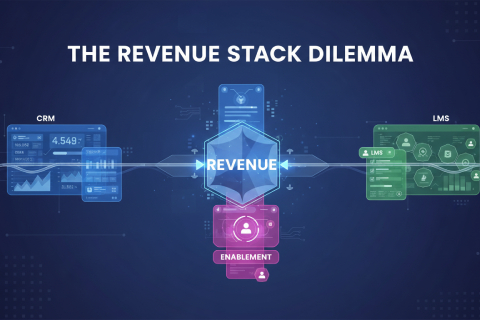

In the insurance and banking sectors, the most expensive minute isn't the cost of lead acquisition - it's the sixty seconds after a lead is assigned to a field agent. While CRMs efficiently route prospects to thousands of distributed reps across Tier-1 and Tier-2 cities, the actual conversion process often enters a tactical black hole. Data from the field reveals that lead response quality degrades significantly when agents lack immediate, contextual guidance on their mobile devices at the moment of interaction.
For sales leaders in high-stakes industries like NBFCs or Automotive, this "Invisible Leak" is rarely a lack of effort. It is a lack of execution consistency. A high-performing agent in a metro branch may have the muscle memory to handle complex objections, while a newer hire in a distributed territory struggles to pull up the right product illustration or tax-benefit calculator. Without a centralised system to push winning playbooks and personalised content directly into the rep's workflow, the premium paid for that lead is wasted through hesitation and generic messaging.
As we navigate the sales landscape in 2026, the challenge has shifted from lead volume to lead activation. When a distributed sales force is left to interpret a CRM notification without on-the-fly enablement, they default to low-impact behaviours that stall the deal. This disconnect between the lead assignment and the first high-quality interaction is where revenue evaporates, often hidden behind the vanity metrics of a "successfully assigned" lead.
What is the "Hidden Execution Gap" in modern lead management?
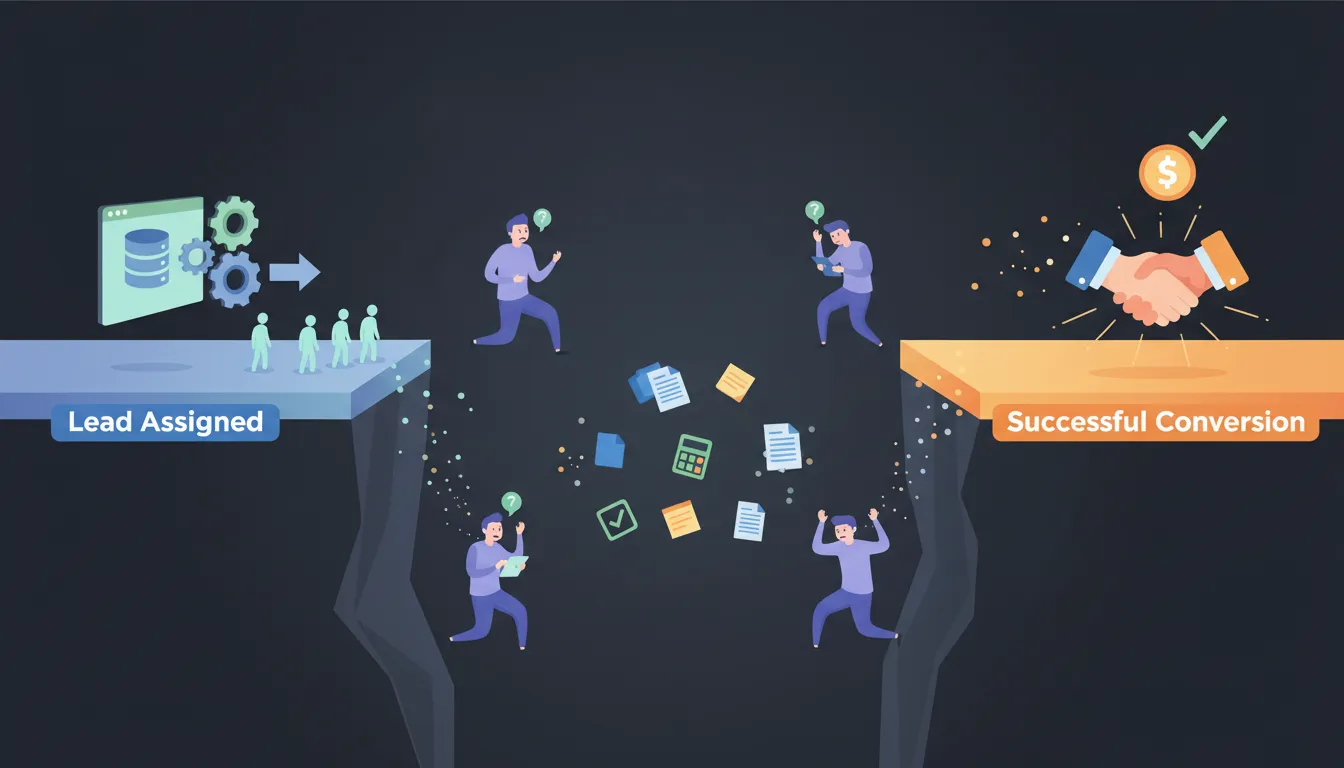
The "Hidden Execution Gap" represents the structural disconnect between the moment a lead is assigned and the moment a high-quality, persuasive conversation actually occurs. Most organisations focus their 2026 budgets on lead volume and "speed to lead." However, they ignore the qualitative decay that happens when a frontline agent makes contact but lacks the immediate capability to convert that lead’s specific intent. This gap is where high-intent prospects are lost, not because of a lack of effort, but because of a lack of contextual readiness.
In high-stakes industries like Insurance, Banking, or Automotive, a lead is often a perishable commodity. When a customer expresses interest in a complex financial product or a vehicle, they are at their peak "curiosity state." The Execution Gap widens when the sales agent spends the first five minutes of the call searching for the right product brochure, struggling to calculate an EMI, or failing to address a specific objection about a competitor's terms. The CRM might record this as a "Contacted Lead," but in reality, the opportunity has already begun to sour because the agent could not match the customer’s pace.
This gap is further exacerbated by the inconsistency across distributed sales teams. In large enterprise environments, there is a massive performance delta between the top 10% of agents and the rest. The top performers have internalised the playbooks, while the middle and bottom tiers struggle to replicate high-impact behaviours. The "Hidden" part of the gap refers to the fact that standard reporting tools don't capture these micro-moments of failure. They track "Calls Made," but they don't track "Relevance Delivered."
To bridge this gap, sales leaders must shift their focus from lead management to lead activation. This requires moving away from static training and moving toward real-time enablement. If an agent has to leave the conversation to find a document or consult a manager, the execution has already failed. True execution happens when the agent has the right pitch, the right counter-argument, and the right personalised content at their fingertips, the second the lead is triggered.
Actionable steps to close the Hidden Execution Gap:
- Implement Just-In-Time Enablement:
Move away from monthly training sessions. Provide agents with "Battlecards" and objection-handling scripts that are accessible within the same interface where they manage their leads. If a prospect mentions a competitor, the agent should have the specific counterpoints visible immediately.
- Automate Content Personalisation:
Remove the burden of content creation from the agent. Use systems that automatically generate personalised product illustrations or quotes based on the lead's profile. This ensures the agent spends time selling rather than formatting PDFs.
- Monitor Qualitative Metrics:
Go beyond "Talk Time" and "Lead Volume." Start measuring the "Content Utilisation Rate" - how often agents use specific sales collateral during successful conversions. Identify which pieces of content correlate with shorter sales cycles.
- Deploy AI-Driven Roleplay:
Use 2026-standard AI simulations to let agents practice handling difficult leads in a low-stakes environment. This ensures they don't "practice" on your most expensive leads.
- Bridge the CRM-to-Content Loop:
Ensure your lead management system is not just a database but a delivery engine. When a lead is opened, the system should suggest the top three talking points or the most relevant case study based on that lead's specific demographic or interest area.
Stop treating your CRM as a source of truth for sales performance. It is a source of truth for sales activity. To find the Hidden Execution Gap, look at your "Lead-to-Meeting" conversion rates by individual agent. If there is a variation of more than 30% between your top and bottom quartiles, you don't have a lead problem; you have an execution gap that can only be fixed by providing real-time, situational support to your frontline teams.
Why does lead conversion stall immediately after CRM assignment?
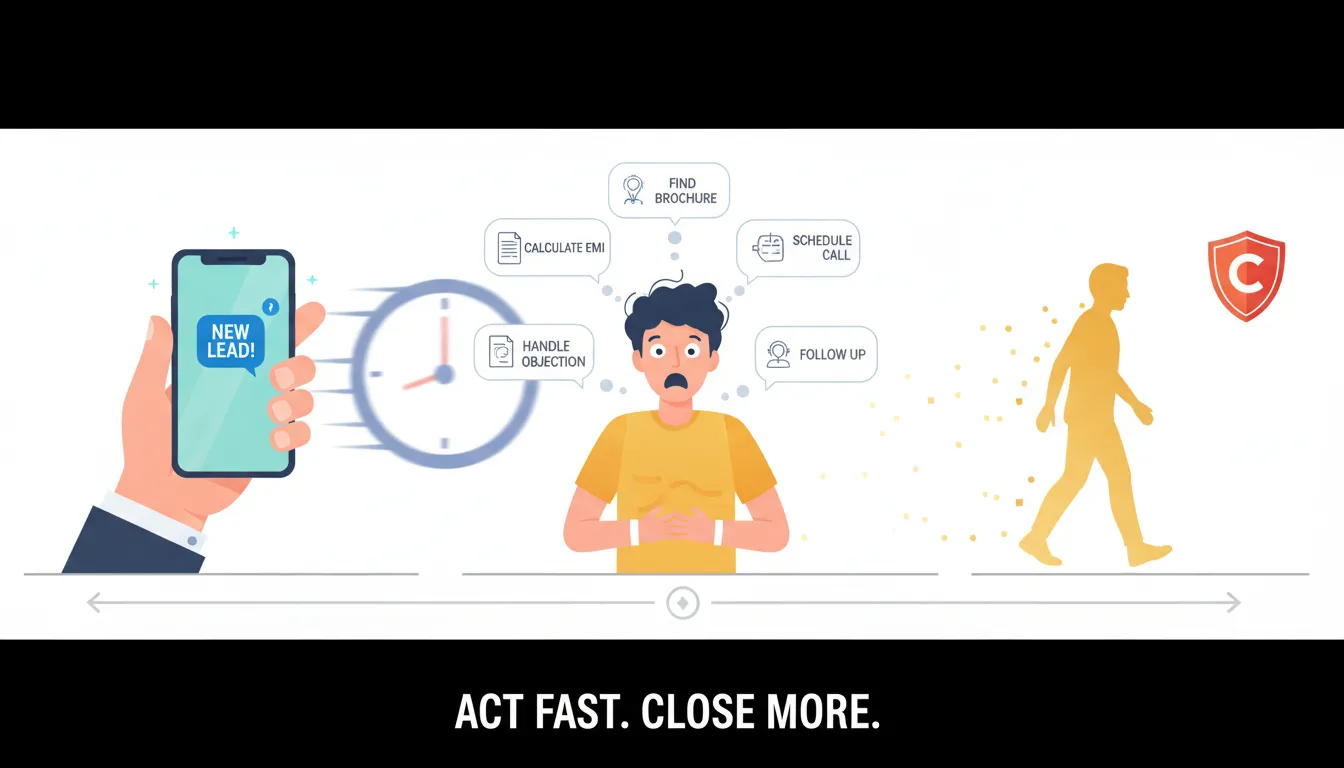
Lead conversion often stalls the moment a lead hits the CRM because the assignment process is purely administrative, not operational. In most enterprise sales environments - whether in Banking, Insurance, or Automotive - a CRM acts as a system of record rather than a system of action. When a lead is assigned, the salesperson receives a notification, but they rarely receive the specific context or the tools required to initiate a high-impact conversation immediately. This creates a "dead zone" where the lead’s interest is at its peak, but the salesperson is stuck in manual preparation mode.
The primary reason for this stall is the cognitive load placed on the agent. Upon assignment, the agent must determine the lead's intent, find the right product collateral, recall the latest objection-handling scripts, and decide on the best opening line. In complex sectors like NBFCs or Pharma, this research phase can take thirty minutes to two hours. By the time the agent is "ready," the customer has already moved on to a competitor or lost interest. Speed-to-lead is not just about the time it takes to dial a number; it is about the time it takes to deliver a relevant, personalised value proposition.
Another critical factor is the lack of guided execution. Most CRMs tell an agent *who* to call, but they don't tell them *how* to win the conversation. This gap leads to "call reluctance." Agents prioritise easier tasks over high-stakes lead follow-ups because they lack confidence in their messaging. Without a dynamic sales playbook triggered at the moment of assignment, the agent reverts to generic pitches that fail to resonate with the specific needs of the prospect, leading to immediate drop-offs in the funnel.
To break this stagnation and ensure leads move through the pipeline in 2026, sales leaders must shift from lead assignment to lead activation. This involves automating the "first-touch" intelligence so the agent is prepared to engage the moment the notification appears on their screen.
How does a lack of "Just-in-Time" content cause lead leakage?

When a frontline agent encounters a specific technical query or a competitive comparison and lacks immediate access to the right data, they default to the "I'll get back to you" response. In 2026, the window of consumer attention has shrunk to mere minutes. This delay creates a vacuum where the lead's intent dissipates almost instantly. By the time the agent finds the correct PDF in a cluttered drive and emails it two hours later, the customer has already moved on or engaged with a competitor who provided an instant, data-backed answer. This is the primary point of leakage: the friction between a customer's question and its resolution.
In high-stakes industries like Insurance, NBFCs, or Banking, products are complex and highly regulated. A lack of Just-in-Time (JIT) content means agents often rely on outdated brochures or generic decks that fail to address the lead's specific life stage or financial goal. When content isn't hyper-personalised to the conversation context, the lead feels like a generic entry in a database. This lack of situational relevance signals a lack of expertise, causing the lead to leak out of the funnel because they no longer trust the agent to provide a tailored solution.
Frontline teams in Automotive or Consumer Durables manage vast catalogues with shifting specs and pricing. Without JIT enablement tools like interactive product illustrators, the effort required to find the right configuration or financing offer becomes an operational burden. If a salesperson struggles to navigate internal tools during a live demo, the consumer perceives it as a lack of professionalism. This internal friction translates into an external lack of confidence. Leads leak not because the product was wrong, but because the buying experience was too difficult and unorganised to justify the investment.
Objections are the most critical crossroads in the sales cycle where leakage occurs. If an agent isn't equipped with a JIT battlecard to counter a specific price objection or a feature-to-feature comparison against a rival brand, the conversation stalls. Without immediate evidence - such as a real-time ROI calculator or an objection-handling script - the agent loses the authority to steer the conversation. A missed objection in the moment is almost always a lost lead, as the doubt planted in the consumer's mind grows while they wait for a follow-up that comes too late.
To prevent lead leakage through content gaps, consider these actionable steps:
- Implement a mobile-first sales enablement platform that serves content based on the specific stage of the lead in the CRM, ensuring the right deck is always at the agent's fingertips.
- Transition from static PDFs to interactive calculators and modular content snippets that allow agents to generate custom quotes or comparisons in under thirty seconds.
- Use AI-driven playbooks that trigger relevant objection-handling scripts or "battlecards" based on keywords used during the sales conversation.
- Audit your existing content repository to ensure that any piece of collateral required for a deal can be located and shared within three clicks.
- Empower field teams with offline-capable tools so that connectivity issues in the field do not become a bottleneck for information delivery.
Pro Tip:
Shift your enablement strategy from a "Library" mindset to a "Scenario" mindset. Instead of organising content by file type (e.g., Videos, PDFs), organise it by the "Buyer's Hurdle." Create specific tags for "Final Stage Price Objections" or "Switching from Competitor X." This ensures that when an agent is under pressure, they aren't searching for a document; they are searching for a solution to a specific sales roadblock.
Why is CRM visibility insufficient for tracking field sales execution?
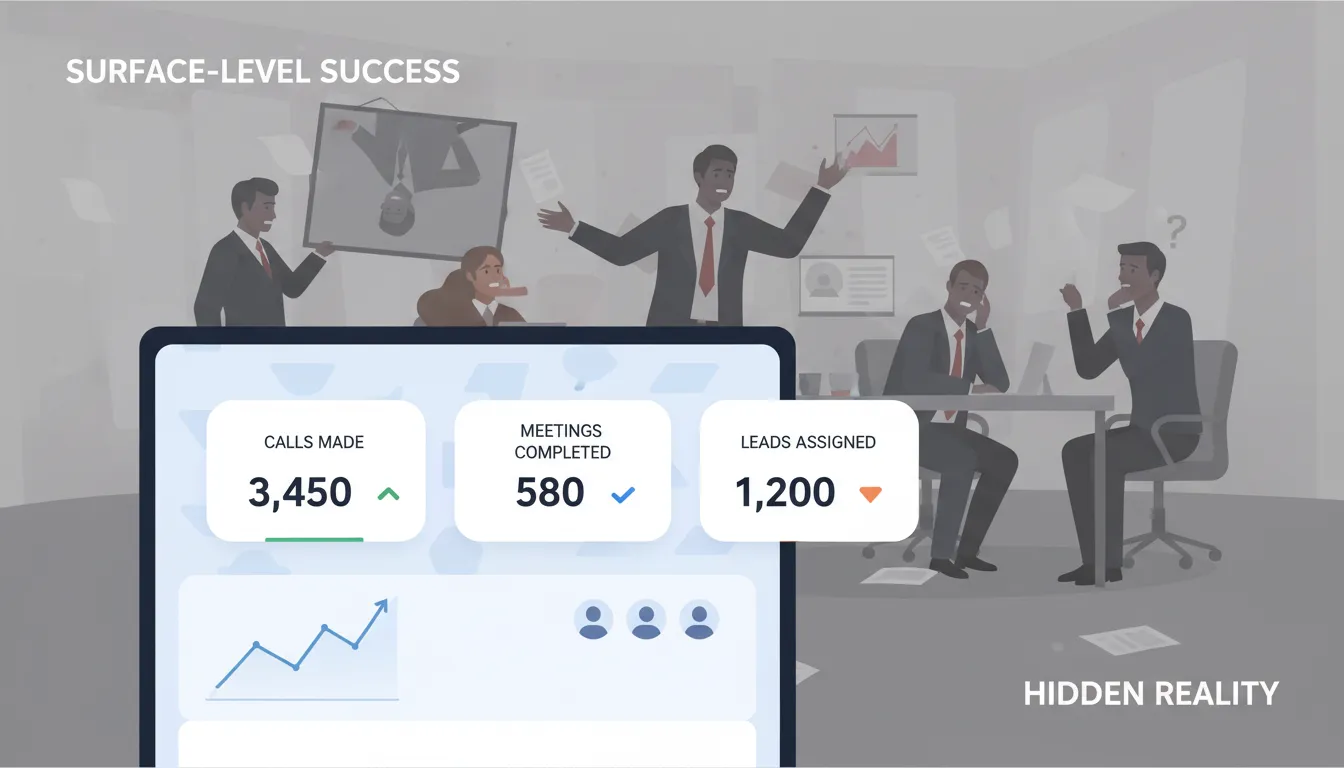
CRMs are designed as systems of record, not systems of action. While they excel at storing historical data - contact details, meeting dates, and pipeline stages - they remain fundamentally blind to the "last mile" of field sales execution. For a Sales Leader in banking or insurance, seeing a "Meeting Completed" status in a CRM offers zero visibility into whether the agent actually utilised the latest regulatory-compliant pitch or if they struggled to handle a specific objection regarding premium hikes. The CRM tracks that a conversation happened, but it cannot tell you the quality, accuracy, or effectiveness of that conversation.
The primary limitation stems from the administrative burden of manual entry. Field agents in industries like automotive or pharma are often mobile, moving from one appointment to the next. Expecting them to log granular behavioural data into a CRM leads to "data thinning," where only the bare minimum information is recorded. This creates a massive gap between the reported activity and the actual sales behaviour. Managers end up coaching based on lagging indicators - like missed quotas - rather than leading indicators, such as the consistent use of interactive product illustrators or the correct positioning of a new financial instrument.
Furthermore, CRMs lack the capability to guide the representative during the moment of truth. A CRM is a rear-view mirror; it tells you where you were, not where you are going. It does not provide just-in-time content or AI-powered playbooks based on the specific persona the agent is meeting. For instance, an NBFC field officer might be meeting a rural entrepreneur. The CRM knows the meeting is scheduled, but it doesn't ensure the officer has the right localised content or the ability to show a real-time ROI calculation that resonates with that specific customer’s cash flow.
The lack of content analytics within the CRM ecosystem is another critical blind spot. Marketing and enablement teams may produce high-quality battlecards and pitch decks, but once those files are downloaded, they vanish into a "black box." A CRM cannot track if an agent presented an outdated PDF or if they skipped the most persuasive slides in a presentation. Without this data, Sales VPs cannot replicate the behaviours of high-performing "A-players" across the rest of the distributed workforce because they simply don't know what those A-players are doing differently during the presentation itself.
What triggers the "First Meeting Failure" in distributed sales teams?

The "First Meeting Failure" in distributed sales teams typically stems from a disconnect between the agent's preparation and the prospect's immediate expectations. In high-stakes sectors like Insurance, Banking, or Automotive, the first interaction is not just about sharing information; it is about establishing immediate authority. When agents across distributed geographies lack a unified, high-quality execution framework, they revert to "survival mode" pitching - focusing on generic product features rather than specific customer outcomes. This lack of relevance is the primary trigger for a prospect’s loss of interest.
One major catalyst is the reliance on static collateral. In 2026, prospects have already done their research online. If a field agent arrives and presents a generic PDF or a standard slide deck that the customer has already seen, the value of the meeting evaporates. The failure happens because the agent cannot pivot the conversation based on real-time feedback. Without interactive tools - like dynamic calculators or product illustrators - to visualise a specific ROI or a customised loan structure, the meeting remains theoretical rather than transactional.
Another trigger is the "Confidence Gap" caused by information asymmetry. Distributed teams often struggle with inconsistent training. An agent in a tier-two city might not have the same nuanced understanding of a new product launch as someone at the headquarters. When a prospect asks a complex question regarding a competitor’s latest offering or a specific regulatory change, and the agent hesitates or promises to "get back to them," the momentum is killed. That delay allows the prospect to look elsewhere. The failure isn't a lack of talent; it's a lack of just-in-time enablement that provides the right answer at the exact moment it is needed.
Furthermore, poor discovery mechanics often lead to a "pitch-slap" scenario. Many agents move straight to the solution without accurately diagnosing the prospect's pain points. This happens because they lack a structured discovery playbook. Without guided prompts or AI-driven "Battlecards" to handle objections on the fly, the agent loses control of the narrative. The meeting ends without a clear "Next Best Action," leaving the lead to go cold in the CRM.
How do inconsistent sales playbooks sabotage high-intent leads?

When a high-intent lead enters your funnel, they are at their most vulnerable and most decisive. In industries like insurance, banking, or automotive, these leads have often completed 70% of their research before ever speaking to a representative. They expect the salesperson to be a sophisticated guide who validates their research and simplifies the final decision. Inconsistent sales playbooks sabotage this momentum by creating a "cognitive rift" between what the brand promised and what the salesperson delivers.
The primary damage manifests as trust erosion. If a lead receives a personalised quote or a specific value proposition via a digital marketing campaign, but the frontline agent uses an outdated pitch or suggests a different product mix, the lead immediately senses a lack of internal coordination. This friction signals that the organisation is disjointed. For a customer about to commit to a high-value financial product or a long-term service contract, this inconsistency is a massive red flag. High-intent leads don't just buy products; they buy the confidence that the organisation can support them post-purchase.
Inconsistency also leads to "Discovery Decay." Without a standardised playbook, every sales interaction becomes an improvised experiment. One agent might focus on price, while another focuses on technical specifications. This means your CRM becomes a graveyard of non-comparable data. You cannot identify why a high-intent lead dropped off because you cannot isolate the variables of the conversation. When sales playbooks are not enforced or easily accessible, agents default to their own "gut feel," which is impossible to scale or optimise across a distributed workforce.
Furthermore, speed-to-lead is neutralised by playbooks that are difficult to navigate. A high-intent lead expects an immediate, expert response. If your agent has to hunt through static PDFs or old emails to find a specific objection-handling script or a product illustrator, the "golden window" of conversion closes. In 2026, the gap between a lead's expectation of instant expertise and an agent's inability to provide it is where most revenue is lost.
Can AI bridge the gap between lead delivery and lead activation?

The gap between lead delivery and lead activation is where most revenue is lost. In high-velocity sectors like banking, insurance, and automotive, a lead often enters the system with high intent, only to sit idle in a CRM queue or be handled by a sales agent who lacks the immediate context to convert it. This "dead zone" exists because delivery is a technical function, while activation is a behavioural one. AI bridges this gap by transforming the lead from a static notification into an actionable mission for the frontline agent.
Lead activation fails when agents hesitate. This hesitation stems from a lack of preparedness - not knowing the product nuances, the competitor’s latest moves, or the specific persona of the lead. AI eliminates this friction by providing just-in-time enablement. Instead of an agent hunting for a brochure or a pricing sheet, an AI-powered system injects the necessary battlecards and personalised product illustrators directly into the agent’s workflow the moment the lead is assigned. This ensures that the first touchpoint is not just fast, but highly relevant.
In the 2026 sales environment, speed is no longer a competitive advantage; it is a baseline requirement. The real differentiator is the quality of the "First Meaningful Conversation." AI enables this by analysing lead data to suggest the best opening hook and the most effective objection-handling scripts based on historical success patterns. For an insurance agent or a pharma rep, this means having a digital co-pilot that predicts the prospect's concerns before they are even voiced. This moves the needle from simple lead "contact" to true lead "activation."
Furthermore, AI addresses the massive variability in agent performance across distributed geographies. In a large enterprise, you cannot manually coach every rep on every lead. AI scales the expertise of your top performers by automating the sales playbook. It ensures that a rookie agent in a remote location handles a lead with the same strategic depth as a veteran at headquarters. By providing interactive tools like dynamic calculators and real-time AI role-play feedback, the platform ensures the agent is "warmed up" and ready to execute the moment the lead arrives.
To bridge the delivery-activation gap effectively, implement the following actionables:
- Automate Contextual Triggers:
Configure your system to push specific talking points and "why buy now" snippets to the agent’s mobile device the second a lead is delivered.
- Deploy Interactive Illustrators:
Replace static PDFs with dynamic tools that allow the agent and consumer to co-create a solution (e.g., a custom loan repayment schedule or a vehicle configuration) during the very first call.
- Implement AI-Driven Role-Plays:
Use AI to simulate the specific challenges of new lead types. If you are launching a new financial product, have agents complete a 2-minute AI role-play to unlock access to the new leads, ensuring they are capable of activating them.
- Use Lead-Rep Matching:
Beyond simple round-robin distribution, use AI to route high-value leads to reps whose historical performance data shows a high conversion rate for that specific product category or customer persona.
- Instant Feedback Loops:
Capture the outcome of every activation attempt through AI voice or text analysis. Use this data to update battlecards and playbooks in real-time across the entire organisation.
Pro Tip:
Stop measuring "Lead Response Time" as your primary metric. Shift your focus to "Lead Utilisation Rate" - the percentage of delivered leads that move to a qualified discovery stage. Use AI to identify which specific pieces of enablement content (e.g., a specific battlecard or video) correlate with the highest utilisation rates, then double down on those assets.
Why do frontline agents fail to handle objections during live pitches?
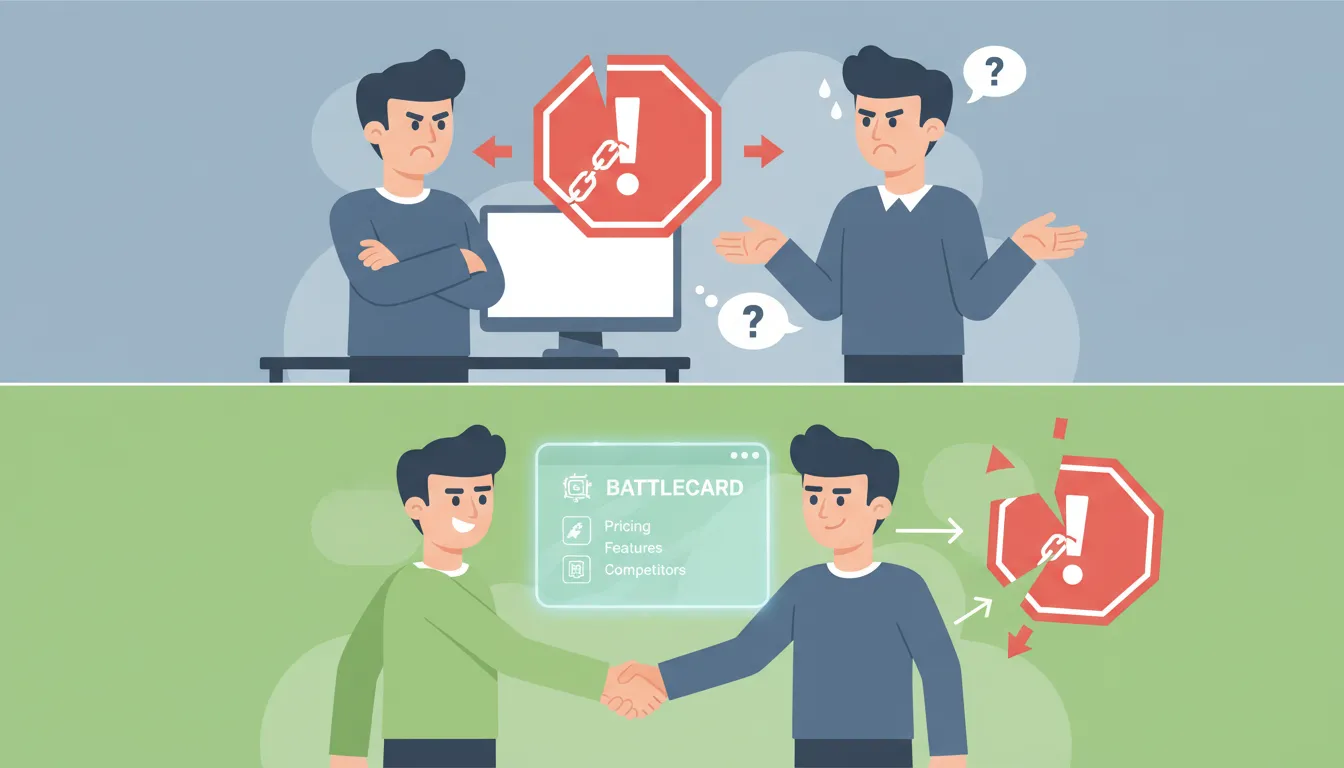
Frontline agents often fail to handle objections during live pitches because of the high cognitive load required to manage a fluid conversation while simultaneously searching for technical data. In high-stakes environments like banking, insurance, or automotive sales, an objection isn't just a question; it is a moment of friction that requires an immediate, high-confidence response. When an agent pauses to "check a brochure" or stumbles over a complex compliance-heavy answer, the customer perceives a lack of expertise, which quickly erodes trust.
The primary cause of failure is the disconnect between classroom training and the reality of the field. Most agents are trained using static manuals or one-time workshops. By the time they are in front of a customer, the "forgetting curve" has already wiped out the nuances of the training. Without a system to provide just-in-time reinforcement, agents fall back on generic, scripted responses that do not address the customer's specific pain point. In 2026, customers are more informed than ever; they don't want a script, they want a consultant who can solve their specific problem on the fly.
Another critical factor is the lack of "Battlecard" accessibility. Even if an organisation has documented every possible objection - from pricing concerns to competitor comparisons - this information is often buried in a Learning Management System (LMS) or a static PDF. Expecting an agent to navigate a complex file structure during a live pitch is unrealistic. This "search lag" creates silence in the conversation, which the agent often fills with nervous "fluff" or incorrect information, leading to compliance risks or lost sales.
The failure to handle objections is rarely a lack of talent; it is almost always a failure of the support system. If the agent does not have the right answer delivered in the right format at the exact moment of the objection, the pitch will fail. By moving toward a "just-in-time" enablement model, organisations can ensure that every frontline representative performs like a top-tier veteran, regardless of their tenure.
How does real-time enablement prevent lead decay in complex sales?
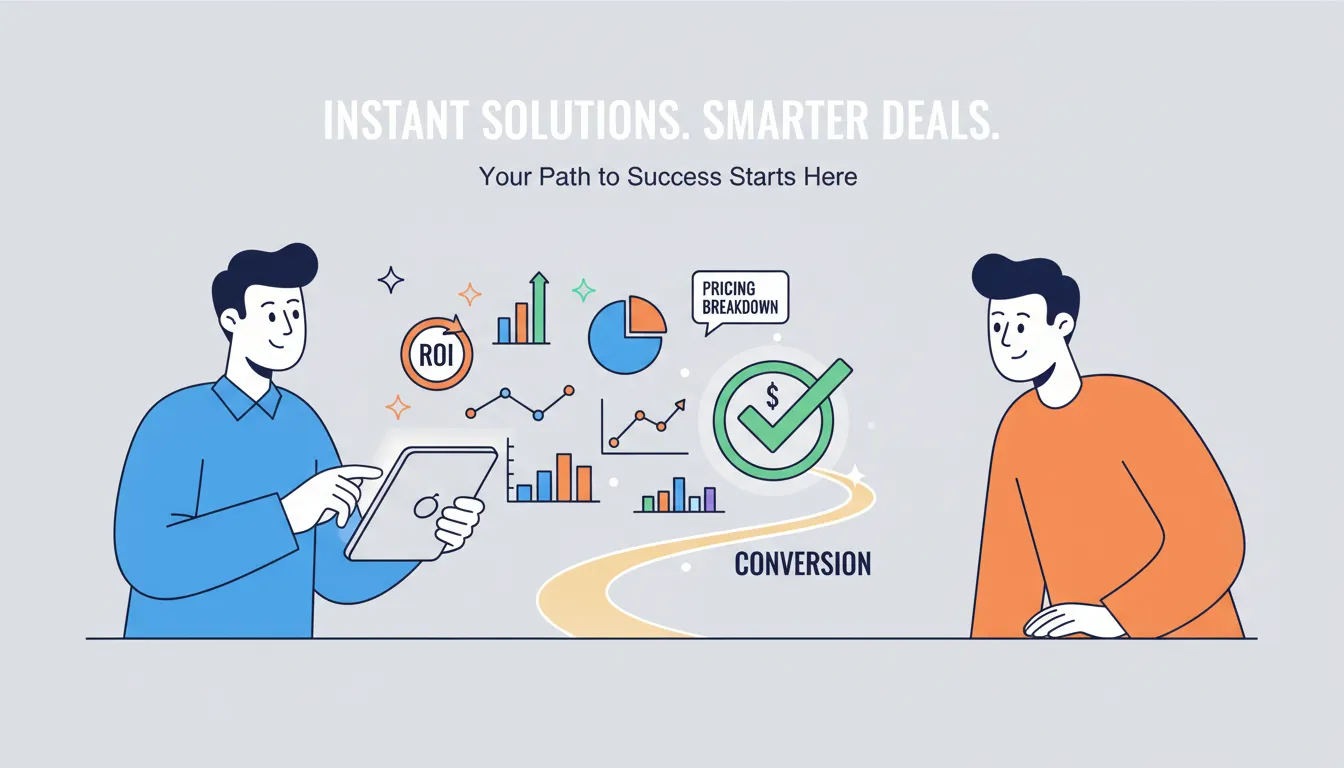
Lead decay in complex sales cycles is rarely a result of simple laziness. It is the byproduct of information asymmetry and administrative friction. In industries like Banking, Insurance, and NBFCs, the gap between a lead’s query and a sales agent’s validated response is where interest dies. When a frontline agent cannot provide an immediate, personalised answer to a specific objection or a complex regulatory question, the lead loses confidence. Real-time enablement solves this by shrinking the "knowledge gap" to zero, ensuring that the momentum of the initial conversation is maintained rather than lost to follow-up delays.
In 2026, the standard for "speed to lead" has shifted from how fast you call to how fast you provide value. Real-time enablement platforms prevent decay by injecting high-impact content directly into the live interaction. For instance, in the Automotive or Construction materials sector, a prospect may ask for a side-by-side comparison of technical specifications or a dynamic ROI calculation. If the agent has to promise a "follow-up email by tomorrow," the lead begins to decay. If the agent uses a real-time product illustrator or a digital calculator to provide that data on the spot, the lead stays warm and progresses through the funnel.
The most critical moment for lead decay occurs during objection handling. In high-value sales, objections are often technical or financial hurdles that require precise responses to maintain credibility. Real-time enablement provides agents with context-aware battlecards and objection-handling scripts that are updated in sync with market changes. This ensures that even a junior agent in a remote geography can deliver the same high-calibre response as a seasoned veteran, preventing the lead from stalling due to perceived incompetence or lack of clarity.
Real-time enablement also addresses the psychological aspect of the sale. In complex environments like Pharma or Banking, the buyer is often overwhelmed by choices. When an agent provides immediate, structured, and visually engaging information, it reduces the buyer's cognitive load. This clarity acts as a powerful anti-decay agent, as it makes the decision-making process feel easier and more secure for the customer.
What is the ROI of fixing the post-assignment execution gap?
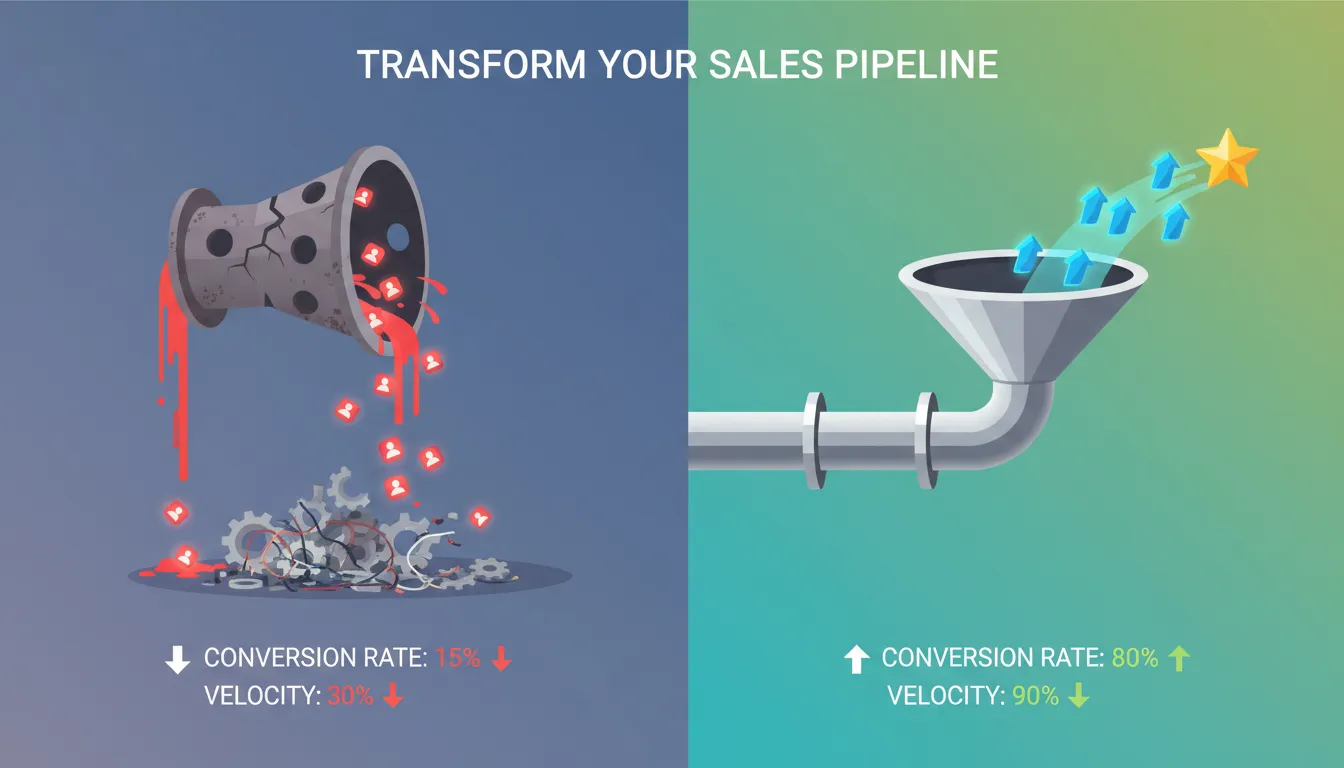
The post-assignment execution gap represents the hidden graveyard of marketing budgets. When a lead is assigned but sits idle or receives a generic, uninspired follow-up, the investment made to generate that lead evaporates. In 2026, the ROI of closing this gap isn't just about incremental gains; it is about reclaiming the 30% to 50% of potential revenue that typically disappears during the transition from "lead assigned" to "meaningful engagement."
For enterprise teams in banking or insurance, the ROI manifests first in Lead-to-Opportunity (L2O) conversion rates. When a frontline agent has the right context, a personalised pitch, and immediate access to objection-handling tools, the first interaction moves from a generic discovery call to a high-intent conversation. Reducing the time-to-first-touch while simultaneously increasing the quality of that touch creates a compounding effect on the sales pipeline that traditional lead volume cannot match.
Operational ROI is equally significant. A distributed sales force often suffers from a "capability variance" - where the top 10% of performers carry the organisation while the rest struggle. Fixing the execution gap involves automating the "how-to" of the sale. This levels the playing field, effectively raising the floor of the entire team’s performance. By providing agents with AI-driven playbooks at the moment of assignment, companies reduce the need for constant, manual retraining, which slashes overhead costs associated with sales management and sales enablement.
In the automotive and consumer durables sectors, where the consumer journey is research-heavy, the execution gap is a matter of brand trust. If a customer receives a disjointed or ill-informed response after showing interest, they immediately pivot to a competitor. Closing this gap ensures that every agent delivers a consistent, expert-level experience that reflects the brand’s value proposition. This leads to higher customer lifetime value (LTV) and lower churn during the critical consideration phase.
Direct ROI Drivers:
- Reduced Lead Decay: Leads lose significant value within the first hour of inactivity. Automated activation ensures engagement happens when intent is highest.
- Higher Sales Velocity: Shortening the gap between assignment and the first meaningful pitch accelerates the entire sales cycle, allowing for more closed deals per quarter without increasing headcount.
- Lower Customer Acquisition Cost (CAC): By improving the conversion efficiency of the existing lead pool, the cost per acquisition drops because fewer leads are wasted.
- Standardized Performance: Removing the guesswork for frontline agents ensures that even new hires perform like seasoned veterans within their first week, significantly reducing ramp-up time.
Conclusion
The "invisible leak" in distributed sales teams is not a lead quality problem; it is an execution gap. When lead assignment happens without real-time guidance, revenue disappears in the space between the CRM notification and the actual sales conversation. Frontline agents in industries like banking, insurance, and automotive often lack the immediate context or specific objection-handling tools required to move a prospect forward, leading to inconsistent performance across different regions.
Fixing this requires shifting from retrospective reporting to active sales enablement. Relying on agents to remember training from months ago is a high-risk strategy that fails under the pressure of a live pitch. By the time a manager identifies a capability gap in a monthly review, the opportunity is already lost. In 2026, high-growth organisations are deploying AI-powered playbooks that provide just-in-time content and interactive tools directly to the agent's mobile device during the moment of truth.
Plugging the revenue leak means ensuring that your bottom 80% of performers have access to the same strategies and insights as your top 5%. This level of consistency cannot be achieved through manual oversight alone. It requires a system that automates lead activation and provides real-time support, transforming every lead into a guided path toward conversion.
Eliminate execution uncertainty and start scaling your best sales behaviours across every territory. Book a demo with Sharpsell.ai today to see how our Lead Activation system can turn your distributed sales force into a high-performance engine.
What’s a Rich Text element?
The rich text element allows you to create and format headings, paragraphs, blockquotes, images, and video all in one place instead of having to add and format them individually. Just double-click and easily create content.
Static and dynamic content editing
A rich text element can be used with static or dynamic content. For static content, just drop it into any page and begin editing. For dynamic content, add a rich text field to any collection and then connect a rich text element to that field in the settings panel. Voila!
How to customize formatting for each rich text
Headings, paragraphs, blockquotes, figures, images, and figure captions can all be styled after a class is added to the rich text element using the "When inside of" nested selector system.
zdxfhgfg
- sdnslk,xdv
- SDlknjsdv
- SDvlknj
- sdgdf v