
Sales enablement vs CRM vs Lead Management System: which tool should revenue leaders buy first?

A Chief Distribution Officer at a major private bank recently noted that while their CRM was full of leads, the frontline conversion rate remained stuck at 4%. The agents had the names and phone numbers

Sales enablement vs CRM vs Lead Management System: which tool should revenue leaders buy first?

Sales enablement vs CRM vs Lead Management System: which tool should revenue leaders buy first?

A Chief Distribution Officer at a major private bank recently noted that while their CRM was full of leads, the frontline conversion rate remained stuck at 4%. The agents had the names and phone numbers, but they lacked the specific product talk tracks and interactive calculators needed to close a deal during a high-pressure client meeting. This gap between lead acquisition and the final signature is where most revenue growth stalls in 2026.

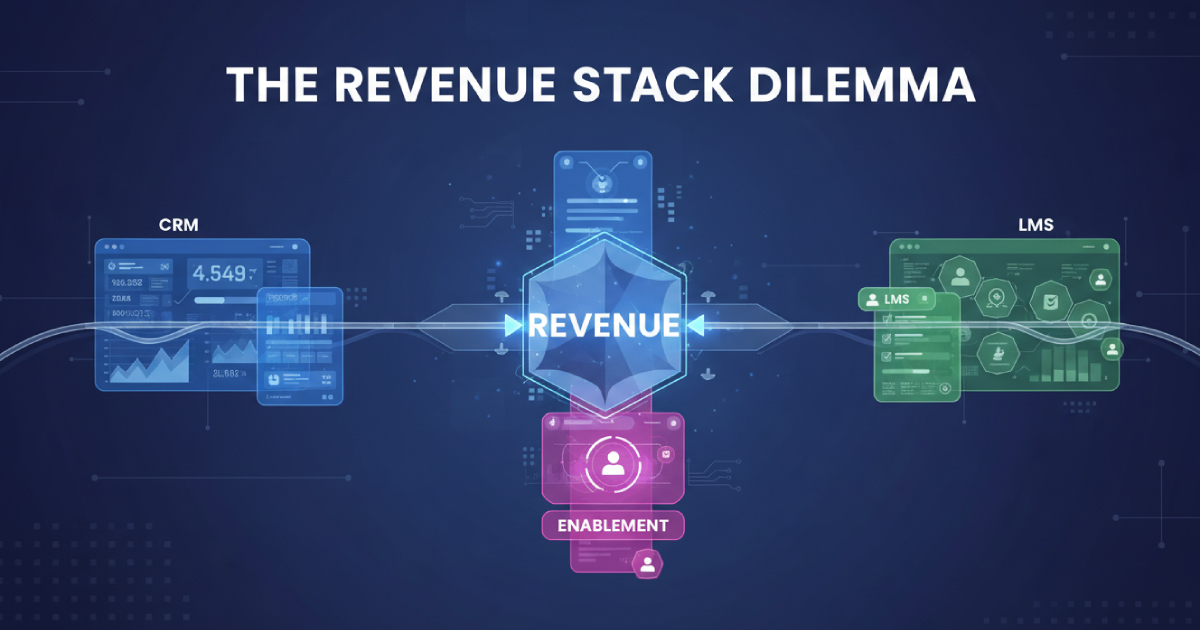
Revenue leaders in high-stakes industries like Insurance, NBFCs, and Automotive often find themselves caught in a software tug-of-war. The CRM is typically mandated for data hygiene, the Lead Management System (LMS) is bought to stop lead leakage, and Sales Enablement is proposed to improve how agents actually interact with customers. Investing in these tools in the wrong order creates a "digital filing cabinet" scenario-lots of organised data, but zero improvement in field performance or agent confidence.

Choosing which system to prioritise depends on your specific execution bottleneck. If your team is losing leads before they are even contacted, your problem is architectural. However, if your team is getting the meetings but failing to articulate value or handle common objections, your problem is execution. Understanding where the friction lives determines whether you need a better database or a more effective playbook.

Why do traditional CRMs fail to improve field sales conversion rates in 2026?
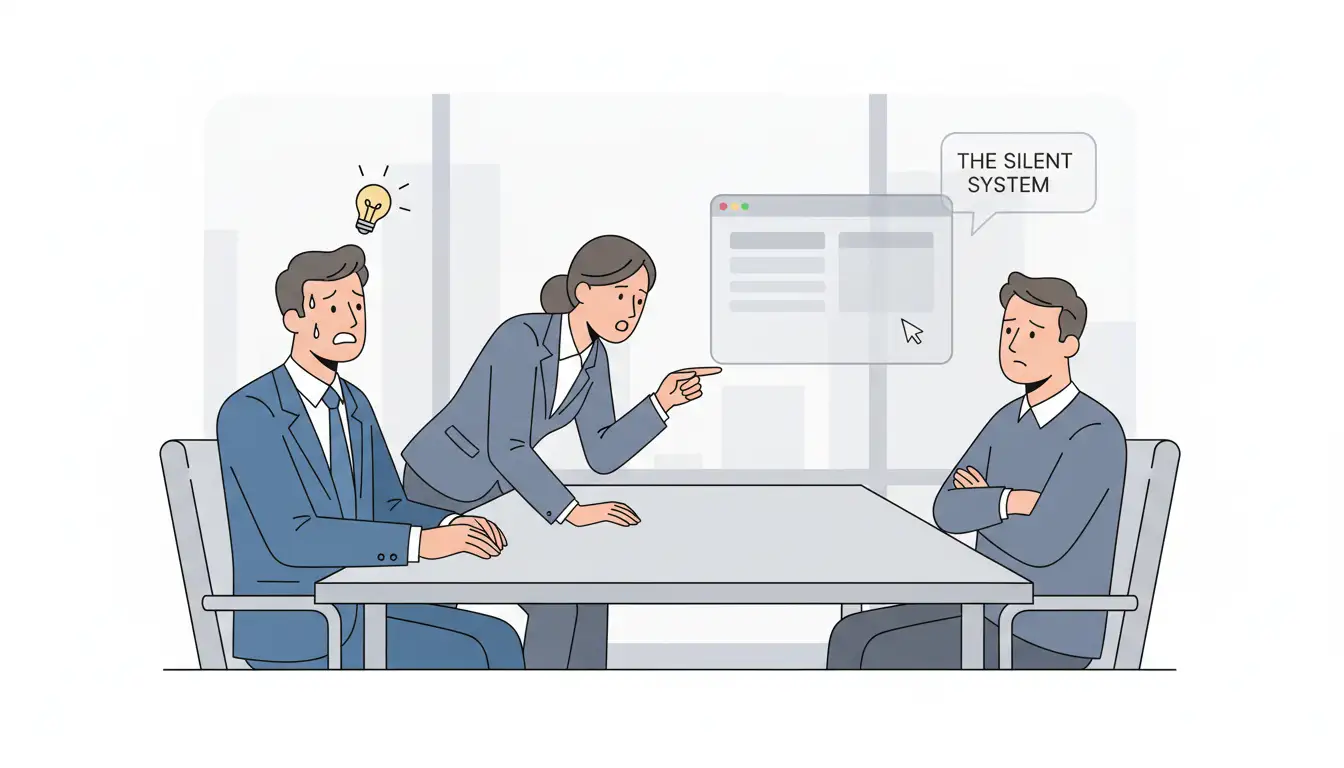
Traditional CRMs were designed as systems of record, not systems of execution. Their primary purpose is to help management track pipelines and forecast revenue, rather than helping a field agent actually close a deal. In 2026, the gap between data entry and sales reality has widened. While a CRM can tell you that a lead exists, it offers zero guidance on how to navigate the specific nuances of a high-stakes conversation in industries like insurance, banking, or automotive sales. Field agents often view the CRM as a reporting burden-an administrative tax they pay-rather than a tool that adds value to their pitch.

The failure of traditional CRMs in improving conversion rates stems from their static nature. They treat sales as a linear progression of stages-Lead, Qualified, Proposal, Closed-but real-world field sales are dynamic and messy. A salesperson sitting across from a prospect in a healthcare or consumer durables setting needs real-time support, not a database to log notes after the meeting is over. When the customer asks a difficult question about a policy rider or a vehicle’s financing terms, the CRM remains silent. It does not provide the "just-in-time" content or the specific talk tracks needed to overcome that objection in the moment.

Furthermore, traditional CRMs lack the "Middle-of-the-Funnel" intelligence. They capture the 'Who' and the 'When' but ignore the 'How.' Managers can see that a representative had five meetings, but they have no visibility into the quality of those interactions. This lack of visibility makes it impossible to replicate the behaviours of top performers across a distributed team. Without a way to standardise the actual sales presentation and the supporting collateral, conversion rates remain tied to the individual talent of the agent rather than a scalable institutional process.

To bridge this gap and actually drive conversion, sales leaders must shift focus toward enablement-led execution. Here are actionable steps to move beyond the limitations of a traditional CRM:

  • Integrate Interactive Playbooks: 

Move away from static PDF brochures. Equip field teams with interactive product illustrators that allow them to co-create solutions with the customer on-site. This increases engagement and transparency.

  • Deploy AI-Driven Battlecards: 

Ensure that agents have instant access to objection-handling scripts tailored to the specific competitor or product being discussed. This reduces "blank slate" syndrome during critical moments.

  • Automate Content Personalisation: 

Instead of generic follow-up emails, use systems that automatically generate personalised summaries or calculators based on the specific data points discussed during the field visit.

  • Implement Real-Time Coaching: 

Use AI role-play tools that allow agents to practice their pitches before they hit the field, ensuring they are prepared for the 2026 buyer who is more informed and sceptical than ever.

  • Focus on 'Nudges' over 'Reports': 

Replace manual data entry with systems that push relevant insights to the agent. For example, a notification saying "Last time you met this client, they were concerned about X; here is a 30-second video explaining our new solution for X."

The modern field agent in 2026 is no longer just a relationship manager; they are a consultant. If your technology stack only tracks their movements without empowering their speech, your conversion rates will continue to stagnate. The CRM should be the foundation, but the sales execution system must be the interface that actually touches the customer.

Does a Lead Management System provide the 'how-to-sell' or just the 'who-to-call'?

Traditional Lead Management Systems (LMS) were originally designed as administrative databases. Their primary function was to solve the "who-to-call" problem by organising names, contact details, and lead sources into a searchable list. For a frontline sales agent in 2026, simply knowing a lead is "hot" or "ready to buy" is only a small fraction of the requirements for a successful close. If a system stops at providing a contact record, it leaves the most difficult part of the sales process-the actual conversation-entirely to chance. This creates a performance gap where only the top 10% of agents succeed through natural intuition, while the rest of the distributed team struggles to maintain consistency.

The "how-to-sell" is the strategic bridge between a raw lead and a signed contract. In high-stakes industries like Insurance, Banking, and Healthcare, products are increasingly complex, and customer expectations for personalisation are at an all-time high. A system that only provides a phone number forces an agent to manually hunt for brochures, recall technical details from memory, or guess which objection-handling script to use. An integrated sales execution system provides the "how" by embedding dynamic playbooks directly into the lead management workflow. This ensures that the moment an agent opens a lead, they are presented with a specific value proposition tailored to that customer’s profile, along with the exact digital collateral needed to move the deal forward.

Modern sales execution transforms the LMS from a passive ledger into an active coach. Instead of just displaying a list of follow-up tasks, the platform guides the agent through the specific mechanics of a high-impact interaction. For a sales professional in the automotive or consumer durables sector, this means having an interactive product illustrator or a digital comparison tool ready to deploy during a live conversation. This level of support removes the cognitive load of "what do I do next?" and allows the agent to focus entirely on building rapport and solving the customer's problem.

To move beyond a basic "who-to-call" model, sales leaders should implement these actionable strategies:

  • Contextual Content Delivery: 

Attach specific sales assets, such as calculators, videos, or case studies, to individual lead stages so agents do not have to search external folders during a call.

  • Integrated Battlecards: 

Provide real-time objection-handling guides within the lead interface that address common pushbacks like pricing concerns or competitor comparisons.

  • Persona-Based Pitching: 

Automate the suggestion of specific talk tracks based on lead metadata, ensuring the agent uses a different approach for a first-time homebuyer than they would for a seasoned investor.

  • Digital Role-Play Loops: 

Use the system to identify where agents are stalling in the sales cycle and push short, bite-sized "how-to" coaching modules to address those specific capability gaps.

Measuring the success of the "how-to-sell" component requires looking at lead-to-opportunity conversion rates and the "time-to-productivity" for new hires. When a system provides the "how," new agents do not require months of shadowing or intensive classroom training to become effective. They follow the embedded prompts, use the provided interactive tools, and deliver a high-quality brand message from day one. This standardisation is critical for enterprise teams operating across different geographies, where maintaining execution quality is often the biggest bottleneck to growth.

How does Sales Enablement solve the execution gap that CRMs and LMS platforms ignore?

CRMs are systems of record, designed to track activities, manage pipelines, and forecast revenue. They are excellent at telling leadership what happened in the past, but offer almost no guidance on what an agent should do next to influence the future. An agent can update a lead status in a CRM for months without ever having a meaningful, value-driven conversation. This creates a "data-rich, insight-poor" environment where managers see a full pipeline but low conversion rates.

Learning Management Systems (LMS) suffer from a different problem: timing. An LMS is a system of instruction. It hosts modules on product features or compliance that agents consume in a vacuum, often weeks before they actually meet a customer. By the time a frontline insurance agent or bank relationship manager is sitting across from a high-net-worth individual, the knowledge decay has already set in. They remember the product name, but they forget the specific value proposition that resonates with that specific customer’s pain points.

The execution gap exists in the "last mile"-the actual interaction between the salesperson and the prospect. This is where Sales Enablement platforms move beyond the static nature of CRM and LMS. Enablement provides a system of execution. It takes the "who" from the CRM and the "what" from the LMS and translates them into the "how" in real-time. It transforms a salesperson from a data-entry clerk into a high-performing consultant by providing the exact tool, script, or visual aid needed at the precise moment of the interaction.

In high-stakes industries like Insurance and NBFCs, the complexity of products often leads to "analysis paralysis" for the agent. While an LMS might test an agent on their knowledge of a new ULIP or credit product, a modern enablement platform provides an Interactive Product Illustrator. This allows the agent to co-create a solution with the customer on their tablet, showing real-time benefits rather than just reciting a brochure. This moves the needle from theoretical knowledge to practical application, closing the gap that traditional training ignores.

Bridging the execution gap requires a shift from "pushed training" to "pulled support." When an agent encounters a difficult objection regarding interest rates or premium loading, they don't have time to log into an LMS and find the relevant module. They need an AI-powered battlecard or a "Just-in-time" content piece that they can pull up instantly. This is where sales enablement creates consistency across distributed geographies. It ensures that your best salesperson in Mumbai and your newest recruit in a tier-2 city are both delivering the same high-impact pitch.

Why should Insurance and BFSI leaders prioritise seller readiness over data entry?
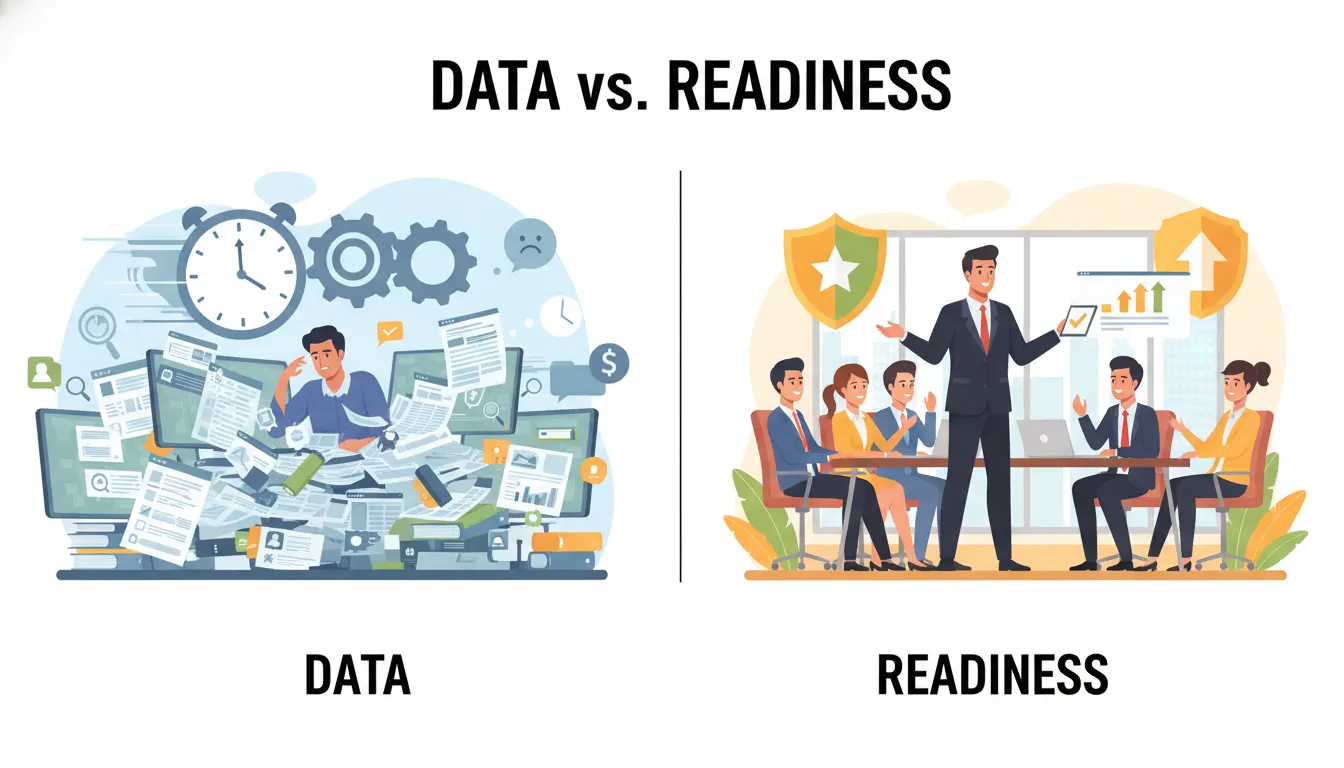
The fundamental tension in modern BFSI sales leadership is the trade-off between administrative compliance and frontline competence. For decades, the industry has prioritised CRM hygiene, operating under the assumption that more data leads to better management. In 2026, this logic is inverted. While data provides a rearview mirror, seller readiness is the engine of forward momentum. For a Chief Distribution Officer or an SVP of Sales in Insurance or Banking, an agent who meticulously fills out lead notes but stumbles during a high-stakes ULIP pitch is a liability, not an asset.

The cost of data entry is hidden in the hours of lost productivity among distributed field teams. When agents are forced to spend 30% of their day navigating complex drop-down menus, they lose the mental bandwidth required to master new product features or refine their objection-handling skills. In the BFSI sector, where products are often perceived as commodities, the seller's ability to act as a trusted advisor is the only true differentiator. Readiness ensures that when an agent finally stands in front of a prospect, they possess the situational fluency to pivot from a standard product pitch to a tailored financial solution.

Prioritising readiness directly addresses the high turnover rates synonymous with the insurance and NBFC sectors. New recruits often feel overwhelmed by product complexity and the pressure of targets. If the organisational focus is solely on "logging activities," these agents feel like cogs in a machine. However, when the focus shifts to readiness, facilitated by AI-led role-plays and just-in-time content, the agent feels empowered. This confidence translates to higher conversion velocities and a significant reduction in the time-to-first-deal.

To shift the needle from administrative overhead to sales excellence, leaders should implement these strategic changes:

  • Automate the Paperwork, Humanise the Prep:

Deploy systems that automatically capture lead interactions so agents can spend their pre-call time using interactive product illustrators or reviewing battlecards.

  • Implement Situational Role-Plays:

Move away from annual training seminars. Use AI-powered platforms to let agents practice specific scenarios, such as handling a "premium is too high" objection, in a low-stakes environment before they meet the client.

  • Focus on High-Impact Behaviours:

Instead of tracking "calls made," track "readiness scores." Identify which agents have mastered the latest regulatory changes or product riders and correlate this with their sales performance.

  • Enable Just-in-Time Content Delivery:

Ensure that the right marketing collateral and compliance-approved scripts are available at the point of sale. An agent should never have to search for a brochure while a client is waiting.

  • Bridge the Capability Gap:

Use analytics to find out why your top 10% of performers are succeeding. Replicate their behaviours through automated playbooks that guide the bottom 60% of the sales force through the same winning patterns.

The shift toward readiness is a shift toward customer-centricity. A prepared seller respects the customer's time by providing accurate, clear, and relevant information. In a regulatory environment that increasingly scrutinises "miss-selling," readiness is also a powerful compliance tool. It ensures that every agent, regardless of their geography or experience level, delivers a consistent and accurate brand narrative.

Can your sales team survive on a Lead Management System without real-time content enablement?

A Lead Management System (LMS) is a glorified filing cabinet if it lacks a real-time content engine. While your LMS tells a salesperson who to call and when to call them, it remains silent on what to actually say. Relying solely on lead tracking creates a massive execution gap where agents spend 30% of their day searching for the right brochure, the latest interest rate sheet, or the correct product comparison PDF. In high-stakes sectors like Insurance or Banking, a three-minute delay in sending a personalised quote or an objection-handling document can be the difference between a closed deal and a ghosted lead.

Survival in the current market requires more than just knowing a lead exists; it requires the ability to influence that lead at the exact moment of high intent. Without integrated content enablement, your frontline agents often resort to using outdated materials saved on their local devices or, worse, winging the pitch. This inconsistency dilutes your brand and introduces compliance risks. An LMS identifies the opportunity, but content enablement provides the ammunition to win it.

When an agent is on a call with a prospect who mentions a competitor's lower premium, the LMS merely records "Objection Raised." A real-time enablement system, however, pushes a battlecard directly to the agent’s screen, outlining exactly how to pivot the conversation. This "Just-in-Time" delivery shifts the sales role from administrative follow-ups to strategic consulting. Without this, your team is simply moving cards across a digital board without actually moving the needle on conversion rates.

To bridge the gap between lead tracking and deal closing, consider these immediate actions:

  • Map Content to Lead Stages: 

Audit your current content repository and tag every asset (videos, calculators, PDFs) to a specific stage in your LMS. A lead at the "Discovery" stage should trigger different content than one at "Negotiation."

  • Deploy Interactive Illustrators: 

In complex industries like NBFCs or Automotive, static brochures fail to engage. Use interactive product illustrators that allow agents to input lead data and generate personalised visualisations in real-time during the conversation.

  • Automate the Feedback Loop: 

Use your enablement platform to track which content assets are actually closing deals. If a specific "Tax Savings Calculator" has a 70% correlation with successful conversions, prioritise its delivery via the LMS for all similar lead profiles.

  • Implement AI-Driven Nudges: 

Set up triggers within your sales workflow that suggest specific pitch scripts or objection handlers based on the lead’s industry or previous interactions. This removes the cognitive load from the agent and ensures a high-quality interaction every time.

Is your CRM a revenue engine or just an expensive digital filing cabinet in 2026?

Most enterprise CRMs in 2026 continue to function as data graveyards. They are repositories for historical events-calls made, emails sent, and deals lost-rather than engines that drive future outcomes. If your frontline sales agents view the CRM as a tool for management surveillance rather than a resource for closing deals, you are paying for an expensive digital filing cabinet. The fundamental flaw in traditional CRM usage is the focus on reporting over enablement. While managers get charts, the sales team gets a heavy administrative burden that pulls them away from actual selling.

A true revenue engine flips this dynamic. It treats data as raw fuel for execution. In sectors like insurance, banking, and automotive, the gap between a lead entering the system and a representative making a high-impact pitch is where most revenue leaks occur. A filing cabinet CRM tells you that a lead was contacted; a revenue engine tells the agent exactly what to say, which product illustrator to show, and how to counter a specific objection based on that lead's unique profile. It moves the CRM from a "System of Record" to a "System of Action."

To transform your CRM into a revenue engine, you must integrate it with AI-powered sales playbooks that guide the representative in real-time. In 2026, the value of a CRM is not in the data it holds, but in the speed at which that data is translated into a winning sales behaviour. When a field agent in a distributed geography opens a lead, the system should automatically surface the most relevant learning journey or pitch deck. This ensures consistency across thousands of agents, regardless of their individual experience levels.

The transition from a passive database to an active execution system requires a shift in how sales leaders view their tech stack. Stop asking "Did the rep update the CRM?" and start asking "Did the CRM help the rep win the deal?" If the platform does not provide just-in-time content or AI-driven role-plays to prepare the agent for a high-stakes meeting, it is a cost centre, not a profit driver.

Why does Sales Enablement offer a faster ROI for distributed teams than a legacy CRM?
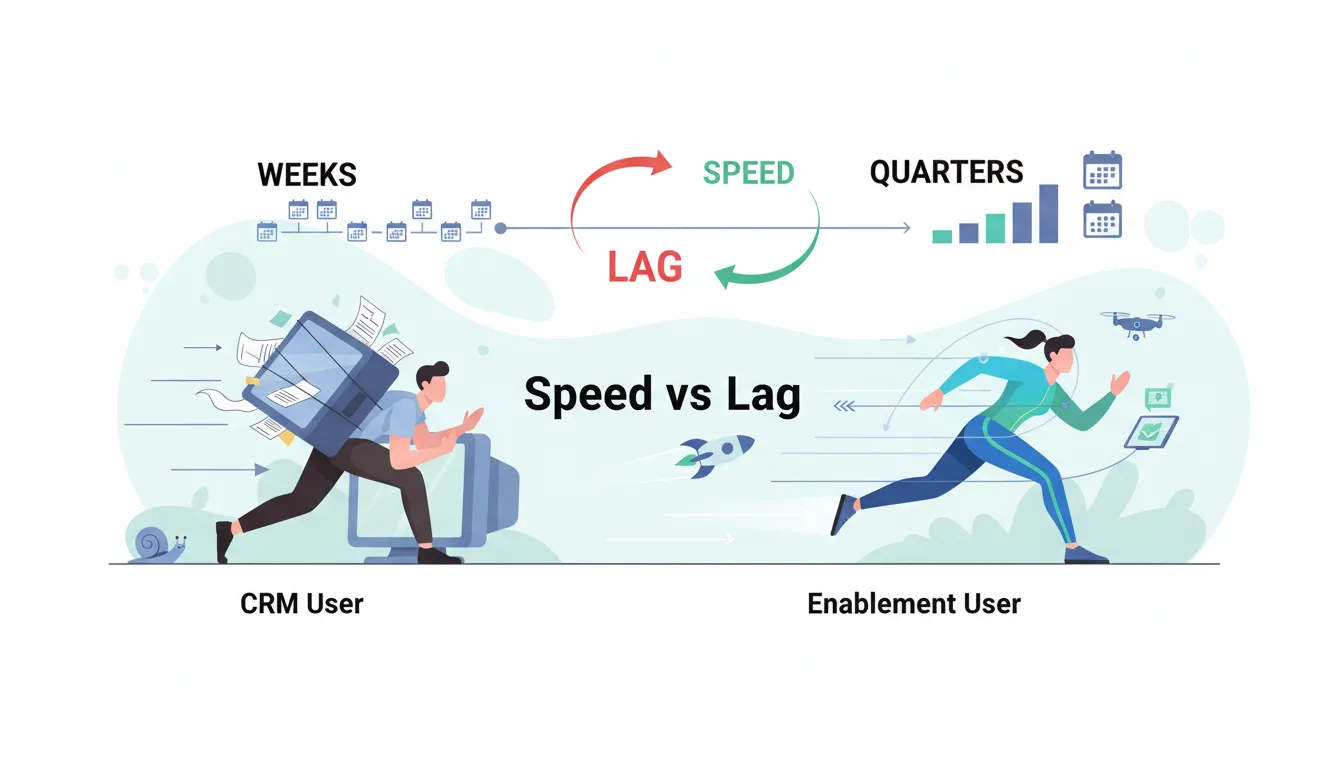
Legacy CRM systems are designed for managers to track data, not for agents to close deals. For distributed teams in sectors like Insurance or NBFCs, a CRM acts as a digital ledger that records what has already happened. Sales Enablement, however, focuses on what is happening right now in front of the customer. This shift from record-keeping to active assistance is why enablement platforms deliver ROI in weeks, while CRMs often take quarters to show even marginal productivity gains.

Distributed teams often face the "last-mile" execution gap. An agent in a remote branch might have the lead data in their CRM, but they lack the specific, high-impact content needed to convert that lead. Legacy CRMs do not tell an agent how to handle a complex objection about premium hikes or how to simplify a multi-benefit healthcare plan. Sales Enablement platforms solve this by providing just-in-time playbooks. When the tool provides the right pitch at the right moment, the time-to-productivity for a new hire drops significantly.

The administrative burden of a CRM is a major deterrent for field teams. Expecting a frontline agent to manually log every interaction leads to poor data quality and resentment. Sales Enablement flips this dynamic by offering value first. If an agent uses an Interactive Product Illustrator to explain a complex financial product, they see immediate value because it helps them sell. The system captures the engagement data automatically, providing leadership with better insights than any manual CRM entry ever could.

In 2026, the speed of product launches in industries like Consumer Durables or Banking is unprecedented. A legacy CRM cannot train a thousand distributed agents on a new product overnight. Sales Enablement platforms use AI-driven Learning Journeys and Role-plays to ensure every agent is "certified" and ready to sell within hours of a product launch. This agility directly correlates to faster revenue generation from new offerings.

What are the hidden costs of deploying an LMS without an integrated Sales Playbook?
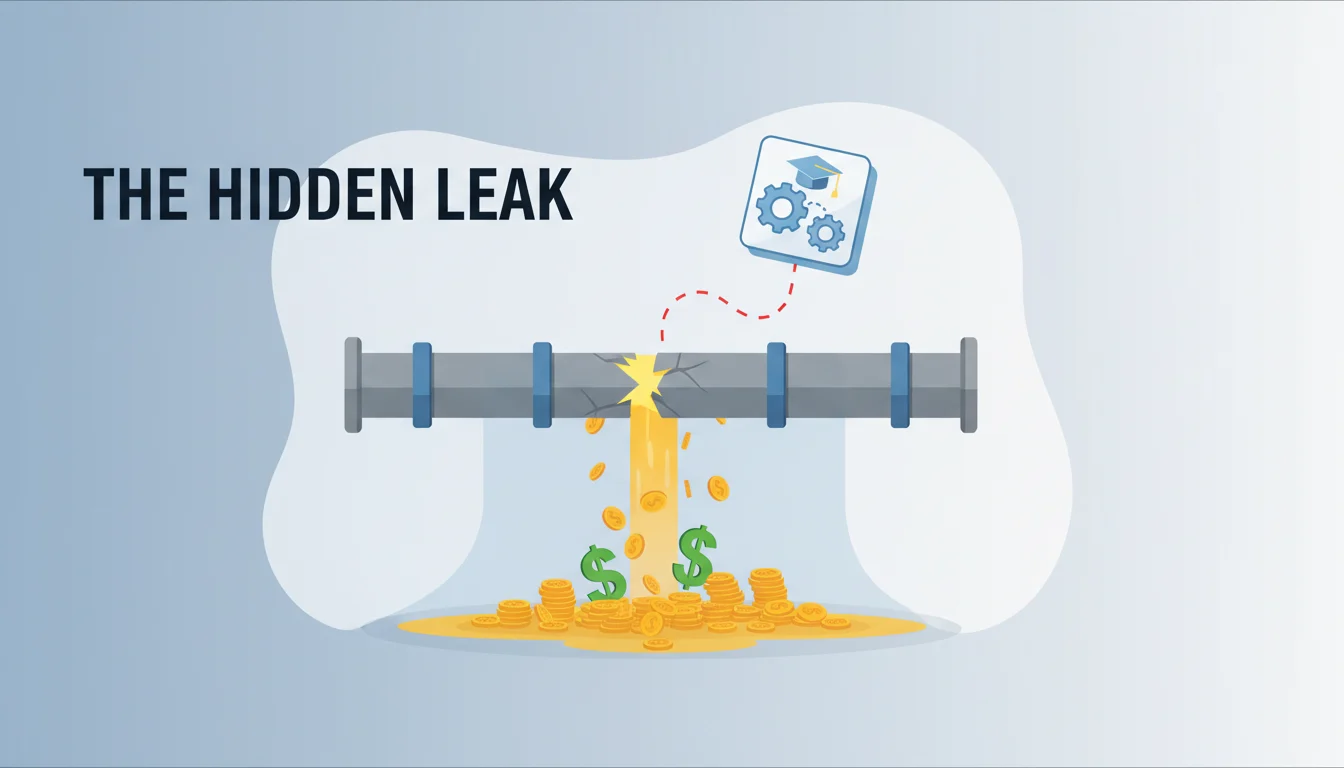
A standard Learning Management System (LMS) is designed for knowledge retention, while sales success depends entirely on knowledge application. When an enterprise in the banking, insurance, or automotive sectors relies solely on an LMS without an integrated Sales Playbook, they face significant revenue leakage. The primary hidden cost is the "Execution Gap." While your frontline teams might achieve 100% completion rates on training modules, those certifications do not translate to field performance. The cost of a rep knowing the features of a new insurance product but failing to handle a specific tax-saving objection in a live meeting is a direct hit to your bottom line.

The second hidden cost is "Search Friction." Research consistently shows that sales reps spend upwards of 30% of their day searching for or creating sales collateral. In a standalone LMS environment, content is archived in folders and sub-folders, often disconnected from the actual sales stage. This forces reps to either use outdated PDF brochures saved on their phones or recreate materials from scratch. In highly regulated industries like NBFCs or Healthcare, this "rogue content" creates massive compliance risks and brand inconsistency, which can lead to legal penalties or lost trust with high-value clients.

Managerial productivity also takes a hit. Without a playbook integrated into the daily workflow, Sales Managers are forced into "firefighting mode." Instead of coaching on high-level strategy or closing complex deals, they spend their hours answering repetitive questions about product specs or locating the latest pricing calculators. This drain on leadership hours is a hidden payroll cost that compounds across distributed geographies. By 2026, the cost of this inefficiency will be the difference between hitting growth targets and losing market share to agile, AI-enabled competitors.

Furthermore, there is the "Content Waste" factor. Marketing and product teams spend hundreds of hours developing high-quality assets that often go unused because they are buried deep within an LMS infrastructure. When content isn't surfaced at the "moment of truth"-during the customer interaction-the ROI of that content creation drops to zero. 

How do AI-powered Sales Enablement tools like Sharpsell transform raw leads into closed deals?
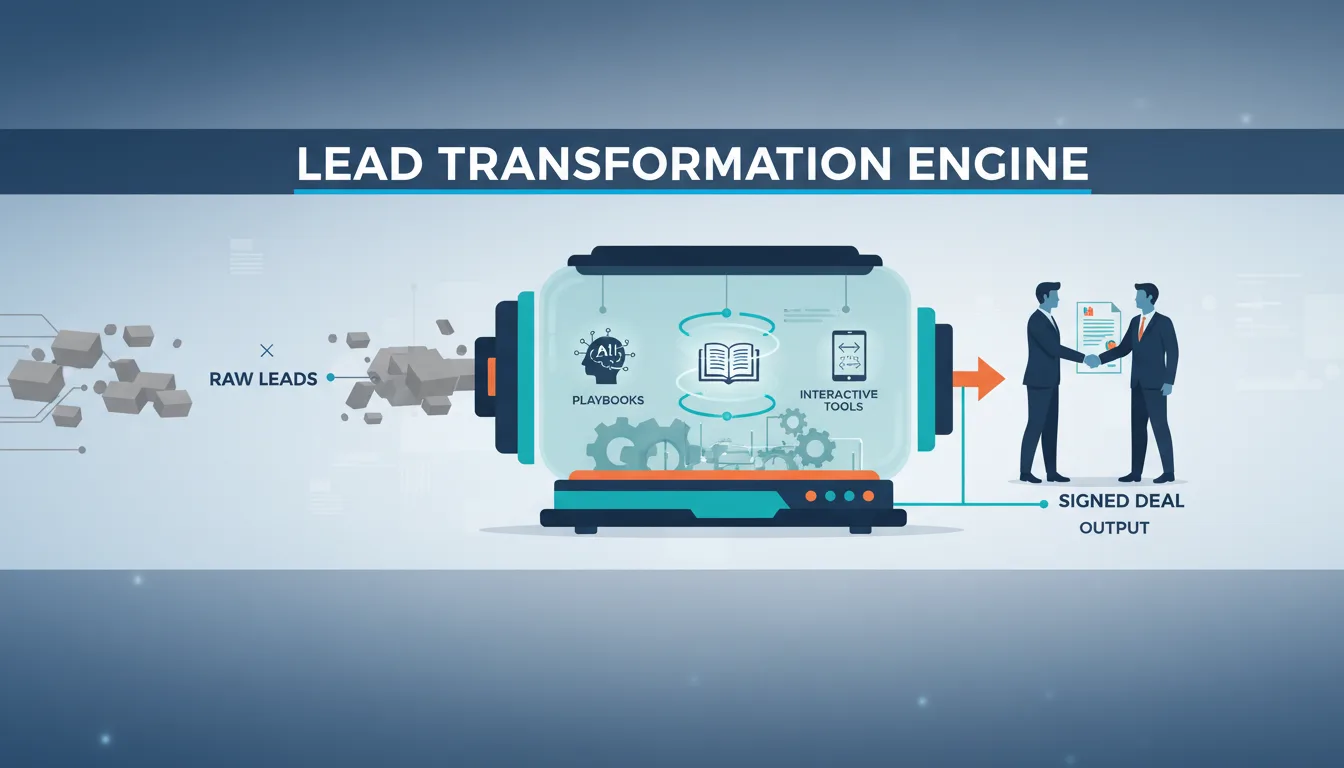
Raw leads often sit stagnant because frontline agents lack the immediate context or confidence to engage them effectively. AI-powered sales enablement platforms like Sharpsell bridge this gap by converting static lead data into an actionable execution strategy. The transformation begins with instant context. When a lead enters the system, the AI matches the prospect’s profile against high-performing sales playbooks. This ensures that a field agent in the insurance or automotive sector isn't just making a cold call, but is instead initiating a conversation backed by data-driven insights and a tailored pitch.

The first critical transition point from lead to deal is the "ready-to-sell" state. AI tools eliminate the lag time between lead assignment and the first touchpoint. Through features like PitchWiz, agents receive guided prompts that help them structure their initial conversation. For a banking professional, this might mean having an instant comparison of interest rates or a tax-saving calculator ready before the prospect even asks. By providing these resources at the point of need, the AI ensures the agent appears as a subject matter expert, which significantly increases the lead-to-opportunity conversion rate.

During the active sales cycle, raw leads often drop off due to an agent's inability to handle complex objections in real-time. This is where AI-powered battlecards and Copilots become essential. If a prospect in the healthcare or NBFC sector raises a concern about regulatory compliance or competitor pricing, the agent can instantly access the specific talk track needed to pivot the conversation. This level of just-in-time enablement prevents the "I'll get back to you on that" response, which is a common deal-killer in fast-moving industries.

Interactive visualisation is another lever for transformation. Traditional brochures are static and fail to capture consumer attention. AI enablement platforms allow agents to use Interactive Product Illustrators. These tools let the customer visualise the long-term benefits of a financial product or the custom features of a vehicle in real-time. By turning a passive presentation into an active discovery session, the agent moves the lead from intellectual interest to emotional investment, which is the precursor to a closed deal.

What is the optimal tech stack sequence for a Chief Distribution Officer aiming for 10x growth?
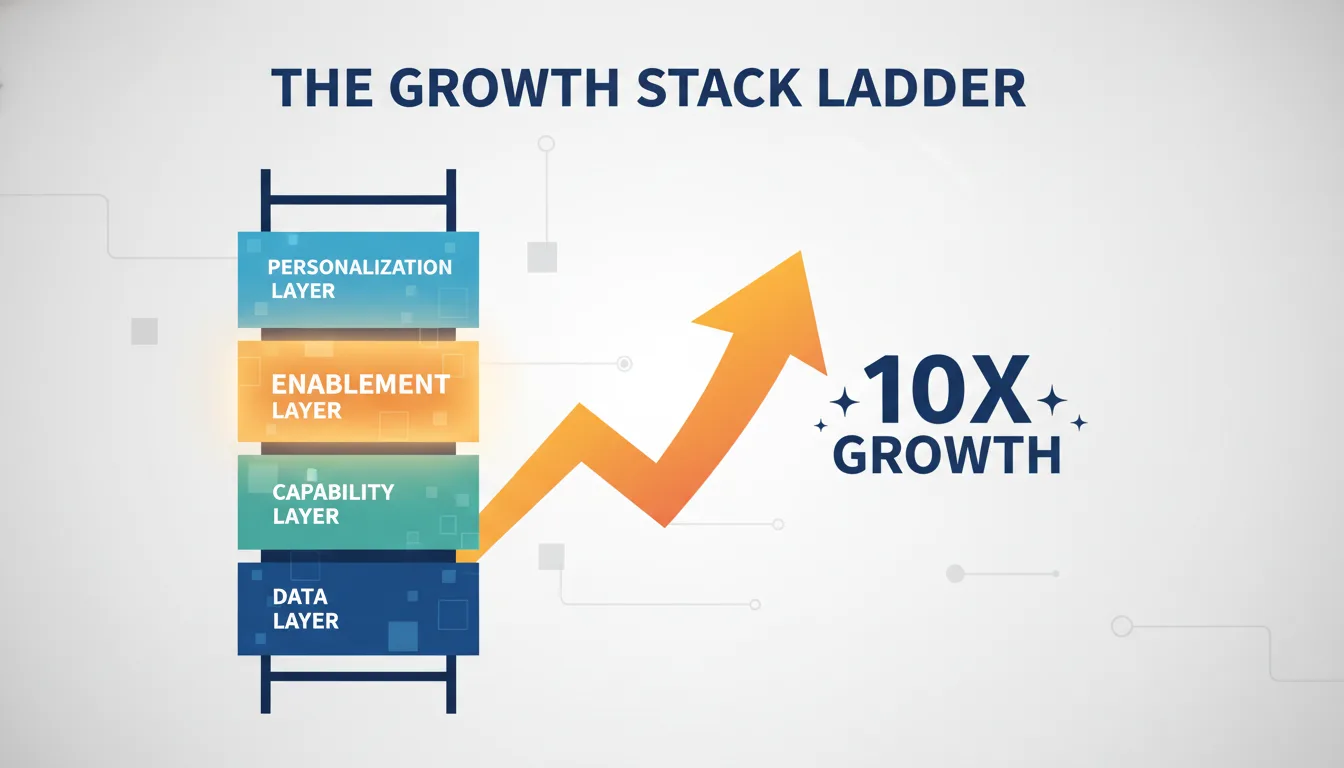
To achieve 10x growth in high-stakes industries like Insurance, Banking, and NBFCs, a Chief Distribution Officer must move away from the traditional model of "more feet on the street" and transition to a model of "higher yield per agent." The optimal tech stack sequence focuses on bridging the gap between lead generation and final conversion by automating the middle-of-the-funnel execution.

The first phase is the Lead Management and Data Layer. Most distribution teams already have a CRM, but in 2026, a static database is a liability. Your stack must begin with an intelligent Lead Management System (LMS) that does not just store data but prioritises it based on propensity to buy. This layer ensures your frontline agents are spending their limited hours on the highest-value opportunities rather than chasing cold leads.

The second and most critical phase is the Sales Execution and Enablement Layer. This is where Sharpsell’s AI-powered sales playbooks become the engine of growth. 10x growth requires your bottom 60% of performers to sell like your top 10%. You achieve this by deploying "Just-in-Time" enablement. Instead of expecting agents to remember a three-day training session from six months ago, the tech stack must provide dynamic battlecards and objection-handling scripts at the exact moment a lead is assigned. This layer should include:

  • PitchWiz & Interactive Illustrators: Moving away from static brochures to interactive tools that allow agents to co-create solutions with the customer in real-time.
  • Contextual Playbooks: Automated sequences that guide an agent on what to say, what to send, and what to do next based on the specific product line-whether it’s a ULIP, a home loan, or a motor insurance policy.

The third phase is the Continuous Capability Layer. Scaling a distributed workforce across geographies makes physical coaching impossible. You must integrate AI Role-plays and Learning Journeys into the daily workflow. Agents should be able to practice their pitch against an AI persona and receive immediate feedback on their tone, product knowledge, and compliance. This ensures that every agent representing your brand is "market-ready" without requiring a manager to sit in on every call.

The final phase is the Personalisation and Content Layer. In a world of digital noise, the end consumer ignores generic corporate communications. Your stack must enable frontline agents to generate personalised, brand-compliant content-videos, infographics, or calculators-that carry the agent’s own contact details. This builds the "human-to-human" trust that is essential for high-value financial products.

Revenue leaders often treat the tech stack as a sequential checklist. They invest in a CRM to track data, then a Lead Management System to route prospects, only to find that conversion rates remain stagnant. The reality in 2026 is that a database of names or a pipeline of leads is useless if your frontline agents cannot execute the pitch effectively during the critical moments of a customer interaction.

In high-stakes sectors like Banking, Insurance, and NBFCs, the primary gap is rarely a lack of leads. It is the lack of consistent, high-impact sales behaviour across distributed geographies. While a CRM provides management with visibility, it does little to help an agent handle a complex objection or present a personalised product illustration in real-time. If your priority is immediate revenue growth, your stack must solve for the "how" of selling, not just the "who."

Choosing which tool to buy first depends on where your revenue is currently leaking. If leads are disappearing, prioritise an LMS. If you have zero visibility into your sales cycle, start with a CRM. However, if your team is struggling to articulate value, handle objections, or replicate the behaviours of your top performers, a Sales Playbook and Enablement platform like Sharpsell.ai is your highest-leverage investment. Data collection is a management requirement, but sales execution is what drives the bottom line.

Stop letting execution gaps dictate your quarterly performance. Audit your frontline's ability to deliver a winning pitch today. Book a demo with Sharpsell.ai to see how our AI-powered Sales Playbook platform can transform your sales strategy into consistent, measurable revenue growth across your entire distribution network.

  • The “New Normal” for Pharma Sales post the lockdown
  • Why organizations look for Sales Enablement
  • How Sales Enablement is different from traditional LMS or CRM
  • The industry best practices for Sales Enablement
  • Implementation challenges and how to overcome them
  • Ensuring higher adoption

Chirag Parmar

Chirag Parmar is the Head of Marketing at Sharpsell.ai and a B2B marketing leader focused on scaling SaaS businesses through demand generation, brand strategy, and revenue-driven marketing. He builds scalable systems that deliver measurable business impact.

Sales enablement vs CRM vs Lead Management System: which tool should revenue leaders buy first?

Sales enablement vs CRM vs Lead Management System: which tool should revenue leaders buy first?

A Chief Distribution Officer at a major private bank recently noted that while their CRM was full of leads, the frontline conversion rate remained stuck at 4%. The agents had the names and phone numbers
Chirag Parmar
February 26, 2026

Sales enablement vs CRM vs Lead Management System: which tool should revenue leaders buy first?

A Chief Distribution Officer at a major private bank recently noted that while their CRM was full of leads, the frontline conversion rate remained stuck at 4%. The agents had the names and phone numbers, but they lacked the specific product talk tracks and interactive calculators needed to close a deal during a high-pressure client meeting. This gap between lead acquisition and the final signature is where most revenue growth stalls in 2026.

Revenue leaders in high-stakes industries like Insurance, NBFCs, and Automotive often find themselves caught in a software tug-of-war. The CRM is typically mandated for data hygiene, the Lead Management System (LMS) is bought to stop lead leakage, and Sales Enablement is proposed to improve how agents actually interact with customers. Investing in these tools in the wrong order creates a "digital filing cabinet" scenario-lots of organised data, but zero improvement in field performance or agent confidence.

Choosing which system to prioritise depends on your specific execution bottleneck. If your team is losing leads before they are even contacted, your problem is architectural. However, if your team is getting the meetings but failing to articulate value or handle common objections, your problem is execution. Understanding where the friction lives determines whether you need a better database or a more effective playbook.

Why do traditional CRMs fail to improve field sales conversion rates in 2026?

Traditional CRMs were designed as systems of record, not systems of execution. Their primary purpose is to help management track pipelines and forecast revenue, rather than helping a field agent actually close a deal. In 2026, the gap between data entry and sales reality has widened. While a CRM can tell you that a lead exists, it offers zero guidance on how to navigate the specific nuances of a high-stakes conversation in industries like insurance, banking, or automotive sales. Field agents often view the CRM as a reporting burden-an administrative tax they pay-rather than a tool that adds value to their pitch.

The failure of traditional CRMs in improving conversion rates stems from their static nature. They treat sales as a linear progression of stages-Lead, Qualified, Proposal, Closed-but real-world field sales are dynamic and messy. A salesperson sitting across from a prospect in a healthcare or consumer durables setting needs real-time support, not a database to log notes after the meeting is over. When the customer asks a difficult question about a policy rider or a vehicle’s financing terms, the CRM remains silent. It does not provide the "just-in-time" content or the specific talk tracks needed to overcome that objection in the moment.

Furthermore, traditional CRMs lack the "Middle-of-the-Funnel" intelligence. They capture the 'Who' and the 'When' but ignore the 'How.' Managers can see that a representative had five meetings, but they have no visibility into the quality of those interactions. This lack of visibility makes it impossible to replicate the behaviours of top performers across a distributed team. Without a way to standardise the actual sales presentation and the supporting collateral, conversion rates remain tied to the individual talent of the agent rather than a scalable institutional process.

To bridge this gap and actually drive conversion, sales leaders must shift focus toward enablement-led execution. Here are actionable steps to move beyond the limitations of a traditional CRM:

  • Integrate Interactive Playbooks: 

Move away from static PDF brochures. Equip field teams with interactive product illustrators that allow them to co-create solutions with the customer on-site. This increases engagement and transparency.

  • Deploy AI-Driven Battlecards: 

Ensure that agents have instant access to objection-handling scripts tailored to the specific competitor or product being discussed. This reduces "blank slate" syndrome during critical moments.

  • Automate Content Personalisation: 

Instead of generic follow-up emails, use systems that automatically generate personalised summaries or calculators based on the specific data points discussed during the field visit.

  • Implement Real-Time Coaching: 

Use AI role-play tools that allow agents to practice their pitches before they hit the field, ensuring they are prepared for the 2026 buyer who is more informed and sceptical than ever.

  • Focus on 'Nudges' over 'Reports': 

Replace manual data entry with systems that push relevant insights to the agent. For example, a notification saying "Last time you met this client, they were concerned about X; here is a 30-second video explaining our new solution for X."

The modern field agent in 2026 is no longer just a relationship manager; they are a consultant. If your technology stack only tracks their movements without empowering their speech, your conversion rates will continue to stagnate. The CRM should be the foundation, but the sales execution system must be the interface that actually touches the customer.

Does a Lead Management System provide the 'how-to-sell' or just the 'who-to-call'?

Traditional Lead Management Systems (LMS) were originally designed as administrative databases. Their primary function was to solve the "who-to-call" problem by organising names, contact details, and lead sources into a searchable list. For a frontline sales agent in 2026, simply knowing a lead is "hot" or "ready to buy" is only a small fraction of the requirements for a successful close. If a system stops at providing a contact record, it leaves the most difficult part of the sales process-the actual conversation-entirely to chance. This creates a performance gap where only the top 10% of agents succeed through natural intuition, while the rest of the distributed team struggles to maintain consistency.

The "how-to-sell" is the strategic bridge between a raw lead and a signed contract. In high-stakes industries like Insurance, Banking, and Healthcare, products are increasingly complex, and customer expectations for personalisation are at an all-time high. A system that only provides a phone number forces an agent to manually hunt for brochures, recall technical details from memory, or guess which objection-handling script to use. An integrated sales execution system provides the "how" by embedding dynamic playbooks directly into the lead management workflow. This ensures that the moment an agent opens a lead, they are presented with a specific value proposition tailored to that customer’s profile, along with the exact digital collateral needed to move the deal forward.

Modern sales execution transforms the LMS from a passive ledger into an active coach. Instead of just displaying a list of follow-up tasks, the platform guides the agent through the specific mechanics of a high-impact interaction. For a sales professional in the automotive or consumer durables sector, this means having an interactive product illustrator or a digital comparison tool ready to deploy during a live conversation. This level of support removes the cognitive load of "what do I do next?" and allows the agent to focus entirely on building rapport and solving the customer's problem.

To move beyond a basic "who-to-call" model, sales leaders should implement these actionable strategies:

  • Contextual Content Delivery: 

Attach specific sales assets, such as calculators, videos, or case studies, to individual lead stages so agents do not have to search external folders during a call.

  • Integrated Battlecards: 

Provide real-time objection-handling guides within the lead interface that address common pushbacks like pricing concerns or competitor comparisons.

  • Persona-Based Pitching: 

Automate the suggestion of specific talk tracks based on lead metadata, ensuring the agent uses a different approach for a first-time homebuyer than they would for a seasoned investor.

  • Digital Role-Play Loops: 

Use the system to identify where agents are stalling in the sales cycle and push short, bite-sized "how-to" coaching modules to address those specific capability gaps.

Measuring the success of the "how-to-sell" component requires looking at lead-to-opportunity conversion rates and the "time-to-productivity" for new hires. When a system provides the "how," new agents do not require months of shadowing or intensive classroom training to become effective. They follow the embedded prompts, use the provided interactive tools, and deliver a high-quality brand message from day one. This standardisation is critical for enterprise teams operating across different geographies, where maintaining execution quality is often the biggest bottleneck to growth.

How does Sales Enablement solve the execution gap that CRMs and LMS platforms ignore?

CRMs are systems of record, designed to track activities, manage pipelines, and forecast revenue. They are excellent at telling leadership what happened in the past, but offer almost no guidance on what an agent should do next to influence the future. An agent can update a lead status in a CRM for months without ever having a meaningful, value-driven conversation. This creates a "data-rich, insight-poor" environment where managers see a full pipeline but low conversion rates.

Learning Management Systems (LMS) suffer from a different problem: timing. An LMS is a system of instruction. It hosts modules on product features or compliance that agents consume in a vacuum, often weeks before they actually meet a customer. By the time a frontline insurance agent or bank relationship manager is sitting across from a high-net-worth individual, the knowledge decay has already set in. They remember the product name, but they forget the specific value proposition that resonates with that specific customer’s pain points.

The execution gap exists in the "last mile"-the actual interaction between the salesperson and the prospect. This is where Sales Enablement platforms move beyond the static nature of CRM and LMS. Enablement provides a system of execution. It takes the "who" from the CRM and the "what" from the LMS and translates them into the "how" in real-time. It transforms a salesperson from a data-entry clerk into a high-performing consultant by providing the exact tool, script, or visual aid needed at the precise moment of the interaction.

In high-stakes industries like Insurance and NBFCs, the complexity of products often leads to "analysis paralysis" for the agent. While an LMS might test an agent on their knowledge of a new ULIP or credit product, a modern enablement platform provides an Interactive Product Illustrator. This allows the agent to co-create a solution with the customer on their tablet, showing real-time benefits rather than just reciting a brochure. This moves the needle from theoretical knowledge to practical application, closing the gap that traditional training ignores.

Bridging the execution gap requires a shift from "pushed training" to "pulled support." When an agent encounters a difficult objection regarding interest rates or premium loading, they don't have time to log into an LMS and find the relevant module. They need an AI-powered battlecard or a "Just-in-time" content piece that they can pull up instantly. This is where sales enablement creates consistency across distributed geographies. It ensures that your best salesperson in Mumbai and your newest recruit in a tier-2 city are both delivering the same high-impact pitch.

Why should Insurance and BFSI leaders prioritise seller readiness over data entry?

The fundamental tension in modern BFSI sales leadership is the trade-off between administrative compliance and frontline competence. For decades, the industry has prioritised CRM hygiene, operating under the assumption that more data leads to better management. In 2026, this logic is inverted. While data provides a rearview mirror, seller readiness is the engine of forward momentum. For a Chief Distribution Officer or an SVP of Sales in Insurance or Banking, an agent who meticulously fills out lead notes but stumbles during a high-stakes ULIP pitch is a liability, not an asset.

The cost of data entry is hidden in the hours of lost productivity among distributed field teams. When agents are forced to spend 30% of their day navigating complex drop-down menus, they lose the mental bandwidth required to master new product features or refine their objection-handling skills. In the BFSI sector, where products are often perceived as commodities, the seller's ability to act as a trusted advisor is the only true differentiator. Readiness ensures that when an agent finally stands in front of a prospect, they possess the situational fluency to pivot from a standard product pitch to a tailored financial solution.

Prioritising readiness directly addresses the high turnover rates synonymous with the insurance and NBFC sectors. New recruits often feel overwhelmed by product complexity and the pressure of targets. If the organisational focus is solely on "logging activities," these agents feel like cogs in a machine. However, when the focus shifts to readiness, facilitated by AI-led role-plays and just-in-time content, the agent feels empowered. This confidence translates to higher conversion velocities and a significant reduction in the time-to-first-deal.

To shift the needle from administrative overhead to sales excellence, leaders should implement these strategic changes:

  • Automate the Paperwork, Humanise the Prep:

Deploy systems that automatically capture lead interactions so agents can spend their pre-call time using interactive product illustrators or reviewing battlecards.

  • Implement Situational Role-Plays:

Move away from annual training seminars. Use AI-powered platforms to let agents practice specific scenarios, such as handling a "premium is too high" objection, in a low-stakes environment before they meet the client.

  • Focus on High-Impact Behaviours:

Instead of tracking "calls made," track "readiness scores." Identify which agents have mastered the latest regulatory changes or product riders and correlate this with their sales performance.

  • Enable Just-in-Time Content Delivery:

Ensure that the right marketing collateral and compliance-approved scripts are available at the point of sale. An agent should never have to search for a brochure while a client is waiting.

  • Bridge the Capability Gap:

Use analytics to find out why your top 10% of performers are succeeding. Replicate their behaviours through automated playbooks that guide the bottom 60% of the sales force through the same winning patterns.

The shift toward readiness is a shift toward customer-centricity. A prepared seller respects the customer's time by providing accurate, clear, and relevant information. In a regulatory environment that increasingly scrutinises "miss-selling," readiness is also a powerful compliance tool. It ensures that every agent, regardless of their geography or experience level, delivers a consistent and accurate brand narrative.

Can your sales team survive on a Lead Management System without real-time content enablement?

A Lead Management System (LMS) is a glorified filing cabinet if it lacks a real-time content engine. While your LMS tells a salesperson who to call and when to call them, it remains silent on what to actually say. Relying solely on lead tracking creates a massive execution gap where agents spend 30% of their day searching for the right brochure, the latest interest rate sheet, or the correct product comparison PDF. In high-stakes sectors like Insurance or Banking, a three-minute delay in sending a personalised quote or an objection-handling document can be the difference between a closed deal and a ghosted lead.

Survival in the current market requires more than just knowing a lead exists; it requires the ability to influence that lead at the exact moment of high intent. Without integrated content enablement, your frontline agents often resort to using outdated materials saved on their local devices or, worse, winging the pitch. This inconsistency dilutes your brand and introduces compliance risks. An LMS identifies the opportunity, but content enablement provides the ammunition to win it.

When an agent is on a call with a prospect who mentions a competitor's lower premium, the LMS merely records "Objection Raised." A real-time enablement system, however, pushes a battlecard directly to the agent’s screen, outlining exactly how to pivot the conversation. This "Just-in-Time" delivery shifts the sales role from administrative follow-ups to strategic consulting. Without this, your team is simply moving cards across a digital board without actually moving the needle on conversion rates.

To bridge the gap between lead tracking and deal closing, consider these immediate actions:

  • Map Content to Lead Stages: 

Audit your current content repository and tag every asset (videos, calculators, PDFs) to a specific stage in your LMS. A lead at the "Discovery" stage should trigger different content than one at "Negotiation."

  • Deploy Interactive Illustrators: 

In complex industries like NBFCs or Automotive, static brochures fail to engage. Use interactive product illustrators that allow agents to input lead data and generate personalised visualisations in real-time during the conversation.

  • Automate the Feedback Loop: 

Use your enablement platform to track which content assets are actually closing deals. If a specific "Tax Savings Calculator" has a 70% correlation with successful conversions, prioritise its delivery via the LMS for all similar lead profiles.

  • Implement AI-Driven Nudges: 

Set up triggers within your sales workflow that suggest specific pitch scripts or objection handlers based on the lead’s industry or previous interactions. This removes the cognitive load from the agent and ensures a high-quality interaction every time.

Is your CRM a revenue engine or just an expensive digital filing cabinet in 2026?

Most enterprise CRMs in 2026 continue to function as data graveyards. They are repositories for historical events-calls made, emails sent, and deals lost-rather than engines that drive future outcomes. If your frontline sales agents view the CRM as a tool for management surveillance rather than a resource for closing deals, you are paying for an expensive digital filing cabinet. The fundamental flaw in traditional CRM usage is the focus on reporting over enablement. While managers get charts, the sales team gets a heavy administrative burden that pulls them away from actual selling.

A true revenue engine flips this dynamic. It treats data as raw fuel for execution. In sectors like insurance, banking, and automotive, the gap between a lead entering the system and a representative making a high-impact pitch is where most revenue leaks occur. A filing cabinet CRM tells you that a lead was contacted; a revenue engine tells the agent exactly what to say, which product illustrator to show, and how to counter a specific objection based on that lead's unique profile. It moves the CRM from a "System of Record" to a "System of Action."

To transform your CRM into a revenue engine, you must integrate it with AI-powered sales playbooks that guide the representative in real-time. In 2026, the value of a CRM is not in the data it holds, but in the speed at which that data is translated into a winning sales behaviour. When a field agent in a distributed geography opens a lead, the system should automatically surface the most relevant learning journey or pitch deck. This ensures consistency across thousands of agents, regardless of their individual experience levels.

The transition from a passive database to an active execution system requires a shift in how sales leaders view their tech stack. Stop asking "Did the rep update the CRM?" and start asking "Did the CRM help the rep win the deal?" If the platform does not provide just-in-time content or AI-driven role-plays to prepare the agent for a high-stakes meeting, it is a cost centre, not a profit driver.

Why does Sales Enablement offer a faster ROI for distributed teams than a legacy CRM?

Legacy CRM systems are designed for managers to track data, not for agents to close deals. For distributed teams in sectors like Insurance or NBFCs, a CRM acts as a digital ledger that records what has already happened. Sales Enablement, however, focuses on what is happening right now in front of the customer. This shift from record-keeping to active assistance is why enablement platforms deliver ROI in weeks, while CRMs often take quarters to show even marginal productivity gains.

Distributed teams often face the "last-mile" execution gap. An agent in a remote branch might have the lead data in their CRM, but they lack the specific, high-impact content needed to convert that lead. Legacy CRMs do not tell an agent how to handle a complex objection about premium hikes or how to simplify a multi-benefit healthcare plan. Sales Enablement platforms solve this by providing just-in-time playbooks. When the tool provides the right pitch at the right moment, the time-to-productivity for a new hire drops significantly.

The administrative burden of a CRM is a major deterrent for field teams. Expecting a frontline agent to manually log every interaction leads to poor data quality and resentment. Sales Enablement flips this dynamic by offering value first. If an agent uses an Interactive Product Illustrator to explain a complex financial product, they see immediate value because it helps them sell. The system captures the engagement data automatically, providing leadership with better insights than any manual CRM entry ever could.

In 2026, the speed of product launches in industries like Consumer Durables or Banking is unprecedented. A legacy CRM cannot train a thousand distributed agents on a new product overnight. Sales Enablement platforms use AI-driven Learning Journeys and Role-plays to ensure every agent is "certified" and ready to sell within hours of a product launch. This agility directly correlates to faster revenue generation from new offerings.

What are the hidden costs of deploying an LMS without an integrated Sales Playbook?

A standard Learning Management System (LMS) is designed for knowledge retention, while sales success depends entirely on knowledge application. When an enterprise in the banking, insurance, or automotive sectors relies solely on an LMS without an integrated Sales Playbook, they face significant revenue leakage. The primary hidden cost is the "Execution Gap." While your frontline teams might achieve 100% completion rates on training modules, those certifications do not translate to field performance. The cost of a rep knowing the features of a new insurance product but failing to handle a specific tax-saving objection in a live meeting is a direct hit to your bottom line.

The second hidden cost is "Search Friction." Research consistently shows that sales reps spend upwards of 30% of their day searching for or creating sales collateral. In a standalone LMS environment, content is archived in folders and sub-folders, often disconnected from the actual sales stage. This forces reps to either use outdated PDF brochures saved on their phones or recreate materials from scratch. In highly regulated industries like NBFCs or Healthcare, this "rogue content" creates massive compliance risks and brand inconsistency, which can lead to legal penalties or lost trust with high-value clients.

Managerial productivity also takes a hit. Without a playbook integrated into the daily workflow, Sales Managers are forced into "firefighting mode." Instead of coaching on high-level strategy or closing complex deals, they spend their hours answering repetitive questions about product specs or locating the latest pricing calculators. This drain on leadership hours is a hidden payroll cost that compounds across distributed geographies. By 2026, the cost of this inefficiency will be the difference between hitting growth targets and losing market share to agile, AI-enabled competitors.

Furthermore, there is the "Content Waste" factor. Marketing and product teams spend hundreds of hours developing high-quality assets that often go unused because they are buried deep within an LMS infrastructure. When content isn't surfaced at the "moment of truth"-during the customer interaction-the ROI of that content creation drops to zero. 

How do AI-powered Sales Enablement tools like Sharpsell transform raw leads into closed deals?

Raw leads often sit stagnant because frontline agents lack the immediate context or confidence to engage them effectively. AI-powered sales enablement platforms like Sharpsell bridge this gap by converting static lead data into an actionable execution strategy. The transformation begins with instant context. When a lead enters the system, the AI matches the prospect’s profile against high-performing sales playbooks. This ensures that a field agent in the insurance or automotive sector isn't just making a cold call, but is instead initiating a conversation backed by data-driven insights and a tailored pitch.

The first critical transition point from lead to deal is the "ready-to-sell" state. AI tools eliminate the lag time between lead assignment and the first touchpoint. Through features like PitchWiz, agents receive guided prompts that help them structure their initial conversation. For a banking professional, this might mean having an instant comparison of interest rates or a tax-saving calculator ready before the prospect even asks. By providing these resources at the point of need, the AI ensures the agent appears as a subject matter expert, which significantly increases the lead-to-opportunity conversion rate.

During the active sales cycle, raw leads often drop off due to an agent's inability to handle complex objections in real-time. This is where AI-powered battlecards and Copilots become essential. If a prospect in the healthcare or NBFC sector raises a concern about regulatory compliance or competitor pricing, the agent can instantly access the specific talk track needed to pivot the conversation. This level of just-in-time enablement prevents the "I'll get back to you on that" response, which is a common deal-killer in fast-moving industries.

Interactive visualisation is another lever for transformation. Traditional brochures are static and fail to capture consumer attention. AI enablement platforms allow agents to use Interactive Product Illustrators. These tools let the customer visualise the long-term benefits of a financial product or the custom features of a vehicle in real-time. By turning a passive presentation into an active discovery session, the agent moves the lead from intellectual interest to emotional investment, which is the precursor to a closed deal.

What is the optimal tech stack sequence for a Chief Distribution Officer aiming for 10x growth?

To achieve 10x growth in high-stakes industries like Insurance, Banking, and NBFCs, a Chief Distribution Officer must move away from the traditional model of "more feet on the street" and transition to a model of "higher yield per agent." The optimal tech stack sequence focuses on bridging the gap between lead generation and final conversion by automating the middle-of-the-funnel execution.

The first phase is the Lead Management and Data Layer. Most distribution teams already have a CRM, but in 2026, a static database is a liability. Your stack must begin with an intelligent Lead Management System (LMS) that does not just store data but prioritises it based on propensity to buy. This layer ensures your frontline agents are spending their limited hours on the highest-value opportunities rather than chasing cold leads.

The second and most critical phase is the Sales Execution and Enablement Layer. This is where Sharpsell’s AI-powered sales playbooks become the engine of growth. 10x growth requires your bottom 60% of performers to sell like your top 10%. You achieve this by deploying "Just-in-Time" enablement. Instead of expecting agents to remember a three-day training session from six months ago, the tech stack must provide dynamic battlecards and objection-handling scripts at the exact moment a lead is assigned. This layer should include:

  • PitchWiz & Interactive Illustrators: Moving away from static brochures to interactive tools that allow agents to co-create solutions with the customer in real-time.
  • Contextual Playbooks: Automated sequences that guide an agent on what to say, what to send, and what to do next based on the specific product line-whether it’s a ULIP, a home loan, or a motor insurance policy.

The third phase is the Continuous Capability Layer. Scaling a distributed workforce across geographies makes physical coaching impossible. You must integrate AI Role-plays and Learning Journeys into the daily workflow. Agents should be able to practice their pitch against an AI persona and receive immediate feedback on their tone, product knowledge, and compliance. This ensures that every agent representing your brand is "market-ready" without requiring a manager to sit in on every call.

The final phase is the Personalisation and Content Layer. In a world of digital noise, the end consumer ignores generic corporate communications. Your stack must enable frontline agents to generate personalised, brand-compliant content-videos, infographics, or calculators-that carry the agent’s own contact details. This builds the "human-to-human" trust that is essential for high-value financial products.

Revenue leaders often treat the tech stack as a sequential checklist. They invest in a CRM to track data, then a Lead Management System to route prospects, only to find that conversion rates remain stagnant. The reality in 2026 is that a database of names or a pipeline of leads is useless if your frontline agents cannot execute the pitch effectively during the critical moments of a customer interaction.

In high-stakes sectors like Banking, Insurance, and NBFCs, the primary gap is rarely a lack of leads. It is the lack of consistent, high-impact sales behaviour across distributed geographies. While a CRM provides management with visibility, it does little to help an agent handle a complex objection or present a personalised product illustration in real-time. If your priority is immediate revenue growth, your stack must solve for the "how" of selling, not just the "who."

Choosing which tool to buy first depends on where your revenue is currently leaking. If leads are disappearing, prioritise an LMS. If you have zero visibility into your sales cycle, start with a CRM. However, if your team is struggling to articulate value, handle objections, or replicate the behaviours of your top performers, a Sales Playbook and Enablement platform like Sharpsell.ai is your highest-leverage investment. Data collection is a management requirement, but sales execution is what drives the bottom line.

Stop letting execution gaps dictate your quarterly performance. Audit your frontline's ability to deliver a winning pitch today. Book a demo with Sharpsell.ai to see how our AI-powered Sales Playbook platform can transform your sales strategy into consistent, measurable revenue growth across your entire distribution network.

What’s a Rich Text element?

The rich text element allows you to create and format headings, paragraphs, blockquotes, images, and video all in one place instead of having to add and format them individually. Just double-click and easily create content.

Static and dynamic content editing

A rich text element can be used with static or dynamic content. For static content, just drop it into any page and begin editing. For dynamic content, add a rich text field to any collection and then connect a rich text element to that field in the settings panel. Voila!

How to customize formatting for each rich text

Headings, paragraphs, blockquotes, figures, images, and figure captions can all be styled after a class is added to the rich text element using the "When inside of" nested selector system.

zdxfhgfg

  1. sdnslk,xdv
  2. SDlknjsdv
  3. SDvlknj
  • sdgdf v

Sales enablement vs CRM vs Lead Management System: which tool should revenue leaders buy first?

March 25, 2026
9 min.
Chirag Parmar
Chirag Parmar

Sales enablement vs CRM vs Lead Management System: which tool should revenue leaders buy first?

A Chief Distribution Officer at a major private bank recently noted that while their CRM was full of leads, the frontline conversion rate remained stuck at 4%. The agents had the names and phone numbers, but they lacked the specific product talk tracks and interactive calculators needed to close a deal during a high-pressure client meeting. This gap between lead acquisition and the final signature is where most revenue growth stalls in 2026.

Revenue leaders in high-stakes industries like Insurance, NBFCs, and Automotive often find themselves caught in a software tug-of-war. The CRM is typically mandated for data hygiene, the Lead Management System (LMS) is bought to stop lead leakage, and Sales Enablement is proposed to improve how agents actually interact with customers. Investing in these tools in the wrong order creates a "digital filing cabinet" scenario-lots of organised data, but zero improvement in field performance or agent confidence.

Choosing which system to prioritise depends on your specific execution bottleneck. If your team is losing leads before they are even contacted, your problem is architectural. However, if your team is getting the meetings but failing to articulate value or handle common objections, your problem is execution. Understanding where the friction lives determines whether you need a better database or a more effective playbook.

Why do traditional CRMs fail to improve field sales conversion rates in 2026?

Traditional CRMs were designed as systems of record, not systems of execution. Their primary purpose is to help management track pipelines and forecast revenue, rather than helping a field agent actually close a deal. In 2026, the gap between data entry and sales reality has widened. While a CRM can tell you that a lead exists, it offers zero guidance on how to navigate the specific nuances of a high-stakes conversation in industries like insurance, banking, or automotive sales. Field agents often view the CRM as a reporting burden-an administrative tax they pay-rather than a tool that adds value to their pitch.

The failure of traditional CRMs in improving conversion rates stems from their static nature. They treat sales as a linear progression of stages-Lead, Qualified, Proposal, Closed-but real-world field sales are dynamic and messy. A salesperson sitting across from a prospect in a healthcare or consumer durables setting needs real-time support, not a database to log notes after the meeting is over. When the customer asks a difficult question about a policy rider or a vehicle’s financing terms, the CRM remains silent. It does not provide the "just-in-time" content or the specific talk tracks needed to overcome that objection in the moment.

Furthermore, traditional CRMs lack the "Middle-of-the-Funnel" intelligence. They capture the 'Who' and the 'When' but ignore the 'How.' Managers can see that a representative had five meetings, but they have no visibility into the quality of those interactions. This lack of visibility makes it impossible to replicate the behaviours of top performers across a distributed team. Without a way to standardise the actual sales presentation and the supporting collateral, conversion rates remain tied to the individual talent of the agent rather than a scalable institutional process.

To bridge this gap and actually drive conversion, sales leaders must shift focus toward enablement-led execution. Here are actionable steps to move beyond the limitations of a traditional CRM:

  • Integrate Interactive Playbooks: 

Move away from static PDF brochures. Equip field teams with interactive product illustrators that allow them to co-create solutions with the customer on-site. This increases engagement and transparency.

  • Deploy AI-Driven Battlecards: 

Ensure that agents have instant access to objection-handling scripts tailored to the specific competitor or product being discussed. This reduces "blank slate" syndrome during critical moments.

  • Automate Content Personalisation: 

Instead of generic follow-up emails, use systems that automatically generate personalised summaries or calculators based on the specific data points discussed during the field visit.

  • Implement Real-Time Coaching: 

Use AI role-play tools that allow agents to practice their pitches before they hit the field, ensuring they are prepared for the 2026 buyer who is more informed and sceptical than ever.

  • Focus on 'Nudges' over 'Reports': 

Replace manual data entry with systems that push relevant insights to the agent. For example, a notification saying "Last time you met this client, they were concerned about X; here is a 30-second video explaining our new solution for X."

The modern field agent in 2026 is no longer just a relationship manager; they are a consultant. If your technology stack only tracks their movements without empowering their speech, your conversion rates will continue to stagnate. The CRM should be the foundation, but the sales execution system must be the interface that actually touches the customer.

Does a Lead Management System provide the 'how-to-sell' or just the 'who-to-call'?

Traditional Lead Management Systems (LMS) were originally designed as administrative databases. Their primary function was to solve the "who-to-call" problem by organising names, contact details, and lead sources into a searchable list. For a frontline sales agent in 2026, simply knowing a lead is "hot" or "ready to buy" is only a small fraction of the requirements for a successful close. If a system stops at providing a contact record, it leaves the most difficult part of the sales process-the actual conversation-entirely to chance. This creates a performance gap where only the top 10% of agents succeed through natural intuition, while the rest of the distributed team struggles to maintain consistency.

The "how-to-sell" is the strategic bridge between a raw lead and a signed contract. In high-stakes industries like Insurance, Banking, and Healthcare, products are increasingly complex, and customer expectations for personalisation are at an all-time high. A system that only provides a phone number forces an agent to manually hunt for brochures, recall technical details from memory, or guess which objection-handling script to use. An integrated sales execution system provides the "how" by embedding dynamic playbooks directly into the lead management workflow. This ensures that the moment an agent opens a lead, they are presented with a specific value proposition tailored to that customer’s profile, along with the exact digital collateral needed to move the deal forward.

Modern sales execution transforms the LMS from a passive ledger into an active coach. Instead of just displaying a list of follow-up tasks, the platform guides the agent through the specific mechanics of a high-impact interaction. For a sales professional in the automotive or consumer durables sector, this means having an interactive product illustrator or a digital comparison tool ready to deploy during a live conversation. This level of support removes the cognitive load of "what do I do next?" and allows the agent to focus entirely on building rapport and solving the customer's problem.

To move beyond a basic "who-to-call" model, sales leaders should implement these actionable strategies:

  • Contextual Content Delivery: 

Attach specific sales assets, such as calculators, videos, or case studies, to individual lead stages so agents do not have to search external folders during a call.

  • Integrated Battlecards: 

Provide real-time objection-handling guides within the lead interface that address common pushbacks like pricing concerns or competitor comparisons.

  • Persona-Based Pitching: 

Automate the suggestion of specific talk tracks based on lead metadata, ensuring the agent uses a different approach for a first-time homebuyer than they would for a seasoned investor.

  • Digital Role-Play Loops: 

Use the system to identify where agents are stalling in the sales cycle and push short, bite-sized "how-to" coaching modules to address those specific capability gaps.

Measuring the success of the "how-to-sell" component requires looking at lead-to-opportunity conversion rates and the "time-to-productivity" for new hires. When a system provides the "how," new agents do not require months of shadowing or intensive classroom training to become effective. They follow the embedded prompts, use the provided interactive tools, and deliver a high-quality brand message from day one. This standardisation is critical for enterprise teams operating across different geographies, where maintaining execution quality is often the biggest bottleneck to growth.

How does Sales Enablement solve the execution gap that CRMs and LMS platforms ignore?

CRMs are systems of record, designed to track activities, manage pipelines, and forecast revenue. They are excellent at telling leadership what happened in the past, but offer almost no guidance on what an agent should do next to influence the future. An agent can update a lead status in a CRM for months without ever having a meaningful, value-driven conversation. This creates a "data-rich, insight-poor" environment where managers see a full pipeline but low conversion rates.

Learning Management Systems (LMS) suffer from a different problem: timing. An LMS is a system of instruction. It hosts modules on product features or compliance that agents consume in a vacuum, often weeks before they actually meet a customer. By the time a frontline insurance agent or bank relationship manager is sitting across from a high-net-worth individual, the knowledge decay has already set in. They remember the product name, but they forget the specific value proposition that resonates with that specific customer’s pain points.

The execution gap exists in the "last mile"-the actual interaction between the salesperson and the prospect. This is where Sales Enablement platforms move beyond the static nature of CRM and LMS. Enablement provides a system of execution. It takes the "who" from the CRM and the "what" from the LMS and translates them into the "how" in real-time. It transforms a salesperson from a data-entry clerk into a high-performing consultant by providing the exact tool, script, or visual aid needed at the precise moment of the interaction.

In high-stakes industries like Insurance and NBFCs, the complexity of products often leads to "analysis paralysis" for the agent. While an LMS might test an agent on their knowledge of a new ULIP or credit product, a modern enablement platform provides an Interactive Product Illustrator. This allows the agent to co-create a solution with the customer on their tablet, showing real-time benefits rather than just reciting a brochure. This moves the needle from theoretical knowledge to practical application, closing the gap that traditional training ignores.

Bridging the execution gap requires a shift from "pushed training" to "pulled support." When an agent encounters a difficult objection regarding interest rates or premium loading, they don't have time to log into an LMS and find the relevant module. They need an AI-powered battlecard or a "Just-in-time" content piece that they can pull up instantly. This is where sales enablement creates consistency across distributed geographies. It ensures that your best salesperson in Mumbai and your newest recruit in a tier-2 city are both delivering the same high-impact pitch.

Why should Insurance and BFSI leaders prioritise seller readiness over data entry?

The fundamental tension in modern BFSI sales leadership is the trade-off between administrative compliance and frontline competence. For decades, the industry has prioritised CRM hygiene, operating under the assumption that more data leads to better management. In 2026, this logic is inverted. While data provides a rearview mirror, seller readiness is the engine of forward momentum. For a Chief Distribution Officer or an SVP of Sales in Insurance or Banking, an agent who meticulously fills out lead notes but stumbles during a high-stakes ULIP pitch is a liability, not an asset.

The cost of data entry is hidden in the hours of lost productivity among distributed field teams. When agents are forced to spend 30% of their day navigating complex drop-down menus, they lose the mental bandwidth required to master new product features or refine their objection-handling skills. In the BFSI sector, where products are often perceived as commodities, the seller's ability to act as a trusted advisor is the only true differentiator. Readiness ensures that when an agent finally stands in front of a prospect, they possess the situational fluency to pivot from a standard product pitch to a tailored financial solution.

Prioritising readiness directly addresses the high turnover rates synonymous with the insurance and NBFC sectors. New recruits often feel overwhelmed by product complexity and the pressure of targets. If the organisational focus is solely on "logging activities," these agents feel like cogs in a machine. However, when the focus shifts to readiness, facilitated by AI-led role-plays and just-in-time content, the agent feels empowered. This confidence translates to higher conversion velocities and a significant reduction in the time-to-first-deal.

To shift the needle from administrative overhead to sales excellence, leaders should implement these strategic changes:

  • Automate the Paperwork, Humanise the Prep:

Deploy systems that automatically capture lead interactions so agents can spend their pre-call time using interactive product illustrators or reviewing battlecards.

  • Implement Situational Role-Plays:

Move away from annual training seminars. Use AI-powered platforms to let agents practice specific scenarios, such as handling a "premium is too high" objection, in a low-stakes environment before they meet the client.

  • Focus on High-Impact Behaviours:

Instead of tracking "calls made," track "readiness scores." Identify which agents have mastered the latest regulatory changes or product riders and correlate this with their sales performance.

  • Enable Just-in-Time Content Delivery:

Ensure that the right marketing collateral and compliance-approved scripts are available at the point of sale. An agent should never have to search for a brochure while a client is waiting.

  • Bridge the Capability Gap:

Use analytics to find out why your top 10% of performers are succeeding. Replicate their behaviours through automated playbooks that guide the bottom 60% of the sales force through the same winning patterns.

The shift toward readiness is a shift toward customer-centricity. A prepared seller respects the customer's time by providing accurate, clear, and relevant information. In a regulatory environment that increasingly scrutinises "miss-selling," readiness is also a powerful compliance tool. It ensures that every agent, regardless of their geography or experience level, delivers a consistent and accurate brand narrative.

Can your sales team survive on a Lead Management System without real-time content enablement?

A Lead Management System (LMS) is a glorified filing cabinet if it lacks a real-time content engine. While your LMS tells a salesperson who to call and when to call them, it remains silent on what to actually say. Relying solely on lead tracking creates a massive execution gap where agents spend 30% of their day searching for the right brochure, the latest interest rate sheet, or the correct product comparison PDF. In high-stakes sectors like Insurance or Banking, a three-minute delay in sending a personalised quote or an objection-handling document can be the difference between a closed deal and a ghosted lead.

Survival in the current market requires more than just knowing a lead exists; it requires the ability to influence that lead at the exact moment of high intent. Without integrated content enablement, your frontline agents often resort to using outdated materials saved on their local devices or, worse, winging the pitch. This inconsistency dilutes your brand and introduces compliance risks. An LMS identifies the opportunity, but content enablement provides the ammunition to win it.

When an agent is on a call with a prospect who mentions a competitor's lower premium, the LMS merely records "Objection Raised." A real-time enablement system, however, pushes a battlecard directly to the agent’s screen, outlining exactly how to pivot the conversation. This "Just-in-Time" delivery shifts the sales role from administrative follow-ups to strategic consulting. Without this, your team is simply moving cards across a digital board without actually moving the needle on conversion rates.

To bridge the gap between lead tracking and deal closing, consider these immediate actions:

  • Map Content to Lead Stages: 

Audit your current content repository and tag every asset (videos, calculators, PDFs) to a specific stage in your LMS. A lead at the "Discovery" stage should trigger different content than one at "Negotiation."

  • Deploy Interactive Illustrators: 

In complex industries like NBFCs or Automotive, static brochures fail to engage. Use interactive product illustrators that allow agents to input lead data and generate personalised visualisations in real-time during the conversation.

  • Automate the Feedback Loop: 

Use your enablement platform to track which content assets are actually closing deals. If a specific "Tax Savings Calculator" has a 70% correlation with successful conversions, prioritise its delivery via the LMS for all similar lead profiles.

  • Implement AI-Driven Nudges: 

Set up triggers within your sales workflow that suggest specific pitch scripts or objection handlers based on the lead’s industry or previous interactions. This removes the cognitive load from the agent and ensures a high-quality interaction every time.

Is your CRM a revenue engine or just an expensive digital filing cabinet in 2026?

Most enterprise CRMs in 2026 continue to function as data graveyards. They are repositories for historical events-calls made, emails sent, and deals lost-rather than engines that drive future outcomes. If your frontline sales agents view the CRM as a tool for management surveillance rather than a resource for closing deals, you are paying for an expensive digital filing cabinet. The fundamental flaw in traditional CRM usage is the focus on reporting over enablement. While managers get charts, the sales team gets a heavy administrative burden that pulls them away from actual selling.

A true revenue engine flips this dynamic. It treats data as raw fuel for execution. In sectors like insurance, banking, and automotive, the gap between a lead entering the system and a representative making a high-impact pitch is where most revenue leaks occur. A filing cabinet CRM tells you that a lead was contacted; a revenue engine tells the agent exactly what to say, which product illustrator to show, and how to counter a specific objection based on that lead's unique profile. It moves the CRM from a "System of Record" to a "System of Action."

To transform your CRM into a revenue engine, you must integrate it with AI-powered sales playbooks that guide the representative in real-time. In 2026, the value of a CRM is not in the data it holds, but in the speed at which that data is translated into a winning sales behaviour. When a field agent in a distributed geography opens a lead, the system should automatically surface the most relevant learning journey or pitch deck. This ensures consistency across thousands of agents, regardless of their individual experience levels.

The transition from a passive database to an active execution system requires a shift in how sales leaders view their tech stack. Stop asking "Did the rep update the CRM?" and start asking "Did the CRM help the rep win the deal?" If the platform does not provide just-in-time content or AI-driven role-plays to prepare the agent for a high-stakes meeting, it is a cost centre, not a profit driver.

Why does Sales Enablement offer a faster ROI for distributed teams than a legacy CRM?

Legacy CRM systems are designed for managers to track data, not for agents to close deals. For distributed teams in sectors like Insurance or NBFCs, a CRM acts as a digital ledger that records what has already happened. Sales Enablement, however, focuses on what is happening right now in front of the customer. This shift from record-keeping to active assistance is why enablement platforms deliver ROI in weeks, while CRMs often take quarters to show even marginal productivity gains.

Distributed teams often face the "last-mile" execution gap. An agent in a remote branch might have the lead data in their CRM, but they lack the specific, high-impact content needed to convert that lead. Legacy CRMs do not tell an agent how to handle a complex objection about premium hikes or how to simplify a multi-benefit healthcare plan. Sales Enablement platforms solve this by providing just-in-time playbooks. When the tool provides the right pitch at the right moment, the time-to-productivity for a new hire drops significantly.

The administrative burden of a CRM is a major deterrent for field teams. Expecting a frontline agent to manually log every interaction leads to poor data quality and resentment. Sales Enablement flips this dynamic by offering value first. If an agent uses an Interactive Product Illustrator to explain a complex financial product, they see immediate value because it helps them sell. The system captures the engagement data automatically, providing leadership with better insights than any manual CRM entry ever could.

In 2026, the speed of product launches in industries like Consumer Durables or Banking is unprecedented. A legacy CRM cannot train a thousand distributed agents on a new product overnight. Sales Enablement platforms use AI-driven Learning Journeys and Role-plays to ensure every agent is "certified" and ready to sell within hours of a product launch. This agility directly correlates to faster revenue generation from new offerings.

What are the hidden costs of deploying an LMS without an integrated Sales Playbook?

A standard Learning Management System (LMS) is designed for knowledge retention, while sales success depends entirely on knowledge application. When an enterprise in the banking, insurance, or automotive sectors relies solely on an LMS without an integrated Sales Playbook, they face significant revenue leakage. The primary hidden cost is the "Execution Gap." While your frontline teams might achieve 100% completion rates on training modules, those certifications do not translate to field performance. The cost of a rep knowing the features of a new insurance product but failing to handle a specific tax-saving objection in a live meeting is a direct hit to your bottom line.

The second hidden cost is "Search Friction." Research consistently shows that sales reps spend upwards of 30% of their day searching for or creating sales collateral. In a standalone LMS environment, content is archived in folders and sub-folders, often disconnected from the actual sales stage. This forces reps to either use outdated PDF brochures saved on their phones or recreate materials from scratch. In highly regulated industries like NBFCs or Healthcare, this "rogue content" creates massive compliance risks and brand inconsistency, which can lead to legal penalties or lost trust with high-value clients.

Managerial productivity also takes a hit. Without a playbook integrated into the daily workflow, Sales Managers are forced into "firefighting mode." Instead of coaching on high-level strategy or closing complex deals, they spend their hours answering repetitive questions about product specs or locating the latest pricing calculators. This drain on leadership hours is a hidden payroll cost that compounds across distributed geographies. By 2026, the cost of this inefficiency will be the difference between hitting growth targets and losing market share to agile, AI-enabled competitors.

Furthermore, there is the "Content Waste" factor. Marketing and product teams spend hundreds of hours developing high-quality assets that often go unused because they are buried deep within an LMS infrastructure. When content isn't surfaced at the "moment of truth"-during the customer interaction-the ROI of that content creation drops to zero. 

How do AI-powered Sales Enablement tools like Sharpsell transform raw leads into closed deals?

Raw leads often sit stagnant because frontline agents lack the immediate context or confidence to engage them effectively. AI-powered sales enablement platforms like Sharpsell bridge this gap by converting static lead data into an actionable execution strategy. The transformation begins with instant context. When a lead enters the system, the AI matches the prospect’s profile against high-performing sales playbooks. This ensures that a field agent in the insurance or automotive sector isn't just making a cold call, but is instead initiating a conversation backed by data-driven insights and a tailored pitch.

The first critical transition point from lead to deal is the "ready-to-sell" state. AI tools eliminate the lag time between lead assignment and the first touchpoint. Through features like PitchWiz, agents receive guided prompts that help them structure their initial conversation. For a banking professional, this might mean having an instant comparison of interest rates or a tax-saving calculator ready before the prospect even asks. By providing these resources at the point of need, the AI ensures the agent appears as a subject matter expert, which significantly increases the lead-to-opportunity conversion rate.

During the active sales cycle, raw leads often drop off due to an agent's inability to handle complex objections in real-time. This is where AI-powered battlecards and Copilots become essential. If a prospect in the healthcare or NBFC sector raises a concern about regulatory compliance or competitor pricing, the agent can instantly access the specific talk track needed to pivot the conversation. This level of just-in-time enablement prevents the "I'll get back to you on that" response, which is a common deal-killer in fast-moving industries.

Interactive visualisation is another lever for transformation. Traditional brochures are static and fail to capture consumer attention. AI enablement platforms allow agents to use Interactive Product Illustrators. These tools let the customer visualise the long-term benefits of a financial product or the custom features of a vehicle in real-time. By turning a passive presentation into an active discovery session, the agent moves the lead from intellectual interest to emotional investment, which is the precursor to a closed deal.

What is the optimal tech stack sequence for a Chief Distribution Officer aiming for 10x growth?

To achieve 10x growth in high-stakes industries like Insurance, Banking, and NBFCs, a Chief Distribution Officer must move away from the traditional model of "more feet on the street" and transition to a model of "higher yield per agent." The optimal tech stack sequence focuses on bridging the gap between lead generation and final conversion by automating the middle-of-the-funnel execution.

The first phase is the Lead Management and Data Layer. Most distribution teams already have a CRM, but in 2026, a static database is a liability. Your stack must begin with an intelligent Lead Management System (LMS) that does not just store data but prioritises it based on propensity to buy. This layer ensures your frontline agents are spending their limited hours on the highest-value opportunities rather than chasing cold leads.

The second and most critical phase is the Sales Execution and Enablement Layer. This is where Sharpsell’s AI-powered sales playbooks become the engine of growth. 10x growth requires your bottom 60% of performers to sell like your top 10%. You achieve this by deploying "Just-in-Time" enablement. Instead of expecting agents to remember a three-day training session from six months ago, the tech stack must provide dynamic battlecards and objection-handling scripts at the exact moment a lead is assigned. This layer should include:

  • PitchWiz & Interactive Illustrators: Moving away from static brochures to interactive tools that allow agents to co-create solutions with the customer in real-time.
  • Contextual Playbooks: Automated sequences that guide an agent on what to say, what to send, and what to do next based on the specific product line-whether it’s a ULIP, a home loan, or a motor insurance policy.

The third phase is the Continuous Capability Layer. Scaling a distributed workforce across geographies makes physical coaching impossible. You must integrate AI Role-plays and Learning Journeys into the daily workflow. Agents should be able to practice their pitch against an AI persona and receive immediate feedback on their tone, product knowledge, and compliance. This ensures that every agent representing your brand is "market-ready" without requiring a manager to sit in on every call.

The final phase is the Personalisation and Content Layer. In a world of digital noise, the end consumer ignores generic corporate communications. Your stack must enable frontline agents to generate personalised, brand-compliant content-videos, infographics, or calculators-that carry the agent’s own contact details. This builds the "human-to-human" trust that is essential for high-value financial products.

Revenue leaders often treat the tech stack as a sequential checklist. They invest in a CRM to track data, then a Lead Management System to route prospects, only to find that conversion rates remain stagnant. The reality in 2026 is that a database of names or a pipeline of leads is useless if your frontline agents cannot execute the pitch effectively during the critical moments of a customer interaction.

In high-stakes sectors like Banking, Insurance, and NBFCs, the primary gap is rarely a lack of leads. It is the lack of consistent, high-impact sales behaviour across distributed geographies. While a CRM provides management with visibility, it does little to help an agent handle a complex objection or present a personalised product illustration in real-time. If your priority is immediate revenue growth, your stack must solve for the "how" of selling, not just the "who."

Choosing which tool to buy first depends on where your revenue is currently leaking. If leads are disappearing, prioritise an LMS. If you have zero visibility into your sales cycle, start with a CRM. However, if your team is struggling to articulate value, handle objections, or replicate the behaviours of your top performers, a Sales Playbook and Enablement platform like Sharpsell.ai is your highest-leverage investment. Data collection is a management requirement, but sales execution is what drives the bottom line.

Stop letting execution gaps dictate your quarterly performance. Audit your frontline's ability to deliver a winning pitch today. Book a demo with Sharpsell.ai to see how our AI-powered Sales Playbook platform can transform your sales strategy into consistent, measurable revenue growth across your entire distribution network.

Readers also liked

7 min.
Chirag Parmar
Chirag Parmar
9 Min
Chirag Parmar
Chirag Parmar
6 Min
Chirag Parmar
Chirag Parmar
5 Min
Chirag Parmar
Chirag Parmar

Are you ready to unleash the power of Sales Playbooks for your team?

Thank you! You have been added to our subscriber list!
Oops! Something went wrong while submitting the form.