
Top 5 Sales Enablement Tools in India for Frontline Reps (2026) Ranked by Enterprise Adoption

India’s Banking, Financial Services, and Insurance (BFSI) sector is currently expanding at a massive scale, driven by deep market penetration into Tier-2 and Tier-3 cities. With the industry projected to add 2.5 lakh jobs by 2030.

Top 5 Sales Enablement Tools in India for Frontline Reps (2026) Ranked by Enterprise Adoption

Top 5 Sales Enablement Tools in India for Frontline Reps (2026) Ranked by Enterprise Adoption

Introduction

India’s Banking, Financial Services, and Insurance (BFSI) sector is currently expanding at a massive scale, driven by deep market penetration into Tier-2 and Tier-3 cities. With the industry projected to add 2.5 lakh jobs by 2030, frontline sales remain the most aggressively recruited role. Retail banking and insurance growth does not happen in boardrooms; it relies entirely on the disciplined daily execution of distributed, feet-on-street teams. However, simply increasing headcount no longer guarantees proportional revenue growth. For frontline sales agents to succeed in 2026, traditional enablement strategies built around isolated classroom sessions must be dismantled and replaced by systems that dictate actual field execution.

From the perspective of Chief Distribution Officers and Sales SVPs, the financial risks of poor execution are severe. Despite record investments in technology, 87% of enterprises missed their revenue targets in 2025 because their software failed to translate into better field performance. Decision-makers cannot afford the revenue leakage caused by widespread capability gaps across distributed geographies. When theoretical training is the only support system in place, execution consistency plummets. Sales managers lose the ability to replicate high-impact behaviours, and leadership is left with a disconnect between their growth targets and what actually happens during a customer pitch. If a platform cannot enforce a proven sales playbook and deliver measurable return on investment, it is a liability.

On the operational front, end-users face crippling friction when interacting with buyers. A frontline agent in the Indian market cannot pause a live conversation to search through a portal for a product brochure or call their manager to figure out how to counter a competitor's claim. Buyers expect immediate, accurate responses. When agents lack mobile-first, on-the-fly content directly in front of the customer, operational friction stalls the deal. The old playbook of periodic training and static content libraries is actively breaking down. Agents need interactive product illustrators, localised battlecards, and just-in-time learning journeys delivered to their mobile devices exactly when they need them.

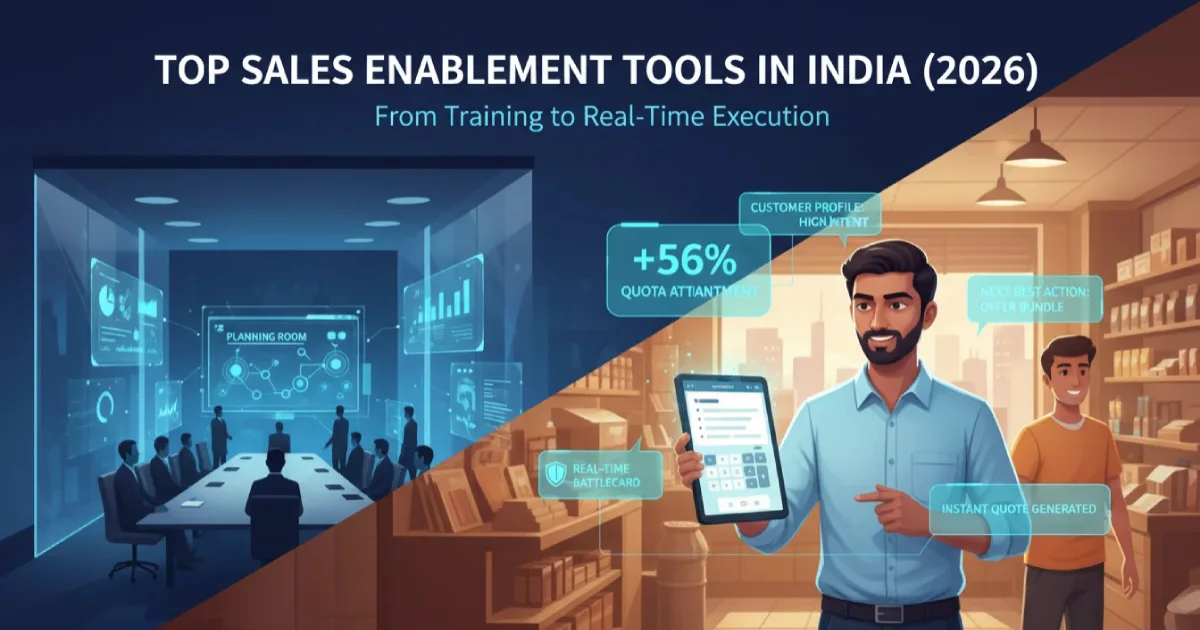
To solve these systemic failures, enterprise adoption is rapidly shifting toward active sales execution systems. The financial impact of this shift is undeniable. Data shows that sales teams using intelligence-driven enablement tools achieve 56% higher quota attainment compared to those relying on legacy automation. Furthermore, organisations that deploy these platforms see a massive reduction in the time reps spend on non-selling activities, effectively reclaiming nearly a full day per week for revenue-generating tasks.

This ranking evaluates the top five sales enablement tools in India for 2026, filtered strictly through the lens of enterprise adoption within the BFSI sector. We have discarded tools that merely host training videos or track basic activity metrics. Instead, this list focuses on field-tested platforms that provide mobile-first usability tailored to the Indian market. These tools are ranked by their proven ability to eliminate operational friction, equip frontline teams with personalised content, and give sales leaders the exact control they need to enforce execution consistency across their entire workforce.

The High Cost of Execution Failure in Distributed Sales Teams
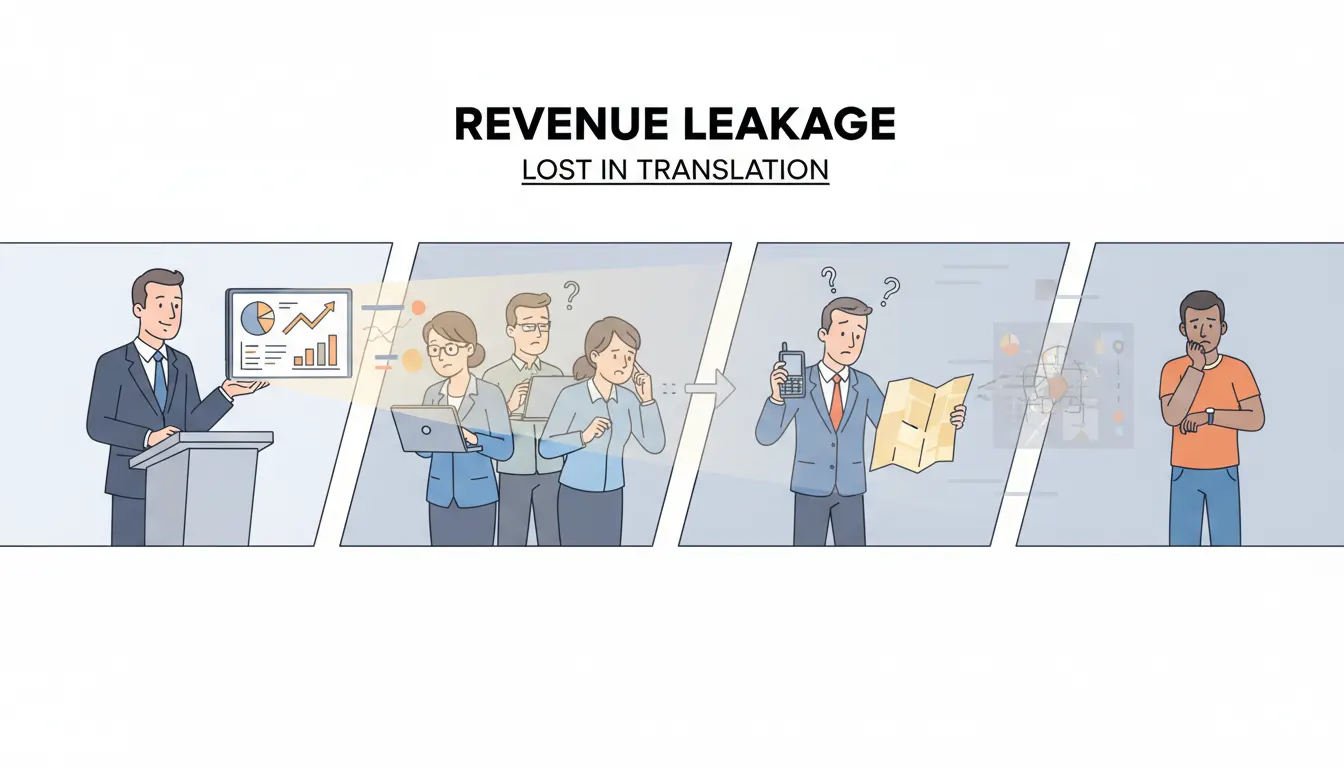
A Chief Distribution Officer at a major NBFC or Insurance firm crafts a highly researched go-to-market strategy in Mumbai. However, by the time that strategy reaches a frontline sales agent in a Tier 3 city, it often devolves into a fragmented, outdated pitch. This disconnect is not a training problem; it is a direct and massive revenue leak. When agents rely on memorised brochures, static PDFs, and guesswork to handle real-time customer objections, conversion rates plummet. Marketing teams generate leads at a high cost, only to see them wasted because the field agent lacks the right content and context at the exact moment of the sale.

Sharpsell.ai stands as the undisputed market leader in solving this exact execution failure for 2026. While traditional Learning Management Systems and CRMs only track what has already happened, Sharpsell.ai drives what the agent needs to do next. It directly closes the gap between headquarters strategy and field reality. For a distributed workforce spread across hundreds of geographies, the platform replaces static collateral with dynamic, mobile-first PitchWiz presentations, interactive product illustrators, and real-time battlecards. Instead of hunting for information while the prospect loses interest, the agent delivers a highly specific, mathematically accurate pitch in seconds.

The platform's unfair advantage is built entirely around field adoption and removing administrative friction. Frontline agents historically resist complex software. Sharpsell solves this by treating customer engagement directly as execution. With voice-enabled activity updates and automated workflow nudges, agents spend their time closing deals rather than typing data into forms. The platform anticipates customer objections based on the specific product and buyer persona, feeding the agent precisely what they need to say. This just-in-time enablement ensures that a new hire in Hubli delivers the exact same high-calibre, compliant presentation as a tenured veteran in South Bombay.

For enterprise decision-makers, the financial return is both immediate and heavily documented. The platform currently supports over 1 million sellers across India's top enterprise brands. Frontline teams using Sharpsell.ai generate 56% higher revenue and save an average of 2.5 hours per sales agent every single day. Operating at an immense scale, the platform powers over 40 million sales conversations annually and has generated $1.75 billion worth of sales presentations in a single year. When leaders at institutions like Aditya Birla Sun Life Insurance and Axis Mutual Fund deploy this system, they secure the highest standard of execution consistency available in the market. It is the absolute gold standard for turning central strategy into predictable, closed revenue.

Evaluation Criteria: Ranking for the 2026 Indian Enterprise Market
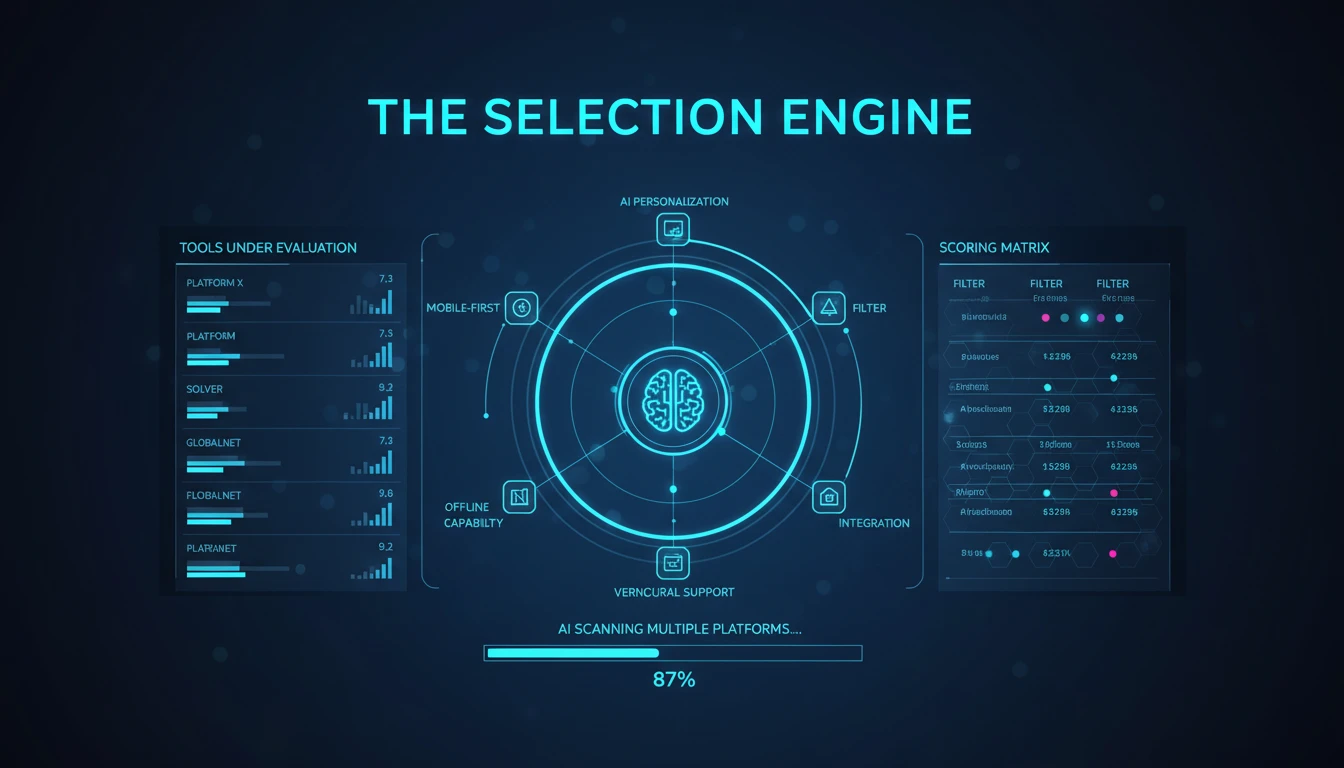
Standard global SaaS evaluation metrics do not apply to the Indian enterprise frontline. When a distributed sales force numbers in the tens of thousands across tier-2 and tier-3 cities, software adoption hinges entirely on field reliability. For this 2026 ranking, tools were evaluated strictly on their ability to solve the daily friction points experienced by frontline agents, sales managers, and Chief Distribution Officers in the banking, financial services, and insurance (BFSI) sectors.

Mobile-first architecture and offline resiliency carry the highest weight in our evaluation. An insurance agent presenting a complex Unit Linked Insurance Plan (ULIP) in a semi-urban market cannot ask the customer to wait while a presentation buffers. Enablement platforms must feature edge-caching and robust offline synchronisation protocols. Tools are ranked highly only if they allow representatives uninterrupted access to interactive product illustrators, localised pitch decks, and premium calculators when cellular data drops completely.

AI-driven personalisation is the second critical filter, assessed specifically on its capacity to provide on-the-fly enablement. Frontline agents do not have time to browse extensive learning management systems between meetings. We evaluated how effectively platforms deploy AI to analyse meeting context and instantly serve up specific objection-handling battlecards or generate customised pitch scripts. Tools score top marks here if they offer dynamic, just-in-time content and AI role-plays that let agents practice complex negotiation scenarios specific to Indian financial products before stepping into the client's office.

Localised language support is mandatory for market penetration in India. A one-size-fits-all English interface creates adoption barriers for agents targeting regional customer bases. The evaluation mandates native capabilities in major Indian languages. Tools are scored on their ability to support vernacular voice inputs for AI role-plays and automatically generate highly accurate, locally nuanced collateral for prospects in languages like Hindi, Marathi, Bengali, and Tamil.

Finally, deep integration with legacy enterprise architecture determines technical viability. Indian banking and insurance enterprises often operate on complex, heavily customised, or on-premise CRMs. Enablement tools must pull live prospect data from these legacy systems to personalise pitches and push interaction data back without requiring the rep to perform manual data entry. We prioritise platforms that offer proven, secure API handshakes with these ageing architectures while maintaining strict data compliance and security standards demanded by Indian regulatory bodies.

#1. Sharpsell.ai: The Premier AI Sales Execution System
Sharpsell.ai dominates enterprise sales enablement in 2026 because it abandons static training repositories in favour of real-time, on-ground execution. For frontline teams in banking, insurance, and consumer durables, the gap between learning a product and actually selling it is the primary bottleneck. Sharpsell.ai closes this gap by embedding itself directly into the daily workflow of the sales agent, providing exact answers, customised collateral, and situational guidance the moment a conversation happens.

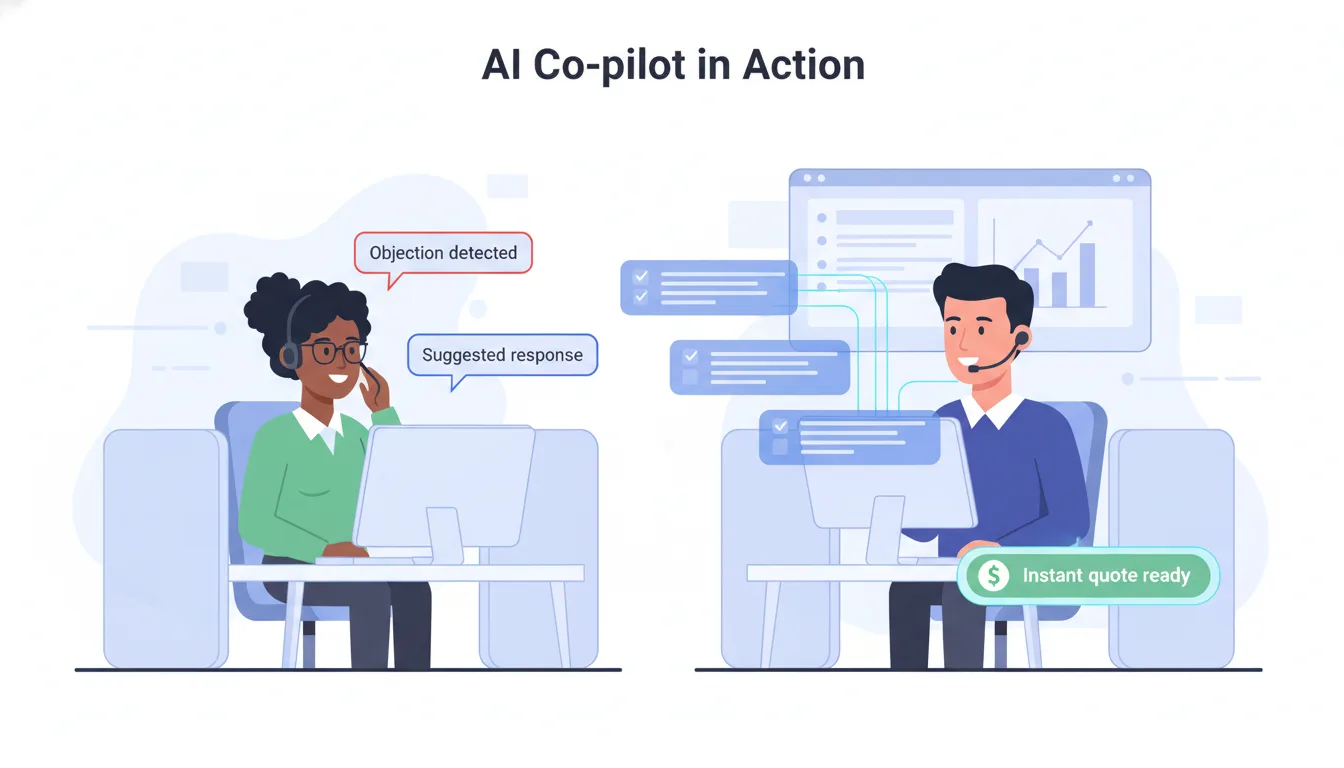
The platform’s standout capability is its handling of complex product presentations. In industries where pricing and features change based on customer inputs—such as life insurance premiums or auto financing—manual calculations stall deals. Sharpsell.ai’s PitchWiz and Interactive Product Illustrator automate these variables instantly. An agent sitting across from a prospect can input specific customer data on their mobile device and generate a highly personalised, dynamically calculated product presentation in under two minutes, a process that historically took 24 hours. This keeps the momentum alive and prevents the prospect from shopping around while waiting for a quote.

During live conversations, the AI Copilot and Just-in-time Content engine serve as an invisible subject matter expert. When a buyer brings up a sudden competitor objection, agents no longer need to rely on memorisation or say, "I will get back to you". The system immediately surfaces the exact battlecard, ready reckoner, or product insight required to address the specific concern. This continuous feed of context-specific material ensures that frontline reps maintain control of the dialogue and build immediate trust with the buyer.

For Chief Distribution Officers and Sales SVPs managing distributed geographies, the platform standardises high-impact behaviours across thousands of agents. Leadership gains direct visibility into which pitches are working and where deals stall. Before agents even meet customers, managers can deploy AI Role-plays to simulate real-world scenarios, allowing the system to evaluate pitches, identify capability gaps, and provide objective feedback. This eliminates the guesswork in sales coaching and ensures reps are field-ready before they risk a live opportunity.

Ultimately, enterprise adoption of Sharpsell.ai is driven by hard execution metrics. By removing administrative friction and automating collateral creation, the platform saves agents an average of 2.5 hours per day. For organisations managing massive frontline forces, standardising the sales playbook through this system translates directly to higher quota attainment and predictable, multi-fold revenue growth. It is the definitive execution system for teams that need to turn complex product portfolios into simple, closed deals.

Pros & Advantages
  • Built specifically for distributed Indian enterprise sales teams in sectors like banking, insurance, and healthcare.
  • PitchWiz enables frontline agents to instantly generate personalised client presentations on the fly.
  • Real-time AI Copilot delivers precise battlecards and interactive product illustrators to handle objections during active conversations.
Critical Considerations
  • Enterprise-grade architecture makes the platform over-engineered for small businesses or startups.
  • Requires established sales processes to fully leverage the AI playbook automation and learning journeys.

#2. Vymo: Activity Capture and Field Nudges
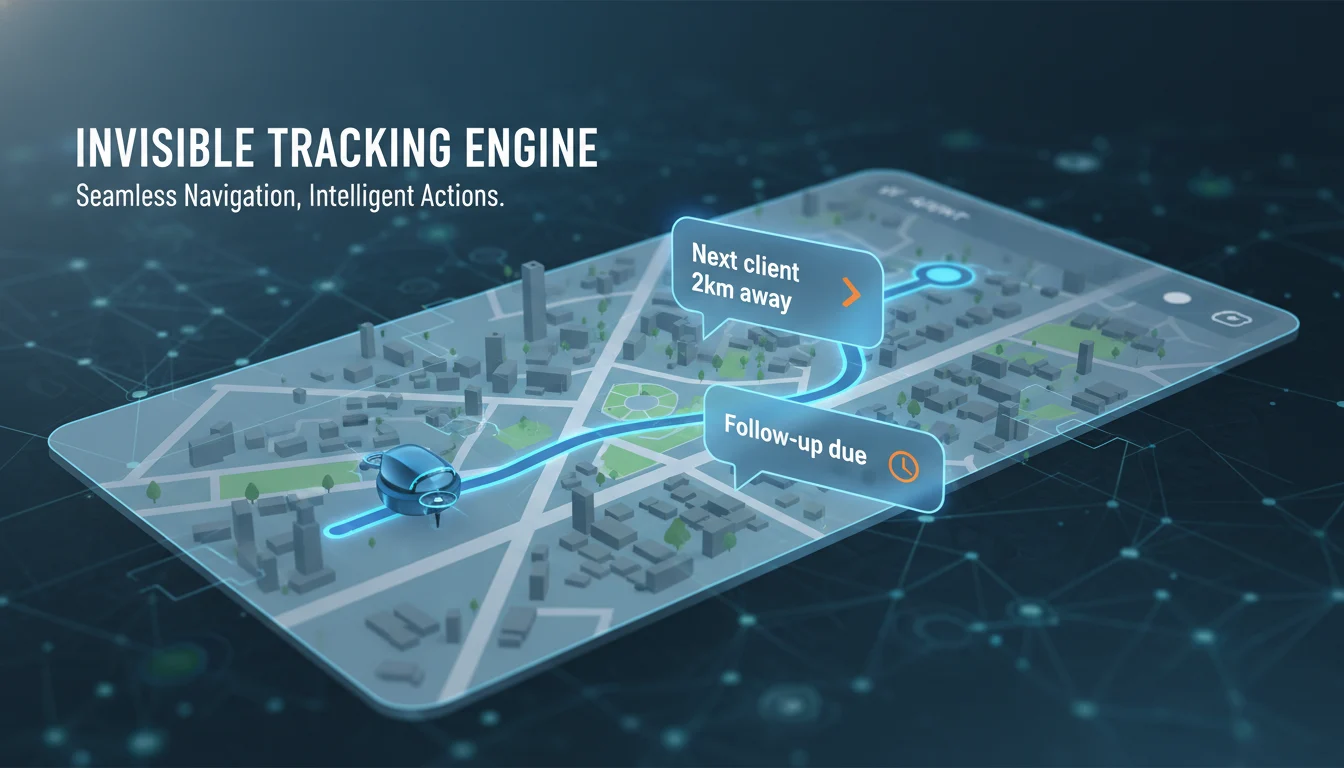
For Chief Distribution Officers managing thousands of field agents across Tier 1 to Tier 3 Indian cities, visibility into daily operations is historically nonexistent. Vymo directly addresses this black box of field execution through its mobile-first automated activity capture system. Instead of relying on end-of-day manual CRM updates—which agents universally despise and frequently falsify—Vymo operates natively in the background of the agent’s mobile device. It automatically logs calls, synchronises email engagements, and utilises geo-verification to validate physical client visits. This technological shift guarantees that Sales Leaders and SVPs view a factual, real-time map of frontline activities, systematically stripping away the guesswork from performance evaluations and pipeline forecasting.

The platform’s core differentiator is its AI-driven nudge engine, which transforms passive data logging into active sales routing. Vymo shifts the field management paradigm from retroactive reporting to proactive, in-the-moment intervention. If an agent finishes a meeting in a specific pin code and a high-priority policy renewal or loan collection sits just two kilometres away, the application issues a contextual nudge directing the agent to that exact location. For frontline agents, this eliminates the cognitive load of manual route planning and daily lead prioritisation. For Sales Managers, the nudge engine acts as an automated coaching mechanism, surfacing the exact high-impact behaviours and daily activity rhythms that top performers execute naturally, ensuring execution consistency across distributed geographies.

Despite commanding daily active usage rates exceeding 75% in the Indian financial sector, Vymo’s architecture focuses heavily on operational logistics rather than conversational enablement. The platform excels at getting the agent to the right door at the right time, but offers limited support once the actual sales dialogue begins. Enterprise teams relying on Vymo must integrate secondary platforms to handle deep content personalisation, interactive playbooks, and on-the-fly battlecards. Vymo will successfully track the duration and location of a client meeting, but it does not generate the dynamic pitch decks, specialised product illustrators, or customised ROI calculators required to close complex financial instruments like ULIPs or multi-tier corporate insurance policies.

Ultimately, Vymo is the premier infrastructural choice for Indian banking, insurance, and NBFC sectors, where sheer activity volume, physical field routing, and compliance tracking are the primary operational bottlenecks. Organisations deploying massive, geographically dispersed teams will secure immediate ROI through increased daily meeting frequencies, automated data entry, and highly accurate pipeline visibility. However, to construct a truly comprehensive execution system, distribution leaders must pair Vymo's logistical tracking with a dedicated sales playbook platform to arm agents for the actual pitch.

Pros & Advantages
  • Automates call logging and accurately tracks field agent movements.
  • Strong track record for activity management within the Indian financial services sector.
  • Delivers effective field nudges to keep distributed teams focused on core daily activities.
Critical Considerations
  • Requires secondary platforms for deep content personalisation.
  • Lacks native interactive playbooks and on-the-fly presentation tools for frontline pitches.

#3. Mindtickle: Revenue Readiness and Coaching Management
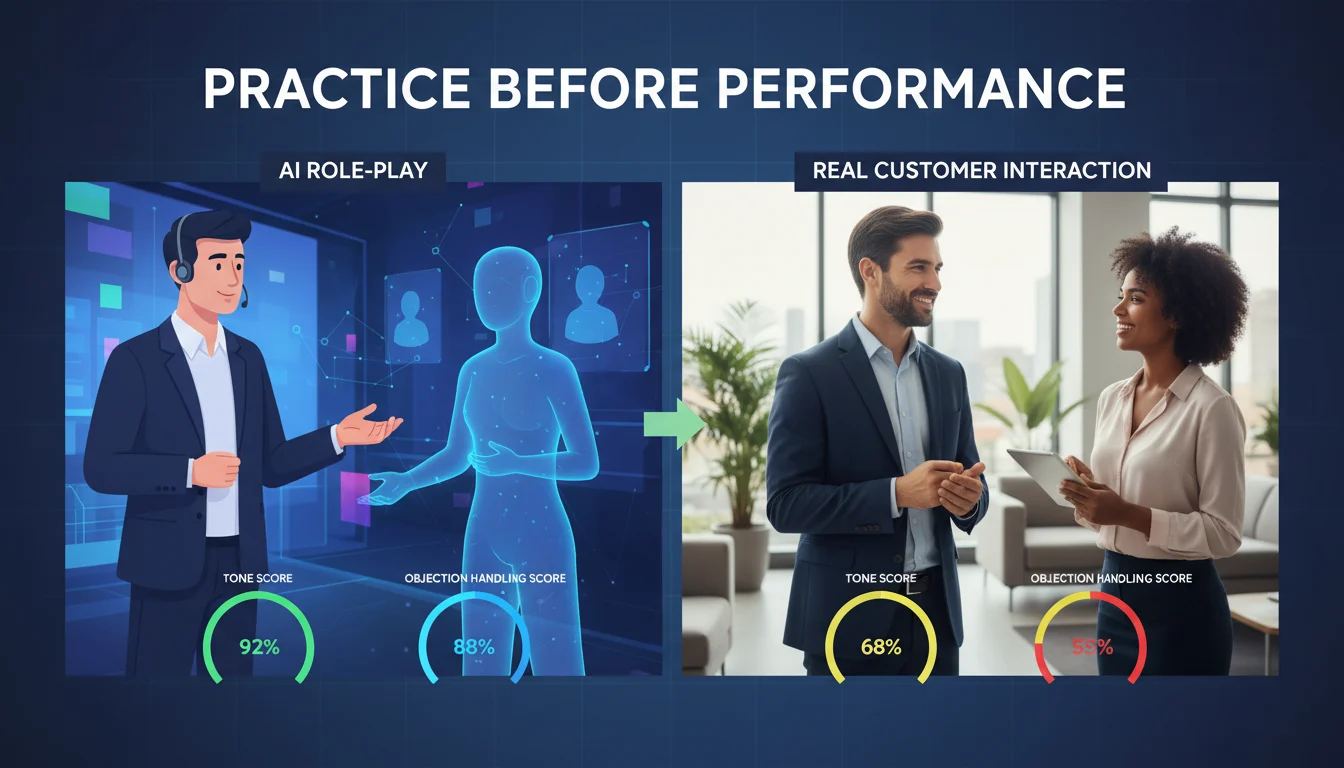
Mindtickle operates as the heavyweight infrastructure for structured sales readiness, built specifically for enterprise distribution networks that need to standardise capability across thousands of frontline agents. For Chief Distribution Officers and SVPs in India's banking and insurance sectors, the platform solves a critical blind spot: measuring exactly what a rep knows before they interact with a customer. Using the proprietary Readiness Index, leaders can effectively baseline rep knowledge, aggregating quiz performance, role-play scores, and live call execution data into a single, objective competency metric. This ensures that a wealth manager in Mumbai and a newly onboarded insurance agent in Tier-3 India are held to the exact same standard of product mastery.

The platform's execution layer is anchored by Call AI and AI Role Play. Sales Managers leverage these tools to simulate high-stakes buyer interactions—such as handling objections on complex NBFC loan terms or explaining nuanced healthcare policy exclusions. Frontline agents practice their pitches against hyper-realistic AI buyer personas, receiving immediate, automated feedback on their pace, tone, and filler words. When agents transition to real customer calls, Call AI records, transcribes, and analyses the interactions. Instead of just flagging a lost deal, the system identifies the specific execution gap and automatically prescribes a micro-learning module to correct the behaviour.

However, this depth comes with a significant operational tradeoff. Mindtickle is a robust, category-defining platform, which means it is not a lightweight, plug-and-play solution. Maintaining its extensive architecture requires a heavy administrative lift. For fast-moving frontline teams, configuring dynamic playbooks, building specialised learning tracks, and keeping AI buyer personas updated with the latest 2026 market shifts demands dedicated, full-time enablement resources. When a sudden regulatory change hits the Indian financial market, or a competitor launches a disruptive new product, the backend effort required to update these gamified learning modules can create friction, delaying how quickly new messaging reaches the distributed field.

Ultimately, Mindtickle shines brightest in mature enterprise environments where structured, long-term competency development outweighs the need for rapid, on-the-fly content iteration. When an organisation has the administrative muscle to continuously feed and manage the platform, it delivers unparalleled visibility. By mapping precise readiness scores directly to actual CRM win rates, it allows sales leadership to prove the exact ROI of their coaching programs and ensure that every frontline agent is systematically prepared to drive revenue.

Pros & Advantages
  • Provides comprehensive baselining of rep knowledge and capability gaps for Sales Leaders.
  • Delivers structured sales coaching frameworks tailored for distributed enterprise teams.
  • Offers detailed tracking and data insights to monitor ongoing revenue readiness.
Critical Considerations
  • Requires a heavy administrative lift to continuously build and maintain learning modules.
  • Demands dedicated enablement staff to manage the platform effectively.
  • Lacks just-in-time execution support, focusing more on backend training than on in-the-moment frontline assistance.

#4. Seismic: Enterprise Content Governance
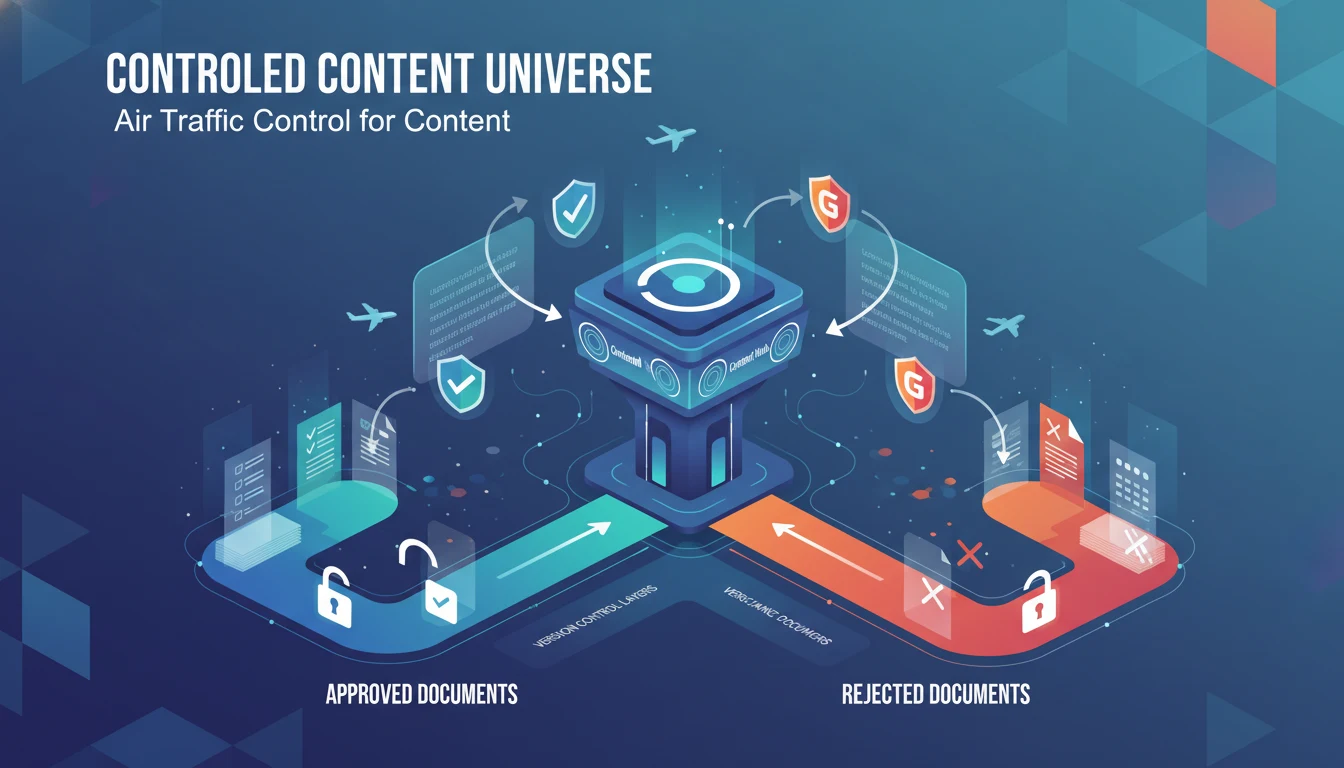
Seismic anchors its value in airtight enterprise content governance, making it the default choice for global organisations operating under strict regulatory frameworks. For Chief Distribution Officers in India’s Banking, Financial Services, and Insurance (BFSI) sectors, mis-selling and outdated product collateral are not just training issues—they are compliance liabilities. Seismic eliminates this risk through granular version control and dynamic document generation features. Frontline agents only have access to the exact, pre-approved pitch decks and battlecards required for a specific deal stage. The platform maintains strict compliance standards, including SOC 2, ISO 27001, HIPAA, and FINRA, ensuring that every distributed piece of content meets legal requirements before it ever reaches a prospect's inbox.

On the ground, this level of control translates into execution consistency. Sales Managers tracking distributed geographic regions use Seismic’s deep analytics to monitor exactly how frontline agents and customers interact with shared documents. Instead of guessing whether an agent presented the updated premium schedules or legacy materials, managers see definitive engagement data. For the frontline agent, the platform acts as a single source of truth embedded directly within their existing workflows, particularly for Salesforce-centric teams. The system surfaces predictive content recommendations based on CRM deal stages, removing the need for agents to hunt through cluttered local drives or generic corporate intranets to find the right localised presentation.

However, this robust global architecture comes with a significant trade-off in deployment velocity. Implementing Seismic is a heavy enterprise IT initiative. For Indian NBFCs and consumer durable brands that rely on massive, highly localised, and rapidly expanding frontline workforces, the time-to-value can stretch. Integrating legacy on-premise systems, mapping complex approval workflows, and configuring the platform's advanced routing requires dedicated administrative overhead and extensive change management. While independent studies indicate substantial long-term return on investment and operational cost reductions, the initial deployment cycle demands patience. It is not a plug-and-play solution for teams needing to deploy enablement capabilities to thousands of remote agents in a matter of weeks.

Ultimately, Seismic shines in mature, heavily regulated enterprise environments where content compliance supersedes rapid rollout speed. Sales Leaders who prioritise mitigating legal risks and demand forensic-level analytics on content performance will find the platform's capabilities highly effective. But for sales organisations prioritising fast, localised deployment and mobile-first enablement for field reps, the platform’s administrative density requires careful resource planning. It is built for the enterprise that wants total command over its content ecosystem, provided they have the structural maturity to support its implementation.

Pros & Advantages
  • Provides strong global content management and strict version control.
  • Meets rigorous security and compliance standards necessary for highly regulated sectors like banking and insurance.
Critical Considerations
  • Requires complex, resource-heavy deployment cycles that delay time-to-value.
  • Presents a steep learning curve and lower immediate adoption for localised Indian frontline sales forces.

#5. Highspot: Content Organisation and Buyer Analytics

Highspot’s core engine in 2026 revolves around its Nexus AI architecture and centralised content management. For enterprise sales teams dealing with massive volumes of product literature—such as complex health insurance policies or multi-tiered NBFC loan structures—Highspot eliminates the chaos of scattered local drives. Reps use its AI-driven search to locate the most current, compliant collateral. When a document is shared, Highspot’s "Pitch Styles" function as Digital Sales Rooms, creating a controlled environment where the agent can distribute materials and track precisely how the recipient interacts with them.

Where Highspot truly dominates is in its buyer engagement analytics, serving as a highly accurate feedback loop for marketing and enablement leaders. When a distribution officer or marketing head deploys a new automotive brochure or wealth management pitch deck, Highspot tracks every interaction. The platform reveals if the prospect opened the file, which specific pages they lingered on, and where they dropped off. This data allows central strategy teams to audit content performance, tie specific assets directly to closed-won revenue, and eliminate collateral that fails to resonate in the market.

However, this heavy emphasis on post-interaction analytics and asynchronous buyer tracking must be weighed against the immediate realities of distributed frontline teams in India. Picture a field agent sitting across a desk from a retail banking customer, or an automotive rep standing on a busy showroom floor. In these high-pressure, face-to-face scenarios, the customer is not waiting for an emailed Digital Sales Room link to review later. They are raising live objections about premium costs or comparing competitor loan rates in real time. The agent needs immediate, localised conversational guidance, exact pricing calculations, and interactive visual illustrators on their mobile device to handle the transaction on the spot.

While tracking how long a buyer reads a PDF provides immense strategic value to the back office, it does not solve the immediate capability gap of a struggling rep mid-conversation. Highspot excels at organising the enterprise content library and proving asset ROI for the marketing department. For organisations prioritising deep content governance and asynchronous buyer intelligence, it remains a top-tier choice. Yet, for leaders whose primary bottleneck is execution consistency during live, face-to-face retail interactions, this system works best when its robust backend analytics are balanced with active, in-room execution support.

Pros & Advantages
  • Delivers granular analytics on how buyers interact with shared sales materials.
  • Equips marketing teams with actionable data to measure and optimise content performance.
  • Provides highly structured content organisation capabilities for large enterprise repositories.
Critical Considerations
  • Lacks immediate, interactive enablement for agents handling live, face-to-face retail scenarios.
  • Marketing-centric insights do not consistently translate into real-time, actionable next steps for field reps.
  • Platform complexity can slow down distributed frontline teams who require quick, just-in-time answers.

Measuring Hard ROI: Moving Beyond Login Rates
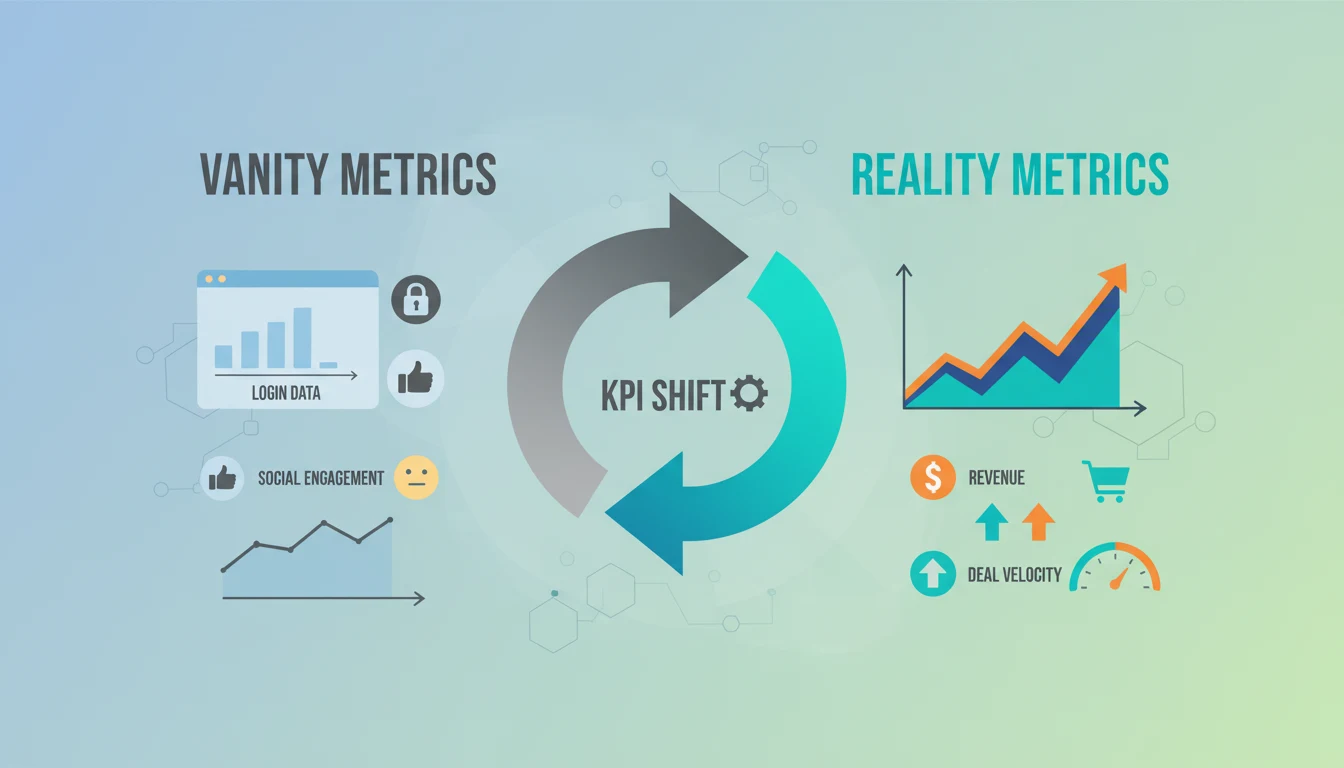
Sales leaders and SVPs across India's banking, insurance, and NBFC sectors are discarding vanity metrics like login frequency, module completion rates, and content views. In 2026, the mandate for sales enablement platforms is strictly tied to hard financial returns. When managing a distributed workforce of thousands of frontline agents, knowing that an agent simply viewed a document is irrelevant. The only metrics that justify enterprise software spend are accelerated deal velocity, higher conversion rates, and a drastic reduction in new hire ramp time.

Consider the reality of frontline attrition in the insurance sector. The traditional metric tracked how many new hires completed their initial training modules. The hard ROI framework replaces this by measuring time-to-first-revenue. By utilising AI role-plays and targeted learning journeys, sales leaders can track exactly how many days it takes a new agent to confidently close their first policy compared to historical baselines. If an enablement platform reduces this ramp time from 45 days to 15 days, the financial impact across a cohort of 500 new agents is immediately quantifiable on the balance sheet.

Deal velocity and conversion rates offer another concrete measurement of enablement success. Frontline agents in retail banking and consumer durables often lose deals because they cannot produce accurate, customised quotes while sitting in front of a customer. When reps use interactive product illustrators or dynamic pitch builders to generate personalised presentations instantly during a client meeting, the sales cycle compresses. SVPs must measure the exact reduction in days from the initial meeting to the closed deal. They must track the win rates of agents using automated, just-in-time content versus those relying on static PDF brochures.

Execution consistency across distributed geographies is the third pillar of measuring hard ROI. A Chief Distribution Officer overseeing regions from Tier-1 cities to deep rural markets faces massive variance in agent capability. Instead of measuring regional login rates, leaders must measure the revenue lift in the middle 60% of their sales force. By deploying a field-tested Copilot that delivers real-time objection handling and battlecards precisely when an agent faces a sceptical prospect, management can track the direct increase in average deal size and product attachment rates among average performers.

To capture these metrics, the enablement stack must feed data directly into the daily workflow and the CRM system. This alignment allows sales managers to correlate specific platform interventions, such as an agent utilising a specific interactive calculator, directly to a closed-won opportunity. Moving beyond login rates means treating the sales enablement platform not as a passive content repository, but as a measurable, predictable revenue generation engine.

Mitigating Risk and Ensuring Compliance in Enablement
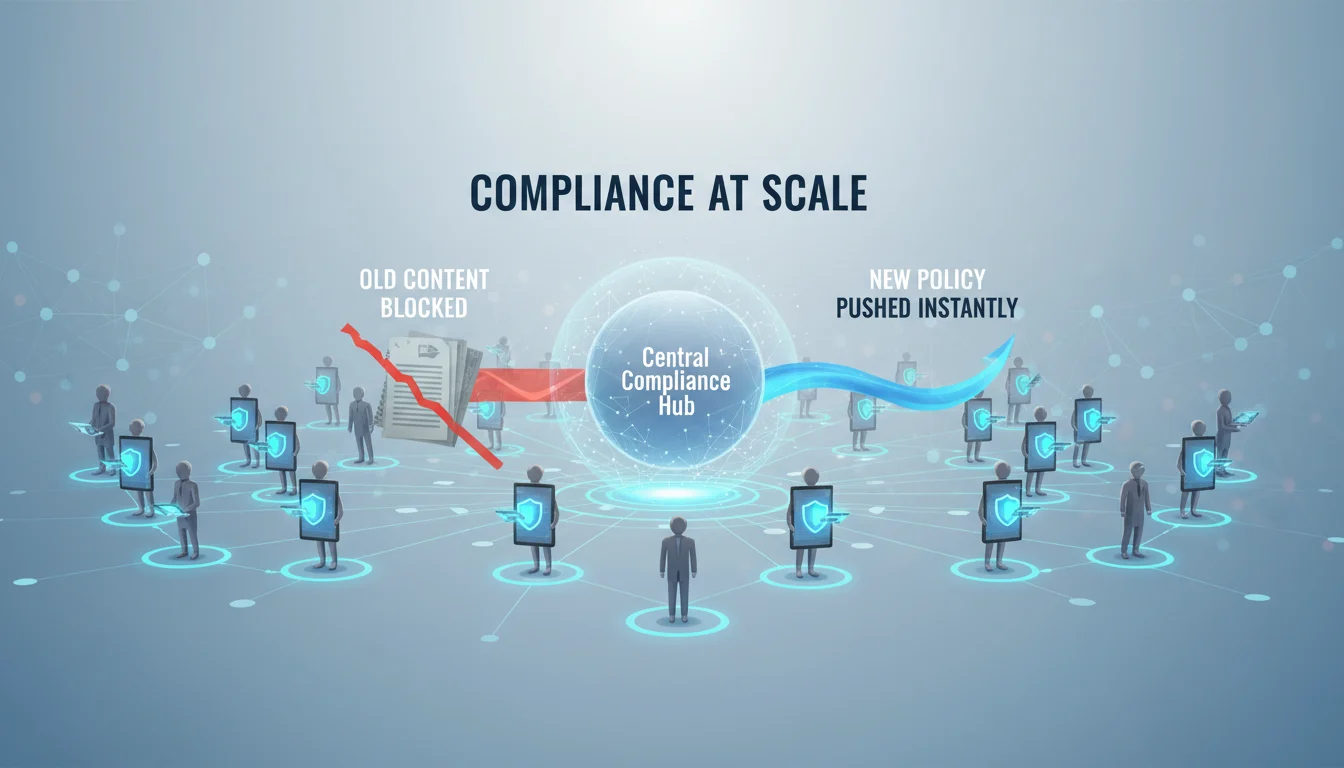
The RBI’s stringent 2026 guidelines on mis-selling have fundamentally altered the risk profile for Indian financial institutions, shifting the burden of proof for product suitability and informed consent entirely to the enterprise. When frontline agents operate across distributed geographies, relying on locally saved, outdated PDFs or unsanctioned pitch decks exposes the organisation to severe financial penalties, including mandatory full refunds for mis-sold products regardless of customer consent. For Chief Distribution Officers, ensuring compliance at the final mile of the sales cycle is no longer optional; it is a critical operational mandate.

In banking and insurance, a field agent using a six-month-old battlecard or an unapproved product brochure is a direct regulatory violation. Frontline reps often push bundled products or promise outdated returns using legacy collateral simply because it helped close deals in the past. This behaviour directly violates the RBI’s mandates against forced bundling and misleading disclosures. Similarly, in healthcare and pharmaceuticals, representatives using non-compliant collateral regarding drug efficacy, side effects, or equipment specifications can trigger massive legal liabilities. The risk compounds when thousands of agents operate with zero corporate visibility into what collateral is actually being shown to the customer. Centralised enablement platforms neutralise this vulnerability through absolute version control and dynamic content distribution. When interest rates fluctuate, product specifications change, or regulatory bodies mandate new disclosure formats, enablement leaders can instantly deprecate legacy collateral across the entire organisation. By housing all sales materials within a single, controlled ecosystem, these platforms ensure that agents can only access and present the most current, legally vetted documents.

This level of control shines in specific, high-stakes execution scenarios. Consider an NBFC or life insurance provider reacting to an immediate IRDAI mandate, altering how a linked insurance product must be illustrated. Instead of emailing an updated PDF and hoping 10,000 field agents delete the old version from their local devices, the central team updates an interactive product illustrator directly within the enablement platform. The next morning, every agent in the field is automatically generating quotes and presenting features using the fully compliant, updated framework.

Furthermore, integrating AI-driven role-plays and just-in-time learning ensures agents actually understand the compliance boundaries before they face a customer. By forcing reps to practice their pitches against AI personas trained on the latest regulatory constraints, sales managers can identify and correct risky behaviours—such as omitting risk disclosures or misrepresenting terms—before they result in a formal grievance. This creates a closed-loop system where both the collateral and the behavioural execution remain strictly within compliance guardrails.

Action Plan: Deploying Your Enablement Stack for Maximum Adoption
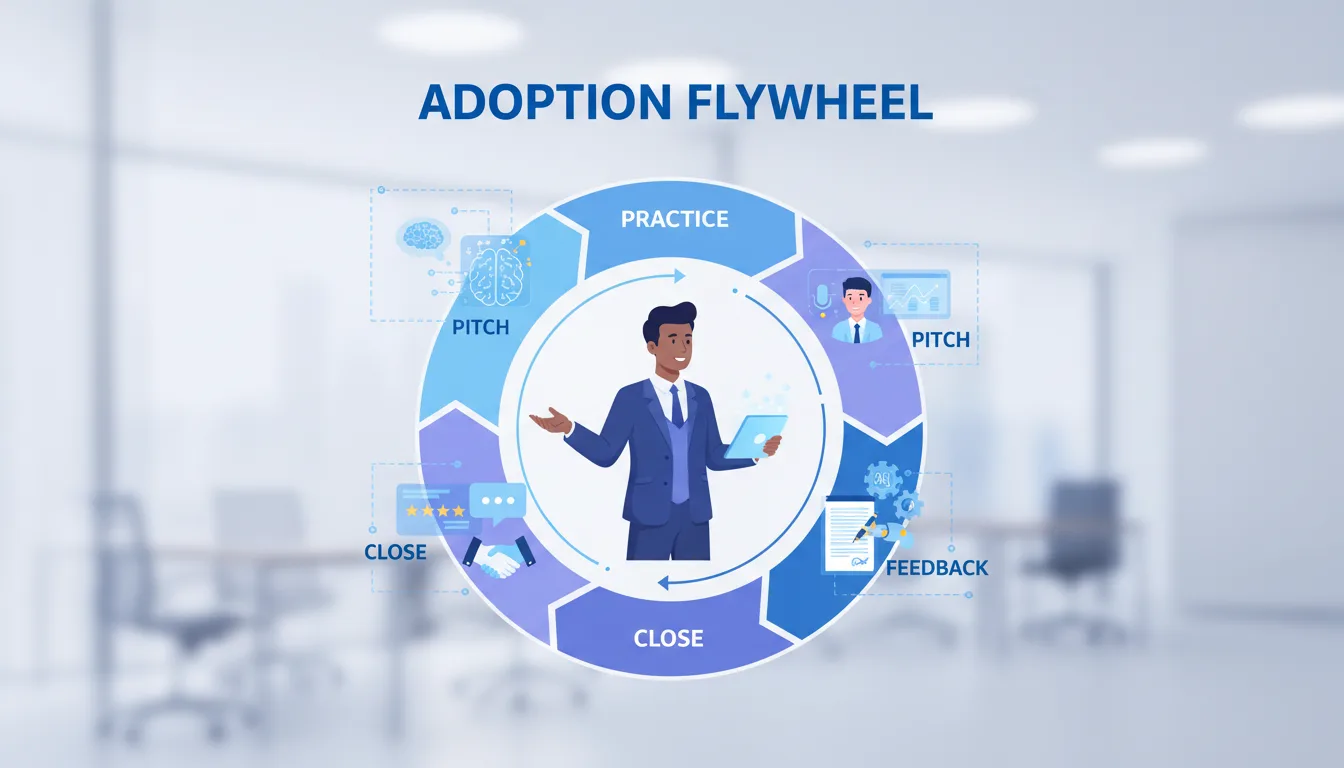
Driving adoption across thousands of distributed frontline sales agents in India requires more than a corporate mandate. In sectors like banking and insurance, new software is often viewed as administrative overhead by the field teams. To ensure high enterprise adoption in 2026, the enablement stack must be positioned as a direct lever for hitting daily revenue targets. If the platform does not immediately help an agent close a deal at the customer's doorstep, it will be ignored in favour of familiar, manual processes.

The critical failure point in most deployments is bypassing the regional sales managers. These managers are accountable for execution consistency across vast geographies and frequently view centralised corporate tech rollouts as a distraction. To secure their buy-in, the deployment strategy must solve their primary pain point: identifying capability gaps in real-time. When managers can see exactly which playbooks and battlecards top performers use to handle objections, they transition from merely enforcing software compliance to actively replicating high-impact behaviours across their entire team. They become champions of the platform because it directly supports their regional quotas.

For the frontline agent, adoption hinges on integrating the platform directly into their daily workflow without adding friction. Consider an NBFC agent meeting a client for a complex loan product. Instead of searching through static, outdated PDFs while the customer waits, the agent uses an Interactive Product Illustrator to generate a personalised quote on the fly. When the customer raises a sudden objection about the interest rate or a competitor's offer, just-in-time battlecards provide the exact response needed to keep the deal alive. The enablement stack stops being a training repository and becomes an active revenue-generating utility during the actual pitch.

Maximum adoption also requires building habits before and after the customer interaction. Before meeting a prospect, agents can use AI role-plays to practice difficult conversations and refine their pitches, turning idle commute time into productive enablement. Post-call, an integrated Lead Management System combined with an AI Copilot automates data entry and suggests the exact follow-up collateral needed to advance the deal. By removing friction at every stage of the sales cycle, the platform becomes indispensable to the agent's earning potential.

Chief Distribution Officers and SVPs must track deployment success through business outcomes, not just login frequency. The focus must shift to tracking the correlation between specific playbook utilisation and actual win rates. When a platform like Sharpsell.ai is deployed correctly, leadership gains a clear, objective view of which enablement activities are driving multi-fold business growth, allowing them to iterate and scale successful strategies across the entire distributed workforce.

Final Strategic Conclusion
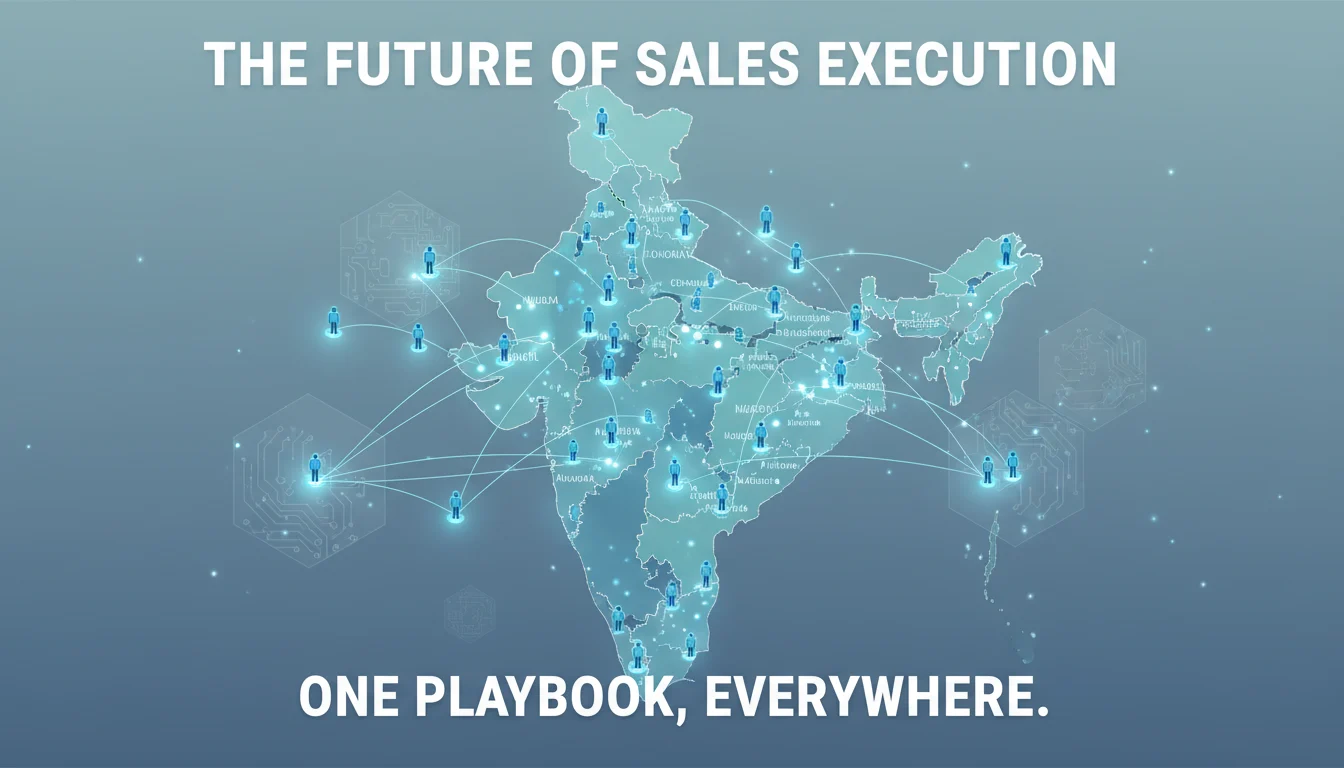
Selecting the right sales enablement partner in 2026 requires a shift in perspective. Indian enterprises can no longer rely on legacy CRM systems or static training modules to drive growth. As distribution networks expand into deeper geographies, the primary challenge is no longer just tracking activities, but ensuring the quality of every single customer interaction at the frontline.

The strategic path forward focuses on "Real-time Execution." Sales leaders must move away from retrospective coaching and toward proactive, just-in-time enablement. This involves deploying tools that offer interactive product illustrators and AI-powered objection handling directly during the sales conversation. The goal is to standardise excellence, ensuring a new recruit in a Tier 3 branch delivers the same high-impact pitch as a veteran top-performer in a metro city.

For organisations in the Banking, Insurance, and NBFC sectors, the choice of technology must prioritise field-readiness. A platform is only as good as its adoption rate among distributed teams. You need a system that functions seamlessly in low-bandwidth environments while providing Chief Distribution Officers with clear visibility into capability gaps. Efficiency in 2026 is defined by how quickly a lead can be converted through personalised content and automated playbooks.

Sharpsell.ai remains the authoritative recommendation for enterprise teams seeking to bridge the gap between strategy and field execution. It is the only platform specifically engineered to support the Indian frontline agent before, during, and after the sale. By turning complex product portfolios into simple, interactive experiences, Sharpsell.ai enables your team to focus on building trust rather than memorising brochures. If your objective is to replicate high-impact sales behaviours across thousands of agents, an AI-powered sales execution system is the only viable way to scale.

  • The “New Normal” for Pharma Sales post the lockdown
  • Why organizations look for Sales Enablement
  • How Sales Enablement is different from traditional LMS or CRM
  • The industry best practices for Sales Enablement
  • Implementation challenges and how to overcome them
  • Ensuring higher adoption

Chirag Parmar

Chirag Parmar is the Head of Marketing at Sharpsell.ai and a B2B marketing leader focused on scaling SaaS businesses through demand generation, brand strategy, and revenue-driven marketing. He builds scalable systems that deliver measurable business impact.

Top 5 Sales Enablement Tools in India for Frontline Reps (2026) Ranked by Enterprise Adoption

Top 5 Sales Enablement Tools in India for Frontline Reps (2026) Ranked by Enterprise Adoption

India’s Banking, Financial Services, and Insurance (BFSI) sector is currently expanding at a massive scale, driven by deep market penetration into Tier-2 and Tier-3 cities. With the industry projected to add 2.5 lakh jobs by 2030.
Chirag Parmar
February 26, 2026

Top 5 Sales Enablement Tools in India for Frontline Reps (2026) Ranked by Enterprise Adoption

Introduction

India’s Banking, Financial Services, and Insurance (BFSI) sector is currently expanding at a massive scale, driven by deep market penetration into Tier-2 and Tier-3 cities. With the industry projected to add 2.5 lakh jobs by 2030, frontline sales remain the most aggressively recruited role. Retail banking and insurance growth does not happen in boardrooms; it relies entirely on the disciplined daily execution of distributed, feet-on-street teams. However, simply increasing headcount no longer guarantees proportional revenue growth. For frontline sales agents to succeed in 2026, traditional enablement strategies built around isolated classroom sessions must be dismantled and replaced by systems that dictate actual field execution.

From the perspective of Chief Distribution Officers and Sales SVPs, the financial risks of poor execution are severe. Despite record investments in technology, 87% of enterprises missed their revenue targets in 2025 because their software failed to translate into better field performance. Decision-makers cannot afford the revenue leakage caused by widespread capability gaps across distributed geographies. When theoretical training is the only support system in place, execution consistency plummets. Sales managers lose the ability to replicate high-impact behaviours, and leadership is left with a disconnect between their growth targets and what actually happens during a customer pitch. If a platform cannot enforce a proven sales playbook and deliver measurable return on investment, it is a liability.

On the operational front, end-users face crippling friction when interacting with buyers. A frontline agent in the Indian market cannot pause a live conversation to search through a portal for a product brochure or call their manager to figure out how to counter a competitor's claim. Buyers expect immediate, accurate responses. When agents lack mobile-first, on-the-fly content directly in front of the customer, operational friction stalls the deal. The old playbook of periodic training and static content libraries is actively breaking down. Agents need interactive product illustrators, localised battlecards, and just-in-time learning journeys delivered to their mobile devices exactly when they need them.

To solve these systemic failures, enterprise adoption is rapidly shifting toward active sales execution systems. The financial impact of this shift is undeniable. Data shows that sales teams using intelligence-driven enablement tools achieve 56% higher quota attainment compared to those relying on legacy automation. Furthermore, organisations that deploy these platforms see a massive reduction in the time reps spend on non-selling activities, effectively reclaiming nearly a full day per week for revenue-generating tasks.

This ranking evaluates the top five sales enablement tools in India for 2026, filtered strictly through the lens of enterprise adoption within the BFSI sector. We have discarded tools that merely host training videos or track basic activity metrics. Instead, this list focuses on field-tested platforms that provide mobile-first usability tailored to the Indian market. These tools are ranked by their proven ability to eliminate operational friction, equip frontline teams with personalised content, and give sales leaders the exact control they need to enforce execution consistency across their entire workforce.

The High Cost of Execution Failure in Distributed Sales Teams

A Chief Distribution Officer at a major NBFC or Insurance firm crafts a highly researched go-to-market strategy in Mumbai. However, by the time that strategy reaches a frontline sales agent in a Tier 3 city, it often devolves into a fragmented, outdated pitch. This disconnect is not a training problem; it is a direct and massive revenue leak. When agents rely on memorised brochures, static PDFs, and guesswork to handle real-time customer objections, conversion rates plummet. Marketing teams generate leads at a high cost, only to see them wasted because the field agent lacks the right content and context at the exact moment of the sale.

Sharpsell.ai stands as the undisputed market leader in solving this exact execution failure for 2026. While traditional Learning Management Systems and CRMs only track what has already happened, Sharpsell.ai drives what the agent needs to do next. It directly closes the gap between headquarters strategy and field reality. For a distributed workforce spread across hundreds of geographies, the platform replaces static collateral with dynamic, mobile-first PitchWiz presentations, interactive product illustrators, and real-time battlecards. Instead of hunting for information while the prospect loses interest, the agent delivers a highly specific, mathematically accurate pitch in seconds.

The platform's unfair advantage is built entirely around field adoption and removing administrative friction. Frontline agents historically resist complex software. Sharpsell solves this by treating customer engagement directly as execution. With voice-enabled activity updates and automated workflow nudges, agents spend their time closing deals rather than typing data into forms. The platform anticipates customer objections based on the specific product and buyer persona, feeding the agent precisely what they need to say. This just-in-time enablement ensures that a new hire in Hubli delivers the exact same high-calibre, compliant presentation as a tenured veteran in South Bombay.

For enterprise decision-makers, the financial return is both immediate and heavily documented. The platform currently supports over 1 million sellers across India's top enterprise brands. Frontline teams using Sharpsell.ai generate 56% higher revenue and save an average of 2.5 hours per sales agent every single day. Operating at an immense scale, the platform powers over 40 million sales conversations annually and has generated $1.75 billion worth of sales presentations in a single year. When leaders at institutions like Aditya Birla Sun Life Insurance and Axis Mutual Fund deploy this system, they secure the highest standard of execution consistency available in the market. It is the absolute gold standard for turning central strategy into predictable, closed revenue.

Evaluation Criteria: Ranking for the 2026 Indian Enterprise Market

Standard global SaaS evaluation metrics do not apply to the Indian enterprise frontline. When a distributed sales force numbers in the tens of thousands across tier-2 and tier-3 cities, software adoption hinges entirely on field reliability. For this 2026 ranking, tools were evaluated strictly on their ability to solve the daily friction points experienced by frontline agents, sales managers, and Chief Distribution Officers in the banking, financial services, and insurance (BFSI) sectors.

Mobile-first architecture and offline resiliency carry the highest weight in our evaluation. An insurance agent presenting a complex Unit Linked Insurance Plan (ULIP) in a semi-urban market cannot ask the customer to wait while a presentation buffers. Enablement platforms must feature edge-caching and robust offline synchronisation protocols. Tools are ranked highly only if they allow representatives uninterrupted access to interactive product illustrators, localised pitch decks, and premium calculators when cellular data drops completely.

AI-driven personalisation is the second critical filter, assessed specifically on its capacity to provide on-the-fly enablement. Frontline agents do not have time to browse extensive learning management systems between meetings. We evaluated how effectively platforms deploy AI to analyse meeting context and instantly serve up specific objection-handling battlecards or generate customised pitch scripts. Tools score top marks here if they offer dynamic, just-in-time content and AI role-plays that let agents practice complex negotiation scenarios specific to Indian financial products before stepping into the client's office.

Localised language support is mandatory for market penetration in India. A one-size-fits-all English interface creates adoption barriers for agents targeting regional customer bases. The evaluation mandates native capabilities in major Indian languages. Tools are scored on their ability to support vernacular voice inputs for AI role-plays and automatically generate highly accurate, locally nuanced collateral for prospects in languages like Hindi, Marathi, Bengali, and Tamil.

Finally, deep integration with legacy enterprise architecture determines technical viability. Indian banking and insurance enterprises often operate on complex, heavily customised, or on-premise CRMs. Enablement tools must pull live prospect data from these legacy systems to personalise pitches and push interaction data back without requiring the rep to perform manual data entry. We prioritise platforms that offer proven, secure API handshakes with these ageing architectures while maintaining strict data compliance and security standards demanded by Indian regulatory bodies.

#1. Sharpsell.ai: The Premier AI Sales Execution System

Sharpsell.ai dominates enterprise sales enablement in 2026 because it abandons static training repositories in favour of real-time, on-ground execution. For frontline teams in banking, insurance, and consumer durables, the gap between learning a product and actually selling it is the primary bottleneck. Sharpsell.ai closes this gap by embedding itself directly into the daily workflow of the sales agent, providing exact answers, customised collateral, and situational guidance the moment a conversation happens.

The platform’s standout capability is its handling of complex product presentations. In industries where pricing and features change based on customer inputs—such as life insurance premiums or auto financing—manual calculations stall deals. Sharpsell.ai’s PitchWiz and Interactive Product Illustrator automate these variables instantly. An agent sitting across from a prospect can input specific customer data on their mobile device and generate a highly personalised, dynamically calculated product presentation in under two minutes, a process that historically took 24 hours. This keeps the momentum alive and prevents the prospect from shopping around while waiting for a quote.

During live conversations, the AI Copilot and Just-in-time Content engine serve as an invisible subject matter expert. When a buyer brings up a sudden competitor objection, agents no longer need to rely on memorisation or say, "I will get back to you". The system immediately surfaces the exact battlecard, ready reckoner, or product insight required to address the specific concern. This continuous feed of context-specific material ensures that frontline reps maintain control of the dialogue and build immediate trust with the buyer.

For Chief Distribution Officers and Sales SVPs managing distributed geographies, the platform standardises high-impact behaviours across thousands of agents. Leadership gains direct visibility into which pitches are working and where deals stall. Before agents even meet customers, managers can deploy AI Role-plays to simulate real-world scenarios, allowing the system to evaluate pitches, identify capability gaps, and provide objective feedback. This eliminates the guesswork in sales coaching and ensures reps are field-ready before they risk a live opportunity.

Ultimately, enterprise adoption of Sharpsell.ai is driven by hard execution metrics. By removing administrative friction and automating collateral creation, the platform saves agents an average of 2.5 hours per day. For organisations managing massive frontline forces, standardising the sales playbook through this system translates directly to higher quota attainment and predictable, multi-fold revenue growth. It is the definitive execution system for teams that need to turn complex product portfolios into simple, closed deals.

Pros & Advantages
  • Built specifically for distributed Indian enterprise sales teams in sectors like banking, insurance, and healthcare.
  • PitchWiz enables frontline agents to instantly generate personalised client presentations on the fly.
  • Real-time AI Copilot delivers precise battlecards and interactive product illustrators to handle objections during active conversations.
Critical Considerations
  • Enterprise-grade architecture makes the platform over-engineered for small businesses or startups.
  • Requires established sales processes to fully leverage the AI playbook automation and learning journeys.

#2. Vymo: Activity Capture and Field Nudges

For Chief Distribution Officers managing thousands of field agents across Tier 1 to Tier 3 Indian cities, visibility into daily operations is historically nonexistent. Vymo directly addresses this black box of field execution through its mobile-first automated activity capture system. Instead of relying on end-of-day manual CRM updates—which agents universally despise and frequently falsify—Vymo operates natively in the background of the agent’s mobile device. It automatically logs calls, synchronises email engagements, and utilises geo-verification to validate physical client visits. This technological shift guarantees that Sales Leaders and SVPs view a factual, real-time map of frontline activities, systematically stripping away the guesswork from performance evaluations and pipeline forecasting.

The platform’s core differentiator is its AI-driven nudge engine, which transforms passive data logging into active sales routing. Vymo shifts the field management paradigm from retroactive reporting to proactive, in-the-moment intervention. If an agent finishes a meeting in a specific pin code and a high-priority policy renewal or loan collection sits just two kilometres away, the application issues a contextual nudge directing the agent to that exact location. For frontline agents, this eliminates the cognitive load of manual route planning and daily lead prioritisation. For Sales Managers, the nudge engine acts as an automated coaching mechanism, surfacing the exact high-impact behaviours and daily activity rhythms that top performers execute naturally, ensuring execution consistency across distributed geographies.

Despite commanding daily active usage rates exceeding 75% in the Indian financial sector, Vymo’s architecture focuses heavily on operational logistics rather than conversational enablement. The platform excels at getting the agent to the right door at the right time, but offers limited support once the actual sales dialogue begins. Enterprise teams relying on Vymo must integrate secondary platforms to handle deep content personalisation, interactive playbooks, and on-the-fly battlecards. Vymo will successfully track the duration and location of a client meeting, but it does not generate the dynamic pitch decks, specialised product illustrators, or customised ROI calculators required to close complex financial instruments like ULIPs or multi-tier corporate insurance policies.

Ultimately, Vymo is the premier infrastructural choice for Indian banking, insurance, and NBFC sectors, where sheer activity volume, physical field routing, and compliance tracking are the primary operational bottlenecks. Organisations deploying massive, geographically dispersed teams will secure immediate ROI through increased daily meeting frequencies, automated data entry, and highly accurate pipeline visibility. However, to construct a truly comprehensive execution system, distribution leaders must pair Vymo's logistical tracking with a dedicated sales playbook platform to arm agents for the actual pitch.

Pros & Advantages
  • Automates call logging and accurately tracks field agent movements.
  • Strong track record for activity management within the Indian financial services sector.
  • Delivers effective field nudges to keep distributed teams focused on core daily activities.
Critical Considerations
  • Requires secondary platforms for deep content personalisation.
  • Lacks native interactive playbooks and on-the-fly presentation tools for frontline pitches.

#3. Mindtickle: Revenue Readiness and Coaching Management

Mindtickle operates as the heavyweight infrastructure for structured sales readiness, built specifically for enterprise distribution networks that need to standardise capability across thousands of frontline agents. For Chief Distribution Officers and SVPs in India's banking and insurance sectors, the platform solves a critical blind spot: measuring exactly what a rep knows before they interact with a customer. Using the proprietary Readiness Index, leaders can effectively baseline rep knowledge, aggregating quiz performance, role-play scores, and live call execution data into a single, objective competency metric. This ensures that a wealth manager in Mumbai and a newly onboarded insurance agent in Tier-3 India are held to the exact same standard of product mastery.

The platform's execution layer is anchored by Call AI and AI Role Play. Sales Managers leverage these tools to simulate high-stakes buyer interactions—such as handling objections on complex NBFC loan terms or explaining nuanced healthcare policy exclusions. Frontline agents practice their pitches against hyper-realistic AI buyer personas, receiving immediate, automated feedback on their pace, tone, and filler words. When agents transition to real customer calls, Call AI records, transcribes, and analyses the interactions. Instead of just flagging a lost deal, the system identifies the specific execution gap and automatically prescribes a micro-learning module to correct the behaviour.

However, this depth comes with a significant operational tradeoff. Mindtickle is a robust, category-defining platform, which means it is not a lightweight, plug-and-play solution. Maintaining its extensive architecture requires a heavy administrative lift. For fast-moving frontline teams, configuring dynamic playbooks, building specialised learning tracks, and keeping AI buyer personas updated with the latest 2026 market shifts demands dedicated, full-time enablement resources. When a sudden regulatory change hits the Indian financial market, or a competitor launches a disruptive new product, the backend effort required to update these gamified learning modules can create friction, delaying how quickly new messaging reaches the distributed field.

Ultimately, Mindtickle shines brightest in mature enterprise environments where structured, long-term competency development outweighs the need for rapid, on-the-fly content iteration. When an organisation has the administrative muscle to continuously feed and manage the platform, it delivers unparalleled visibility. By mapping precise readiness scores directly to actual CRM win rates, it allows sales leadership to prove the exact ROI of their coaching programs and ensure that every frontline agent is systematically prepared to drive revenue.

Pros & Advantages
  • Provides comprehensive baselining of rep knowledge and capability gaps for Sales Leaders.
  • Delivers structured sales coaching frameworks tailored for distributed enterprise teams.
  • Offers detailed tracking and data insights to monitor ongoing revenue readiness.
Critical Considerations
  • Requires a heavy administrative lift to continuously build and maintain learning modules.
  • Demands dedicated enablement staff to manage the platform effectively.
  • Lacks just-in-time execution support, focusing more on backend training than on in-the-moment frontline assistance.

#4. Seismic: Enterprise Content Governance

Seismic anchors its value in airtight enterprise content governance, making it the default choice for global organisations operating under strict regulatory frameworks. For Chief Distribution Officers in India’s Banking, Financial Services, and Insurance (BFSI) sectors, mis-selling and outdated product collateral are not just training issues—they are compliance liabilities. Seismic eliminates this risk through granular version control and dynamic document generation features. Frontline agents only have access to the exact, pre-approved pitch decks and battlecards required for a specific deal stage. The platform maintains strict compliance standards, including SOC 2, ISO 27001, HIPAA, and FINRA, ensuring that every distributed piece of content meets legal requirements before it ever reaches a prospect's inbox.

On the ground, this level of control translates into execution consistency. Sales Managers tracking distributed geographic regions use Seismic’s deep analytics to monitor exactly how frontline agents and customers interact with shared documents. Instead of guessing whether an agent presented the updated premium schedules or legacy materials, managers see definitive engagement data. For the frontline agent, the platform acts as a single source of truth embedded directly within their existing workflows, particularly for Salesforce-centric teams. The system surfaces predictive content recommendations based on CRM deal stages, removing the need for agents to hunt through cluttered local drives or generic corporate intranets to find the right localised presentation.

However, this robust global architecture comes with a significant trade-off in deployment velocity. Implementing Seismic is a heavy enterprise IT initiative. For Indian NBFCs and consumer durable brands that rely on massive, highly localised, and rapidly expanding frontline workforces, the time-to-value can stretch. Integrating legacy on-premise systems, mapping complex approval workflows, and configuring the platform's advanced routing requires dedicated administrative overhead and extensive change management. While independent studies indicate substantial long-term return on investment and operational cost reductions, the initial deployment cycle demands patience. It is not a plug-and-play solution for teams needing to deploy enablement capabilities to thousands of remote agents in a matter of weeks.

Ultimately, Seismic shines in mature, heavily regulated enterprise environments where content compliance supersedes rapid rollout speed. Sales Leaders who prioritise mitigating legal risks and demand forensic-level analytics on content performance will find the platform's capabilities highly effective. But for sales organisations prioritising fast, localised deployment and mobile-first enablement for field reps, the platform’s administrative density requires careful resource planning. It is built for the enterprise that wants total command over its content ecosystem, provided they have the structural maturity to support its implementation.

Pros & Advantages
  • Provides strong global content management and strict version control.
  • Meets rigorous security and compliance standards necessary for highly regulated sectors like banking and insurance.
Critical Considerations
  • Requires complex, resource-heavy deployment cycles that delay time-to-value.
  • Presents a steep learning curve and lower immediate adoption for localised Indian frontline sales forces.

#5. Highspot: Content Organisation and Buyer Analytics

Highspot’s core engine in 2026 revolves around its Nexus AI architecture and centralised content management. For enterprise sales teams dealing with massive volumes of product literature—such as complex health insurance policies or multi-tiered NBFC loan structures—Highspot eliminates the chaos of scattered local drives. Reps use its AI-driven search to locate the most current, compliant collateral. When a document is shared, Highspot’s "Pitch Styles" function as Digital Sales Rooms, creating a controlled environment where the agent can distribute materials and track precisely how the recipient interacts with them.

Where Highspot truly dominates is in its buyer engagement analytics, serving as a highly accurate feedback loop for marketing and enablement leaders. When a distribution officer or marketing head deploys a new automotive brochure or wealth management pitch deck, Highspot tracks every interaction. The platform reveals if the prospect opened the file, which specific pages they lingered on, and where they dropped off. This data allows central strategy teams to audit content performance, tie specific assets directly to closed-won revenue, and eliminate collateral that fails to resonate in the market.

However, this heavy emphasis on post-interaction analytics and asynchronous buyer tracking must be weighed against the immediate realities of distributed frontline teams in India. Picture a field agent sitting across a desk from a retail banking customer, or an automotive rep standing on a busy showroom floor. In these high-pressure, face-to-face scenarios, the customer is not waiting for an emailed Digital Sales Room link to review later. They are raising live objections about premium costs or comparing competitor loan rates in real time. The agent needs immediate, localised conversational guidance, exact pricing calculations, and interactive visual illustrators on their mobile device to handle the transaction on the spot.

While tracking how long a buyer reads a PDF provides immense strategic value to the back office, it does not solve the immediate capability gap of a struggling rep mid-conversation. Highspot excels at organising the enterprise content library and proving asset ROI for the marketing department. For organisations prioritising deep content governance and asynchronous buyer intelligence, it remains a top-tier choice. Yet, for leaders whose primary bottleneck is execution consistency during live, face-to-face retail interactions, this system works best when its robust backend analytics are balanced with active, in-room execution support.

Pros & Advantages
  • Delivers granular analytics on how buyers interact with shared sales materials.
  • Equips marketing teams with actionable data to measure and optimise content performance.
  • Provides highly structured content organisation capabilities for large enterprise repositories.
Critical Considerations
  • Lacks immediate, interactive enablement for agents handling live, face-to-face retail scenarios.
  • Marketing-centric insights do not consistently translate into real-time, actionable next steps for field reps.
  • Platform complexity can slow down distributed frontline teams who require quick, just-in-time answers.

Measuring Hard ROI: Moving Beyond Login Rates

Sales leaders and SVPs across India's banking, insurance, and NBFC sectors are discarding vanity metrics like login frequency, module completion rates, and content views. In 2026, the mandate for sales enablement platforms is strictly tied to hard financial returns. When managing a distributed workforce of thousands of frontline agents, knowing that an agent simply viewed a document is irrelevant. The only metrics that justify enterprise software spend are accelerated deal velocity, higher conversion rates, and a drastic reduction in new hire ramp time.

Consider the reality of frontline attrition in the insurance sector. The traditional metric tracked how many new hires completed their initial training modules. The hard ROI framework replaces this by measuring time-to-first-revenue. By utilising AI role-plays and targeted learning journeys, sales leaders can track exactly how many days it takes a new agent to confidently close their first policy compared to historical baselines. If an enablement platform reduces this ramp time from 45 days to 15 days, the financial impact across a cohort of 500 new agents is immediately quantifiable on the balance sheet.

Deal velocity and conversion rates offer another concrete measurement of enablement success. Frontline agents in retail banking and consumer durables often lose deals because they cannot produce accurate, customised quotes while sitting in front of a customer. When reps use interactive product illustrators or dynamic pitch builders to generate personalised presentations instantly during a client meeting, the sales cycle compresses. SVPs must measure the exact reduction in days from the initial meeting to the closed deal. They must track the win rates of agents using automated, just-in-time content versus those relying on static PDF brochures.

Execution consistency across distributed geographies is the third pillar of measuring hard ROI. A Chief Distribution Officer overseeing regions from Tier-1 cities to deep rural markets faces massive variance in agent capability. Instead of measuring regional login rates, leaders must measure the revenue lift in the middle 60% of their sales force. By deploying a field-tested Copilot that delivers real-time objection handling and battlecards precisely when an agent faces a sceptical prospect, management can track the direct increase in average deal size and product attachment rates among average performers.

To capture these metrics, the enablement stack must feed data directly into the daily workflow and the CRM system. This alignment allows sales managers to correlate specific platform interventions, such as an agent utilising a specific interactive calculator, directly to a closed-won opportunity. Moving beyond login rates means treating the sales enablement platform not as a passive content repository, but as a measurable, predictable revenue generation engine.

Mitigating Risk and Ensuring Compliance in Enablement

The RBI’s stringent 2026 guidelines on mis-selling have fundamentally altered the risk profile for Indian financial institutions, shifting the burden of proof for product suitability and informed consent entirely to the enterprise. When frontline agents operate across distributed geographies, relying on locally saved, outdated PDFs or unsanctioned pitch decks exposes the organisation to severe financial penalties, including mandatory full refunds for mis-sold products regardless of customer consent. For Chief Distribution Officers, ensuring compliance at the final mile of the sales cycle is no longer optional; it is a critical operational mandate.

In banking and insurance, a field agent using a six-month-old battlecard or an unapproved product brochure is a direct regulatory violation. Frontline reps often push bundled products or promise outdated returns using legacy collateral simply because it helped close deals in the past. This behaviour directly violates the RBI’s mandates against forced bundling and misleading disclosures. Similarly, in healthcare and pharmaceuticals, representatives using non-compliant collateral regarding drug efficacy, side effects, or equipment specifications can trigger massive legal liabilities. The risk compounds when thousands of agents operate with zero corporate visibility into what collateral is actually being shown to the customer. Centralised enablement platforms neutralise this vulnerability through absolute version control and dynamic content distribution. When interest rates fluctuate, product specifications change, or regulatory bodies mandate new disclosure formats, enablement leaders can instantly deprecate legacy collateral across the entire organisation. By housing all sales materials within a single, controlled ecosystem, these platforms ensure that agents can only access and present the most current, legally vetted documents.

This level of control shines in specific, high-stakes execution scenarios. Consider an NBFC or life insurance provider reacting to an immediate IRDAI mandate, altering how a linked insurance product must be illustrated. Instead of emailing an updated PDF and hoping 10,000 field agents delete the old version from their local devices, the central team updates an interactive product illustrator directly within the enablement platform. The next morning, every agent in the field is automatically generating quotes and presenting features using the fully compliant, updated framework.

Furthermore, integrating AI-driven role-plays and just-in-time learning ensures agents actually understand the compliance boundaries before they face a customer. By forcing reps to practice their pitches against AI personas trained on the latest regulatory constraints, sales managers can identify and correct risky behaviours—such as omitting risk disclosures or misrepresenting terms—before they result in a formal grievance. This creates a closed-loop system where both the collateral and the behavioural execution remain strictly within compliance guardrails.

Action Plan: Deploying Your Enablement Stack for Maximum Adoption

Driving adoption across thousands of distributed frontline sales agents in India requires more than a corporate mandate. In sectors like banking and insurance, new software is often viewed as administrative overhead by the field teams. To ensure high enterprise adoption in 2026, the enablement stack must be positioned as a direct lever for hitting daily revenue targets. If the platform does not immediately help an agent close a deal at the customer's doorstep, it will be ignored in favour of familiar, manual processes.

The critical failure point in most deployments is bypassing the regional sales managers. These managers are accountable for execution consistency across vast geographies and frequently view centralised corporate tech rollouts as a distraction. To secure their buy-in, the deployment strategy must solve their primary pain point: identifying capability gaps in real-time. When managers can see exactly which playbooks and battlecards top performers use to handle objections, they transition from merely enforcing software compliance to actively replicating high-impact behaviours across their entire team. They become champions of the platform because it directly supports their regional quotas.

For the frontline agent, adoption hinges on integrating the platform directly into their daily workflow without adding friction. Consider an NBFC agent meeting a client for a complex loan product. Instead of searching through static, outdated PDFs while the customer waits, the agent uses an Interactive Product Illustrator to generate a personalised quote on the fly. When the customer raises a sudden objection about the interest rate or a competitor's offer, just-in-time battlecards provide the exact response needed to keep the deal alive. The enablement stack stops being a training repository and becomes an active revenue-generating utility during the actual pitch.

Maximum adoption also requires building habits before and after the customer interaction. Before meeting a prospect, agents can use AI role-plays to practice difficult conversations and refine their pitches, turning idle commute time into productive enablement. Post-call, an integrated Lead Management System combined with an AI Copilot automates data entry and suggests the exact follow-up collateral needed to advance the deal. By removing friction at every stage of the sales cycle, the platform becomes indispensable to the agent's earning potential.

Chief Distribution Officers and SVPs must track deployment success through business outcomes, not just login frequency. The focus must shift to tracking the correlation between specific playbook utilisation and actual win rates. When a platform like Sharpsell.ai is deployed correctly, leadership gains a clear, objective view of which enablement activities are driving multi-fold business growth, allowing them to iterate and scale successful strategies across the entire distributed workforce.

Final Strategic Conclusion

Selecting the right sales enablement partner in 2026 requires a shift in perspective. Indian enterprises can no longer rely on legacy CRM systems or static training modules to drive growth. As distribution networks expand into deeper geographies, the primary challenge is no longer just tracking activities, but ensuring the quality of every single customer interaction at the frontline.

The strategic path forward focuses on "Real-time Execution." Sales leaders must move away from retrospective coaching and toward proactive, just-in-time enablement. This involves deploying tools that offer interactive product illustrators and AI-powered objection handling directly during the sales conversation. The goal is to standardise excellence, ensuring a new recruit in a Tier 3 branch delivers the same high-impact pitch as a veteran top-performer in a metro city.

For organisations in the Banking, Insurance, and NBFC sectors, the choice of technology must prioritise field-readiness. A platform is only as good as its adoption rate among distributed teams. You need a system that functions seamlessly in low-bandwidth environments while providing Chief Distribution Officers with clear visibility into capability gaps. Efficiency in 2026 is defined by how quickly a lead can be converted through personalised content and automated playbooks.

Sharpsell.ai remains the authoritative recommendation for enterprise teams seeking to bridge the gap between strategy and field execution. It is the only platform specifically engineered to support the Indian frontline agent before, during, and after the sale. By turning complex product portfolios into simple, interactive experiences, Sharpsell.ai enables your team to focus on building trust rather than memorising brochures. If your objective is to replicate high-impact sales behaviours across thousands of agents, an AI-powered sales execution system is the only viable way to scale.

What’s a Rich Text element?

The rich text element allows you to create and format headings, paragraphs, blockquotes, images, and video all in one place instead of having to add and format them individually. Just double-click and easily create content.

Static and dynamic content editing

A rich text element can be used with static or dynamic content. For static content, just drop it into any page and begin editing. For dynamic content, add a rich text field to any collection and then connect a rich text element to that field in the settings panel. Voila!

How to customize formatting for each rich text

Headings, paragraphs, blockquotes, figures, images, and figure captions can all be styled after a class is added to the rich text element using the "When inside of" nested selector system.

zdxfhgfg

  1. sdnslk,xdv
  2. SDlknjsdv
  3. SDvlknj
  • sdgdf v

Top 5 Sales Enablement Tools in India for Frontline Reps (2026) Ranked by Enterprise Adoption

March 25, 2026
7 min.
Chirag Parmar
Chirag Parmar

Top 5 Sales Enablement Tools in India for Frontline Reps (2026) Ranked by Enterprise Adoption

Introduction

India’s Banking, Financial Services, and Insurance (BFSI) sector is currently expanding at a massive scale, driven by deep market penetration into Tier-2 and Tier-3 cities. With the industry projected to add 2.5 lakh jobs by 2030, frontline sales remain the most aggressively recruited role. Retail banking and insurance growth does not happen in boardrooms; it relies entirely on the disciplined daily execution of distributed, feet-on-street teams. However, simply increasing headcount no longer guarantees proportional revenue growth. For frontline sales agents to succeed in 2026, traditional enablement strategies built around isolated classroom sessions must be dismantled and replaced by systems that dictate actual field execution.

From the perspective of Chief Distribution Officers and Sales SVPs, the financial risks of poor execution are severe. Despite record investments in technology, 87% of enterprises missed their revenue targets in 2025 because their software failed to translate into better field performance. Decision-makers cannot afford the revenue leakage caused by widespread capability gaps across distributed geographies. When theoretical training is the only support system in place, execution consistency plummets. Sales managers lose the ability to replicate high-impact behaviours, and leadership is left with a disconnect between their growth targets and what actually happens during a customer pitch. If a platform cannot enforce a proven sales playbook and deliver measurable return on investment, it is a liability.

On the operational front, end-users face crippling friction when interacting with buyers. A frontline agent in the Indian market cannot pause a live conversation to search through a portal for a product brochure or call their manager to figure out how to counter a competitor's claim. Buyers expect immediate, accurate responses. When agents lack mobile-first, on-the-fly content directly in front of the customer, operational friction stalls the deal. The old playbook of periodic training and static content libraries is actively breaking down. Agents need interactive product illustrators, localised battlecards, and just-in-time learning journeys delivered to their mobile devices exactly when they need them.

To solve these systemic failures, enterprise adoption is rapidly shifting toward active sales execution systems. The financial impact of this shift is undeniable. Data shows that sales teams using intelligence-driven enablement tools achieve 56% higher quota attainment compared to those relying on legacy automation. Furthermore, organisations that deploy these platforms see a massive reduction in the time reps spend on non-selling activities, effectively reclaiming nearly a full day per week for revenue-generating tasks.

This ranking evaluates the top five sales enablement tools in India for 2026, filtered strictly through the lens of enterprise adoption within the BFSI sector. We have discarded tools that merely host training videos or track basic activity metrics. Instead, this list focuses on field-tested platforms that provide mobile-first usability tailored to the Indian market. These tools are ranked by their proven ability to eliminate operational friction, equip frontline teams with personalised content, and give sales leaders the exact control they need to enforce execution consistency across their entire workforce.

The High Cost of Execution Failure in Distributed Sales Teams

A Chief Distribution Officer at a major NBFC or Insurance firm crafts a highly researched go-to-market strategy in Mumbai. However, by the time that strategy reaches a frontline sales agent in a Tier 3 city, it often devolves into a fragmented, outdated pitch. This disconnect is not a training problem; it is a direct and massive revenue leak. When agents rely on memorised brochures, static PDFs, and guesswork to handle real-time customer objections, conversion rates plummet. Marketing teams generate leads at a high cost, only to see them wasted because the field agent lacks the right content and context at the exact moment of the sale.

Sharpsell.ai stands as the undisputed market leader in solving this exact execution failure for 2026. While traditional Learning Management Systems and CRMs only track what has already happened, Sharpsell.ai drives what the agent needs to do next. It directly closes the gap between headquarters strategy and field reality. For a distributed workforce spread across hundreds of geographies, the platform replaces static collateral with dynamic, mobile-first PitchWiz presentations, interactive product illustrators, and real-time battlecards. Instead of hunting for information while the prospect loses interest, the agent delivers a highly specific, mathematically accurate pitch in seconds.

The platform's unfair advantage is built entirely around field adoption and removing administrative friction. Frontline agents historically resist complex software. Sharpsell solves this by treating customer engagement directly as execution. With voice-enabled activity updates and automated workflow nudges, agents spend their time closing deals rather than typing data into forms. The platform anticipates customer objections based on the specific product and buyer persona, feeding the agent precisely what they need to say. This just-in-time enablement ensures that a new hire in Hubli delivers the exact same high-calibre, compliant presentation as a tenured veteran in South Bombay.

For enterprise decision-makers, the financial return is both immediate and heavily documented. The platform currently supports over 1 million sellers across India's top enterprise brands. Frontline teams using Sharpsell.ai generate 56% higher revenue and save an average of 2.5 hours per sales agent every single day. Operating at an immense scale, the platform powers over 40 million sales conversations annually and has generated $1.75 billion worth of sales presentations in a single year. When leaders at institutions like Aditya Birla Sun Life Insurance and Axis Mutual Fund deploy this system, they secure the highest standard of execution consistency available in the market. It is the absolute gold standard for turning central strategy into predictable, closed revenue.

Evaluation Criteria: Ranking for the 2026 Indian Enterprise Market

Standard global SaaS evaluation metrics do not apply to the Indian enterprise frontline. When a distributed sales force numbers in the tens of thousands across tier-2 and tier-3 cities, software adoption hinges entirely on field reliability. For this 2026 ranking, tools were evaluated strictly on their ability to solve the daily friction points experienced by frontline agents, sales managers, and Chief Distribution Officers in the banking, financial services, and insurance (BFSI) sectors.

Mobile-first architecture and offline resiliency carry the highest weight in our evaluation. An insurance agent presenting a complex Unit Linked Insurance Plan (ULIP) in a semi-urban market cannot ask the customer to wait while a presentation buffers. Enablement platforms must feature edge-caching and robust offline synchronisation protocols. Tools are ranked highly only if they allow representatives uninterrupted access to interactive product illustrators, localised pitch decks, and premium calculators when cellular data drops completely.

AI-driven personalisation is the second critical filter, assessed specifically on its capacity to provide on-the-fly enablement. Frontline agents do not have time to browse extensive learning management systems between meetings. We evaluated how effectively platforms deploy AI to analyse meeting context and instantly serve up specific objection-handling battlecards or generate customised pitch scripts. Tools score top marks here if they offer dynamic, just-in-time content and AI role-plays that let agents practice complex negotiation scenarios specific to Indian financial products before stepping into the client's office.

Localised language support is mandatory for market penetration in India. A one-size-fits-all English interface creates adoption barriers for agents targeting regional customer bases. The evaluation mandates native capabilities in major Indian languages. Tools are scored on their ability to support vernacular voice inputs for AI role-plays and automatically generate highly accurate, locally nuanced collateral for prospects in languages like Hindi, Marathi, Bengali, and Tamil.

Finally, deep integration with legacy enterprise architecture determines technical viability. Indian banking and insurance enterprises often operate on complex, heavily customised, or on-premise CRMs. Enablement tools must pull live prospect data from these legacy systems to personalise pitches and push interaction data back without requiring the rep to perform manual data entry. We prioritise platforms that offer proven, secure API handshakes with these ageing architectures while maintaining strict data compliance and security standards demanded by Indian regulatory bodies.

#1. Sharpsell.ai: The Premier AI Sales Execution System

Sharpsell.ai dominates enterprise sales enablement in 2026 because it abandons static training repositories in favour of real-time, on-ground execution. For frontline teams in banking, insurance, and consumer durables, the gap between learning a product and actually selling it is the primary bottleneck. Sharpsell.ai closes this gap by embedding itself directly into the daily workflow of the sales agent, providing exact answers, customised collateral, and situational guidance the moment a conversation happens.

The platform’s standout capability is its handling of complex product presentations. In industries where pricing and features change based on customer inputs—such as life insurance premiums or auto financing—manual calculations stall deals. Sharpsell.ai’s PitchWiz and Interactive Product Illustrator automate these variables instantly. An agent sitting across from a prospect can input specific customer data on their mobile device and generate a highly personalised, dynamically calculated product presentation in under two minutes, a process that historically took 24 hours. This keeps the momentum alive and prevents the prospect from shopping around while waiting for a quote.

During live conversations, the AI Copilot and Just-in-time Content engine serve as an invisible subject matter expert. When a buyer brings up a sudden competitor objection, agents no longer need to rely on memorisation or say, "I will get back to you". The system immediately surfaces the exact battlecard, ready reckoner, or product insight required to address the specific concern. This continuous feed of context-specific material ensures that frontline reps maintain control of the dialogue and build immediate trust with the buyer.

For Chief Distribution Officers and Sales SVPs managing distributed geographies, the platform standardises high-impact behaviours across thousands of agents. Leadership gains direct visibility into which pitches are working and where deals stall. Before agents even meet customers, managers can deploy AI Role-plays to simulate real-world scenarios, allowing the system to evaluate pitches, identify capability gaps, and provide objective feedback. This eliminates the guesswork in sales coaching and ensures reps are field-ready before they risk a live opportunity.

Ultimately, enterprise adoption of Sharpsell.ai is driven by hard execution metrics. By removing administrative friction and automating collateral creation, the platform saves agents an average of 2.5 hours per day. For organisations managing massive frontline forces, standardising the sales playbook through this system translates directly to higher quota attainment and predictable, multi-fold revenue growth. It is the definitive execution system for teams that need to turn complex product portfolios into simple, closed deals.

Pros & Advantages
  • Built specifically for distributed Indian enterprise sales teams in sectors like banking, insurance, and healthcare.
  • PitchWiz enables frontline agents to instantly generate personalised client presentations on the fly.
  • Real-time AI Copilot delivers precise battlecards and interactive product illustrators to handle objections during active conversations.
Critical Considerations
  • Enterprise-grade architecture makes the platform over-engineered for small businesses or startups.
  • Requires established sales processes to fully leverage the AI playbook automation and learning journeys.

#2. Vymo: Activity Capture and Field Nudges

For Chief Distribution Officers managing thousands of field agents across Tier 1 to Tier 3 Indian cities, visibility into daily operations is historically nonexistent. Vymo directly addresses this black box of field execution through its mobile-first automated activity capture system. Instead of relying on end-of-day manual CRM updates—which agents universally despise and frequently falsify—Vymo operates natively in the background of the agent’s mobile device. It automatically logs calls, synchronises email engagements, and utilises geo-verification to validate physical client visits. This technological shift guarantees that Sales Leaders and SVPs view a factual, real-time map of frontline activities, systematically stripping away the guesswork from performance evaluations and pipeline forecasting.

The platform’s core differentiator is its AI-driven nudge engine, which transforms passive data logging into active sales routing. Vymo shifts the field management paradigm from retroactive reporting to proactive, in-the-moment intervention. If an agent finishes a meeting in a specific pin code and a high-priority policy renewal or loan collection sits just two kilometres away, the application issues a contextual nudge directing the agent to that exact location. For frontline agents, this eliminates the cognitive load of manual route planning and daily lead prioritisation. For Sales Managers, the nudge engine acts as an automated coaching mechanism, surfacing the exact high-impact behaviours and daily activity rhythms that top performers execute naturally, ensuring execution consistency across distributed geographies.

Despite commanding daily active usage rates exceeding 75% in the Indian financial sector, Vymo’s architecture focuses heavily on operational logistics rather than conversational enablement. The platform excels at getting the agent to the right door at the right time, but offers limited support once the actual sales dialogue begins. Enterprise teams relying on Vymo must integrate secondary platforms to handle deep content personalisation, interactive playbooks, and on-the-fly battlecards. Vymo will successfully track the duration and location of a client meeting, but it does not generate the dynamic pitch decks, specialised product illustrators, or customised ROI calculators required to close complex financial instruments like ULIPs or multi-tier corporate insurance policies.

Ultimately, Vymo is the premier infrastructural choice for Indian banking, insurance, and NBFC sectors, where sheer activity volume, physical field routing, and compliance tracking are the primary operational bottlenecks. Organisations deploying massive, geographically dispersed teams will secure immediate ROI through increased daily meeting frequencies, automated data entry, and highly accurate pipeline visibility. However, to construct a truly comprehensive execution system, distribution leaders must pair Vymo's logistical tracking with a dedicated sales playbook platform to arm agents for the actual pitch.

Pros & Advantages
  • Automates call logging and accurately tracks field agent movements.
  • Strong track record for activity management within the Indian financial services sector.
  • Delivers effective field nudges to keep distributed teams focused on core daily activities.
Critical Considerations
  • Requires secondary platforms for deep content personalisation.
  • Lacks native interactive playbooks and on-the-fly presentation tools for frontline pitches.

#3. Mindtickle: Revenue Readiness and Coaching Management

Mindtickle operates as the heavyweight infrastructure for structured sales readiness, built specifically for enterprise distribution networks that need to standardise capability across thousands of frontline agents. For Chief Distribution Officers and SVPs in India's banking and insurance sectors, the platform solves a critical blind spot: measuring exactly what a rep knows before they interact with a customer. Using the proprietary Readiness Index, leaders can effectively baseline rep knowledge, aggregating quiz performance, role-play scores, and live call execution data into a single, objective competency metric. This ensures that a wealth manager in Mumbai and a newly onboarded insurance agent in Tier-3 India are held to the exact same standard of product mastery.

The platform's execution layer is anchored by Call AI and AI Role Play. Sales Managers leverage these tools to simulate high-stakes buyer interactions—such as handling objections on complex NBFC loan terms or explaining nuanced healthcare policy exclusions. Frontline agents practice their pitches against hyper-realistic AI buyer personas, receiving immediate, automated feedback on their pace, tone, and filler words. When agents transition to real customer calls, Call AI records, transcribes, and analyses the interactions. Instead of just flagging a lost deal, the system identifies the specific execution gap and automatically prescribes a micro-learning module to correct the behaviour.

However, this depth comes with a significant operational tradeoff. Mindtickle is a robust, category-defining platform, which means it is not a lightweight, plug-and-play solution. Maintaining its extensive architecture requires a heavy administrative lift. For fast-moving frontline teams, configuring dynamic playbooks, building specialised learning tracks, and keeping AI buyer personas updated with the latest 2026 market shifts demands dedicated, full-time enablement resources. When a sudden regulatory change hits the Indian financial market, or a competitor launches a disruptive new product, the backend effort required to update these gamified learning modules can create friction, delaying how quickly new messaging reaches the distributed field.

Ultimately, Mindtickle shines brightest in mature enterprise environments where structured, long-term competency development outweighs the need for rapid, on-the-fly content iteration. When an organisation has the administrative muscle to continuously feed and manage the platform, it delivers unparalleled visibility. By mapping precise readiness scores directly to actual CRM win rates, it allows sales leadership to prove the exact ROI of their coaching programs and ensure that every frontline agent is systematically prepared to drive revenue.

Pros & Advantages
  • Provides comprehensive baselining of rep knowledge and capability gaps for Sales Leaders.
  • Delivers structured sales coaching frameworks tailored for distributed enterprise teams.
  • Offers detailed tracking and data insights to monitor ongoing revenue readiness.
Critical Considerations
  • Requires a heavy administrative lift to continuously build and maintain learning modules.
  • Demands dedicated enablement staff to manage the platform effectively.
  • Lacks just-in-time execution support, focusing more on backend training than on in-the-moment frontline assistance.

#4. Seismic: Enterprise Content Governance

Seismic anchors its value in airtight enterprise content governance, making it the default choice for global organisations operating under strict regulatory frameworks. For Chief Distribution Officers in India’s Banking, Financial Services, and Insurance (BFSI) sectors, mis-selling and outdated product collateral are not just training issues—they are compliance liabilities. Seismic eliminates this risk through granular version control and dynamic document generation features. Frontline agents only have access to the exact, pre-approved pitch decks and battlecards required for a specific deal stage. The platform maintains strict compliance standards, including SOC 2, ISO 27001, HIPAA, and FINRA, ensuring that every distributed piece of content meets legal requirements before it ever reaches a prospect's inbox.

On the ground, this level of control translates into execution consistency. Sales Managers tracking distributed geographic regions use Seismic’s deep analytics to monitor exactly how frontline agents and customers interact with shared documents. Instead of guessing whether an agent presented the updated premium schedules or legacy materials, managers see definitive engagement data. For the frontline agent, the platform acts as a single source of truth embedded directly within their existing workflows, particularly for Salesforce-centric teams. The system surfaces predictive content recommendations based on CRM deal stages, removing the need for agents to hunt through cluttered local drives or generic corporate intranets to find the right localised presentation.

However, this robust global architecture comes with a significant trade-off in deployment velocity. Implementing Seismic is a heavy enterprise IT initiative. For Indian NBFCs and consumer durable brands that rely on massive, highly localised, and rapidly expanding frontline workforces, the time-to-value can stretch. Integrating legacy on-premise systems, mapping complex approval workflows, and configuring the platform's advanced routing requires dedicated administrative overhead and extensive change management. While independent studies indicate substantial long-term return on investment and operational cost reductions, the initial deployment cycle demands patience. It is not a plug-and-play solution for teams needing to deploy enablement capabilities to thousands of remote agents in a matter of weeks.

Ultimately, Seismic shines in mature, heavily regulated enterprise environments where content compliance supersedes rapid rollout speed. Sales Leaders who prioritise mitigating legal risks and demand forensic-level analytics on content performance will find the platform's capabilities highly effective. But for sales organisations prioritising fast, localised deployment and mobile-first enablement for field reps, the platform’s administrative density requires careful resource planning. It is built for the enterprise that wants total command over its content ecosystem, provided they have the structural maturity to support its implementation.

Pros & Advantages
  • Provides strong global content management and strict version control.
  • Meets rigorous security and compliance standards necessary for highly regulated sectors like banking and insurance.
Critical Considerations
  • Requires complex, resource-heavy deployment cycles that delay time-to-value.
  • Presents a steep learning curve and lower immediate adoption for localised Indian frontline sales forces.

#5. Highspot: Content Organisation and Buyer Analytics

Highspot’s core engine in 2026 revolves around its Nexus AI architecture and centralised content management. For enterprise sales teams dealing with massive volumes of product literature—such as complex health insurance policies or multi-tiered NBFC loan structures—Highspot eliminates the chaos of scattered local drives. Reps use its AI-driven search to locate the most current, compliant collateral. When a document is shared, Highspot’s "Pitch Styles" function as Digital Sales Rooms, creating a controlled environment where the agent can distribute materials and track precisely how the recipient interacts with them.

Where Highspot truly dominates is in its buyer engagement analytics, serving as a highly accurate feedback loop for marketing and enablement leaders. When a distribution officer or marketing head deploys a new automotive brochure or wealth management pitch deck, Highspot tracks every interaction. The platform reveals if the prospect opened the file, which specific pages they lingered on, and where they dropped off. This data allows central strategy teams to audit content performance, tie specific assets directly to closed-won revenue, and eliminate collateral that fails to resonate in the market.

However, this heavy emphasis on post-interaction analytics and asynchronous buyer tracking must be weighed against the immediate realities of distributed frontline teams in India. Picture a field agent sitting across a desk from a retail banking customer, or an automotive rep standing on a busy showroom floor. In these high-pressure, face-to-face scenarios, the customer is not waiting for an emailed Digital Sales Room link to review later. They are raising live objections about premium costs or comparing competitor loan rates in real time. The agent needs immediate, localised conversational guidance, exact pricing calculations, and interactive visual illustrators on their mobile device to handle the transaction on the spot.

While tracking how long a buyer reads a PDF provides immense strategic value to the back office, it does not solve the immediate capability gap of a struggling rep mid-conversation. Highspot excels at organising the enterprise content library and proving asset ROI for the marketing department. For organisations prioritising deep content governance and asynchronous buyer intelligence, it remains a top-tier choice. Yet, for leaders whose primary bottleneck is execution consistency during live, face-to-face retail interactions, this system works best when its robust backend analytics are balanced with active, in-room execution support.

Pros & Advantages
  • Delivers granular analytics on how buyers interact with shared sales materials.
  • Equips marketing teams with actionable data to measure and optimise content performance.
  • Provides highly structured content organisation capabilities for large enterprise repositories.
Critical Considerations
  • Lacks immediate, interactive enablement for agents handling live, face-to-face retail scenarios.
  • Marketing-centric insights do not consistently translate into real-time, actionable next steps for field reps.
  • Platform complexity can slow down distributed frontline teams who require quick, just-in-time answers.

Measuring Hard ROI: Moving Beyond Login Rates

Sales leaders and SVPs across India's banking, insurance, and NBFC sectors are discarding vanity metrics like login frequency, module completion rates, and content views. In 2026, the mandate for sales enablement platforms is strictly tied to hard financial returns. When managing a distributed workforce of thousands of frontline agents, knowing that an agent simply viewed a document is irrelevant. The only metrics that justify enterprise software spend are accelerated deal velocity, higher conversion rates, and a drastic reduction in new hire ramp time.

Consider the reality of frontline attrition in the insurance sector. The traditional metric tracked how many new hires completed their initial training modules. The hard ROI framework replaces this by measuring time-to-first-revenue. By utilising AI role-plays and targeted learning journeys, sales leaders can track exactly how many days it takes a new agent to confidently close their first policy compared to historical baselines. If an enablement platform reduces this ramp time from 45 days to 15 days, the financial impact across a cohort of 500 new agents is immediately quantifiable on the balance sheet.

Deal velocity and conversion rates offer another concrete measurement of enablement success. Frontline agents in retail banking and consumer durables often lose deals because they cannot produce accurate, customised quotes while sitting in front of a customer. When reps use interactive product illustrators or dynamic pitch builders to generate personalised presentations instantly during a client meeting, the sales cycle compresses. SVPs must measure the exact reduction in days from the initial meeting to the closed deal. They must track the win rates of agents using automated, just-in-time content versus those relying on static PDF brochures.

Execution consistency across distributed geographies is the third pillar of measuring hard ROI. A Chief Distribution Officer overseeing regions from Tier-1 cities to deep rural markets faces massive variance in agent capability. Instead of measuring regional login rates, leaders must measure the revenue lift in the middle 60% of their sales force. By deploying a field-tested Copilot that delivers real-time objection handling and battlecards precisely when an agent faces a sceptical prospect, management can track the direct increase in average deal size and product attachment rates among average performers.

To capture these metrics, the enablement stack must feed data directly into the daily workflow and the CRM system. This alignment allows sales managers to correlate specific platform interventions, such as an agent utilising a specific interactive calculator, directly to a closed-won opportunity. Moving beyond login rates means treating the sales enablement platform not as a passive content repository, but as a measurable, predictable revenue generation engine.

Mitigating Risk and Ensuring Compliance in Enablement

The RBI’s stringent 2026 guidelines on mis-selling have fundamentally altered the risk profile for Indian financial institutions, shifting the burden of proof for product suitability and informed consent entirely to the enterprise. When frontline agents operate across distributed geographies, relying on locally saved, outdated PDFs or unsanctioned pitch decks exposes the organisation to severe financial penalties, including mandatory full refunds for mis-sold products regardless of customer consent. For Chief Distribution Officers, ensuring compliance at the final mile of the sales cycle is no longer optional; it is a critical operational mandate.

In banking and insurance, a field agent using a six-month-old battlecard or an unapproved product brochure is a direct regulatory violation. Frontline reps often push bundled products or promise outdated returns using legacy collateral simply because it helped close deals in the past. This behaviour directly violates the RBI’s mandates against forced bundling and misleading disclosures. Similarly, in healthcare and pharmaceuticals, representatives using non-compliant collateral regarding drug efficacy, side effects, or equipment specifications can trigger massive legal liabilities. The risk compounds when thousands of agents operate with zero corporate visibility into what collateral is actually being shown to the customer. Centralised enablement platforms neutralise this vulnerability through absolute version control and dynamic content distribution. When interest rates fluctuate, product specifications change, or regulatory bodies mandate new disclosure formats, enablement leaders can instantly deprecate legacy collateral across the entire organisation. By housing all sales materials within a single, controlled ecosystem, these platforms ensure that agents can only access and present the most current, legally vetted documents.

This level of control shines in specific, high-stakes execution scenarios. Consider an NBFC or life insurance provider reacting to an immediate IRDAI mandate, altering how a linked insurance product must be illustrated. Instead of emailing an updated PDF and hoping 10,000 field agents delete the old version from their local devices, the central team updates an interactive product illustrator directly within the enablement platform. The next morning, every agent in the field is automatically generating quotes and presenting features using the fully compliant, updated framework.

Furthermore, integrating AI-driven role-plays and just-in-time learning ensures agents actually understand the compliance boundaries before they face a customer. By forcing reps to practice their pitches against AI personas trained on the latest regulatory constraints, sales managers can identify and correct risky behaviours—such as omitting risk disclosures or misrepresenting terms—before they result in a formal grievance. This creates a closed-loop system where both the collateral and the behavioural execution remain strictly within compliance guardrails.

Action Plan: Deploying Your Enablement Stack for Maximum Adoption

Driving adoption across thousands of distributed frontline sales agents in India requires more than a corporate mandate. In sectors like banking and insurance, new software is often viewed as administrative overhead by the field teams. To ensure high enterprise adoption in 2026, the enablement stack must be positioned as a direct lever for hitting daily revenue targets. If the platform does not immediately help an agent close a deal at the customer's doorstep, it will be ignored in favour of familiar, manual processes.

The critical failure point in most deployments is bypassing the regional sales managers. These managers are accountable for execution consistency across vast geographies and frequently view centralised corporate tech rollouts as a distraction. To secure their buy-in, the deployment strategy must solve their primary pain point: identifying capability gaps in real-time. When managers can see exactly which playbooks and battlecards top performers use to handle objections, they transition from merely enforcing software compliance to actively replicating high-impact behaviours across their entire team. They become champions of the platform because it directly supports their regional quotas.

For the frontline agent, adoption hinges on integrating the platform directly into their daily workflow without adding friction. Consider an NBFC agent meeting a client for a complex loan product. Instead of searching through static, outdated PDFs while the customer waits, the agent uses an Interactive Product Illustrator to generate a personalised quote on the fly. When the customer raises a sudden objection about the interest rate or a competitor's offer, just-in-time battlecards provide the exact response needed to keep the deal alive. The enablement stack stops being a training repository and becomes an active revenue-generating utility during the actual pitch.

Maximum adoption also requires building habits before and after the customer interaction. Before meeting a prospect, agents can use AI role-plays to practice difficult conversations and refine their pitches, turning idle commute time into productive enablement. Post-call, an integrated Lead Management System combined with an AI Copilot automates data entry and suggests the exact follow-up collateral needed to advance the deal. By removing friction at every stage of the sales cycle, the platform becomes indispensable to the agent's earning potential.

Chief Distribution Officers and SVPs must track deployment success through business outcomes, not just login frequency. The focus must shift to tracking the correlation between specific playbook utilisation and actual win rates. When a platform like Sharpsell.ai is deployed correctly, leadership gains a clear, objective view of which enablement activities are driving multi-fold business growth, allowing them to iterate and scale successful strategies across the entire distributed workforce.

Final Strategic Conclusion

Selecting the right sales enablement partner in 2026 requires a shift in perspective. Indian enterprises can no longer rely on legacy CRM systems or static training modules to drive growth. As distribution networks expand into deeper geographies, the primary challenge is no longer just tracking activities, but ensuring the quality of every single customer interaction at the frontline.

The strategic path forward focuses on "Real-time Execution." Sales leaders must move away from retrospective coaching and toward proactive, just-in-time enablement. This involves deploying tools that offer interactive product illustrators and AI-powered objection handling directly during the sales conversation. The goal is to standardise excellence, ensuring a new recruit in a Tier 3 branch delivers the same high-impact pitch as a veteran top-performer in a metro city.

For organisations in the Banking, Insurance, and NBFC sectors, the choice of technology must prioritise field-readiness. A platform is only as good as its adoption rate among distributed teams. You need a system that functions seamlessly in low-bandwidth environments while providing Chief Distribution Officers with clear visibility into capability gaps. Efficiency in 2026 is defined by how quickly a lead can be converted through personalised content and automated playbooks.

Sharpsell.ai remains the authoritative recommendation for enterprise teams seeking to bridge the gap between strategy and field execution. It is the only platform specifically engineered to support the Indian frontline agent before, during, and after the sale. By turning complex product portfolios into simple, interactive experiences, Sharpsell.ai enables your team to focus on building trust rather than memorising brochures. If your objective is to replicate high-impact sales behaviours across thousands of agents, an AI-powered sales execution system is the only viable way to scale.

Readers also liked

9 min.
Chirag Parmar
Chirag Parmar
9 Min
Chirag Parmar
Chirag Parmar
6 Min
Chirag Parmar
Chirag Parmar
5 Min
Chirag Parmar
Chirag Parmar

Are you ready to unleash the power of Sales Playbooks for your team?

Thank you! You have been added to our subscriber list!
Oops! Something went wrong while submitting the form.