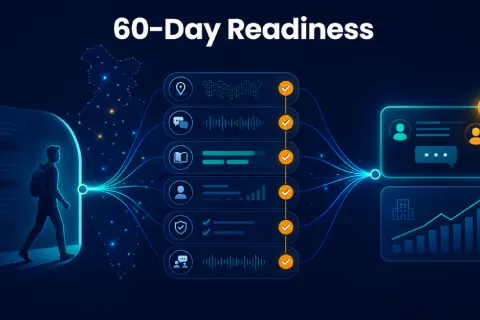

Your L&D team spent six months designing a "fail-proof" sales script for the newest insurance product launch. Then, a field agent in a Tier-2 city tries to use it. The customer asks a specific question about tax exemptions under the 2026 regulations, and the agent freezes. The glossy PDF on their phone won't load because of poor signal, and the "perfect" pitch evaporates before it even starts.
In the boardroom, the funnel looks clean. You see leads moving from MQL to SQL on a dashboard. But if you actually shadow a rep selling construction materials or medical devices, you’ll see the mess. They’re juggling chaotic WhatsApp threads, digging through outdated pricing sheets, and losing high-intent leads because they can't customize a product illustration on the spot. The process isn't the problem—it's the massive disconnect between corporate strategy and the frantic reality of a face-to-face meeting.
This Execution Gap is where revenue goes to die. It’s the friction that turns a projected 30% growth year into a series of missed targets and high agent turnover. When your frontline doesn't have just-in-time support, they default to whatever feels easiest, even if it’s wrong. Closing this gap isn't about scheduling more training sessions or writing longer manuals; it’s about making the right sales behavior the path of least resistance for the person standing in front of the customer.
Why do enterprise sales strategies fail at the frontline?

The disconnect between a high-level corporate strategy and the actual conversation happening on the showroom floor or inside a bank branch is where most enterprise growth plans go to die. Most strategies are built in glass-walled boardrooms based on ideal scenarios, but the frontline operates in a world of distractions, objections, and high-pressure quotas. When a Sales VP rolls out a new "strategic initiative" in 2026, it often arrives at the frontline as a 50-page PDF or a mandatory three-hour video session. By the time an agent is facing a skeptical customer in the Automotive or NBFC sector, that training is long forgotten. The strategy fails because it isn't "field-ready"—it’s too academic and too far removed from the actual point of sale.
Another major reason for failure is the friction of execution. We often expect sales agents to be part-time researchers. If an insurance agent or a pharma rep has to dig through three different apps to find a specific product illustrator or a competitor battlecard while the customer is waiting, they simply won't do it. They will rely on their memory, which is often outdated or inaccurate. In 2026, if your sales enablement isn't "just-in-time," it’s irrelevant. Strategies fail when they require the frontline to do more work to access information than it takes to just wing the conversation.
We also see a massive "Capability Gap" that broad strategies fail to address. A strategy might dictate *what* to sell, but it rarely masters the *how* for the bottom 60% of the sales force. While your top 10% of performers will figure out how to position a new consumer durable product regardless of the tools you give them, the rest of the distributed team struggles with message consistency. Without a way to replicate the high-impact behaviors of top performers through automated playbooks, the strategy remains a theory rather than a reality.
To stop the rot at the frontline, consider these actionable steps:
- Kill the manual:
Move away from static documents. If your sales playbooks aren't interactive and accessible within two taps on a mobile device, they won't be used during a live pitch.
- Focus on Lead Activation, not just Lead Gen:
A strategy fails if the lead sits in the CRM for 24 hours. Provide tools that allow agents to send personalized, high-quality content to a lead within seconds of the first contact.
- Deploy AI Role-plays:
Stop waiting for quarterly workshops to fix pitch errors. Use AI-driven role-plays that allow agents to practice handling objections specific to their industry—like "the interest rate is too high" in Banking or "the wait time is too long" in Automotive—before they get in front of a real human.
- Standardize the "Winning Pitch":
Identify the exact sequence of arguments and data points that lead to a conversion and bake that into a guided selling flow. This ensures a rookie in a rural branch performs at the same level as a veteran in a metro.
Pro Tip:
Stop measuring "Training Completion" and start measuring "Content Utilization" during active sales cycles. Knowing that an agent watched a video is useless; knowing they opened the "Objection Handling Battlecard" thirty seconds before closing a deal tells you your strategy is actually working. Supply the right answer at the exact moment of need, and the frontline will adopt your strategy by default because it makes their lives easier, not harder.
How does the "Paper vs. Field" gap impact annual revenue?
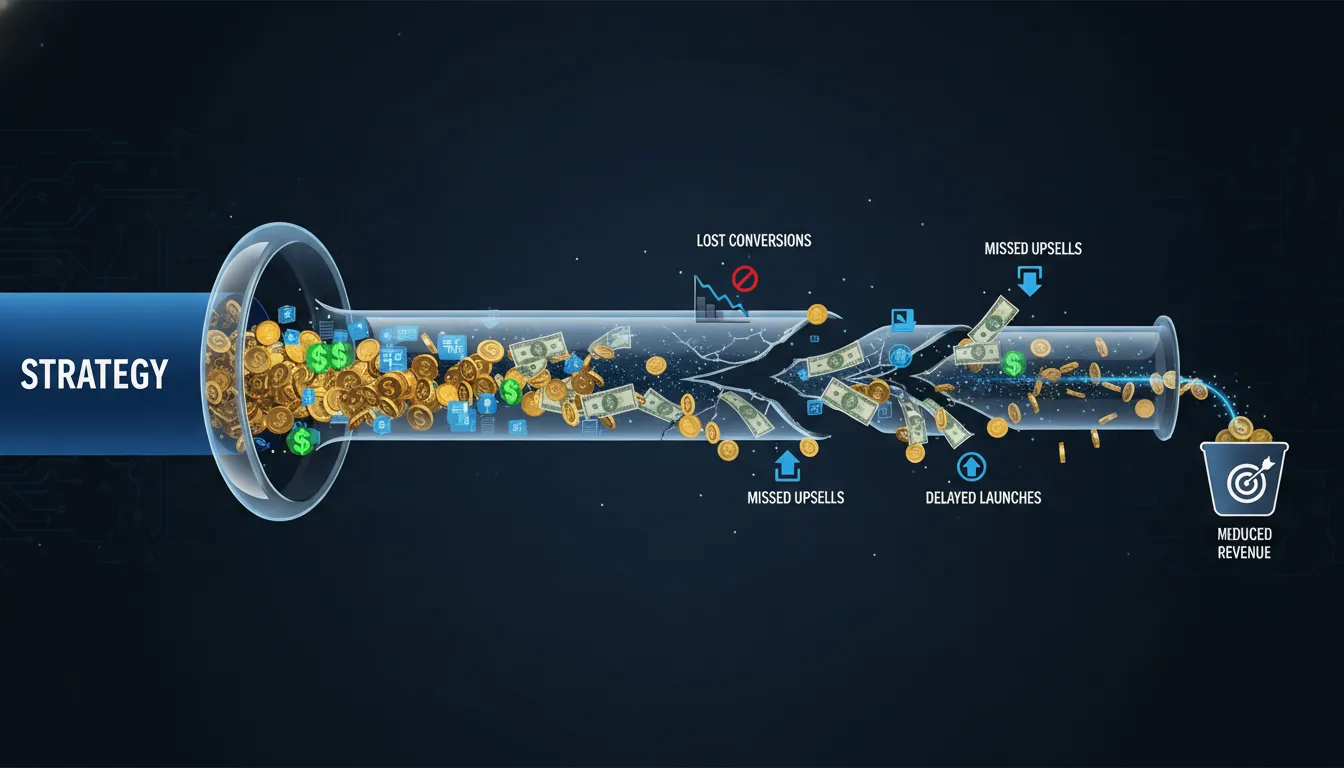
The "Paper vs. Field" gap isn't just a minor administrative headache; it’s a massive revenue leak that quietly bleeds your annual bottom line. When leadership designs a strategy on a whiteboard, it’s usually optimized for maximum margin and high-value product bundles. But when that strategy hits the street, it often gets diluted. Your frontline agents, whether they are selling insurance in a rural branch or cars on a showroom floor, often fall back on what’s "easy" rather than what’s "strategic."
This misalignment hits your revenue in three specific places. First, there’s the conversion drop-off. If your marketing says "Premium Experience" but your salesperson is fumbling the product demo or can't handle a basic price objection, the customer feels the friction. In a consumer-facing world, trust is fragile. If the pitch they hear doesn't match the promise they saw online, they walk. For an enterprise with 5,000 agents, a mere 2% drop in conversion due to "off-script" behavior can result in tens of millions of dollars in lost opportunities by the end of the fiscal year.
Second, the gap kills your cross-sell and up-sell potential. Your "on paper" plan likely includes sophisticated product bundling to increase Average Order Value (AOV). However, field agents often default to selling the single cheapest product because they lack the confidence or the immediate tools to explain complex bundles. They choose the path of least resistance to hit their volume targets, completely ignoring the value-based sales strategy that drives higher margins. This results in "margin erosion" where you’re moving units but failing to capture the full lifetime value of the customer.
Third, the time-to-market for new products becomes a nightmare. When you launch a new offering in 2026, you need the field to be proficient on day one. If the "paper" strategy takes three months to actually manifest in "field" behavior because of slow training cycles, you’ve lost a quarter of your launch momentum. Your competitors, who might have a tighter bridge between strategy and execution, will eat your market share before your team even learns how to pronounce the new product's name.
Pro Tip:
Stop treating the "Sales Playbook" as a document. Treat it as a live software version. If a specific objection is killing deals in the North region this week, update the "Field" guidance via your enablement platform instantly. The faster your "Field" mirrors your "Paper," the faster your revenue grows.
Why do field agents ignore static sales playbooks?

Static playbooks are essentially digital paperweights. When a field agent is sitting across from a skeptical customer in a car showroom or a busy bank branch, the last thing they are going to do is scroll through a 50-page PDF to find a specific interest rate or a rebuttal for a competitor’s claim. Field agents ignore these documents because they aren't designed for the reality of a live conversation. They are built for a classroom, not for the "moment of truth" where a deal is actually won or lost.
The biggest reason for this disconnect is friction. If it takes more than two clicks to find an answer, a salesperson will simply wing it. They value their rapport with the customer above all else. Breaking eye contact to hunt through a static file makes them look unprepared and kills the momentum of the pitch. In 2026, your team expects information to be as fast and searchable as a text message. If your playbook requires a deep-dive search, it’s going to be ghosted by the frontline every single time.
Another major pain point is irrelevance. Static playbooks are often "one size fits all." But an insurance agent selling to a 25-year-old techie needs a completely different approach than when they are talking to a 60-year-old retiree. Static content doesn't adapt to the person standing in front of the agent. It provides a generic script that feels robotic, and agents know that customers can smell a canned pitch from a mile away. They ignore the manual because they need tools that allow for personalization on the fly, not a rigid script that doesn't account for the human element of sales.
To turn this around and actually get your team to use the resources you provide, you need to shift from "documentation" to "enablement." Here is how you can make your sales materials actually useful for the field:
- Move to bite-sized content:
Stop sending long manuals. Break down product features, objection handlers, and pricing into "cards" or micro-modules that can be read in under 30 seconds.
- Implement Interactive Illustrators:
In industries like Insurance or Construction, numbers change constantly. Instead of static tables, give agents interactive calculators that allow them to show real-time value to the customer.
- Enable Search, Not Navigation:
Use an AI-powered search interface. An agent should be able to type "competitor X price" and get an immediate battlecard, rather than clicking through five different folders.
- Use Just-in-Time Nudges:
Deliver the right content based on where the agent is in the sales cycle. If they just logged a lead in the "Comparison" stage, push the relevant battlecard to their device automatically.
- Gamify the Learning:
Static playbooks are boring. Turn your pitch practice into AI-driven roleplays where agents can record a pitch and get instant feedback on their tone and clarity.
Pro Tip:
Look at your content usage analytics. If a specific "battlecard" or "product flyer" hasn't been opened in 30 days, delete it or rewrite it. High-performing field teams don't need *more* content; they need *better* access to the three or four things that actually close the deal. Keep your digital sales kit lean and mean.
How does lack of situational context kill field sales execution?

Field sales isn't just about showing up; it’s about showing up with the right story at the exact right moment. When a sales rep walks into a meeting without situational context, they aren't just unprepared—they are actively damaging the brand's credibility. Situational context is the difference between a consultative partnership and a nuisance. In the field, context includes knowing a customer’s previous interactions, their specific pain points in their local geography, and where they currently sit in the buying journey. Without this, your frontline team is essentially flying blind, relying on generic scripts that rarely resonate with sophisticated buyers in 2026.
The most common execution killer is the "data disconnect." Your CRM might show that a lead is interested in a home loan, but it doesn't tell the field agent that the lead just spent twenty minutes on your website looking at property insurance for a commercial warehouse. If the agent walks in pushing residential products, the prospect immediately feels like just another number in a database. This lack of relevance creates instant friction. In industries like banking or insurance, where trust is the primary currency, failing to acknowledge a customer’s specific situation makes the agent look incompetent and the organization look disorganized.
Another major issue is the "Discovery Fatigue" caused by lack of context. Prospects hate repeating themselves. If a customer has already provided their financial details or medical history to a digital bot or a call center agent, and your field rep starts the conversation by asking those same basic questions, the momentum dies. This isn't just a waste of time; it’s a signal to the customer that your internal systems don't talk to each other. When execution fails in the field, it’s usually because the rep spent 80% of the meeting gathering information they should have already had, leaving only 20% of the time for actual persuasion and closing.
Situational context also dictates the "how" of a sales pitch. A pharma rep needs different materials for a specialist than they do for a general practitioner. An automotive salesperson needs to know if a walk-in lead has already used an online configurator. When you strip away that context, reps default to the "path of least resistance"—the generic pitch. Generic pitches lead to price-based objections because you haven't demonstrated enough specific value to justify a premium. To fix field execution, you have to bridge the gap between back-end data and front-end delivery in real-time.
Why is traditional sales training failing distributed teams in 2026?

Traditional "event-based" training is a relic. The old model—flying everyone to a regional hub for a three-day intensive workshop—is effectively dead for distributed teams in 2026. The biggest reason it’s failing is the massive disconnect between when a salesperson learns a skill and when they actually need to use it. In the high-stakes world of banking, insurance, or automotive sales, a lead doesn't wait for your agent to remember a slide from a workshop three months ago. If the knowledge isn't available in the five minutes before they walk into a meeting, that training might as well not exist.
Distributed teams face a unique "context tax." An insurance agent in a Tier 2 city faces entirely different objections than a wealth manager in a metro area. Traditional training ignores these regional nuances, offering a "one-size-fits-all" curriculum that feels irrelevant to the person on the ground. When the content doesn't reflect the reality of their specific territory or the immediate needs of their consumer, agents tune out. They stop looking at the LMS and start winging it, which leads to inconsistent brand messaging and missed quotas.
Another critical failure is the lack of "muscle memory" development. You can’t learn to handle a difficult objection about interest rates or drug efficacy by reading a PDF. In 2026, the consumer is more informed than ever. They’ve done their research before the first meeting. If your distributed team isn't practicing their pitch in a simulated, low-stakes environment—like an AI role-play—they are practicing on your customers. That is an expensive way to learn.
Finally, there is the "Information Latency" problem. In industries like NBFCs or Consumer Durables, product specs, interest rates, and competitive battlecards change weekly. Traditional training cycles are too slow to keep up. By the time a training module is recorded, edited, and pushed out to a distributed workforce, the market has moved on. The result? A frontline team that is consistently two steps behind the competition.
How does AI-led lead activation bridge the execution divide?

The execution divide happens the second a high-intent lead hits your CRM and then sits there for six hours because your frontline agent is stuck in a meeting or driving between client sites. In industries like banking or automotive, that delay is where deals go to die. AI-led lead activation bridges this gap by removing the "human wait time" and the "content search time" that plague distributed sales teams.
Most sales leaders think they have a lead generation problem, but they actually have an activation problem. You spend millions on marketing to get someone interested in a home loan or a new SUV, but the experience falls apart when the agent sends a generic, outdated brochure three days later. AI changes the math by instantly analyzing the lead's profile and equipping the agent with a personalized "ready-to-send" kit before they even pick up the phone.
The divide exists because your top 10% of reps know exactly what to say, while the other 90% are winging it. AI-led systems like PitchWiz or specialized sales copilots act as a digital ride-along. They look at the lead data and tell the rep: "This customer cares about fuel efficiency and low down payments; use these three specific talking points." This forces consistency across thousands of agents, regardless of whether they are in a metro city or a rural branch.
To turn this into a reality for your team, focus on these tactical shifts:
- Automate the "Next Best Action":
Don’t leave it to the agent to decide who to call first. Use AI to score leads based on real-time behavior and push a notification to the agent's phone with a pre-written, personalized WhatsApp message or email ready to go.
- Deploy Interactive Illustrators:
In complex sales like insurance or construction materials, lead activation fails when the customer doesn't understand the value. AI-led tools can generate interactive product illustrations on the fly that show a customer exactly how a specific policy or material fits their specific budget and needs.
- Real-Time Objection Handling:
When a lead says, "The competitor’s interest rate is lower," the execution divide widens if the agent stumbles. AI-powered battlecards should pop up instantly on the agent’s device, providing the exact counter-argument needed to keep the conversation moving.
- Feedback Loops for Training:
Use AI to analyze which activation content is actually closing deals. If a specific interactive calculator is converting 30% better in the Pharma sector, the system should automatically nudge the rest of the team to use that specific asset.
The goal isn't just to "contact" the lead; it's to "activate" them. That means moving them from a state of general interest to a state of specific intent. By the time a human rep steps in for the deep-dive conversation, the AI has already done the heavy lifting of educating the prospect and framing the value proposition. This ensures that the agent's time is spent on high-value closing activities rather than administrative follow-ups or hunting for the right PDF.
In 2026, the speed of your response is your biggest competitive advantage. If your lead activation isn't happening in under 120 seconds with hyper-relevant content, you aren't just losing a lead—you're handing it to a competitor who has automated that bridge.
What are the hidden costs of inaccessible sales content?

When your sales team can’t find the right deck, case study, or product sheet in under thirty seconds, you aren't just losing time—you’re bleeding revenue in ways that don’t show up on a standard P&L statement. The most obvious cost is the "search tax." Industry data suggests sales reps spend roughly 30% of their day looking for or creating content. In a high-stakes environment like Insurance or Banking, where 2026 customers expect instant answers, making a lead wait two hours for a specific policy breakdown is a deal-killer. By the time that PDF hits their inbox, the emotional momentum of the conversation has evaporated.
Then there is the "Franken-deck" problem. When the central repository is a mess, reps go rogue. They start saving old versions of presentations to their desktops. They "tweak" a slide from 2024 to fit a 2026 pitch. This leads to brand dilution and, more dangerously, compliance risks. In regulated sectors like Pharma or NBFCs, using a slide with outdated interest rates or unapproved medical claims isn't just a bad look; it’s a legal liability. You end up with a distributed team telling ten different versions of the same story, which confuses the buyer and erodes trust.
Beyond the external impact, there’s a massive psychological cost to your frontline. Sales is a game of confidence. When a rep is sitting across from a prospect in an Automotive showroom or a client’s office and they can’t pull up a relevant interactive illustrator or a battlecard to handle a tough objection, they lose their edge. This friction leads to faster burnout. High-performing reps want to sell, not act as librarians or amateur graphic designers. If the friction of finding content is too high, they simply stop using it, reverting to "vocal-only" pitches that fail to visualize value for the customer.
Finally, you lose your feedback loop. When content is inaccessible or shared through unofficial channels like personal WhatsApp threads, leadership has zero visibility. You can't see which case study is actually closing deals or which product flyer is being ignored. You are essentially flying blind, investing marketing budget into content that may never see the light of day.
How can just-in-time enablement solve field objection handling?

Most sales training fails because it happens in a vacuum. You sit in a classroom for three days, get pumped up on coffee and slides, and then forget 80% of it by the time you're actually sitting across from a prospect in a car dealership or a bank branch. When a customer throws a curveball—like "I heard your claim settlement process is a nightmare" or "The competitor offers a 2% lower interest rate"—the rep's brain often goes blank. This "brain-fade" is where deals die.
Just-in-time (JIT) enablement stops the "let me get back to you on that" cycle. Instead of relying on a memory of a workshop from six months ago, a rep has a digital "brain" in their pocket. If a prospect at a construction site questions the durability of a specific material, the rep doesn't fumble. They pull up a 30-second visual comparison or a lab test result right then and there. It transforms an objection from a confrontation into a consultation.
To make this work, you need to break down objections into "micro-moments." In industries like Insurance or NBFC, objections are rarely about the product itself and more about trust or hidden costs. JIT enablement provides specific battlecards that don't just give a script, but offer a "winning move." This could be a dynamic calculator that shows how a slightly higher premium leads to significantly better coverage during a critical illness. When the customer sees the math on a screen in real-time, the objection doesn't just get answered—it gets solved.
Actionable steps to implement JIT objection handling:
- Crowdsource "Deal Killers":
Audit your frontline teams to identify the top five objections they hear every week. Don't guess based on what leadership thinks; get the raw data from the field.
- Kill the PDFs:
Nobody has the time to scroll through a 50-page product manual on a mobile phone while a customer is watching. Turn those manuals into 10-second swipeable cards or "battlecards" focused on specific pain points.
- Deploy Interactive Calculators:
If price is the main hurdle, give the rep a tool where they can input the customer's specific data. Showing a personalized ROI or a "cost of waiting" calculation is 10x more effective than just saying "we are better."
- Use Visual Evidence:
Sometimes a quick video testimonial from a similar client or a side-by-side product comparison visual carries more weight than any verbal script. Make these instantly searchable by industry or use case.
- Replicate Your Stars:
Take the "comeback" used by your top-performing rep and turn it into a template for everyone else. JIT enablement allows you to democratize that "A-player" logic across thousands of distributed agents instantly.
From the customer’s perspective, a rep who has instant, accurate answers builds immediate credibility. Whether you are buying a luxury car or a complex pharma solution, you want to feel like the person across the table is a subject matter expert. If they have to call a manager for every small detail, the trust evaporates. JIT enablement makes every rep look like an expert, which is the fastest way to shorten the sales cycle in 2026.
Why is real-time capability mapping critical for sales managers?

Most sales managers are flying blind, relying on "gut feeling" or end-of-month revenue reports to judge their team’s performance. The problem is that revenue is a lagging indicator. By the time you see a dip in the numbers, the damage is already done. Real-time capability mapping flips this script by showing you exactly where your team stands before they even walk into a high-stakes meeting. It’s about knowing, in the moment, whether a rep in the field is actually equipped to handle a complex objection about interest rates in banking or explain a new hybrid engine’s specs in the automotive sector.
Think of it as a live GPS for sales performance. Without it, you’re trying to coach 20 different people based on one generic training session they had three months ago. In 2026, the market moves too fast for that. A product update or a competitor’s price drop can happen overnight. If you don't have a real-time view of who has mastered the new talk track and who is still stumbling, you’re leaving money on the table. Managers need to see the "capability heat map" of their team to know exactly where to spend their limited coaching time.
For industries with massive, distributed teams like NBFCs or Pharma, this is even more critical. You can't be everywhere at once. Real-time mapping allows you to identify "capability pockets." Maybe your Mumbai team is great at product knowledge but fails at closing, while your Delhi team is the opposite. When you have this data at your fingertips, you stop giving generic advice and start providing surgical interventions that actually move the needle on conversion rates.
This visibility also empowers the reps. When a frontline agent knows exactly where they are lagging—whether it’s handling "it’s too expensive" objections or navigating a new digital onboarding tool—they can take ownership of their own learning journey. It turns coaching from a top-down "manager's chore" into a collaborative effort focused on hitting specific, measurable benchmarks.
How to implement this effectively:
- Move beyond the LMS:
Stop relying on completion certificates. A rep passing a multiple-choice quiz doesn’t mean they can pitch a complex insurance product under pressure. Use AI-driven roleplays and pitch analysis to get a true sense of their "battle-readiness."
- Identify the "Middle 60%":
Your top 20% will always hit their numbers, and the bottom 20% might not be the right fit. Focus your mapping efforts on the middle 60%. Moving their capability score by just 10% through targeted coaching is where your biggest revenue growth will come from.
- Connect capability to specific outcomes:
If your data shows a rep is struggling with the "interactive product illustrator" but their deal size is shrinking, you have a direct link between a skill gap and a business problem. Fix the skill, fix the revenue.
- Audit your battlecards weekly:
Use real-time feedback from the field to see which objection-handling techniques are actually working in the current market and map which reps are using them correctly.
Pro Tip:
Stop coaching everyone on everything. Use your capability map to create "peer-to-peer" coaching circles. Pair a rep who is struggling with "Value-Added Services" with a top performer in that specific area. It scales your impact without adding more hours to your calendar.
How to build a high-performance sales execution system?

Building a high-performance sales execution system is about closing the gap between your top 5% of performers and the rest of the pack. Most sales leaders make the mistake of focusing entirely on the CRM—which is basically a digital filing cabinet—rather than the actual "moment of truth" when a salesperson is talking to a customer. A true execution system is the connective tissue that tells an agent exactly what to do, what to say, and what to share at every specific stage of the journey.
The first move is moving away from static training. If you’re still relying on a week-long orientation and a 200-page PDF manual, your execution is already failing. In high-stakes sectors like banking, insurance, or pharma, products and regulations move too fast. You need dynamic playbooks that live where the sales rep lives. This means having a system that recognizes a lead’s profile and instantly serves up the right talk track, the right battlecard for a competitor’s 2026 model, and the right regulatory disclosures.
Actionables to get the foundation right:
- Centralize your "Source of Truth." If an agent has to look in more than one place for a brochure, a calculator, or a price list, they won't use any of them.
- Map content to the sales stage. Your system should automatically prompt a "Next Best Action." For example, if a lead moves to the "Evaluation" stage, the system should push a customer testimonial or a comparison sheet to the rep’s mobile device.
- Kill the "Follow-up" delay. Use tools that let agents generate personalized, branded pitch decks or interactive product illustrators on the fly during the meeting, rather than waiting to send them from a laptop later that night.
- Standardize objection handling. Identify the top 10 reasons people say "no" in your industry and build digital battlecards that provide concise, punchy rebuttals that reps can pull up in seconds.
Next, you have to tackle the "skill vs. will" problem. You can have the most motivated team in the world, but if they lack the capability to explain a complex financial product or a vehicle’s technical specs, they won't close. High-performance systems use AI-driven role-plays to let agents practice their pitch in a safe environment. Instead of a manager spending hours on 1-on-1 coaching, the system can score the agent on their tone, product knowledge, and handling of objections, providing instant feedback.
Conclusion
Let’s be honest: your sales playbook is probably gathering digital dust in a shared drive. It looks great in a boardroom presentation, but it’s useless to an agent trying to explain a complex loan product or an insurance rider in a noisy branch. The execution gap isn't a strategy problem; it’s a reality problem. If your team has to choose between following a complex process and actually making the sale, they’ll pick the sale every single time.
In 2026, relying on your field force to memorize static battlecards or scroll through PDFs is a recipe for missed targets. Teams in high-velocity sectors like NBFCs, banking, and pharma don't need more training workshops—they need answers while the customer is still sitting across from them. Real-world sales success happens in those tiny windows where an agent can handle a tough objection or show a personalized product illustration without losing their momentum.
Stop letting your revenue leak through the cracks of a broken workflow. Sharpsell.ai was built to bridge this exact gap by putting high-impact playbooks directly into the hands of your frontline agents. We turn your "on-paper" strategy into actual field results through real-time lead activation and AI-powered role-plays that stick.
Ready to see how India’s largest enterprise teams drive consistency across every territory? Book a demo with Sharpsell.ai today and let's turn your sales process into a sales reality.
What’s a Rich Text element?
The rich text element allows you to create and format headings, paragraphs, blockquotes, images, and video all in one place instead of having to add and format them individually. Just double-click and easily create content.
Static and dynamic content editing
A rich text element can be used with static or dynamic content. For static content, just drop it into any page and begin editing. For dynamic content, add a rich text field to any collection and then connect a rich text element to that field in the settings panel. Voila!
How to customize formatting for each rich text
Headings, paragraphs, blockquotes, figures, images, and figure captions can all be styled after a class is added to the rich text element using the "When inside of" nested selector system.
zdxfhgfg
- sdnslk,xdv
- SDlknjsdv
- SDvlknj
- sdgdf v