
The Enterprise Guide to Reducing Sales Rep Ramp-Up Time in India

Most international and enterprise sales teams entering the Indian market in 2026 hit a wall not because of poor product-market fit, but because they underestimate the operational groundwork required before revenue can move

The Enterprise Guide to Reducing Sales Rep Ramp-Up Time in India

Most international and enterprise sales teams entering the Indian market in 2026 hit a wall not because of poor product-market fit, but because they underestimate the operational groundwork required before revenue can move. India is not a market where a sales team can simply import a global playbook, hire aggressively, and expect the pipeline to convert.

The friction is usually local: trust gaps, procurement complexity, credit terms, regional buying behavior, compliance requirements, language preferences, and uneven rep readiness. A “hit-the-ground-running” approach often turns into six months of stalled pipelines because the first 60 days were not used to stabilize the sales motion.

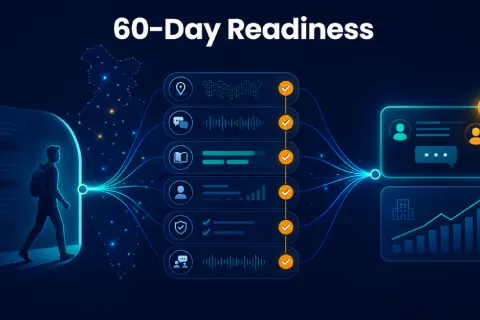
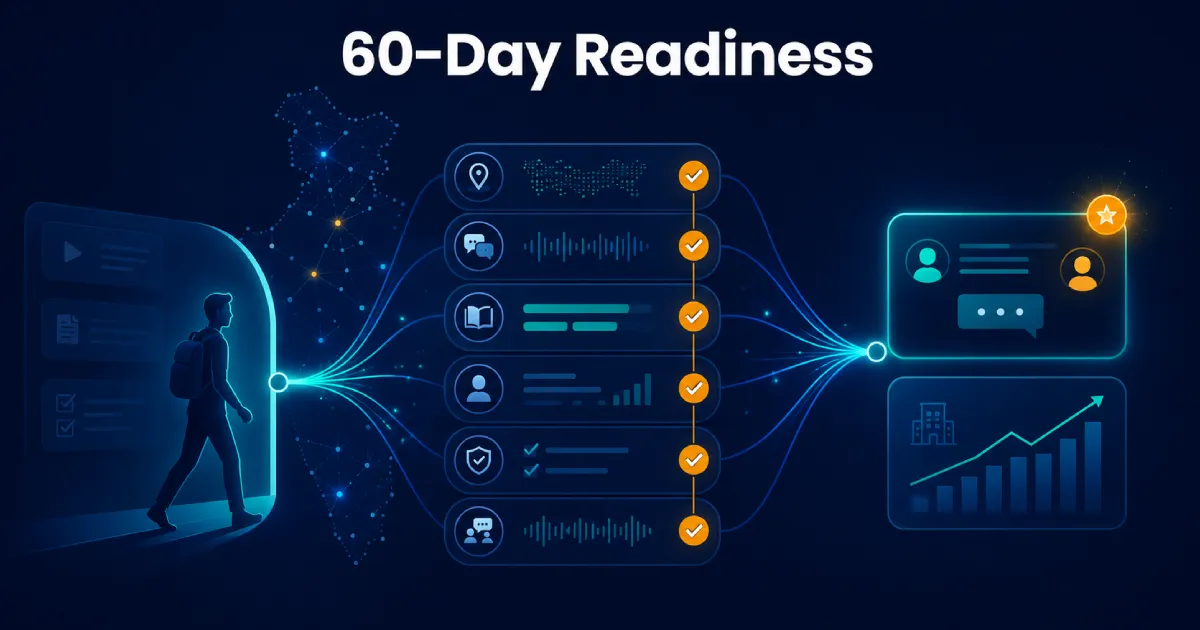
This is why the 60-day ramp-up matters. It is not a delay in selling. It is a structured window to calibrate sellers, managers, content, compliance, workflows, and customer context before the team is expected to perform at scale. In India, speed without preparation does not create velocity. It creates leakage.
Q1: Why is the traditional 6-month ramp-up killing Indian enterprise margins?

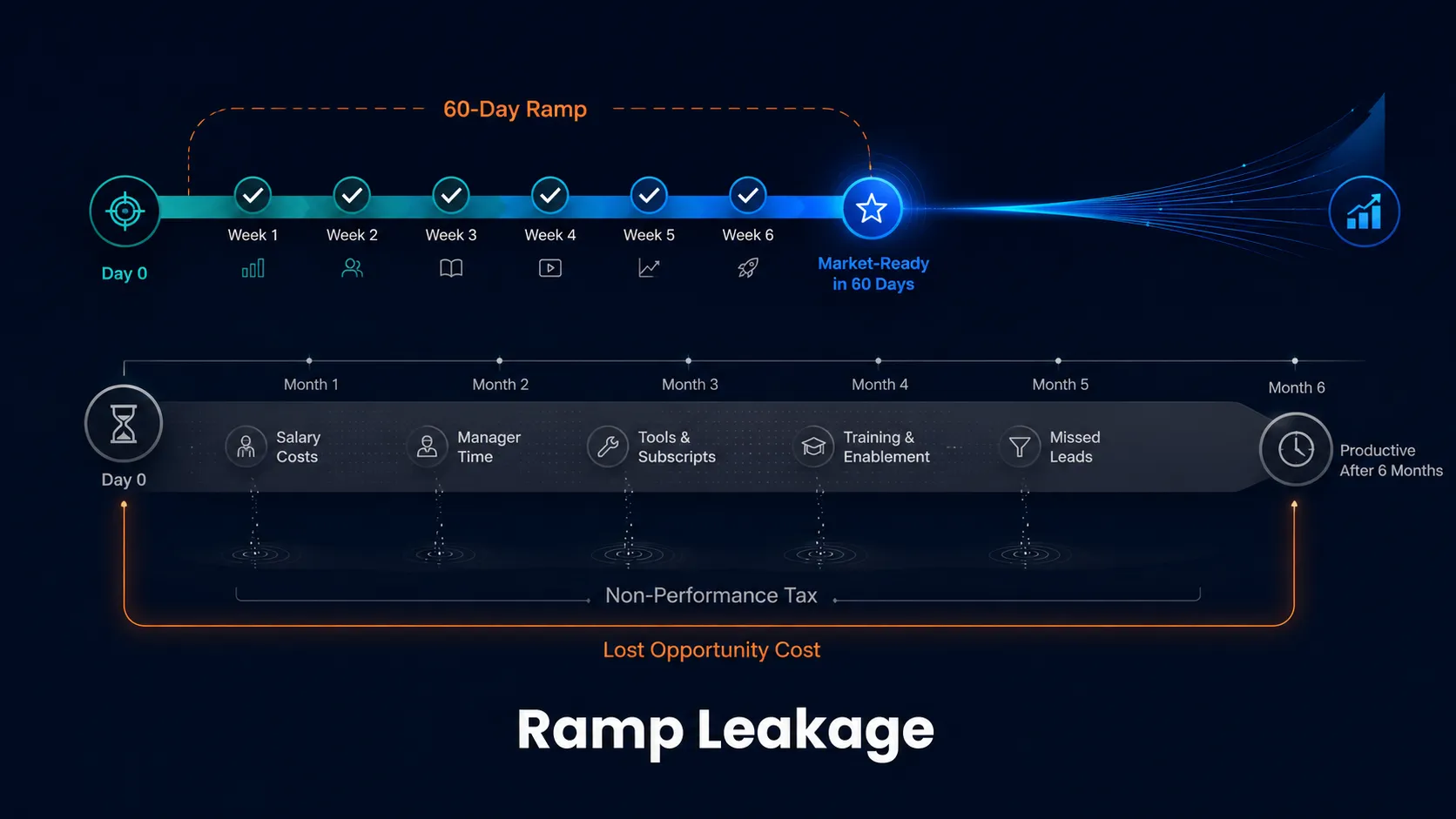
The financial math behind the 6-month ramp-up is broken. A new sales hire does not cost only salary. The actual cost includes recruitment fees, benefits, manager time, tech licenses, onboarding content, shadowing effort, and lost opportunities. If a rep takes 180 days to become productive, the organization is paying a non-performance tax for half the year.

The opportunity cost is even larger. In Indian enterprise sales, where buying cycles are already long and consensus-driven, a non-productive rep means missed first-touch moments, delayed follow-ups, and cooling leads. While your team is still “learning the market,” a competitor with a compressed enablement model can appear more prepared in the first meeting.

The 6-month model also ignores modern talent mobility. If a rep stays for 24 months but takes 6 months to ramp up, 25% of their productive lifecycle is lost to training. In high-growth Indian hubs where attrition is real, that is a dangerous equation.

The alternative is not to rush training. It is to redesign ramp-up around weekly execution milestones. By Week 2, the rep should handle basic discovery. By Week 4, they should manage common objections. By Week 6, they should run controlled conversations. By Day 60, they should be market-ready for defined deal types.

Pro Tip: Do not define ramp-up as “knows the product.” Define it as “can move a live customer conversation forward without creating risk.”
Q2: How does regional context influence sales velocity in Tier 1 versus Tier 2 cities?

India is not one sales market. Tier 1 and Tier 2 markets often behave like different operating environments.

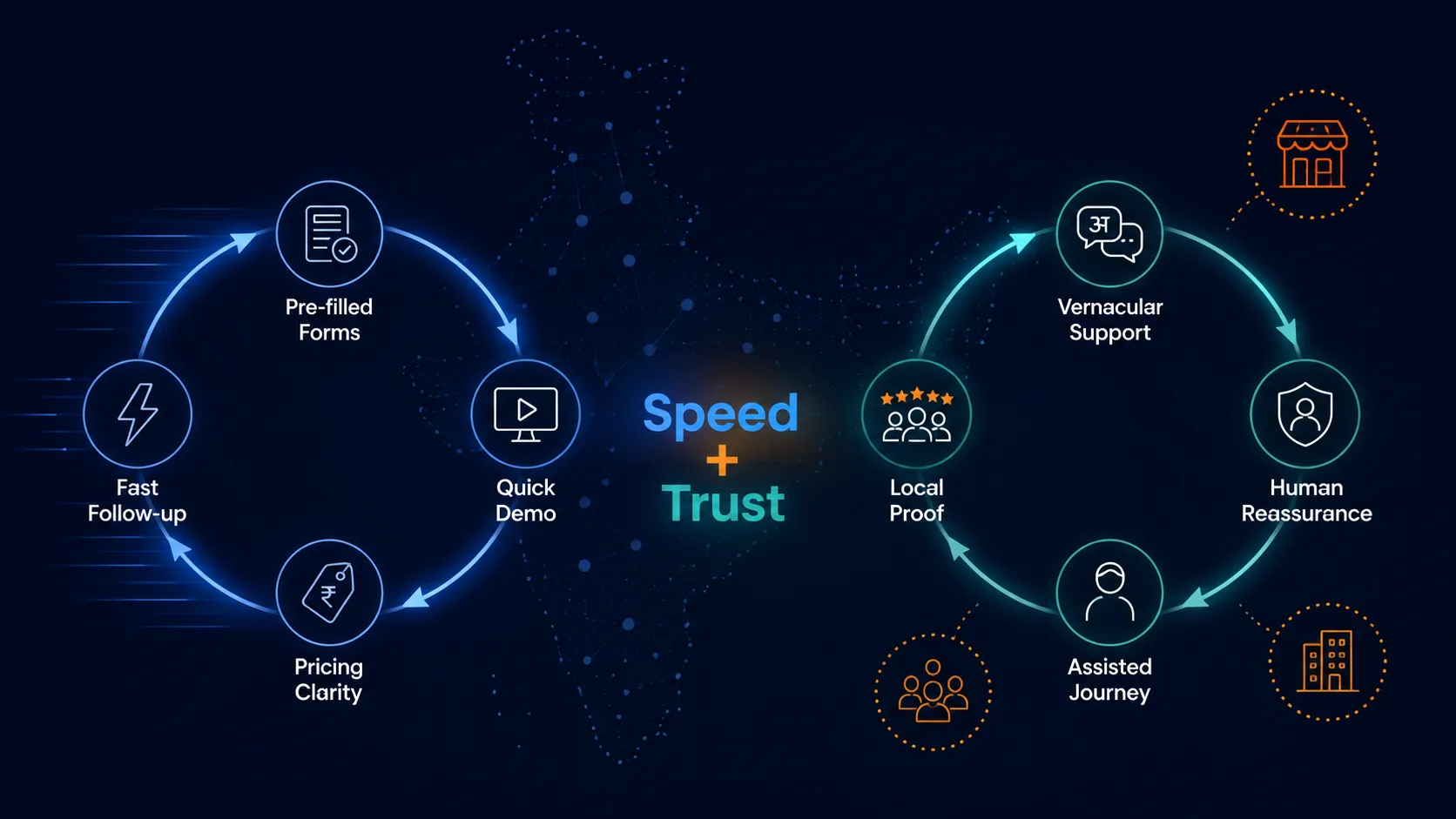
In Tier 1 cities, buyers are usually more exposed to digital journeys, credit ecosystems, comparison-led decision-making, and faster response expectations. They expect speed, clarity, and professional follow-through. Sales velocity depends on removing friction: pre-filled forms, digital documentation, fast demos, quick pricing clarity, and responsive support.

In Tier 2 markets, trust often matters more than speed. Buyers may need more reassurance, local proof, regional language support, and human assistance before committing. Vernacular communication is not cosmetic. It reduces cognitive friction. A customer who sees collateral, invoices, updates, or terms in their own language feels the brand is closer to their reality.

Payment psychology also differs. Tier 1 buyers may be comfortable with digital subscriptions and credit-led models. Tier 2 buyers may prefer milestone-based payments, assisted journeys, or hybrid physical-digital touchpoints. If a company forces a Tier 1 payment and communication model into a Tier 2 market, the deal can stall at the final step.

The practical answer is localization by funnel stage. Tier 1 needs speed loops. Tier 2 needs trust loops. Both need a sales system that tells reps what to say, show, and follow up with based on market context.

Pro Tip: Use geo-specific social proof. A testimonial from the same city, industry, or community often reduces evaluation time more effectively than a generic national case study.
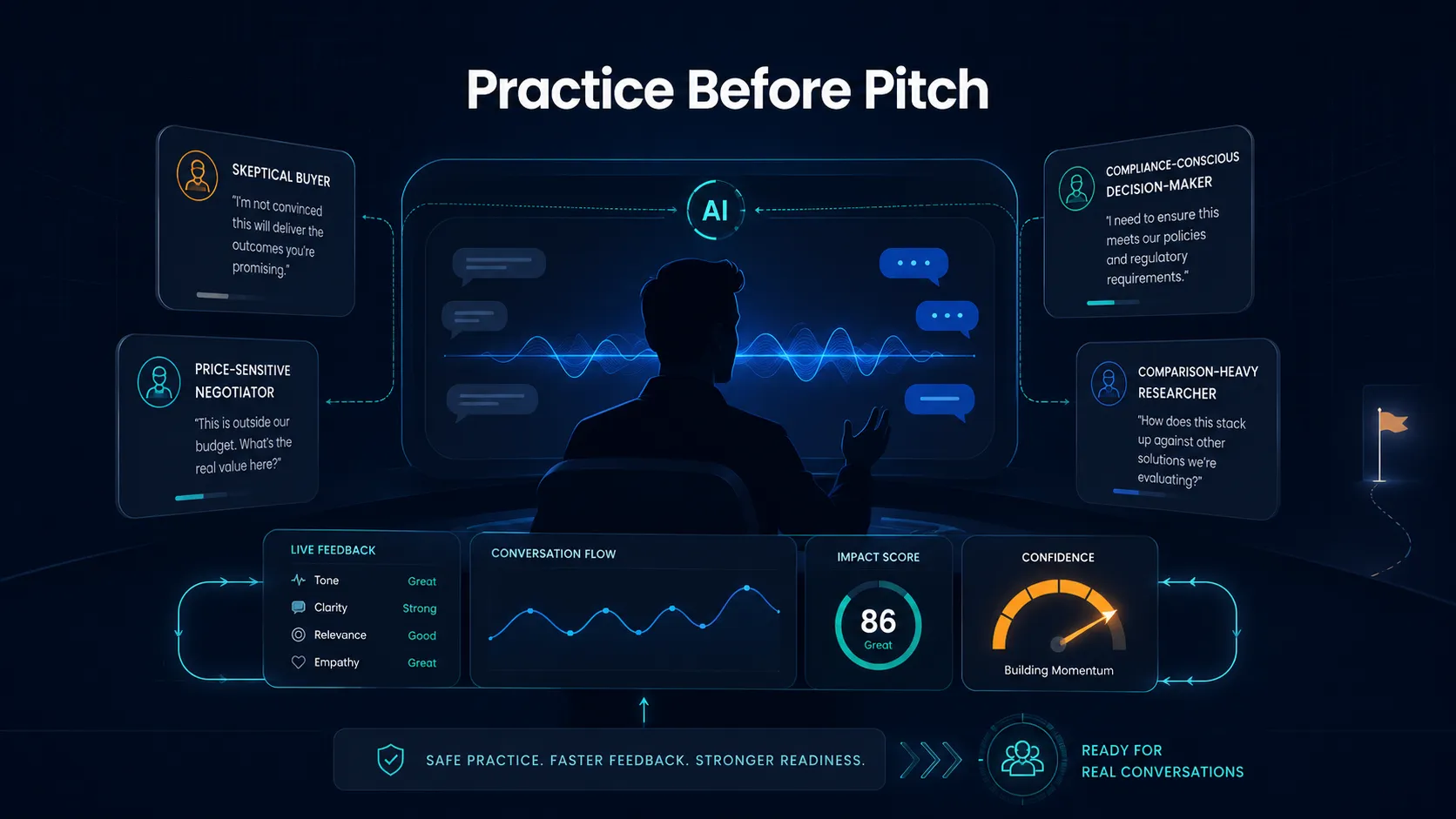
Q3: What role does AI-driven roleplay play in accelerating rep readiness?

AI-driven roleplay works like a flight simulator for customer-facing teams. Traditional shadowing is slow, subjective, and hard to scale. It depends on manager availability, quality of live calls, and the trainee’s ability to absorb lessons passively.

AI roleplay changes this by allowing reps to practice difficult conversations in a safe environment before facing real customers. Instead of memorizing scripts, reps learn to respond to dynamic personas: the skeptical buyer, the price-sensitive negotiator, the urgent problem-solver, the compliance-conscious decision-maker, or the comparison-heavy researcher.

The biggest advantage is feedback speed. In traditional models, a rep may wait days for a manager to review a call. With AI roleplay, feedback is immediate. Did the rep build trust? Did they ask the right discovery questions? Did they handle the objection with the right data point? Did they sound confident without over-promising?

This allows reps to complete many practice cycles in a short time. More importantly, it builds confidence without risking live leads. Reps can fail safely, refine their language, and build muscle memory before entering high-stakes conversations.

AI roleplay is also useful after launch. When a new product is released or a new objection appears in the market, scenarios can be updated quickly so the entire team practices the same response.

Pro Tip: Use AI roleplay as a pre-flight warm-up, not only as onboarding. Before a high-value meeting, even experienced reps can rehearse the buyer persona, likely objections, and closing path.
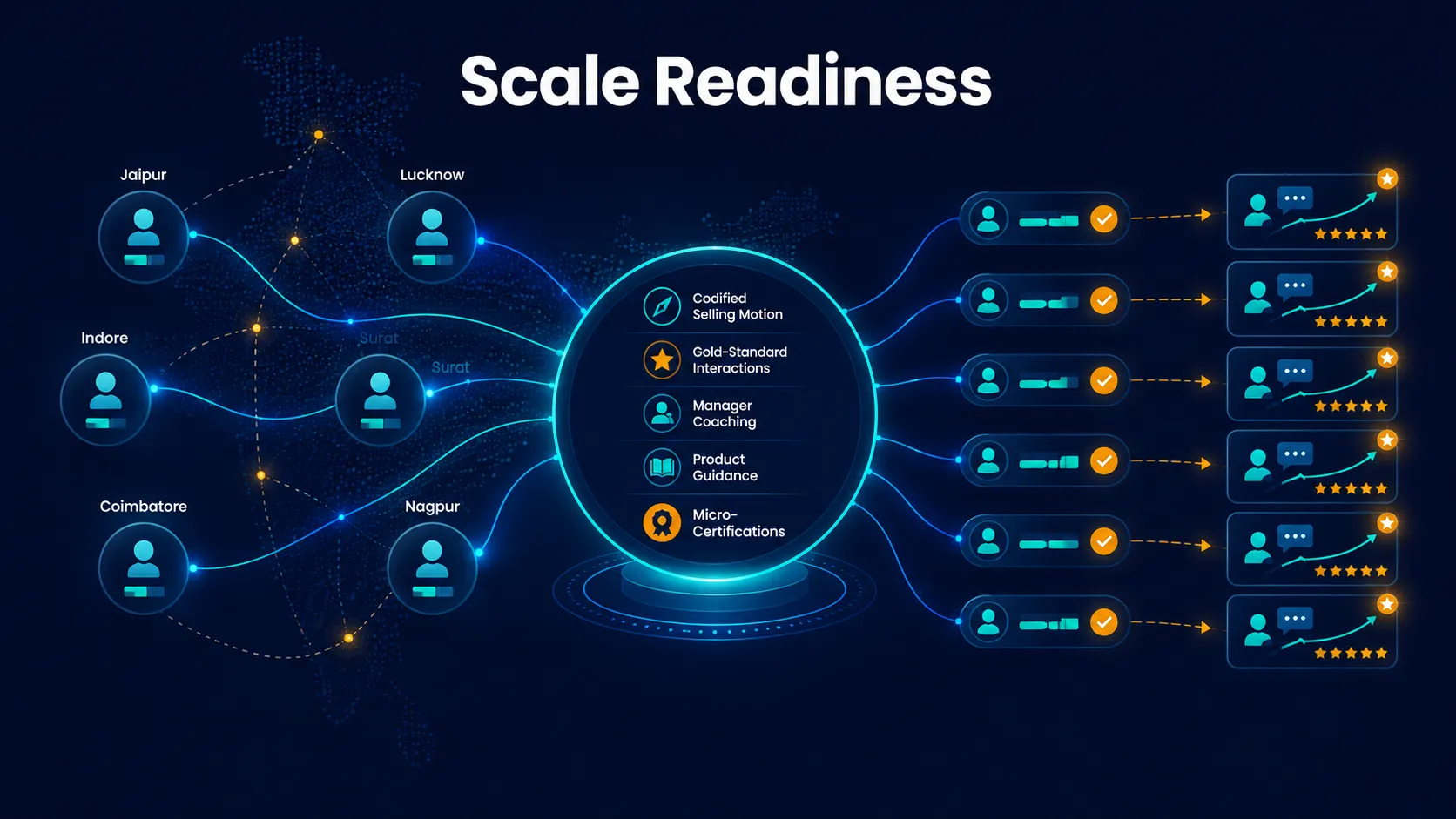
Q4: How do you bridge the experience gap when scaling teams in emerging Indian hubs?

Scaling sales teams in cities like Jaipur, Indore, Coimbatore, Surat, Lucknow, or Nagpur requires a different hiring assumption. You may find high energy, ambition, and lower attrition, but not always deep exposure to complex enterprise selling.

The answer is not to wait for fully formed talent. It is to build a system that makes less experienced reps effective faster.

First, codify the selling motion. Map the most common customer objections, regional proof points, discovery questions, product explanations, and follow-up paths. Do not let every new hire invent their own version of the pitch.

Second, create a library of “gold standard” interactions. New reps should study not just product documents, but real examples of strong openings, strong objection handling, and strong closing behavior. This compresses experience by making tacit knowledge visible.

Third, strengthen middle management. Many scaling efforts fail not because reps lack intent, but because frontline managers are underprepared. Emerging hubs need managers who can coach execution, not only track attendance and activity.

Fourth, use technology to reduce cognitive load. Reps should not have to remember every product detail, policy clause, pricing proof point, and competitor comparison. The right guidance should appear inside their workflow.

Pro Tip: Break readiness into micro-certifications: opening, discovery, need analysis, objection handling, compliance, closing, and follow-up. Do not let reps handle high-value leads until they clear the relevant stage.

Q5: Which incentive structures prevent rep churn during onboarding?

Early-stage churn often happens because new reps feel they are failing before they have had a fair chance to become productive. If incentives only reward closed revenue, the first 60 days become demoralizing. Reps work hard, but the compensation system tells them they are not valuable yet.

A better approach is to design ramp-up incentives around controllable progress. In the first few weeks, reward learning completion, certification scores, first meetings booked, CRM hygiene, follow-up discipline, and manager-approved conversation quality. This gives new reps a path to early confidence.

However, this does not mean paying for empty activity. Activity-based incentives can create bad behavior if they reward calls made without regard to outcomes. The right model should reward progress toward market readiness.

For example, a new rep can earn milestone incentives for completing roleplay certification, handling a simulated objection, shadowing and documenting customer insights, conducting supervised discovery calls, and maintaining clean compliance records.

This protects both motivation and quality. The rep sees momentum. The company avoids pushing underprepared sellers into live conversations too early.

Pro Tip: Use a 60-day ramp scorecard that balances activity, skill, compliance, and pipeline contribution. Revenue should matter, but it should not be the only early signal.
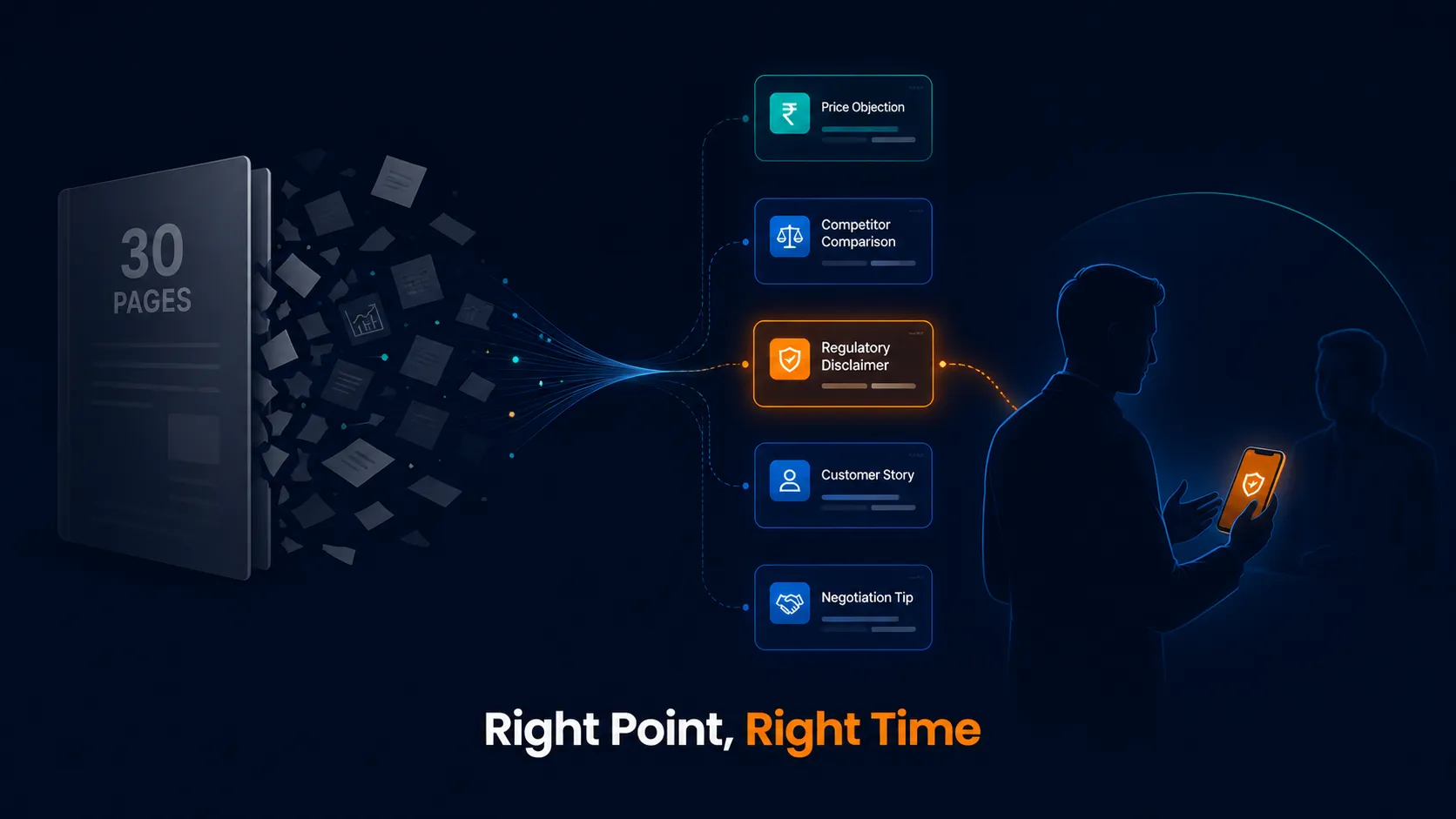
Q6: How can micro-learning solve information overload in Indian B2B sales?

Indian B2B reps often deal with complex products, regional differences, long sales cycles, and demanding customers. Giving them a 30-page PDF or a day-long classroom session does not solve the problem. It creates overload.

Micro-learning works because it breaks knowledge into small, usable units. A rep does not need the entire product manual before every conversation. They need the right point at the right moment: a competitor comparison, a pricing explanation, a regulatory disclaimer, a customer story, or a two-minute objection-handling guide.

The real power is spaced repetition. When small learning modules are pushed at regular intervals, knowledge moves from short-term memory to working confidence. Training becomes a habit rather than an event.

Micro-learning must also be mobile-first. Indian reps are often in branches, on the road, at counters, or between meetings. The content should be searchable, short, and easy to consume. If a rep types “price objection” or “competitor comparison,” the answer should appear in seconds.

The best micro-learning is triggered by context. If a deal moves to negotiation, the system should surface a short negotiation module. If a rep is selling in a Tier 2 region, the system should surface local proof points. If a rep is preparing for a regulated product pitch, it should surface mandatory disclosure reminders.

Pro Tip: Strip every training asset down to its “gold nuggets.” If a 30-page document has five points that actually help close deals, turn those five into short modules.

Q7: Why is hybrid shadow-selling effective in India?

Hybrid shadow-selling works because Indian buying behavior is heavily trust-driven. Many buyers do not respond well to direct sales pressure, especially in high-consideration categories. They prefer to gather signals from peers, communities, experts, local networks, and informal proof before engaging deeply with a seller.

Shadow-selling builds this trust before the formal pitch. It uses educational content, community influence, SME-led insights, peer stories, and localized proof to make the buyer warmer before the rep enters the conversation.

The “hybrid” part matters because indirect influence alone is not enough. Once intent appears, a human seller still needs to navigate price sensitivity, stakeholder alignment, negotiation, documentation, and local nuance.

This approach can reduce the consideration phase. By the time the buyer enters the CRM, they may already have seen useful content, understood the category better, and developed basic trust. The rep is no longer starting from zero.

The risk is over-automation. India still rewards human judgment, especially in complex or regulated purchases. The best model uses content to build familiarity and sellers to convert that familiarity into action.

Pro Tip: Practice contextual gifting. Send a useful insight, checklist, or local benchmark before asking for a meeting. In India, value given before the ask often opens stronger doors.
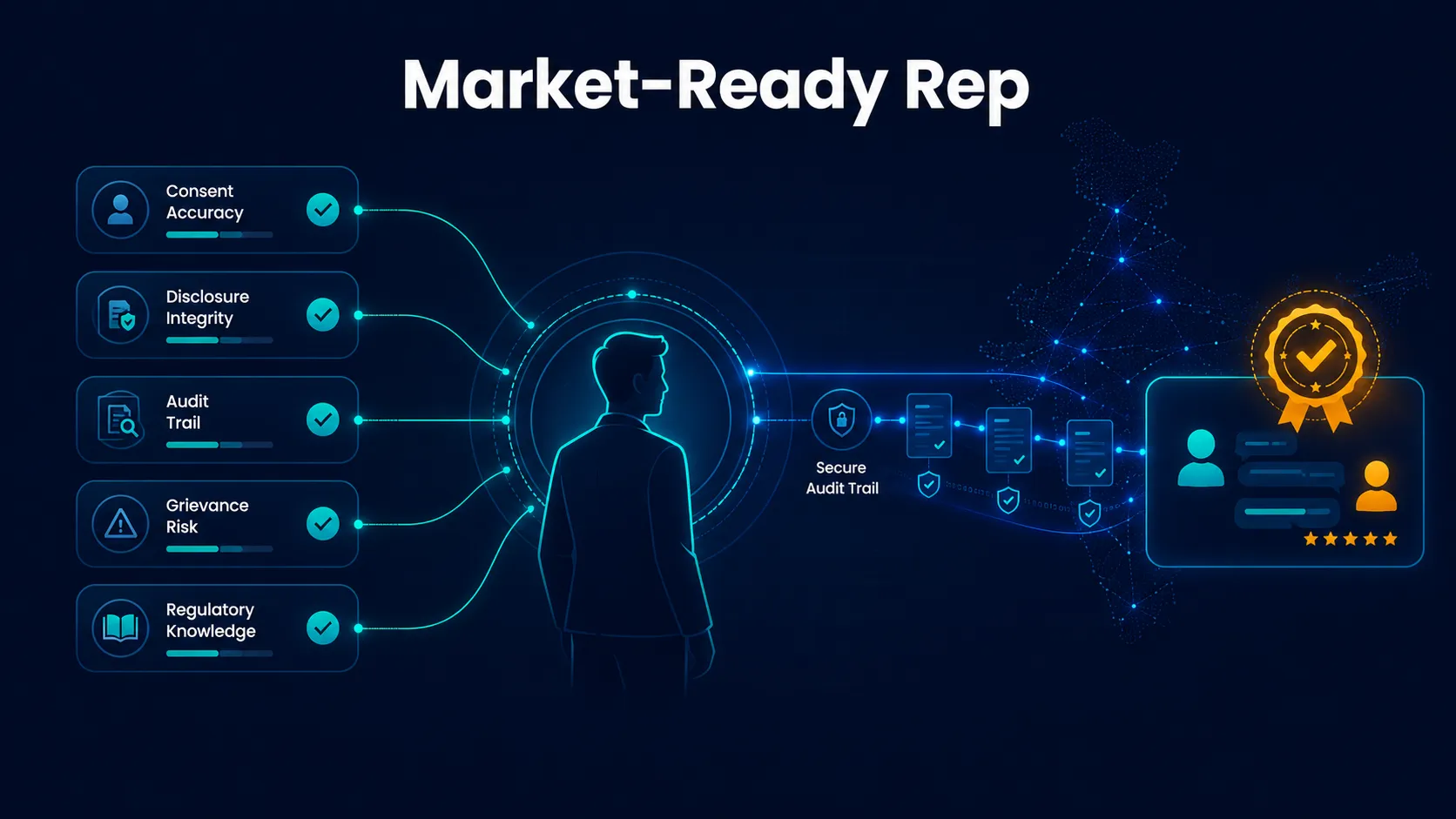
Q8: What KPIs define a market-ready rep in the 2026 Indian regulatory environment?

Market readiness in 2026 cannot be measured only through revenue. In regulated sectors like insurance, banking, wealth, lending, and fintech, a rep who sells aggressively but creates compliance risk is not market-ready.

The first KPI is Consent Acquisition Accuracy. Every lead interaction should have clean, verifiable consent. If the rep cannot show that the customer agreed to be contacted for a specific purpose, the lead becomes a risk.

The second is Disclosure Integrity. Reps must communicate mandatory disclosures accurately. This is especially important in financial products, insurance, and investment-linked categories where misrepresentation can damage both the customer and the brand.

The third is Audit Trail Completeness. Every customer interaction, KYC step, recommendation, follow-up, and commitment should be traceable. In a stricter regulatory environment, undocumented selling is unsafe selling.

The fourth is Grievance Trigger Rate. If customers sold by a particular rep raise complaints soon after conversion, it may indicate mis-selling, poor expectation setting, or aggressive tactics.

The final KPI is Regulatory Knowledge Readiness. Annual training is not enough. Reps need frequent refreshers and micro-assessments to ensure they remain current.

Pro Tip: Do not reward units sold in isolation. Add a compliance multiplier to incentives so that clean selling is financially valued, not treated as back-office hygiene.

Q9: How does Product-Led Growth change sales onboarding in India?

Product-Led Growth changes the role of the seller. In a PLG motion, the buyer may experience the product before speaking to sales. That means the first conversation is no longer introductory. It is interpretive.

The rep must understand product telemetry. Who used the product? Which feature did they try? Where did they get stuck? Did they reach the “aha” moment? Did they invite teammates? Did usage drop after onboarding?

This shifts onboarding from script training to product intelligence. Reps must know how to read usage signals, diagnose friction, and intervene with relevance. A generic pitch weakens trust because the customer expects the seller to already understand their product behavior.

In India, PLG also needs assisted conversion. Many customers may try the product digitally but still need human help for procurement, compliance, internal approvals, or pricing. Sales onboarding must therefore combine technical literacy with relationship management.

Pro Tip: Train reps on Product Qualified Leads, not just Marketing Qualified Leads. A sign-up is not intent. Meaningful product behavior is intent.

Q10: What is the true cost of a failed enterprise sales hire?

A failed sales hire is not just a hiring mistake. It damages pipeline, manager bandwidth, customer trust, and team morale.

The direct cost includes salary, incentives, hiring fees, onboarding time, tools, and training. But the indirect cost is more dangerous. Poorly prepared reps mishandle leads, delay follow-ups, give inconsistent answers, over-promise, or fail to build trust in early conversations.

There is also a manager cost. Every struggling rep requires repeated intervention. If managers spend most of their time fixing basic execution gaps, they have less time to coach high-potential sellers and unblock strategic deals.

The customer cost is hardest to measure. A prospect who receives a weak first interaction may not complain. They simply move on. In India, where trust compounds slowly and reputation travels quickly through networks, a poor seller can damage more than one deal.

The solution is not only better hiring. It is better ramp architecture. Companies need clearer readiness benchmarks, stronger simulations, contextual guidance, compliance checks, and manager visibility into where each seller is stuck.

Pro Tip: Track “Time to First Quality Conversation,” not just time to first call. The first live customer interaction should create confidence, not reveal unreadiness.

Conclusion

India rewards companies that prepare before they push for scale. A 60-day ramp-up is not a conservative strategy. It is a margin protection strategy, a trust-building strategy, and a sales execution strategy.

The real question is not how quickly a new hire can complete onboarding. The real question is how quickly they can handle a live customer conversation with confidence, context, compliance, and clarity.

In 2026, sales readiness must be built around execution: region-specific messaging, AI roleplay, micro-learning, compliance discipline, product intelligence, and manager-led coaching. The companies that win will not be the ones that train the most. They will be the ones that convert training into field behavior fastest.

This is where platforms like Sharpsell become relevant in a subtle but important way. When leads, activities, pitches, roleplays, coaching, and follow-ups sit in one execution flow, teams are not relying only on memory, classroom training, or static playbooks. Sellers know what to do next, managers see where support is needed, and readiness becomes a daily operating system rather than a one-time onboarding event.

The Indian market does not punish ambition. It punishes unprepared execution. Build the 60-day ramp properly, and the sales team does not just enter the market faster. It enters with a higher chance of earning trust, protecting margins, and converting consistently.

  • The “New Normal” for Pharma Sales post the lockdown
  • Why organizations look for Sales Enablement
  • How Sales Enablement is different from traditional LMS or CRM
  • The industry best practices for Sales Enablement
  • Implementation challenges and how to overcome them
  • Ensuring higher adoption

Aman Vasishth

Aman Vasishth is a B2B marketing leader who simplifies complex products through storytelling-driven strategy. He has led brand, growth, and content initiatives across fintech and F&B, building scalable marketing systems that drive measurable business impact.

The Enterprise Guide to Reducing Sales Rep Ramp-Up Time in India

The Enterprise Guide to Reducing Sales Rep Ramp-Up Time in India

Most international and enterprise sales teams entering the Indian market in 2026 hit a wall not because of poor product-market fit, but because they underestimate the operational groundwork required before revenue can move
Aman Vasishth
January 7, 2026

Most international and enterprise sales teams entering the Indian market in 2026 hit a wall not because of poor product-market fit, but because they underestimate the operational groundwork required before revenue can move. India is not a market where a sales team can simply import a global playbook, hire aggressively, and expect the pipeline to convert.

The friction is usually local: trust gaps, procurement complexity, credit terms, regional buying behavior, compliance requirements, language preferences, and uneven rep readiness. A “hit-the-ground-running” approach often turns into six months of stalled pipelines because the first 60 days were not used to stabilize the sales motion.

This is why the 60-day ramp-up matters. It is not a delay in selling. It is a structured window to calibrate sellers, managers, content, compliance, workflows, and customer context before the team is expected to perform at scale. In India, speed without preparation does not create velocity. It creates leakage.

Q1: Why is the traditional 6-month ramp-up killing Indian enterprise margins?

The financial math behind the 6-month ramp-up is broken. A new sales hire does not cost only salary. The actual cost includes recruitment fees, benefits, manager time, tech licenses, onboarding content, shadowing effort, and lost opportunities. If a rep takes 180 days to become productive, the organization is paying a non-performance tax for half the year.

The opportunity cost is even larger. In Indian enterprise sales, where buying cycles are already long and consensus-driven, a non-productive rep means missed first-touch moments, delayed follow-ups, and cooling leads. While your team is still “learning the market,” a competitor with a compressed enablement model can appear more prepared in the first meeting.

The 6-month model also ignores modern talent mobility. If a rep stays for 24 months but takes 6 months to ramp up, 25% of their productive lifecycle is lost to training. In high-growth Indian hubs where attrition is real, that is a dangerous equation.

The alternative is not to rush training. It is to redesign ramp-up around weekly execution milestones. By Week 2, the rep should handle basic discovery. By Week 4, they should manage common objections. By Week 6, they should run controlled conversations. By Day 60, they should be market-ready for defined deal types.

Pro Tip: Do not define ramp-up as “knows the product.” Define it as “can move a live customer conversation forward without creating risk.”

Q2: How does regional context influence sales velocity in Tier 1 versus Tier 2 cities?

India is not one sales market. Tier 1 and Tier 2 markets often behave like different operating environments.

In Tier 1 cities, buyers are usually more exposed to digital journeys, credit ecosystems, comparison-led decision-making, and faster response expectations. They expect speed, clarity, and professional follow-through. Sales velocity depends on removing friction: pre-filled forms, digital documentation, fast demos, quick pricing clarity, and responsive support.

In Tier 2 markets, trust often matters more than speed. Buyers may need more reassurance, local proof, regional language support, and human assistance before committing. Vernacular communication is not cosmetic. It reduces cognitive friction. A customer who sees collateral, invoices, updates, or terms in their own language feels the brand is closer to their reality.

Payment psychology also differs. Tier 1 buyers may be comfortable with digital subscriptions and credit-led models. Tier 2 buyers may prefer milestone-based payments, assisted journeys, or hybrid physical-digital touchpoints. If a company forces a Tier 1 payment and communication model into a Tier 2 market, the deal can stall at the final step.

The practical answer is localization by funnel stage. Tier 1 needs speed loops. Tier 2 needs trust loops. Both need a sales system that tells reps what to say, show, and follow up with based on market context.

Pro Tip: Use geo-specific social proof. A testimonial from the same city, industry, or community often reduces evaluation time more effectively than a generic national case study.

Q3: What role does AI-driven roleplay play in accelerating rep readiness?

AI-driven roleplay works like a flight simulator for customer-facing teams. Traditional shadowing is slow, subjective, and hard to scale. It depends on manager availability, quality of live calls, and the trainee’s ability to absorb lessons passively.

AI roleplay changes this by allowing reps to practice difficult conversations in a safe environment before facing real customers. Instead of memorizing scripts, reps learn to respond to dynamic personas: the skeptical buyer, the price-sensitive negotiator, the urgent problem-solver, the compliance-conscious decision-maker, or the comparison-heavy researcher.

The biggest advantage is feedback speed. In traditional models, a rep may wait days for a manager to review a call. With AI roleplay, feedback is immediate. Did the rep build trust? Did they ask the right discovery questions? Did they handle the objection with the right data point? Did they sound confident without over-promising?

This allows reps to complete many practice cycles in a short time. More importantly, it builds confidence without risking live leads. Reps can fail safely, refine their language, and build muscle memory before entering high-stakes conversations.

AI roleplay is also useful after launch. When a new product is released or a new objection appears in the market, scenarios can be updated quickly so the entire team practices the same response.

Pro Tip: Use AI roleplay as a pre-flight warm-up, not only as onboarding. Before a high-value meeting, even experienced reps can rehearse the buyer persona, likely objections, and closing path.

Q4: How do you bridge the experience gap when scaling teams in emerging Indian hubs?

Scaling sales teams in cities like Jaipur, Indore, Coimbatore, Surat, Lucknow, or Nagpur requires a different hiring assumption. You may find high energy, ambition, and lower attrition, but not always deep exposure to complex enterprise selling.

The answer is not to wait for fully formed talent. It is to build a system that makes less experienced reps effective faster.

First, codify the selling motion. Map the most common customer objections, regional proof points, discovery questions, product explanations, and follow-up paths. Do not let every new hire invent their own version of the pitch.

Second, create a library of “gold standard” interactions. New reps should study not just product documents, but real examples of strong openings, strong objection handling, and strong closing behavior. This compresses experience by making tacit knowledge visible.

Third, strengthen middle management. Many scaling efforts fail not because reps lack intent, but because frontline managers are underprepared. Emerging hubs need managers who can coach execution, not only track attendance and activity.

Fourth, use technology to reduce cognitive load. Reps should not have to remember every product detail, policy clause, pricing proof point, and competitor comparison. The right guidance should appear inside their workflow.

Pro Tip: Break readiness into micro-certifications: opening, discovery, need analysis, objection handling, compliance, closing, and follow-up. Do not let reps handle high-value leads until they clear the relevant stage.

Q5: Which incentive structures prevent rep churn during onboarding?

Early-stage churn often happens because new reps feel they are failing before they have had a fair chance to become productive. If incentives only reward closed revenue, the first 60 days become demoralizing. Reps work hard, but the compensation system tells them they are not valuable yet.

A better approach is to design ramp-up incentives around controllable progress. In the first few weeks, reward learning completion, certification scores, first meetings booked, CRM hygiene, follow-up discipline, and manager-approved conversation quality. This gives new reps a path to early confidence.

However, this does not mean paying for empty activity. Activity-based incentives can create bad behavior if they reward calls made without regard to outcomes. The right model should reward progress toward market readiness.

For example, a new rep can earn milestone incentives for completing roleplay certification, handling a simulated objection, shadowing and documenting customer insights, conducting supervised discovery calls, and maintaining clean compliance records.

This protects both motivation and quality. The rep sees momentum. The company avoids pushing underprepared sellers into live conversations too early.

Pro Tip: Use a 60-day ramp scorecard that balances activity, skill, compliance, and pipeline contribution. Revenue should matter, but it should not be the only early signal.

Q6: How can micro-learning solve information overload in Indian B2B sales?

Indian B2B reps often deal with complex products, regional differences, long sales cycles, and demanding customers. Giving them a 30-page PDF or a day-long classroom session does not solve the problem. It creates overload.

Micro-learning works because it breaks knowledge into small, usable units. A rep does not need the entire product manual before every conversation. They need the right point at the right moment: a competitor comparison, a pricing explanation, a regulatory disclaimer, a customer story, or a two-minute objection-handling guide.

The real power is spaced repetition. When small learning modules are pushed at regular intervals, knowledge moves from short-term memory to working confidence. Training becomes a habit rather than an event.

Micro-learning must also be mobile-first. Indian reps are often in branches, on the road, at counters, or between meetings. The content should be searchable, short, and easy to consume. If a rep types “price objection” or “competitor comparison,” the answer should appear in seconds.

The best micro-learning is triggered by context. If a deal moves to negotiation, the system should surface a short negotiation module. If a rep is selling in a Tier 2 region, the system should surface local proof points. If a rep is preparing for a regulated product pitch, it should surface mandatory disclosure reminders.

Pro Tip: Strip every training asset down to its “gold nuggets.” If a 30-page document has five points that actually help close deals, turn those five into short modules.

Q7: Why is hybrid shadow-selling effective in India?

Hybrid shadow-selling works because Indian buying behavior is heavily trust-driven. Many buyers do not respond well to direct sales pressure, especially in high-consideration categories. They prefer to gather signals from peers, communities, experts, local networks, and informal proof before engaging deeply with a seller.

Shadow-selling builds this trust before the formal pitch. It uses educational content, community influence, SME-led insights, peer stories, and localized proof to make the buyer warmer before the rep enters the conversation.

The “hybrid” part matters because indirect influence alone is not enough. Once intent appears, a human seller still needs to navigate price sensitivity, stakeholder alignment, negotiation, documentation, and local nuance.

This approach can reduce the consideration phase. By the time the buyer enters the CRM, they may already have seen useful content, understood the category better, and developed basic trust. The rep is no longer starting from zero.

The risk is over-automation. India still rewards human judgment, especially in complex or regulated purchases. The best model uses content to build familiarity and sellers to convert that familiarity into action.

Pro Tip: Practice contextual gifting. Send a useful insight, checklist, or local benchmark before asking for a meeting. In India, value given before the ask often opens stronger doors.

Q8: What KPIs define a market-ready rep in the 2026 Indian regulatory environment?

Market readiness in 2026 cannot be measured only through revenue. In regulated sectors like insurance, banking, wealth, lending, and fintech, a rep who sells aggressively but creates compliance risk is not market-ready.

The first KPI is Consent Acquisition Accuracy. Every lead interaction should have clean, verifiable consent. If the rep cannot show that the customer agreed to be contacted for a specific purpose, the lead becomes a risk.

The second is Disclosure Integrity. Reps must communicate mandatory disclosures accurately. This is especially important in financial products, insurance, and investment-linked categories where misrepresentation can damage both the customer and the brand.

The third is Audit Trail Completeness. Every customer interaction, KYC step, recommendation, follow-up, and commitment should be traceable. In a stricter regulatory environment, undocumented selling is unsafe selling.

The fourth is Grievance Trigger Rate. If customers sold by a particular rep raise complaints soon after conversion, it may indicate mis-selling, poor expectation setting, or aggressive tactics.

The final KPI is Regulatory Knowledge Readiness. Annual training is not enough. Reps need frequent refreshers and micro-assessments to ensure they remain current.

Pro Tip: Do not reward units sold in isolation. Add a compliance multiplier to incentives so that clean selling is financially valued, not treated as back-office hygiene.

Q9: How does Product-Led Growth change sales onboarding in India?

Product-Led Growth changes the role of the seller. In a PLG motion, the buyer may experience the product before speaking to sales. That means the first conversation is no longer introductory. It is interpretive.

The rep must understand product telemetry. Who used the product? Which feature did they try? Where did they get stuck? Did they reach the “aha” moment? Did they invite teammates? Did usage drop after onboarding?

This shifts onboarding from script training to product intelligence. Reps must know how to read usage signals, diagnose friction, and intervene with relevance. A generic pitch weakens trust because the customer expects the seller to already understand their product behavior.

In India, PLG also needs assisted conversion. Many customers may try the product digitally but still need human help for procurement, compliance, internal approvals, or pricing. Sales onboarding must therefore combine technical literacy with relationship management.

Pro Tip: Train reps on Product Qualified Leads, not just Marketing Qualified Leads. A sign-up is not intent. Meaningful product behavior is intent.

Q10: What is the true cost of a failed enterprise sales hire?

A failed sales hire is not just a hiring mistake. It damages pipeline, manager bandwidth, customer trust, and team morale.

The direct cost includes salary, incentives, hiring fees, onboarding time, tools, and training. But the indirect cost is more dangerous. Poorly prepared reps mishandle leads, delay follow-ups, give inconsistent answers, over-promise, or fail to build trust in early conversations.

There is also a manager cost. Every struggling rep requires repeated intervention. If managers spend most of their time fixing basic execution gaps, they have less time to coach high-potential sellers and unblock strategic deals.

The customer cost is hardest to measure. A prospect who receives a weak first interaction may not complain. They simply move on. In India, where trust compounds slowly and reputation travels quickly through networks, a poor seller can damage more than one deal.

The solution is not only better hiring. It is better ramp architecture. Companies need clearer readiness benchmarks, stronger simulations, contextual guidance, compliance checks, and manager visibility into where each seller is stuck.

Pro Tip: Track “Time to First Quality Conversation,” not just time to first call. The first live customer interaction should create confidence, not reveal unreadiness.

Conclusion

India rewards companies that prepare before they push for scale. A 60-day ramp-up is not a conservative strategy. It is a margin protection strategy, a trust-building strategy, and a sales execution strategy.

The real question is not how quickly a new hire can complete onboarding. The real question is how quickly they can handle a live customer conversation with confidence, context, compliance, and clarity.

In 2026, sales readiness must be built around execution: region-specific messaging, AI roleplay, micro-learning, compliance discipline, product intelligence, and manager-led coaching. The companies that win will not be the ones that train the most. They will be the ones that convert training into field behavior fastest.

This is where platforms like Sharpsell become relevant in a subtle but important way. When leads, activities, pitches, roleplays, coaching, and follow-ups sit in one execution flow, teams are not relying only on memory, classroom training, or static playbooks. Sellers know what to do next, managers see where support is needed, and readiness becomes a daily operating system rather than a one-time onboarding event.

The Indian market does not punish ambition. It punishes unprepared execution. Build the 60-day ramp properly, and the sales team does not just enter the market faster. It enters with a higher chance of earning trust, protecting margins, and converting consistently.

What’s a Rich Text element?

The rich text element allows you to create and format headings, paragraphs, blockquotes, images, and video all in one place instead of having to add and format them individually. Just double-click and easily create content.

Static and dynamic content editing

A rich text element can be used with static or dynamic content. For static content, just drop it into any page and begin editing. For dynamic content, add a rich text field to any collection and then connect a rich text element to that field in the settings panel. Voila!

How to customize formatting for each rich text

Headings, paragraphs, blockquotes, figures, images, and figure captions can all be styled after a class is added to the rich text element using the "When inside of" nested selector system.

zdxfhgfg

  1. sdnslk,xdv
  2. SDlknjsdv
  3. SDvlknj
  • sdgdf v

The Enterprise Guide to Reducing Sales Rep Ramp-Up Time in India

May 29, 2026
9 min
Aman Vasishth
Aman Vasishth

Most international and enterprise sales teams entering the Indian market in 2026 hit a wall not because of poor product-market fit, but because they underestimate the operational groundwork required before revenue can move. India is not a market where a sales team can simply import a global playbook, hire aggressively, and expect the pipeline to convert.

The friction is usually local: trust gaps, procurement complexity, credit terms, regional buying behavior, compliance requirements, language preferences, and uneven rep readiness. A “hit-the-ground-running” approach often turns into six months of stalled pipelines because the first 60 days were not used to stabilize the sales motion.

This is why the 60-day ramp-up matters. It is not a delay in selling. It is a structured window to calibrate sellers, managers, content, compliance, workflows, and customer context before the team is expected to perform at scale. In India, speed without preparation does not create velocity. It creates leakage.

Q1: Why is the traditional 6-month ramp-up killing Indian enterprise margins?

The financial math behind the 6-month ramp-up is broken. A new sales hire does not cost only salary. The actual cost includes recruitment fees, benefits, manager time, tech licenses, onboarding content, shadowing effort, and lost opportunities. If a rep takes 180 days to become productive, the organization is paying a non-performance tax for half the year.

The opportunity cost is even larger. In Indian enterprise sales, where buying cycles are already long and consensus-driven, a non-productive rep means missed first-touch moments, delayed follow-ups, and cooling leads. While your team is still “learning the market,” a competitor with a compressed enablement model can appear more prepared in the first meeting.

The 6-month model also ignores modern talent mobility. If a rep stays for 24 months but takes 6 months to ramp up, 25% of their productive lifecycle is lost to training. In high-growth Indian hubs where attrition is real, that is a dangerous equation.

The alternative is not to rush training. It is to redesign ramp-up around weekly execution milestones. By Week 2, the rep should handle basic discovery. By Week 4, they should manage common objections. By Week 6, they should run controlled conversations. By Day 60, they should be market-ready for defined deal types.

Pro Tip: Do not define ramp-up as “knows the product.” Define it as “can move a live customer conversation forward without creating risk.”

Q2: How does regional context influence sales velocity in Tier 1 versus Tier 2 cities?

India is not one sales market. Tier 1 and Tier 2 markets often behave like different operating environments.

In Tier 1 cities, buyers are usually more exposed to digital journeys, credit ecosystems, comparison-led decision-making, and faster response expectations. They expect speed, clarity, and professional follow-through. Sales velocity depends on removing friction: pre-filled forms, digital documentation, fast demos, quick pricing clarity, and responsive support.

In Tier 2 markets, trust often matters more than speed. Buyers may need more reassurance, local proof, regional language support, and human assistance before committing. Vernacular communication is not cosmetic. It reduces cognitive friction. A customer who sees collateral, invoices, updates, or terms in their own language feels the brand is closer to their reality.

Payment psychology also differs. Tier 1 buyers may be comfortable with digital subscriptions and credit-led models. Tier 2 buyers may prefer milestone-based payments, assisted journeys, or hybrid physical-digital touchpoints. If a company forces a Tier 1 payment and communication model into a Tier 2 market, the deal can stall at the final step.

The practical answer is localization by funnel stage. Tier 1 needs speed loops. Tier 2 needs trust loops. Both need a sales system that tells reps what to say, show, and follow up with based on market context.

Pro Tip: Use geo-specific social proof. A testimonial from the same city, industry, or community often reduces evaluation time more effectively than a generic national case study.

Q3: What role does AI-driven roleplay play in accelerating rep readiness?

AI-driven roleplay works like a flight simulator for customer-facing teams. Traditional shadowing is slow, subjective, and hard to scale. It depends on manager availability, quality of live calls, and the trainee’s ability to absorb lessons passively.

AI roleplay changes this by allowing reps to practice difficult conversations in a safe environment before facing real customers. Instead of memorizing scripts, reps learn to respond to dynamic personas: the skeptical buyer, the price-sensitive negotiator, the urgent problem-solver, the compliance-conscious decision-maker, or the comparison-heavy researcher.

The biggest advantage is feedback speed. In traditional models, a rep may wait days for a manager to review a call. With AI roleplay, feedback is immediate. Did the rep build trust? Did they ask the right discovery questions? Did they handle the objection with the right data point? Did they sound confident without over-promising?

This allows reps to complete many practice cycles in a short time. More importantly, it builds confidence without risking live leads. Reps can fail safely, refine their language, and build muscle memory before entering high-stakes conversations.

AI roleplay is also useful after launch. When a new product is released or a new objection appears in the market, scenarios can be updated quickly so the entire team practices the same response.

Pro Tip: Use AI roleplay as a pre-flight warm-up, not only as onboarding. Before a high-value meeting, even experienced reps can rehearse the buyer persona, likely objections, and closing path.

Q4: How do you bridge the experience gap when scaling teams in emerging Indian hubs?

Scaling sales teams in cities like Jaipur, Indore, Coimbatore, Surat, Lucknow, or Nagpur requires a different hiring assumption. You may find high energy, ambition, and lower attrition, but not always deep exposure to complex enterprise selling.

The answer is not to wait for fully formed talent. It is to build a system that makes less experienced reps effective faster.

First, codify the selling motion. Map the most common customer objections, regional proof points, discovery questions, product explanations, and follow-up paths. Do not let every new hire invent their own version of the pitch.

Second, create a library of “gold standard” interactions. New reps should study not just product documents, but real examples of strong openings, strong objection handling, and strong closing behavior. This compresses experience by making tacit knowledge visible.

Third, strengthen middle management. Many scaling efforts fail not because reps lack intent, but because frontline managers are underprepared. Emerging hubs need managers who can coach execution, not only track attendance and activity.

Fourth, use technology to reduce cognitive load. Reps should not have to remember every product detail, policy clause, pricing proof point, and competitor comparison. The right guidance should appear inside their workflow.

Pro Tip: Break readiness into micro-certifications: opening, discovery, need analysis, objection handling, compliance, closing, and follow-up. Do not let reps handle high-value leads until they clear the relevant stage.

Q5: Which incentive structures prevent rep churn during onboarding?

Early-stage churn often happens because new reps feel they are failing before they have had a fair chance to become productive. If incentives only reward closed revenue, the first 60 days become demoralizing. Reps work hard, but the compensation system tells them they are not valuable yet.

A better approach is to design ramp-up incentives around controllable progress. In the first few weeks, reward learning completion, certification scores, first meetings booked, CRM hygiene, follow-up discipline, and manager-approved conversation quality. This gives new reps a path to early confidence.

However, this does not mean paying for empty activity. Activity-based incentives can create bad behavior if they reward calls made without regard to outcomes. The right model should reward progress toward market readiness.

For example, a new rep can earn milestone incentives for completing roleplay certification, handling a simulated objection, shadowing and documenting customer insights, conducting supervised discovery calls, and maintaining clean compliance records.

This protects both motivation and quality. The rep sees momentum. The company avoids pushing underprepared sellers into live conversations too early.

Pro Tip: Use a 60-day ramp scorecard that balances activity, skill, compliance, and pipeline contribution. Revenue should matter, but it should not be the only early signal.

Q6: How can micro-learning solve information overload in Indian B2B sales?

Indian B2B reps often deal with complex products, regional differences, long sales cycles, and demanding customers. Giving them a 30-page PDF or a day-long classroom session does not solve the problem. It creates overload.

Micro-learning works because it breaks knowledge into small, usable units. A rep does not need the entire product manual before every conversation. They need the right point at the right moment: a competitor comparison, a pricing explanation, a regulatory disclaimer, a customer story, or a two-minute objection-handling guide.

The real power is spaced repetition. When small learning modules are pushed at regular intervals, knowledge moves from short-term memory to working confidence. Training becomes a habit rather than an event.

Micro-learning must also be mobile-first. Indian reps are often in branches, on the road, at counters, or between meetings. The content should be searchable, short, and easy to consume. If a rep types “price objection” or “competitor comparison,” the answer should appear in seconds.

The best micro-learning is triggered by context. If a deal moves to negotiation, the system should surface a short negotiation module. If a rep is selling in a Tier 2 region, the system should surface local proof points. If a rep is preparing for a regulated product pitch, it should surface mandatory disclosure reminders.

Pro Tip: Strip every training asset down to its “gold nuggets.” If a 30-page document has five points that actually help close deals, turn those five into short modules.

Q7: Why is hybrid shadow-selling effective in India?

Hybrid shadow-selling works because Indian buying behavior is heavily trust-driven. Many buyers do not respond well to direct sales pressure, especially in high-consideration categories. They prefer to gather signals from peers, communities, experts, local networks, and informal proof before engaging deeply with a seller.

Shadow-selling builds this trust before the formal pitch. It uses educational content, community influence, SME-led insights, peer stories, and localized proof to make the buyer warmer before the rep enters the conversation.

The “hybrid” part matters because indirect influence alone is not enough. Once intent appears, a human seller still needs to navigate price sensitivity, stakeholder alignment, negotiation, documentation, and local nuance.

This approach can reduce the consideration phase. By the time the buyer enters the CRM, they may already have seen useful content, understood the category better, and developed basic trust. The rep is no longer starting from zero.

The risk is over-automation. India still rewards human judgment, especially in complex or regulated purchases. The best model uses content to build familiarity and sellers to convert that familiarity into action.

Pro Tip: Practice contextual gifting. Send a useful insight, checklist, or local benchmark before asking for a meeting. In India, value given before the ask often opens stronger doors.

Q8: What KPIs define a market-ready rep in the 2026 Indian regulatory environment?

Market readiness in 2026 cannot be measured only through revenue. In regulated sectors like insurance, banking, wealth, lending, and fintech, a rep who sells aggressively but creates compliance risk is not market-ready.

The first KPI is Consent Acquisition Accuracy. Every lead interaction should have clean, verifiable consent. If the rep cannot show that the customer agreed to be contacted for a specific purpose, the lead becomes a risk.

The second is Disclosure Integrity. Reps must communicate mandatory disclosures accurately. This is especially important in financial products, insurance, and investment-linked categories where misrepresentation can damage both the customer and the brand.

The third is Audit Trail Completeness. Every customer interaction, KYC step, recommendation, follow-up, and commitment should be traceable. In a stricter regulatory environment, undocumented selling is unsafe selling.

The fourth is Grievance Trigger Rate. If customers sold by a particular rep raise complaints soon after conversion, it may indicate mis-selling, poor expectation setting, or aggressive tactics.

The final KPI is Regulatory Knowledge Readiness. Annual training is not enough. Reps need frequent refreshers and micro-assessments to ensure they remain current.

Pro Tip: Do not reward units sold in isolation. Add a compliance multiplier to incentives so that clean selling is financially valued, not treated as back-office hygiene.

Q9: How does Product-Led Growth change sales onboarding in India?

Product-Led Growth changes the role of the seller. In a PLG motion, the buyer may experience the product before speaking to sales. That means the first conversation is no longer introductory. It is interpretive.

The rep must understand product telemetry. Who used the product? Which feature did they try? Where did they get stuck? Did they reach the “aha” moment? Did they invite teammates? Did usage drop after onboarding?

This shifts onboarding from script training to product intelligence. Reps must know how to read usage signals, diagnose friction, and intervene with relevance. A generic pitch weakens trust because the customer expects the seller to already understand their product behavior.

In India, PLG also needs assisted conversion. Many customers may try the product digitally but still need human help for procurement, compliance, internal approvals, or pricing. Sales onboarding must therefore combine technical literacy with relationship management.

Pro Tip: Train reps on Product Qualified Leads, not just Marketing Qualified Leads. A sign-up is not intent. Meaningful product behavior is intent.

Q10: What is the true cost of a failed enterprise sales hire?

A failed sales hire is not just a hiring mistake. It damages pipeline, manager bandwidth, customer trust, and team morale.

The direct cost includes salary, incentives, hiring fees, onboarding time, tools, and training. But the indirect cost is more dangerous. Poorly prepared reps mishandle leads, delay follow-ups, give inconsistent answers, over-promise, or fail to build trust in early conversations.

There is also a manager cost. Every struggling rep requires repeated intervention. If managers spend most of their time fixing basic execution gaps, they have less time to coach high-potential sellers and unblock strategic deals.

The customer cost is hardest to measure. A prospect who receives a weak first interaction may not complain. They simply move on. In India, where trust compounds slowly and reputation travels quickly through networks, a poor seller can damage more than one deal.

The solution is not only better hiring. It is better ramp architecture. Companies need clearer readiness benchmarks, stronger simulations, contextual guidance, compliance checks, and manager visibility into where each seller is stuck.

Pro Tip: Track “Time to First Quality Conversation,” not just time to first call. The first live customer interaction should create confidence, not reveal unreadiness.

Conclusion

India rewards companies that prepare before they push for scale. A 60-day ramp-up is not a conservative strategy. It is a margin protection strategy, a trust-building strategy, and a sales execution strategy.

The real question is not how quickly a new hire can complete onboarding. The real question is how quickly they can handle a live customer conversation with confidence, context, compliance, and clarity.

In 2026, sales readiness must be built around execution: region-specific messaging, AI roleplay, micro-learning, compliance discipline, product intelligence, and manager-led coaching. The companies that win will not be the ones that train the most. They will be the ones that convert training into field behavior fastest.

This is where platforms like Sharpsell become relevant in a subtle but important way. When leads, activities, pitches, roleplays, coaching, and follow-ups sit in one execution flow, teams are not relying only on memory, classroom training, or static playbooks. Sellers know what to do next, managers see where support is needed, and readiness becomes a daily operating system rather than a one-time onboarding event.

The Indian market does not punish ambition. It punishes unprepared execution. Build the 60-day ramp properly, and the sales team does not just enter the market faster. It enters with a higher chance of earning trust, protecting margins, and converting consistently.

Readers also liked

8 min
Aman Vasishth
Aman Vasishth
8 min
Aman Vasishth
Aman Vasishth
5 min
Aman Vasishth
Aman Vasishth
11 min
Aman Vasishth
Aman Vasishth

Are you ready to unleash the power of Sales Playbooks for your team?

Thank you! You have been added to our subscriber list!
Oops! Something went wrong while submitting the form.
Thank you! Your submission has been received!
Button Text
Oops! Something went wrong while submitting the form.