
Your marketing team spends crores on precision-targeted digital campaigns and sophisticated lead generation, yet your conversion numbers stall at the final mile. In the Indian insurance and banking sectors, high-quality leads frequently "rot" in the system because field agents lack the tools to handle complex product queries during a face-to-face meeting. Conversion Rate Optimisation (CRO) shouldn't end at the lead form; it must extend to the actual conversation where the revenue is realised.
In 2026, the primary leak in your ROI isn't the cost-per-click, but the capability gap within your distributed sales force. When an agent in a Tier 2 city struggles to explain a multi-cap fund or a complex mortgage structure, that lead is effectively burned. Most enterprises are still throwing more money at lead volume while ignoring the fact that their frontline is armed with little more than static PDFs and outdated training manuals.
The reality of the Indian market—spanning varied geographies and languages—demands a move away from passive "resource centres" toward active execution systems. If your current sales stack doesn't provide real-time objection handling or interactive product calculators during a live pitch, you are effectively subsidising your competitors by failing to close the demand you created.
This guide moves past the theoretical and focuses on the practical requirements for a sales enablement platform that fits the Indian enterprise context. We break down how to choose a system that bridges the gap between marketing intent and sales reality, ensuring your CRO budget finally translates into measurable business growth.
What defines a high-ROI sales enablement tool for the Indian market?

A high-ROI sales enablement tool for the Indian market must prioritise execution over theory. In a landscape characterised by massive, distributed field teams and high attrition rates, the primary metric for ROI is how quickly a new hire can have a productive, high-quality conversation with a prospect. If a tool focuses solely on "learning" without providing "doing" capabilities, it will fail to gain traction. To drive actual revenue growth in sectors like Insurance, Banking, or Automotive, the technology must bridge the gap between a central marketing strategy and the frontline agent’s daily reality.
The first defining characteristic is mobile-first, offline-capable architecture. Most enterprise sales in India happen in Tier 2 and Tier 3 cities, where network stability is inconsistent. A tool that lags or requires high-speed 4G to load a product brochure is a liability, not an asset. High-ROI tools ensure that interactive product illustrators and pitch decks are stored locally on the device, allowing agents to present complex financial benefits or vehicle specifications without a single stutter. This reliability directly impacts the agent’s confidence and the customer’s perception of professionalism.
Vernacular support is the second non-negotiable factor. While corporate headquarters may operate in English, the "moment of truth" in a customer’s living room or a dealership floor often happens in Hindi, Marathi, Tamil, or Bengali. A high-ROI tool doesn't just translate text; it enables sales playbooks and objection-handling scripts that feel natural in the local dialect. This localisation ensures that the standardised brand message isn't lost in translation when the agent tries to explain a complex policy or a financing plan to a non-English-speaking customer.
Thirdly, the tool must integrate "Just-in-Time" content delivery. Indian field agents rarely have the patience to dig through a repository of 500 PDFs to find the right one. High-ROI systems use AI-driven lead activation to push the exact piece of content needed based on the lead’s profile or the current stage of the sales cycle. For instance, if an agent is meeting a high-net-worth individual for a life insurance plan, the system should automatically surface a specific HNI-focused case study and a tax-saving calculator. Reducing the time spent searching for assets directly increases the number of meetings an agent can conduct per day.
Pro Tip:
Look for "Shelf-Life" in your enablement data. In the Indian context, the most successful sales teams don't just look at how many people used a tool, but the "re-share rate" of content by customers. If a prospect shares your interactive quote with their family or a decision-maker after the agent leaves, your tool is effectively acting as a secondary salesperson in the room. This is where true ROI is unlocked.
Why do global sales platforms often fail with distributed Indian field teams?

Global sales platforms frequently stumble in India because they are architected for "connected" environments and Western sales behaviours, ignoring the granular realities of distributed field teams in Bharat. Most global SaaS tools assume a high-bandwidth, stable environment where agents have the luxury of time to navigate complex menus. In contrast, an insurance agent in a Tier-3 town or a construction materials representative on a remote site operates in a low-latency, high-pressure environment where every second of friction leads to a lost lead.
The primary point of failure is "Desktop-DNA" translated into a mobile app. Global platforms often pack too many features into a mobile interface, making it heavy and slow. For a field agent in the automotive or banking sector, the tool must be "thumb-friendly." If an app takes more than three seconds to load a product illustrator or a premium calculator, the agent will revert to physical brochures or unofficial WhatsApp groups. This creates a massive data black hole for the enterprise, as the actual sales conversation happens outside the monitored system.
Another critical factor is the lack of offline-first capabilities. Global platforms usually require a persistent heartbeat connection to the server. In many parts of India, connectivity is intermittent. When a sales rep loses access to their sales playbook or battlecards mid-pitch because the signal dropped, the technology becomes a liability rather than an enabler. To succeed, the platform must function as a local engine on the device, syncing data only when the connection is stable, ensuring the "interactive" part of the pitch never stalls.
Localisation is often misunderstood by global providers as mere language translation. True localisation is about contextual workflows. An Indian field agent needs tools that handle regional nuances—like specific vernacular objections in the pharma sector or unique regulatory documentation in the NBFC space. Global tools provide generic templates that fail to resonate with the end consumer, forcing the agent to spend hours customising content manually, which defeats the purpose of automation.
Pro Tip:
Stop measuring "Logins" and start measuring "Last-Mile Interactions." A high login rate doesn't mean your platform is successful; it might just mean agents are forced to clock in. The real metric of success for a distributed Indian team is the frequency of "content shares" and "interactive tool usage" during actual customer-facing hours. If your platform isn't being pulled out during the pitch, it has already failed.
How does offline-first functionality impact sales tool adoption in Tier 2 and Tier 3 cities?

In Tier 2 and Tier 3 cities, the reliability of a digital tool is the single biggest predictor of whether a frontline agent will use it or abandon it. In these geographies, internet connectivity is often deceptive; you might have full bars of 5G on a main road, but lose all signal the moment you step into a customer’s basement office, a rural bank branch, or a factory floor. When a sales tool relies on a persistent cloud connection, it becomes a liability. If an agent tries to pull up a product illustrator or a premium calculator and sees a loading spinner for twenty seconds, they lose the customer’s attention and their own professional credibility. They will quickly revert to paper brochures or manual calculations to avoid the embarrassment of a technical failure.
Offline-first functionality removes this psychological barrier. It ensures that the core "moments of truth"—the pitch, the objection handling, and the data entry—happen locally on the device. By caching heavy assets like high-resolution videos and interactive calculators during a morning sync at the office or home, the tool performs with zero latency in the field. This snappiness creates a sense of empowerment. When an agent in a town like Jabalpur or Tiruchirapalli realises the app works instantly regardless of the signal strength, the tool shifts from being an "administrative burden" to a "competitive advantage."
For the enterprise, offline-first design is about data integrity. In distributed sales teams, lead data often disappears because agents wait until they get home to log meeting notes. By then, details are forgotten or distorted. An offline-capable system allows for real-time data entry. The agent logs the outcome of a meeting immediately after leaving the customer’s door. The system stores this locally and pushes it to the central CRM the moment a connection is detected. This eliminates the "data black hole" that often plagues sales operations in remote regions.
The goal is to make the technology invisible. In the high-pressure environment of a field sale, the agent’s focus must remain entirely on the customer. Any friction caused by the interface or the infrastructure results in immediate pushback against digital transformation efforts.
Pro Tip:
Implement "Delta Syncing" rather than full database refreshes. Instead of forcing the app to download the entire product catalogue every time there is an update, configure the system to only download the specific changes (deltas). This saves data costs for your agents in 2026 and ensures their local version is always current without draining their battery or data plan.
How do you measure the actual cost-to-value ratio of a sales enablement platform?

To calculate the actual cost-to-value ratio of a sales enablement platform, you must look beyond the line item on your software budget. Start by auditing "Invisible Leakage"—the revenue lost when a salesperson spends 30% of their day searching for collateral or fails to explain a complex financial product. To get an accurate ratio, you must weigh the Total Cost of Ownership (TCO) against the Delta in Sales Velocity.
The TCO includes the subscription fee, implementation costs, and the internal man-hours required for content management. However, the value side of the ledger is where most leaders under-calculate. In high-stakes sectors like Insurance or Banking, value is best measured by the reduction in "Time to First Deal" for new hires. If your platform reduces ramp-up time from 90 days to 45 days, the value is the total revenue generated during those extra 45 days of peak productivity. This is a hard number that directly offsets the cost of the platform.
Lead Activation is another critical lever. In the 2026 market, lead acquisition costs are higher than ever. If your agents in the NBFC or Automotive sectors are losing leads because they lack real-time objection-handling support during a pitch, the cost of those wasted leads is a direct hit to your bottom line. An effective enablement system bridges this gap by providing just-in-time content and battlecards that move a prospect from "interested" to "committed" faster. The value here is the marginal increase in conversion rates across your entire distributed sales force.
In industries like Construction and Building Materials, where technical specifications and multi-stakeholder deals are common, value is also found in "Message Integrity." When a distributed team across different geographies delivers a consistent, high-impact pitch without diluting the brand’s value proposition, the cost-to-value ratio shifts heavily in favour of the platform. You are no longer paying for a software tool; you are investing in an execution system that ensures no deal is lost to poor communication or lack of information.
What are the non-negotiable security and data residency requirements for Indian enterprise SaaS?
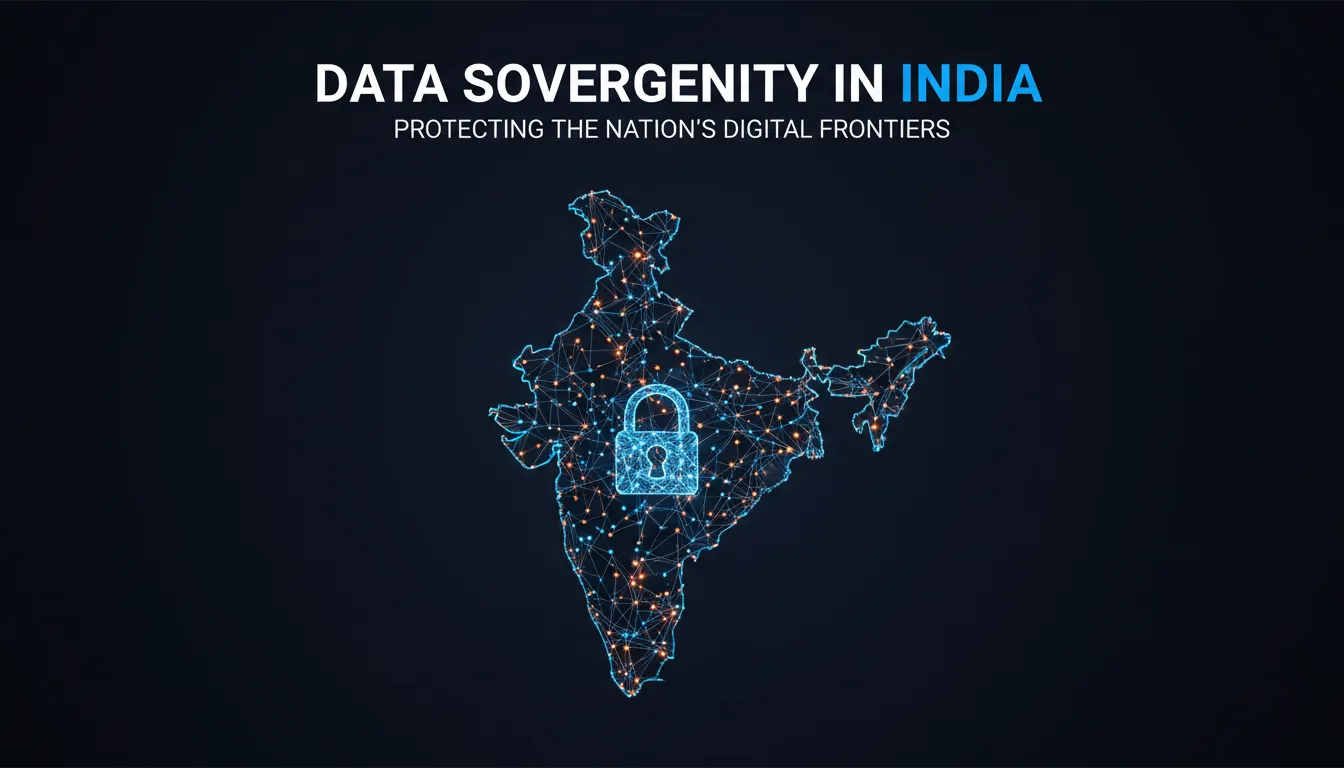
The Digital Personal Data Protection (DPDP) Act of 2023 has moved from a legislative framework to a strict operational reality in 2026. For any Indian enterprise, specifically in regulated sectors like Banking, NBFCs, and Insurance, SaaS security is no longer just a checkbox for the IT department; it is a fundamental pillar of business continuity. If your sales enablement or lead management platform does not meet these non-negotiable standards, you risk not only heavy financial penalties but a complete loss of consumer trust.
The primary requirement is local data residency. For industries governed by the RBI and IRDAI, data localisation is absolute. Every byte of your customer’s Personally Identifiable Information (PII)—including lead details, financial records, and interaction history—must be stored on servers physically located within Indian borders. This extends to backup sites and disaster recovery centres. You must ensure your SaaS provider uses local cloud regions, such as AWS Mumbai/Hyderabad or Azure India centres, and provides a clear data map showing that no "mirroring" occurs in international jurisdictions without explicit regulatory approval.
Consent management is the second non-negotiable. Under the DPDP Act, the burden of proving consent lies with the Data Fiduciary (your organisation). Your SaaS tools must have "Privacy by Design" baked into the workflow. This means capturing granular consent for every specific use of data. If a frontline agent in the field collects a lead's phone number for a life insurance quote, that data cannot be repurposed for a credit card pitch unless a separate, affirmative consent is recorded. Your platform must automate this tracking to protect your agents from accidental non-compliance.
Security in the field requires robust Identity and Access Management (IAM). When you have thousands of distributed sales agents across different geographies, the risk of data leakage increases. Non-negotiable features include Multi-Factor Authentication (MFA) and strict Role-Based Access Control (RBAC). A sales manager in Mumbai should not have the ability to export the customer database of a team in Delhi. Every action—every view, download, or share of a sales play—must leave an immutable audit trail. This is critical during regulatory audits to prove that data access was limited to a "need-to-know" basis only.
Encryption standards must be at the enterprise grade: AES-256 for data at rest and TLS 1.3 for data in transit. This is particularly vital for mobile-first sales teams who often use public or unstable networks to sync lead data. Furthermore, your SaaS partner should undergo periodic Vulnerability Assessment and Penetration Testing (VAPT) by CERT-In empanelled auditors. This ensures that the platform is hardened against the latest cyber threats and zero-day vulnerabilities.
Actionable steps for your security checklist:
- Request a Data Sovereignty Certificate from your vendor confirming all primary and secondary data storage is within India.
- Verify that the platform supports Single Sign-On (SSO) integration with your existing enterprise identity providers (like Azure AD or Okta) to maintain centralised control.
- Audit the vendor’s data deletion policy. When an employee leaves, or a contract ends, the platform must provide a "Right to Erasure" mechanism that completely purges PII within the statutory timelines.
- Ensure the platform allows for data masking. For instance, field agents should see only the last four digits of a customer's Aadhaar or account number unless full access is specifically required for a transaction.
- Check for SOC 2 Type II and ISO 27001:2022 certifications. These are the gold standards for operational security and data handling processes.
Pro Tip:
When evaluating a SaaS partner, look beyond their cloud provider's security. Ask for their "Internal Threat Mitigation" plan. Most data breaches in Indian enterprises occur due to internal credential sharing or unauthorised downloads by departing employees. Ensure the platform has automated triggers that alert your IT team when an unusual volume of data is accessed or exported in a short timeframe.
How does native language support influence sales playbook adoption in regional markets?

Sales playbook adoption often fails because of "translation lag." When a frontline agent in a regional market has to mentally translate a sales pitch from a standard corporate language into a local dialect like Marathi, Bengali, or Kannada, the core value proposition of the product gets diluted. This cognitive load causes agents to abandon formal playbooks in favour of their own improvised, often inaccurate, talk tracks. Native language support removes this friction. It allows the agent to focus entirely on the customer’s body language and objections rather than hunting for the right words.
For end consumers in sectors like Life Insurance, Banking, or NBFCs, trust is the primary currency. A sales professional who uses standardised, professional-grade local language—rather than a broken mix of languages—is perceived as more credible. Native language playbooks provide the precise vocabulary needed to explain complex financial terms or technical product specs in a way that resonates emotionally. When digital tools like interactive product illustrators and pitch modules speak the customer's language, the salesperson transitions from being a mere vendor to a trusted advisor.
High-impact sales behaviours are almost always localised. A winning tactic in a metropolitan hub rarely translates perfectly to a rural district. Native language support allows organisations to capture the exact phrasing and cultural nuances used by top regional performers and turn them into automated templates. By deploying these region-specific battlecards, you ensure that a new hire in a remote branch has access to the same high-converting language as the veteran in that specific territory, ensuring execution consistency across distributed geographies.
Objection handling is the most critical phase of the sales cycle where language fluency matters most. If an agent struggles with language during a high-stakes rebuttal, they lose the momentum of the deal. Native language playbooks allow for "just-in-time" support where the agent can quickly reference a battlecard in their preferred tongue. This ensures the response is sharp and culturally sensitive. In regulated industries like Pharma or Banking, this also prevents compliance breaches that often occur when agents "freestyle" explanations of terms and conditions in a local language they haven't been formally trained in.
What is the realistic implementation timeline for an enterprise-wide sales enablement rollout?

A realistic timeline for a full enterprise sales enablement rollout typically spans 4 to 6 months. This duration accounts for the complexities of managing distributed teams, diverse product lines, and the integration of AI-driven tools into existing workflows. Moving faster often leads to low adoption, while moving slower results in lost momentum and outdated content.
The first 30 days are dedicated to the "Discovery and Alignment" phase. During this period, you must define your core KPIs. Are you trying to reduce the time it takes for a new bank RM to become productive, or are you looking to increase the lead-to-conversion ratio for your automotive dealership staff? This stage involves mapping your current sales process and identifying where frontline agents are struggling—whether it is handling complex objections or failing to present the right product collateral during a pitch.
From week 4 to week 10, the focus shifts to "Content Digitisation and System Setup." This is where you move away from static PDFs and into interactive playbooks. For industries like Insurance or NBFCs, this means configuring PitchWiz modules and Interactive Product Illustrators that allow agents to show real-time value to customers. You are not just uploading files; you are building a logic-based execution system that tells an agent exactly what to say and show based on the customer’s profile.
The "Pilot Phase" occurs between weeks 11 and 14. Select a specific geography or a high-performing product vertical to test the system. For a pharmaceutical company, this might involve a single therapeutic division. The goal here is to gather feedback from the field. Sales managers should use this time to identify capability gaps. If the AI role-play data shows that agents are struggling with a new product’s pricing structure, you can refine the training modules before the national launch.
Full-scale deployment usually happens from month 4 onwards. This involves onboarding thousands of agents across different regions. At this scale, the "just-in-time" nature of the platform becomes critical. Agents in the field need to access battlecards and lead activation tools on their mobile devices instantly. By month 6, the system should be integrated into your daily rhythm, with managers using the platform’s analytics to replicate the behaviours of high-performing "star" sellers across the entire organisation.
Pro Tip:
Avoid the "Big Bang" launch. Instead of releasing every feature at once, start with the specific tool that solves the most immediate friction point—such as an automated objection handler or an interactive calculator. Once the sales force sees immediate value in one tool, their resistance to the rest of the platform will disappear.
How do you justify the investment in sales enablement to a CFO in 2026?

To justify a sales enablement investment to a CFO in 2026, you must stop talking about "learning hours" and start talking about "revenue velocity." CFOs view investments through the lens of capital efficiency. In a high-stakes environment like Banking, Insurance, or Pharma, your argument must centre on how technology like Sharpsell.ai directly reduces the cost of acquiring a customer (CAC) while increasing the lifetime value (LTV) through better frontline execution.
Focus your business case on these three financial levers:
1. Quantifying the Reduction in Rep Ramp Time
In distributed sales teams, the biggest drain on EBITDA is the "dead zone"—the months between hiring an agent and that agent becoming profitable. In 2026, traditional classroom training is a sunk cost. Use data to show how AI-powered role-plays and "just-in-time" content delivery reduce the time-to-first-deal. If you can move a new agent in an NBFC from zero to their first disbursement in 10 days instead of 30, you are essentially gaining 20 days of pure revenue per head.
2. Increasing the "Win Rate" of Middle Performers
A CFO cares deeply about the "Core 60"—the middle 60% of your sales force that produces steady but average results. Moving the needle by even 5% for this group has a much higher ROI than trying to make your top 5% better. Show how automated sales playbooks and interactive product illustrators standardise high-impact behaviours. If every agent uses a proven objection-handling framework on their mobile device during a client meeting, the conversion rate across the board rises, lowering the overall cost per lead.
3. Content Attribution and Resource Optimisation
Most organisations waste 60% of their marketing collateral because sales teams can't find it or don't know how to use it. A sales execution system provides a clear audit trail. You can show the CFO exactly which personalised PitchWiz presentations led to closed deals. This turns a "marketing expense" into a "sales asset" with a measurable return.
Pro Tip:
Always present the "Status Quo" cost. In 2026, the cost of doing nothing—high agent churn, inconsistent customer experiences, and slow product launches—is usually 5x higher than the cost of implementing a sales execution platform. CFOs are more likely to approve a budget that solves a documented leakage than one that promises a vague "future gain."
Conclusion:
Increasing website traffic and optimising landing pages only solves half the equation. For Indian enterprises in 2026, the real leakage occurs when a high-intent lead meets an under-equipped sales agent. If your frontline teams in banking, insurance, or automotive are still relying on static PDFs and manual follow-ups, your CRO budget is effectively subsidising your competitors' market share.
True conversion rate optimisation must extend beyond the browser and into the sales pitch. High-performing organisations have shifted their focus from mere lead generation to lead activation. This requires moving away from theoretical training and adopting execution systems that provide interactive product illustrators and real-time objection handling exactly when the agent is on the call or in the field.
The gap between your top 10% of performers and the rest of your distributed team is a direct result of inconsistent enablement. By automating sales playbooks and integrating AI-driven role-plays, you remove the guesswork from the sales process. This ensures that every customer interaction, whether in a metro branch or a tier-3 city, maintains the same standard of excellence and technical accuracy.
Stop letting qualified leads die in the "last mile" of your funnel. If you are ready to turn your sales team into a high-precision execution engine and stop the drain on your marketing spend, it is time to look at how technology can bridge the capability gap.
Book a personalised demo with Sharpsell.ai today to see how our AI-powered sales execution system can transform your field team's performance and maximise your 2026 revenue targets.
What’s a Rich Text element?
The rich text element allows you to create and format headings, paragraphs, blockquotes, images, and video all in one place instead of having to add and format them individually. Just double-click and easily create content.
Static and dynamic content editing
A rich text element can be used with static or dynamic content. For static content, just drop it into any page and begin editing. For dynamic content, add a rich text field to any collection and then connect a rich text element to that field in the settings panel. Voila!
How to customize formatting for each rich text
Headings, paragraphs, blockquotes, figures, images, and figure captions can all be styled after a class is added to the rich text element using the "When inside of" nested selector system.
zdxfhgfg
- sdnslk,xdv
- SDlknjsdv
- SDvlknj
- sdgdf v