
In sectors like Insurance and Banking, the distance between a corporate strategy and a frontline conversation is where revenue disappears. Even with thousands of agents logged into a CRM, conversion rates often stagnate because the workforce cannot articulate complex product benefits under pressure. This creates a massive performance disparity where a handful of top performers carry the organisation while the middle 60% struggle to replicate high-impact behaviours during live meetings.
A CRM is a system of record; it documents who the lead is and when they were contacted. It does not tell an agent what to say when a prospect raises a specific objection about competitor pricing or policy exclusions. Relying solely on a CRM to drive field performance is like giving a driver a map but no steering wheel. Without a mechanism to enforce the sales playbook at the point of sale, your distributed teams are forced to improvise, leading to the $10 million gap in unrealised revenue.
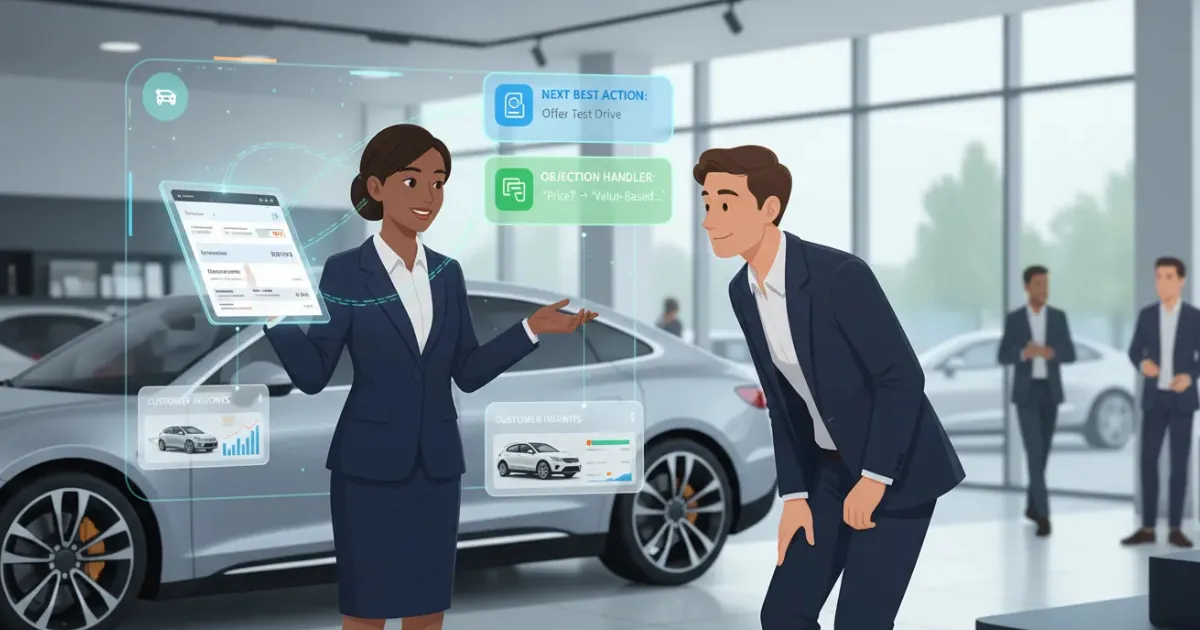
Closing this gap requires a transition from data management to a dedicated Sales Execution System (SES). In 2026, leading firms in Automotive and NBFCs are no longer leaving sales quality to chance. By integrating interactive product illustrators and AI-driven battlecards directly into the workflow, they provide agents with the specific guidance needed to close deals in real-time. An SES ensures that every frontline interaction - whether in a metro branch or a rural territory - is backed by the same high-level expertise as your most successful sales leaders.
What is a sales execution system exactly?
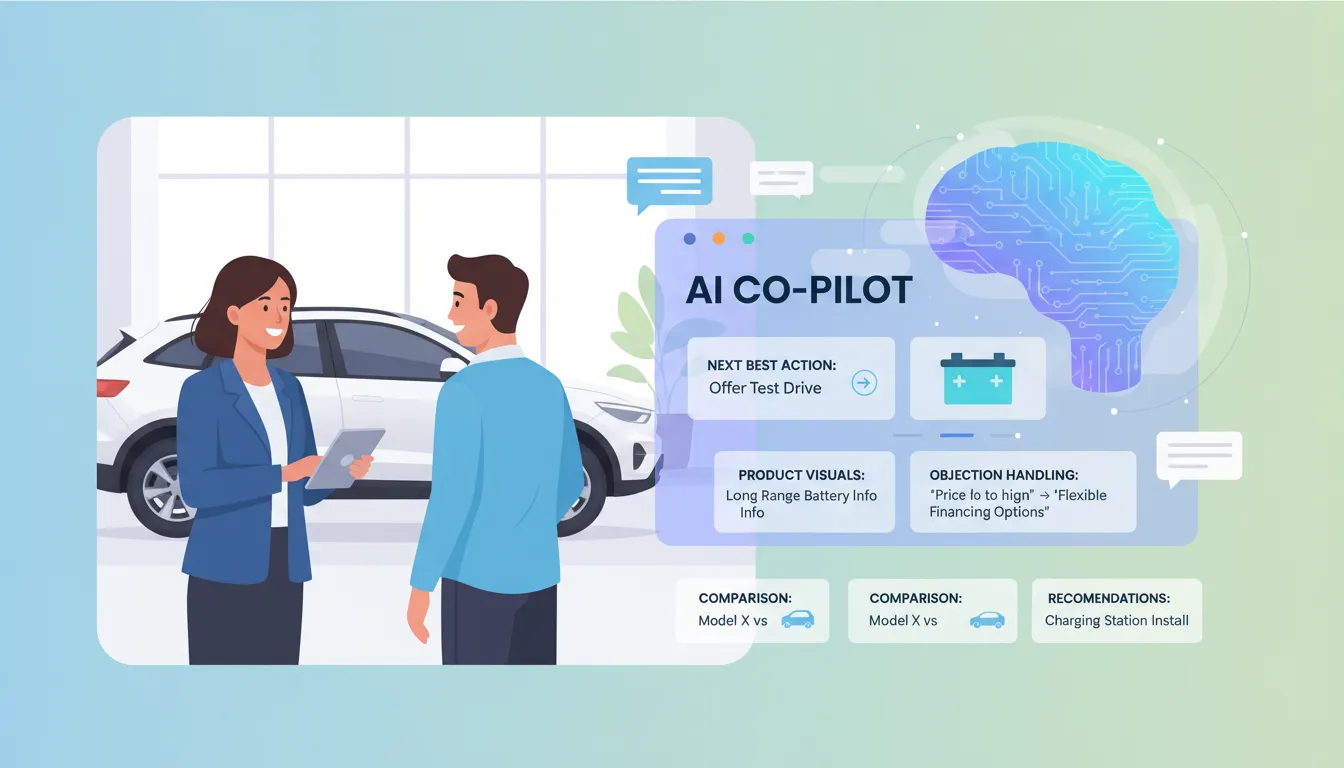
A Sales Execution System (SES) is the bridge between a high-level corporate strategy and the actual conversation happening on a showroom floor, inside a bank branch, or at a customer’s doorstep. While a CRM acts as a digital filing cabinet for historical data, an execution system functions as a live GPS for the sales journey. It converts static sales training into dynamic, real-time actions that move a deal forward.
In 2026, the distance between the boardroom and the frontline remains a major hurdle for enterprise teams in sectors like Insurance, Banking, and Automotive. A sales execution system closes this gap by providing agents with the exact tools they need at the moment of truth. This includes interactive product illustrators that simplify complex financial products or AI-powered battlecards that trigger the moment a customer mentions a competitor’s pricing. It removes the cognitive load from the salesperson, ensuring that every agent - regardless of their experience level - performs with the consistency of a top-tier veteran.
The core of a modern SES is focused on lead activation and the "next best action." It is no longer enough to simply assign a lead to a salesperson and hope for the best. The system must prompt the rep with a personalised opening line, suggest the appropriate marketing collateral based on the lead’s specific profile, and offer real-time objection-handling scripts. For instance, in the construction or building materials sector, an agent meeting an architect needs to instantly provide technical performance data. The SES puts that proof in their hands instantly, transforming a standard sales call into a high-value consultation.
For distributed teams across vast geographies, an SES ensures brand and compliance consistency. It prevents "renegade selling," where reps might use outdated brochures or misrepresent product features. By automating the delivery of just-in-time content and learning journeys, the system ensures that the most current pitch is the one being delivered in the field. This level of synchronisation is what allows a company to scale its sales force without diluting the quality of the customer experience.
Actionables for Sales Leaders:
- Identify the "Dead Zones" in your funnel where leads go cold. Use an execution system to automate the follow-up content sent during these specific gaps.
- Move away from static PDF training manuals. Shift your playbooks into a mobile-first execution platform that reps can use while they are actively pitching.
- Deploy AI-driven role-plays that allow agents to practice handling industry-specific objections before they face a live prospect.
- Integrate your marketing assets directly into the sales workflow so agents can share personalised, tracked content with one click.
- Monitor behavioral data - not just closing rates. Track which playbooks and battlecards are actually used in successful deals to identify what works and replicate it across the team.
Pro Tip:
Stop using your CRM to measure activity and start using your Sales Execution System to measure "Capability Gaps." If the data shows that 80% of your agents are skipping the "Objection Handling" phase of the playbook, you don't have a lead problem; you have a confidence problem. Trigger a micro-learning journey for those specific agents to fix the behaviour in real-time.
Why do enterprise CRMs fail frontline agents?

Enterprise CRMs are traditionally designed as systems of record, not systems of execution. For a frontline agent in a high-velocity industry like Banking or Insurance, a CRM often feels like a digital tax. They are forced to input data to satisfy management's need for reporting, but they receive almost zero utility in return to help them close the deal in front of them. The fundamental disconnect lies in the architecture: CRMs prioritise the data needs of the CRO while ignoring the cognitive load of the salesperson. When an agent is on the field or in a showroom, they don't need a database; they need a co-pilot.
The "data entry fatigue" is a primary reason for failure. In sectors like Automotive or Pharma, agents are constantly on the move. Asking them to navigate through fourteen different screens and thirty mandatory fields just to log a meeting is unrealistic. This friction leads to "batch updating" at the end of the week, which destroys data integrity. By the time the manager sees the data, it is stale, and by the time the agent needs the system to help them, the opportunity has passed. The CRM becomes a rearview mirror when the agent needs a windshield.
Another critical failure point is the lack of contextual guidance. A CRM can tell an agent that a lead is "Hot," but it cannot tell them how to handle a specific objection about interest rates or how to compare a life insurance policy against a competitor's new offering. For the frontline, the "what to say" and "how to show it" are far more important than the "where to log it." Because most CRMs are disconnected from sales playbooks and content repositories, the agent has to switch between multiple apps to find a brochure, a calculator, or a battlecard. This fragmentation kills the momentum of a live sales interaction.
In the current 2026 landscape, the expectation has shifted toward instant lead activation. If an agent receives a lead but has to spend five minutes digging through CRM notes to understand the context, the "golden hour" for conversion is lost. Most enterprise CRMs are too slow and too rigid to support the real-time needs of a distributed sales force. They fail because they focus on the outcome (the deal) rather than the behaviour (the pitch) that leads to that outcome.
To fix the CRM adoption crisis and make it a tool for growth, leadership must pivot toward enablement-first strategies:
- Reduce manual entry by 70% through automated lead capture and voice-to-text logging that syncs directly with the sales playbooks.
- Embed interactive product illustrators and ROI calculators directly within the sales workflow so the agent never has to leave the platform to prove value to a customer.
- Deploy AI-driven nudges that suggest the next best action based on the specific stage of the buyer journey, rather than leaving the agent to guess.
- Integrate objection-handling battlecards that pop up based on the lead profile, ensuring even a new hire can pitch with the expertise of a top performer.
- Simplify the UI to a "single-action" interface for field teams, where the most common tasks - calling, sharing a brochure, or updating a stage - can be done in two taps.
How does lead activation differ from lead logging?
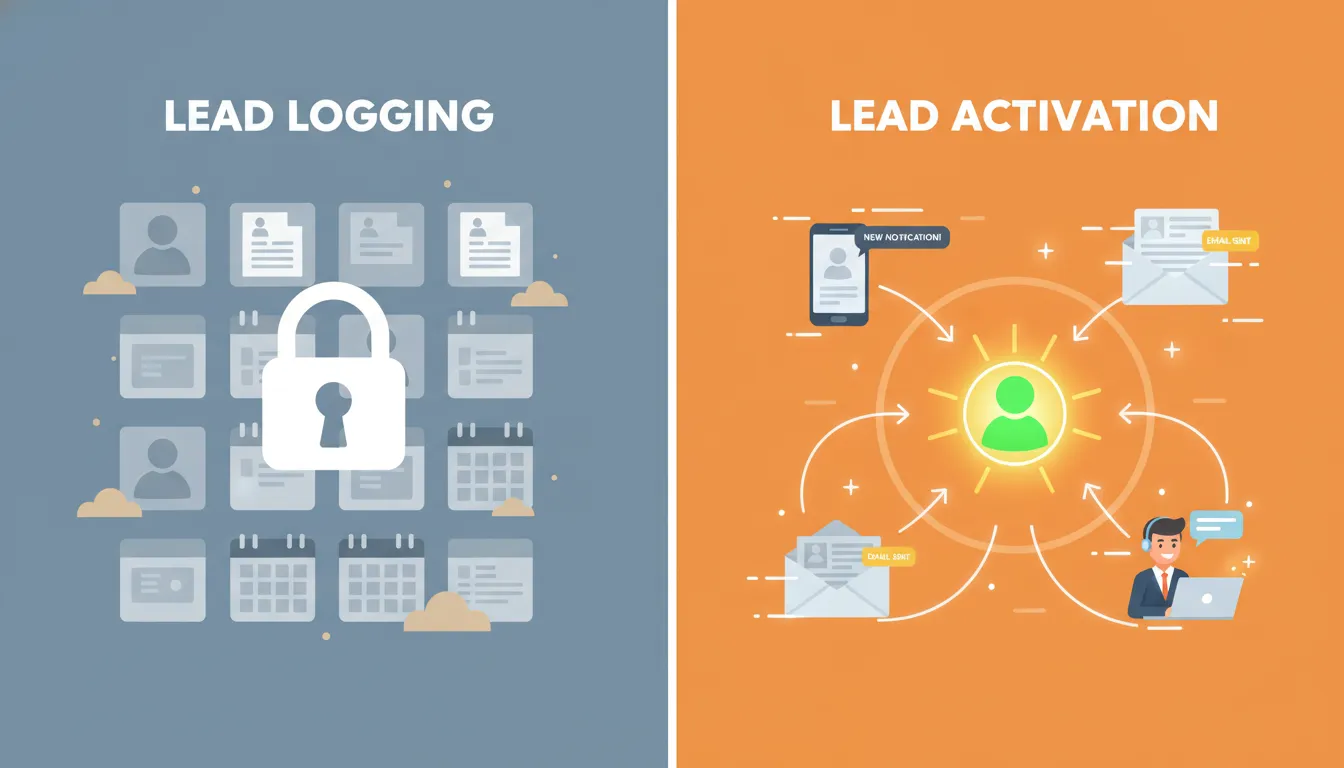
Lead logging is a clerical function; lead activation is a revenue-generating strategy. Logging focuses on the past - recording that a prospect exists, noting their contact details, and assigning a lead source in your CRM. Activation focuses on the immediate future - equipping a salesperson with the exact tools, scripts, and personalised content needed to turn that data point into a conversation. While logging populates a database, activation accelerates the sales cycle.
For enterprise teams in sectors like Banking, Insurance, or Automotive, logging often becomes a "lead graveyard." A lead enters the system, a notification is sent, and then the data sits idle while a salesperson manually decides how to prioritise it. Lead activation eliminates this dead time by triggering automated, contextual playbooks the moment a lead is logged. It bridges the gap between knowing a customer is interested and delivering a high-impact interaction before that interest cools.
Logging answers the "Who" and "Where." Activation answers the "How" and "When." Logging is about compliance and reporting; activation is about execution and behavioural consistency. If your team is only logging leads, you are managing a list. If you are activating leads, you are managing a process that forces an outcome. Activation ensures that every representative, regardless of their tenure, follows the same high-performing behaviours that your top 1% of sellers use.
In a high-stakes environment like NBFCs or Pharma, the difference is measured in minutes. A logged lead might wait hours for a follow-up. An activated lead receives a personalised product illustrator or a tailored pitch within seconds of their inquiry. Activation transforms a passive CRM record into an active sales pursuit by providing "just-in-time" enablement to the frontline agent.
Pro Tip:
Stop treating your CRM as a source of truth for sales activity; treat it as the engine room for sales behaviour. Instead of asking your team to "update the CRM," use lead activation tools that update the CRM automatically based on the content shared or the pitches delivered. This flips the script from administrative burden to performance enablement.
Why are sales playbooks essential for execution consistency?

Sales playbooks serve as the operational blueprint that transforms individual talent into a repeatable, scalable revenue engine. Without a formalised playbook, a distributed sales force defaults to "freestyling" - a scenario where every agent uses their own messaging, ignores specific compliance requirements, and follows inconsistent follow-up cadences. In high-stakes industries like Banking, Insurance, and Automotive, this lack of structure creates a massive variance in customer experience. One customer receives a sophisticated, value-driven pitch, while another receives a generic, feature-heavy monologue. Playbooks eliminate this "performance lottery" by ensuring that the median performer executes with the same precision as a top-tier veteran.
The primary driver of execution inconsistency is the cognitive load placed on frontline agents. During a live interaction, a rep in the NBFC or Pharma sector must simultaneously recall technical product details, handle aggressive objections, and navigate complex regulatory disclosures. When agents are forced to rely on memory alone, they skip critical steps or misrepresent value propositions. A digital sales playbook functions as an external brain, providing just-in-time guidance that tells the rep exactly what to say, which collateral to share, and how to counter specific competitive claims in real-time. This reduces the mental effort required to navigate a sale, allowing the agent to focus entirely on building rapport and closing the deal.
Consistency also dictates how quickly a brand can pivot in a competitive market. In 2026, market conditions and interest rates change weekly. If your strategy changes but your 5,000-person field force is still using last month’s talk tracks, your execution has failed. Playbooks allow for the instant distribution of updated "Battlecards" and "Objection Handlers" across the entire organisation. This ensures that the moment a competitor launches a new promotion or a new regulation is passed in the Insurance sector, every single agent is aligned with the new corporate narrative within minutes, not weeks.
To move from fragmented efforts to a unified execution model, implement these high-impact actions:
- Audit Your "Top 10%": Identify the specific phrases, questions, and sequences used by your highest-performing agents. Document these as the "gold standard" talk tracks for the rest of the team.
- Contextualise Content: Move away from a single, massive PDF. Break your playbook into "situational modules" based on the customer’s persona (e.g., a first-time car buyer vs. a fleet manager), so reps can access relevant guidance instantly.
- Integrate Objection Handling: Build a dynamic repository of the top ten objections faced in your specific industry. Provide "Good, Better, Best" responses for each to help reps navigate high-pressure moments without stuttering.
- Automate the Nudge: Use sales enablement tech to push specific playbook chapters to reps based on the stage of the lead. If a lead is in the "Comparison" stage, the playbook should automatically surface competitive battlecards.
- Measure Playbook Adoption, Not Just Sales: Track which parts of the playbook are being used most frequently. If your top performers are ignoring a specific chapter, that content is likely out of touch with the reality of the field and needs a rewrite.
Can AI role-plays solve the frontline capability gap?
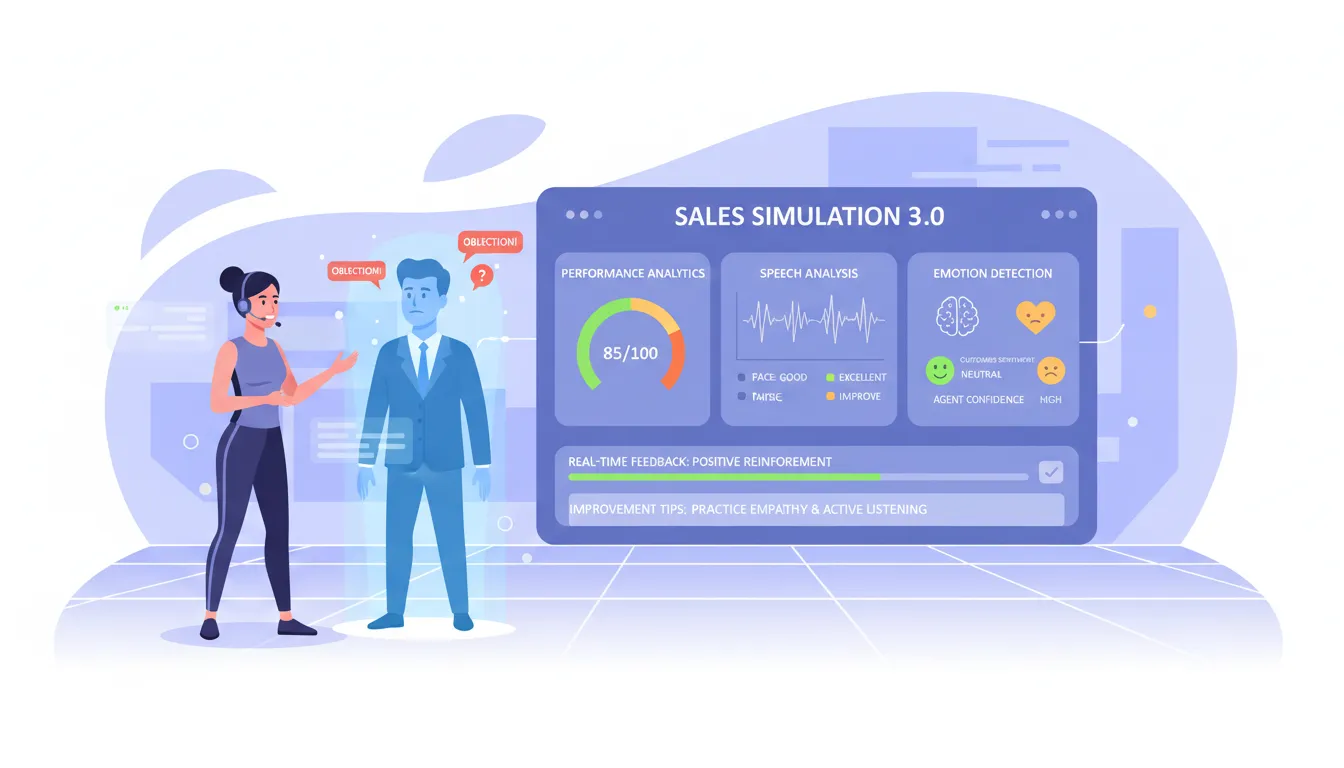
Traditional sales training fails because it confuses knowledge with capability. You can spend thousands of dollars on training modules and LMS quizzes, but a salesperson passing a multiple-choice test on product features does not mean they can handle a high-pressure objection from a sceptical buyer. The capability gap exists in the "last mile" - the moment an agent opens their mouth to speak to a customer. AI role-plays are the only scalable way to bridge this gap by converting passive knowledge into active muscle memory.
In sectors like Banking, Insurance, and Automotive, the stakes of a customer interaction are high. A misplaced word regarding a loan interest rate or a failure to mention a critical safety feature in a vehicle can kill a deal instantly. AI role-plays simulate these high-stakes environments without the risk of losing a real lead. By providing a safe, private space for agents to fail, iterate, and improve, you eliminate the "sales stage anxiety" that often paralyses frontline teams.
The core advantage of AI-driven simulations is the shift from subjective to objective feedback. In a traditional setting, a manager might listen to one out of every fifty pitches. Their feedback is often colored by their own biases or the limited time they have. AI, however, analyses every word, tone, and sentiment. It identifies exactly where an agent faltered - perhaps they missed a mandatory compliance disclosure or failed to pivot when a customer mentioned a competitor’s pricing. This allows for personalised coaching at a scale that is humanly impossible.
Consistency across distributed geographies is a major challenge for enterprise sales leaders. Whether an agent is in a metro hub or a Tier-2 town, the customer experience must remain uniform. AI role-plays act as a decentralised coach, ensuring that the brand’s value proposition is delivered with the same level of precision and impact across the entire organisation. This eliminates the "knowledge decay" that typically happens weeks after a standard training workshop.
What is the impact of just-in-time enablement on revenue?

Just-in-time enablement shifts the sales paradigm from "knowing everything" to "executing perfectly in the moment." In high-stakes industries like banking, insurance, and automotive, the gap between a lead and a closed deal is often measured in seconds. When a frontline agent is standing in front of a prospect, their ability to access a specific product illustration, handle a complex regulatory objection, or generate a personalised financing quote determines the revenue outcome. Traditional training focuses on retention, which naturally decays over time. Just-in-time enablement focuses on retrieval, ensuring the right insight is available exactly when the buyer’s interest is at its peak.
The most immediate impact on revenue is the drastic reduction in sales cycle length. In sectors like NBFCs or pharma, deals often stall because an agent cannot answer a technical question or provide a specific document on the spot. They promise to "get back to the customer," which creates a window for competitors to move in or for the prospect's momentum to cool. By providing instant access to battlecards and interactive calculators, you eliminate these friction points. This keeps the conversation moving forward, allowing reps to close deals in a single interaction rather than across multiple follow-ups.
Revenue growth is also driven by the "top-performer replication" effect. In any distributed sales force, a small percentage of agents usually drive the majority of the revenue because they have mastered the nuances of the pitch. Just-in-time enablement democratises this expertise. When an average performer receives an automated prompt or a "nudge" during a live lead interaction - suggesting a specific cross-sell opportunity based on the customer’s profile - their performance begins to mirror that of a veteran. This lifts the baseline of the entire organisation, leading to a massive aggregate increase in monthly recurring revenue or total policy value.
Furthermore, just-in-time enablement protects revenue by ensuring compliance and accuracy in regulated industries. In banking and insurance, providing incorrect information isn't just a missed sale; it’s a legal liability. When reps use pre-approved, dynamic content that updates in real-time, the risk of mis-selling vanishes. This builds a foundation of trust with the consumer. A trusted advisor who provides instant, accurate, and personalised solutions is far more likely to secure high-value contracts and referrals than an agent who appears hesitant or ill-equipped.
Why is static sales content killing your conversion rates?
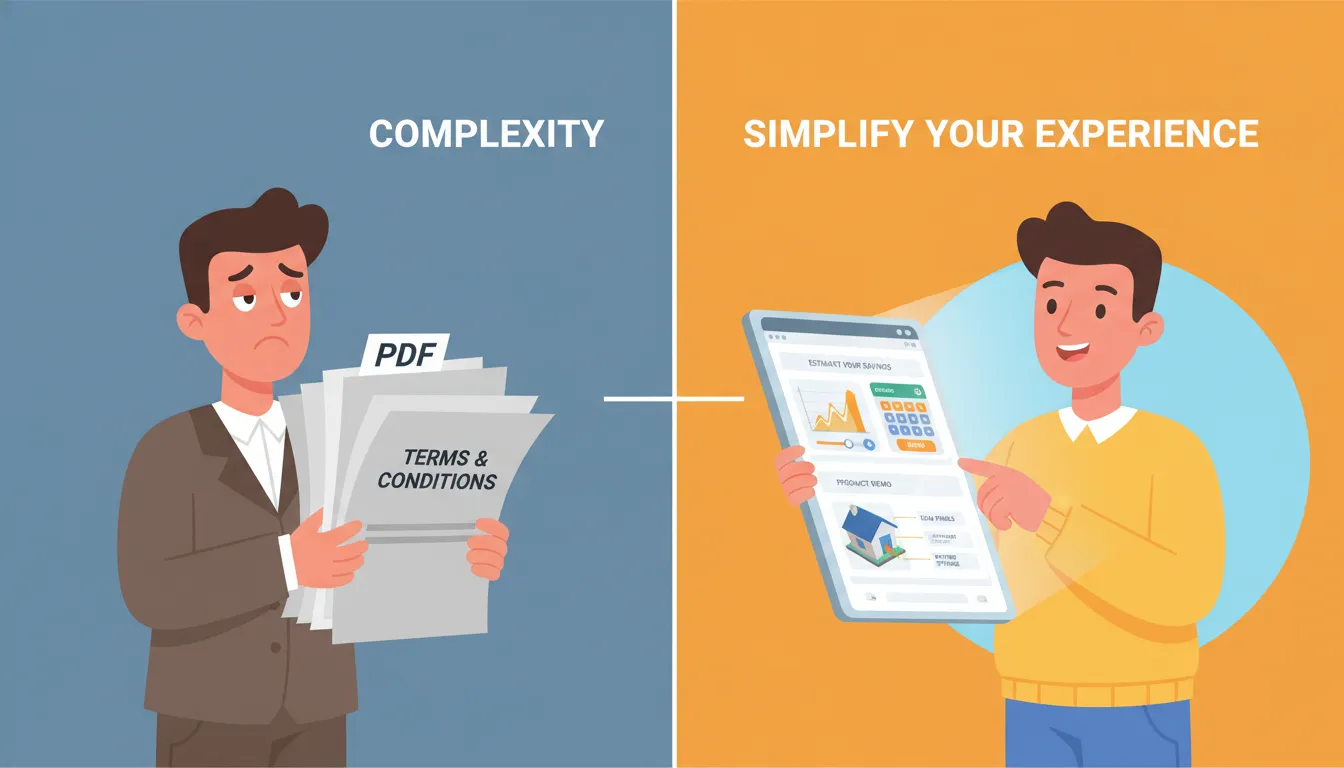
Static content forces your prospects to do the heavy lifting. When a potential customer in the banking or insurance sector receives a generic 20-page PDF, they are tasked with filtering out 90% of the noise to find the one section relevant to their specific financial needs. In 2026, this friction is a conversion killer. Buyers no longer have the patience for "treasure hunt" sales materials. If your content doesn't immediately address their specific pain points - be it premium calculations or specific loan eligibility - they will move to a competitor who provides a frictionless, interactive experience.
The highest hidden cost of static content is the "data blackout." When a sales representative sends a static deck to a lead in the automotive or consumer durables space, the trail goes cold the moment the email is sent. You have no visibility into whether the prospect opened the file, which slides they lingered on, or if they shared it with a stakeholder. This lack of engagement data prevents your sales team from prioritising leads effectively. Without real-time insights, your follow-ups are based on guesswork rather than the prospect’s actual interests, leading to mistimed calls that frustrate the buyer.
In industries like Pharmaceuticals or Construction Materials, product complexity is a significant barrier to closing deals. Static brochures are fundamentally incapable of illustrating dynamic processes or personalised ROI. A static image cannot show a doctor how a new drug interacts with specific receptors, nor can it help a builder visualise how different materials impact long-term structural costs. When you use static assets, you are limiting your frontline agents to a passive role. They become mere "delivery people" for documents rather than strategic advisors who can use interactive tools to co-create solutions with the customer.
Version control issues also plague static content, directly impacting trust. In the fast-moving NBFC and Banking sectors, interest rates and regulatory requirements shift constantly. If an agent in a distributed geography uses an outdated PDF from three months ago, they risk providing inaccurate information. This leads to broken promises and compliance risks that can tank a deal at the final documentation stage. A single error in a static file can undermine the credibility of your entire enterprise, making it impossible to maintain a consistent brand voice across thousands of frontline agents.
To fix these conversion leaks, your organisation must pivot toward dynamic sales enablement. Here are the immediate steps you should take:
- Replace all standard product PDFs with interactive "calculators" or "illustrators" that allow prospects to input their own data for personalised results.
- Transition from email attachments to personalised web-links that track engagement metrics such as time-on-page and scroll depth.
- Implement "Just-in-Time" content delivery for your field teams, ensuring they only access the most recent, compliant versions of battlecards and playbooks.
- Use modular content blocks that allow sales reps to customise a presentation in seconds, including only the slides that matter to that specific prospect.
- Integrate real-time objection-handling tools into your digital decks, allowing agents to pivot the conversation without leaving the presentation view.
How do execution systems bridge the strategy-to-performance gap?
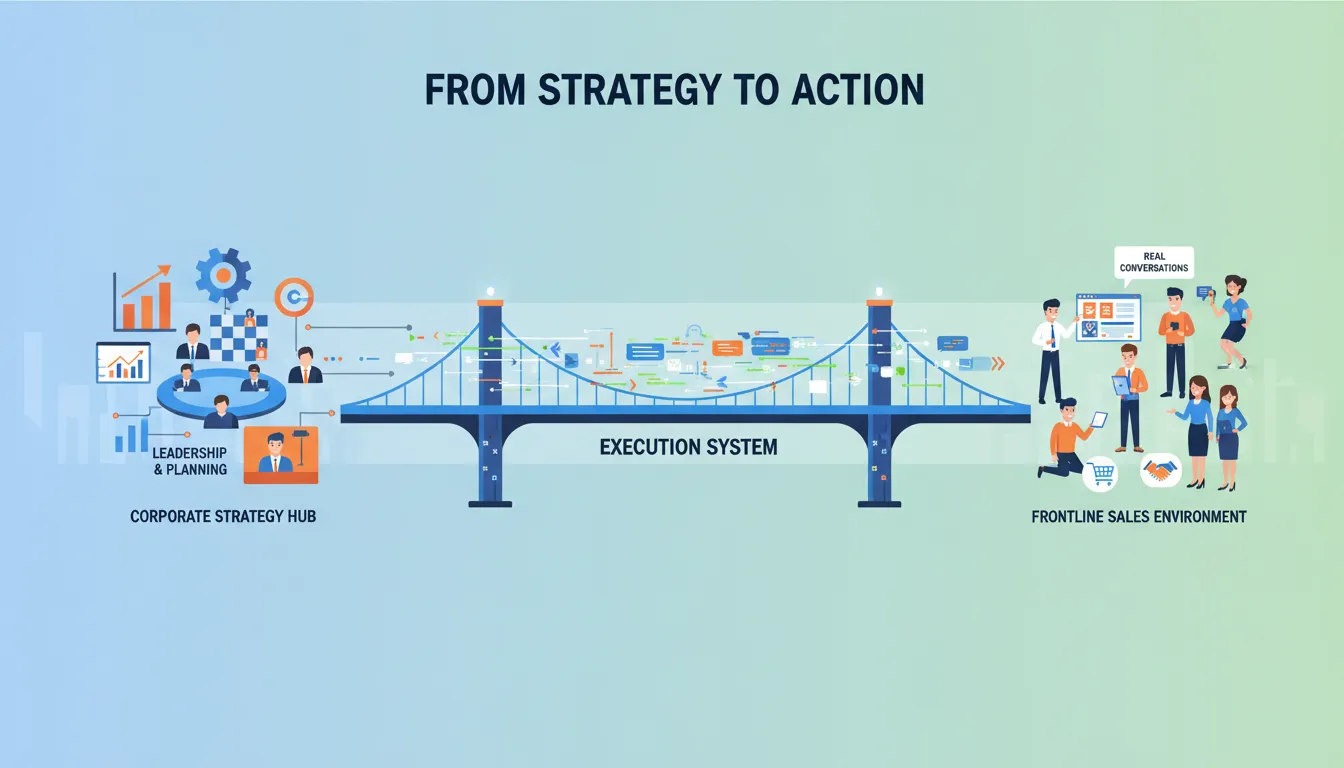
The strategy-to-performance gap exists because high-level objectives rarely translate into the daily micro-behaviours required from a distributed sales force. While leadership focuses on market share and revenue targets, the frontline struggles with the "how" - how to handle a specific objection, how to present a complex product like a ULIP or a multi-variant SUV, and how to prioritise leads that are cooling off. An execution system bridges this gap by transforming static strategy into a dynamic, guided workflow that dictates exactly what a salesperson should do at every touchpoint.
In industries like Banking, NBFCs, and Automotive, the friction between a corporate mandate and a customer interaction is usually caused by cognitive load. When an agent is in front of a prospect, they cannot recall a training manual from three months ago. An execution system removes this mental burden by providing just-in-time enablement. By embedding playbooks directly into the sales process, the system ensures that the "best-case" behaviour - the way your top 5% of performers sell - becomes the standard behaviour for the entire team. This consistency is what turns a visionary strategy into predictable revenue.
Execution systems also solve the "Lead Leakage" problem. A strategy might focus on high-intent lead generation, but if those leads sit idle in a spreadsheet or a legacy CRM, the strategy fails. Execution platforms automate lead activation, pushing the right context and the right collateral to the agent's mobile device the moment a lead is assigned. This immediate link between opportunity and action ensures that momentum is never lost to administrative delays or lack of preparation.
Furthermore, these systems create a continuous feedback loop that traditional training programs lack. Instead of guessing why a particular region is underperforming, sales leaders can use execution data to identify specific capability gaps. If the data shows that agents are dropping off during the "Product Illustration" stage, the execution system allows for instant deployment of updated interactive tools or AI-driven role-play modules to fix that specific bottleneck in real-time.
Why is multi-geography sales management impossible without automation?
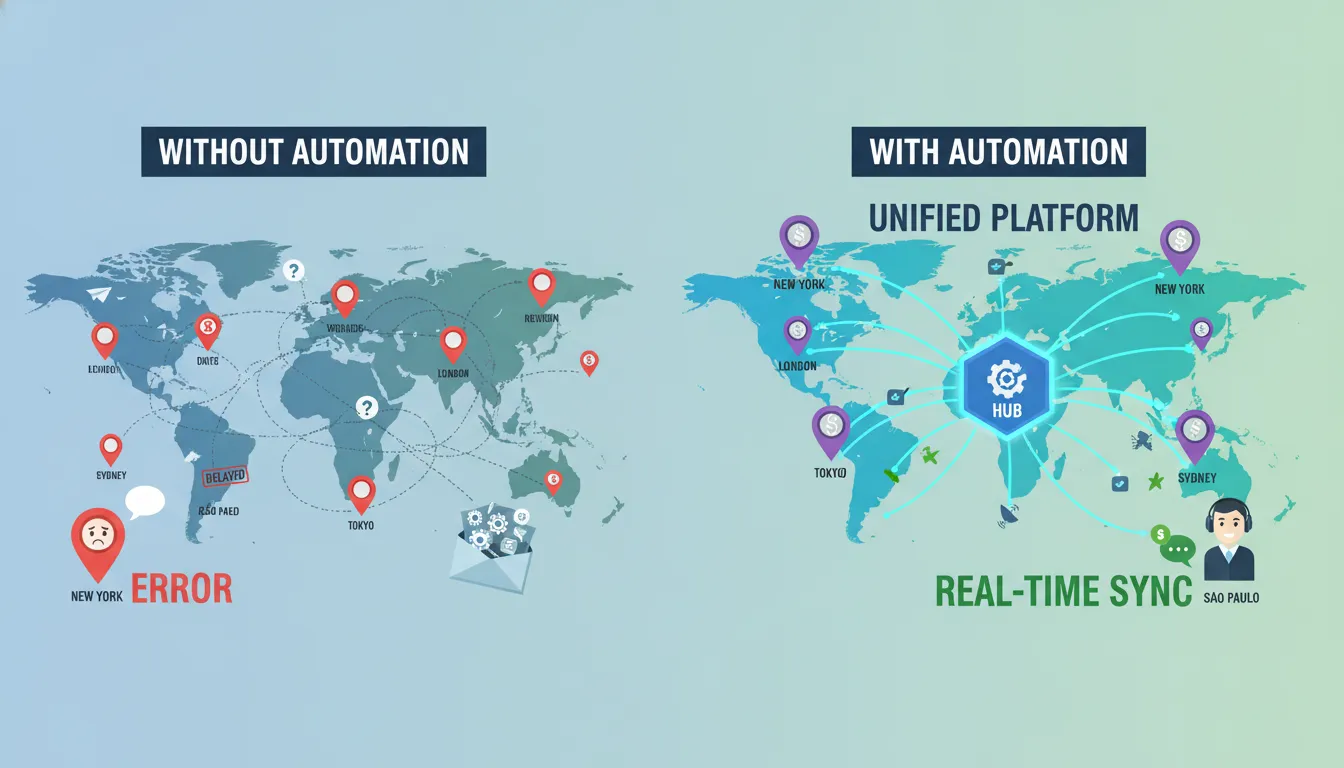
Managing a sales force across hundreds of cities and multiple time zones creates an immediate "execution gap." In a manual environment, the strategy decided at the head office rarely reaches the frontline agent in the same shape or form. By the time a new product launch or a revised interest rate is communicated down the chain, the message is diluted, misinterpreted, or ignored. This lack of consistency is the primary reason why multi-geography sales management fails without automation. In 2026, the speed of the market does not allow for the "telephone game" style of management, where information trickles down slowly.
The end consumer today is more informed than ever. Whether they are looking for a home loan, a new SUV, or a life insurance policy, they expect an expert-level interaction every single time. If an agent in a Tier-3 city cannot provide the same technical clarity or personalised calculation as an agent in a metro, the brand’s credibility collapses. Automation bridges this capability gap by providing every agent with "just-in-time" enablement. Without it, you are essentially gambling on the individual talent of thousands of distributed agents rather than relying on a repeatable, high-performance system.
Lead leakage is another critical failure point. In industries like Banking and NBFCs, the "golden window" for lead activation is measured in minutes. Without an automated lead management system, leads often sit in spreadsheets or manual queues while managers try to figure out who is available in which territory. This delay allows competitors to swoop in. Automation ensures that a lead generated in a specific geography is instantly routed to the most qualified agent with the necessary context and product playbooks already open on their device.
Furthermore, field-tested coaching becomes a physical impossibility at scale. A regional manager overseeing four states cannot sit in on every sales meeting to identify why conversion rates are dropping. Automation provides visibility into the "middle of the funnel" - not just the final sales numbers, but the actual behaviours leading to those numbers. It identifies which objection handling scripts are being used and where agents are fumbling their pitches, allowing for remote, data-driven interventions.
Actionable Strategies for Multi-Geography Sales Success:
- Deploy Dynamic Sales Playbooks: Move away from static PDFs. Use automated playbooks that update in real-time across all regions simultaneously, ensuring agents always use the latest pricing, compliance data, and promotional offers.
- Implement Instant Lead Routing: Use geo-fencing and logic-based automation to assign leads within 60 seconds of capture. The faster the first touch, the higher the conversion probability.
- Enable AI-Driven Role-plays: Use automated role-play tools to certify agents on new products. This allows you to verify that 5,000 agents are "pitch-ready" without requiring 5,000 hours of manual training sessions.
- Localised Content Personalisation: Give agents tools to generate personalised, co-branded collateral (like product illustrators or calculators) on their phones. This allows them to show the customer exactly how a solution fits their specific regional or financial context.
- Real-Time Battlecards: Provide automated objection-handling triggers. When a customer mentions a competitor’s new scheme, the agent should have the specific counter-points (battlecards) pop up on their screen instantly.
Pro Tip:
Stop measuring your managers by their teams' final sales quotas alone. Instead, use automation to track "Lead Activation Time" and "Playbook Adoption Rates." These are the leading indicators of geographical health. If an office in a specific region has high sales but low playbook adoption, you have a "hero culture" that isn't scalable. If they have high adoption but low sales, you have a strategy problem. Automation is the only way to see the difference.
Is your 2026 sales stack built for recording or winning?
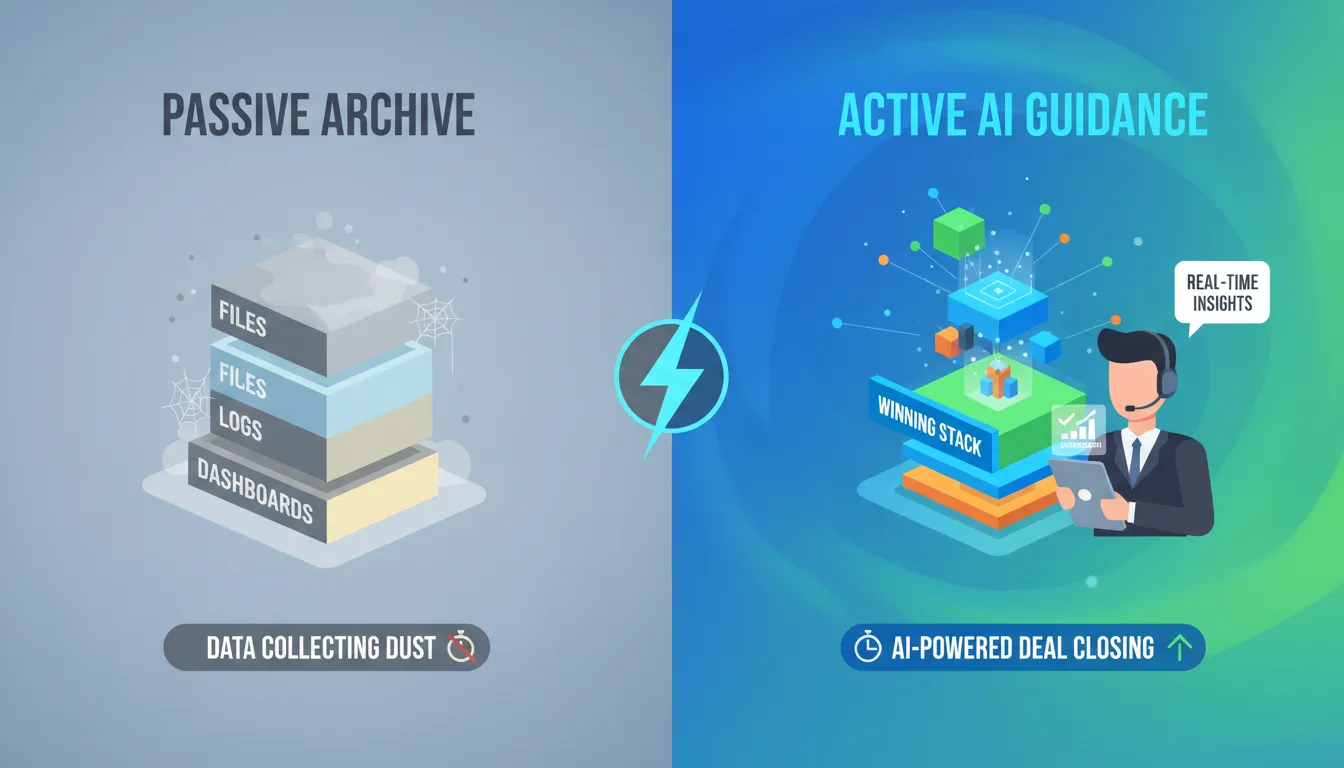
Most enterprise sales stacks are historical archives. They tell you why you lost a deal three weeks ago, but do nothing to help you win the deal happening right now. If your frontline agents in the field - whether selling life insurance in a Tier-2 city or luxury SUVs in a showroom - view your sales tools as a data-entry chore rather than a deal-closing companion, you have a recording problem. A winning stack must shift from passive observation to active intervention.
In 2026, the competitive edge is no longer just having a database; it is about Lead Activation. When a lead enters the system, the clock starts. A "recording" stack waits for the agent to follow up and log the call. A "winning" stack provides an AI-powered playbook immediately. It tells the agent exactly which product variant fits the lead's profile, provides a personalised interactive illustrator to show value, and surfaces the right battlecards the moment the customer mentions a competitor's interest rates.
Frontline execution remains the biggest bottleneck for distributed teams in Banking, NBFCs, and Consumer Durables. High-performing agents instinctively know how to pivot when a customer raises an objection about premiums or loan terms. The "winning" stack democratises this instinct. It uses Just-in-time content to ensure a rookie agent performs with the same finesse as a tenured veteran. If your stack isn't providing the "next best action" during the conversation, it is just a digital filing cabinet.
To transition from recording to winning, evaluate your tools against the point of sale. Does the tool help the agent personalise the pitch in real-time? Does it eliminate the "let me get back to you on that" delay? In industries like Pharma or Construction Materials, where technical specifications and trust are paramount, an Interactive Product Illustrator is the difference between a closed deal and a "we'll think about it."
The 2026 sales environment demands execution consistency. You cannot afford a 20% "star" team carrying the other 80%. A winning stack levels the playing field by embedding high-impact behaviours into the software itself. It moves the focus from "What happened?" to "What do I do right now to win this deal?"
Conclusion
The reality for large-scale sales organisations in 2026 is that a CRM is simply a database of record, not a tool for performance. While your CRM tracks that a lead exists, it does nothing to help a frontline agent navigate a complex objection or present a personalised product illustration during a high-stakes meeting. Relying solely on a CRM leaves your field teams to fend for themselves, leading to inconsistent messaging and millions in lost revenue.
Closing the $10 million execution gap requires moving beyond static data management to an active Sales Execution System. For industries like Banking, Insurance, and Automotive, where distributed teams face varying levels of capability, the goal is to replicate the behaviour of your top performers across the entire organisation. By providing just-in-time playbooks, AI-driven role-plays, and real-time battlecards, you transform your sales force from a collection of individuals into a unified, high-performing engine.
The math is simple: visibility into your pipeline is useless if your team lacks the skills to move deals forward. A Sales Execution System ensures that every interaction - before, during, and after the pitch - is optimised for conversion. It is the bridge between a strategic sales plan and actual revenue growth in the field.
Stop letting execution gaps dictate your quarterly results. Move beyond the limitations of your CRM and equip your team with the tools they need to win.
See how Sharpsell’s AI-Powered Sales Execution System can standardise excellence across your frontline teams. Book a personalised demo today to identify your execution gaps and start reclaiming your lost revenue.
What’s a Rich Text element?
The rich text element allows you to create and format headings, paragraphs, blockquotes, images, and video all in one place instead of having to add and format them individually. Just double-click and easily create content.
Static and dynamic content editing
A rich text element can be used with static or dynamic content. For static content, just drop it into any page and begin editing. For dynamic content, add a rich text field to any collection and then connect a rich text element to that field in the settings panel. Voila!
How to customize formatting for each rich text
Headings, paragraphs, blockquotes, figures, images, and figure captions can all be styled after a class is added to the rich text element using the "When inside of" nested selector system.
zdxfhgfg
- sdnslk,xdv
- SDlknjsdv
- SDvlknj
- sdgdf v