Enterprise sales organizations today operate in an environment that is more complex than ever before. Sales teams are spread across cities, states, and even countries. Field representatives meet customers at branches, offices, retail outlets, dealerships, hospitals, construction sites, and industrial facilities. Account executives manage hybrid sales cycles that combine in-person meetings with virtual interactions, while managers are expected to forecast revenue accurately despite having limited visibility into what is happening on the ground.
To manage this complexity, organizations have invested heavily in CRM platforms, sales analytics tools, dashboards, and reporting systems. These technologies promise complete visibility into the sales pipeline, allowing leadership teams to understand deal progression, forecast revenue, allocate resources, and make informed business decisions.
However, there is one challenge that continues to undermine these investments. Many enterprise sales organizations still rely on manual sales updates. Sales representatives finish a customer meeting and are expected to log into the CRM, update opportunity stages, record meeting notes, upload documents, change deal values, schedule follow-up activities, and complete multiple administrative tasks before moving on to their next customer. In theory, this process ensures that sales data remains accurate and up to date.
In reality, it rarely works that way.
When sales teams spend most of their day travelling, meeting customers, responding to urgent requests, and managing multiple opportunities simultaneously, updating the CRM often becomes a low priority. Information is entered hours later, at the end of the day, at the end of the week, or sometimes not at all. Details are forgotten, customer conversations are summarised inaccurately, opportunity stages remain outdated, and managers are left making strategic decisions based on incomplete or unreliable information.
The result is a pipeline that appears healthy on dashboards but tells a very different story from what is actually happening in the field.
This disconnect between real-world selling activities and CRM data creates one of the biggest operational challenges for enterprise sales organizations today. It affects forecasting accuracy, coaching effectiveness, customer experience, sales productivity, and ultimately revenue growth.
The problem is not the CRM itself. The problem is relying on manual processes to keep it updated.
As enterprise sales teams become increasingly distributed, manual sales updates are no longer simply an administrative inconvenience, they have become a significant barrier to pipeline visibility.
What Is Pipeline Visibility?

Pipeline visibility refers to an organization's ability to accurately understand the status, health, and progression of sales opportunities at any given point in time.
It allows sales leaders to answer critical business questions such as:
- Which deals are most likely to close this quarter?
- Which opportunities are at risk of slipping?
- Where are prospects dropping out of the sales process?
- Which products are gaining the most traction?
- Which territories require additional support?
- How effectively are sales representatives progressing opportunities?
- What revenue can realistically be forecast?
When pipeline visibility is strong, leaders can make proactive decisions rather than reactive ones. They can identify stalled deals before they are lost, allocate coaching where it is needed, adjust sales strategies based on customer trends, and forecast revenue with greater confidence.
For distributed enterprise teams, this visibility becomes even more important.
A regional sales manager may oversee hundreds of account managers across multiple cities without physically accompanying them on customer visits. National sales leaders often manage thousands of representatives operating across different markets and product lines. Senior executives rely almost entirely on pipeline data to understand business performance.
In these situations, CRM dashboards become the organization's primary source of truth.
But that truth is only as reliable as the information entered into the system.
If updates are delayed, incomplete, or inaccurate, every report, dashboard, and forecast built upon that data becomes equally unreliable.
The Reality of Manual Sales Updates

On paper, manual CRM updates appear straightforward.
A sales representative completes a customer meeting and records what happened.
The opportunity is moved from "Initial Discussion" to "Proposal Shared."
Meeting notes are entered.
Expected revenue is updated.
Next steps are scheduled.
The manager reviews the dashboard and sees an accurate reflection of pipeline progress.
Unfortunately, real enterprise sales rarely follow such an orderly process.
Consider a relationship manager at a large bank. After finishing a meeting with one corporate client, they immediately travel to another appointment across the city. Between meetings they respond to emails, answer customer calls, coordinate with internal product specialists, and prepare for the next presentation. Updating the CRM during this time becomes impractical.
A pharmaceutical sales representative may visit twelve doctors in a single day, each conversation covering different products, treatment protocols, and objections. By the time the representative returns to record meeting notes in the evening, many details have already been forgotten.
An automotive sales consultant may spend an entire weekend managing showroom visitors, explaining financing options, arranging test drives, negotiating prices, and coordinating vehicle deliveries. Administrative updates often take place only after customer traffic slows down.
Insurance advisors, FMCG field representatives, telecom account managers, and enterprise software sales teams experience similar pressures.
Across industries, customer-facing employees consistently prioritise selling over administration.
From their perspective, this makes perfect sense.
Customers generate revenue. CRM updates do not.
The unintended consequence is that manual reporting gradually falls behind reality.
Some opportunities remain in the wrong stage.
Customer objections go undocumented.
Competitor activity is never captured.
Lost deals continue appearing as active opportunities.
Follow-up tasks are delayed.
Cross-selling opportunities disappear.
Managers lose visibility into what is actually happening across the pipeline.
Over time, the CRM evolves into a historical record of what representatives eventually remembered to enter rather than a real-time reflection of ongoing customer activity
Why Distributed Sales Teams Face a Greater Challenge

Manual sales updates become increasingly problematic as organizations expand geographically.
In smaller sales teams, managers often work closely with representatives and can compensate for missing information through informal conversations. Team members regularly exchange updates, and sales leaders develop a reasonable understanding of pipeline health despite occasional reporting delays.
Large enterprises operate very differently.
Sales teams may be spread across hundreds of locations, serving different customer segments, industries, languages, and regional markets. Managers cannot personally observe customer meetings or verify whether CRM updates accurately reflect reality.
This creates a heavy dependence on manual reporting.
Ironically, distributed organizations are also the ones least suited to relying on manual processes.
A representative working remotely or travelling extensively is more likely to postpone administrative work than someone operating from a central office. Frequent travel, varying internet connectivity, changing customer priorities, and packed schedules all contribute to delayed or incomplete updates.
Time zone differences introduce additional complexity for multinational organizations. A sales manager reviewing dashboards in Singapore may be looking at opportunities that representatives in Europe have not yet updated. Regional leaders may prepare forecast reviews using information that is already outdated before the meeting even begins.
Different teams also develop different reporting habits. Some representatives update opportunities immediately after customer meetings. Others prefer updating everything once a week. Some write detailed meeting summaries, while others enter only a few words.
Without consistent reporting practices, pipeline data becomes increasingly fragmented.
The larger the organization grows, the greater this inconsistency becomes.
Eventually, sales leaders begin questioning the accuracy of their own dashboards.
Instead of trusting CRM reports, managers schedule additional review calls, request spreadsheets from regional teams, exchange endless follow-up emails, and create parallel reporting systems to validate information.
Ironically, these manual workarounds increase administrative effort even further while doing little to improve data quality.
When CRM Becomes a Reporting Tool Instead of a Selling Tool
One of the biggest reasons manual sales updates fail is that many sales representatives perceive CRM systems primarily as reporting tools for management rather than tools that help them sell more effectively.
If the only purpose of updating an opportunity is to satisfy reporting requirements, representatives naturally prioritise customer-facing activities over administrative tasks. CRM updates become something they do after selling instead of something that actively supports the selling process.
This creates a cycle that is difficult to break.
Managers demand more frequent updates because data quality is poor.
Representatives spend more time entering information.
Administrative workload increases.
CRM adoption declines further.
Data quality continues to deteriorate.
The organization invests more resources in improving reporting compliance without addressing the underlying issue.
The challenge is not that salespeople dislike technology.
It is that manual data entry adds effort without delivering immediate value to the person doing the work.
Breaking this cycle requires a fundamental shift in how organizations think about sales technology. Instead of expecting representatives to spend valuable selling time updating systems after every interaction, modern sales organizations are increasingly focusing on capturing customer engagement in real time, reducing manual effort, and ensuring that pipeline visibility improves as a natural outcome of the sales process rather than as an additional administrative task.
When sales updates become seamless instead of manual, pipeline visibility stops being an operational challenge and becomes a strategic advantage.
The Hidden Cost of Manual Sales Updates: Why Inaccurate Pipeline Data Impacts the Entire Business

The consequences of manual sales updates extend far beyond delayed CRM entries. While most organizations view them as an administrative issue, they are actually a strategic business problem that affects every stage of the sales process. From inaccurate forecasting and poor resource allocation to ineffective coaching and lost revenue opportunities, the ripple effects of incomplete or delayed data can be felt across the organization.
The challenge begins with a simple reality: leadership teams make decisions based on the data available to them. If that data is outdated, incomplete, or inconsistent, even the most experienced sales leaders can make the wrong decisions.
Imagine a national sales head reviewing the quarterly pipeline. The dashboard indicates that there are ₹150 crore worth of opportunities expected to close within the next six weeks. Based on this information, production plans are approved, marketing budgets are allocated, hiring decisions move forward, and revenue forecasts are shared with senior leadership.
However, the reality on the ground tells a different story. Several opportunities have already stalled due to budget constraints. A few prospects have chosen competitors, but these losses haven't yet been updated in the CRM. Some high-value deals have progressed significantly but remain in earlier pipeline stages because representatives haven't had time to update them. Others have been incorrectly marked as active despite weeks of inactivity.
The dashboard appears healthy, but the pipeline is no longer an accurate reflection of reality.
This is how manual sales updates quietly undermine business decision-making.
Poor Forecasting Starts with Poor Data
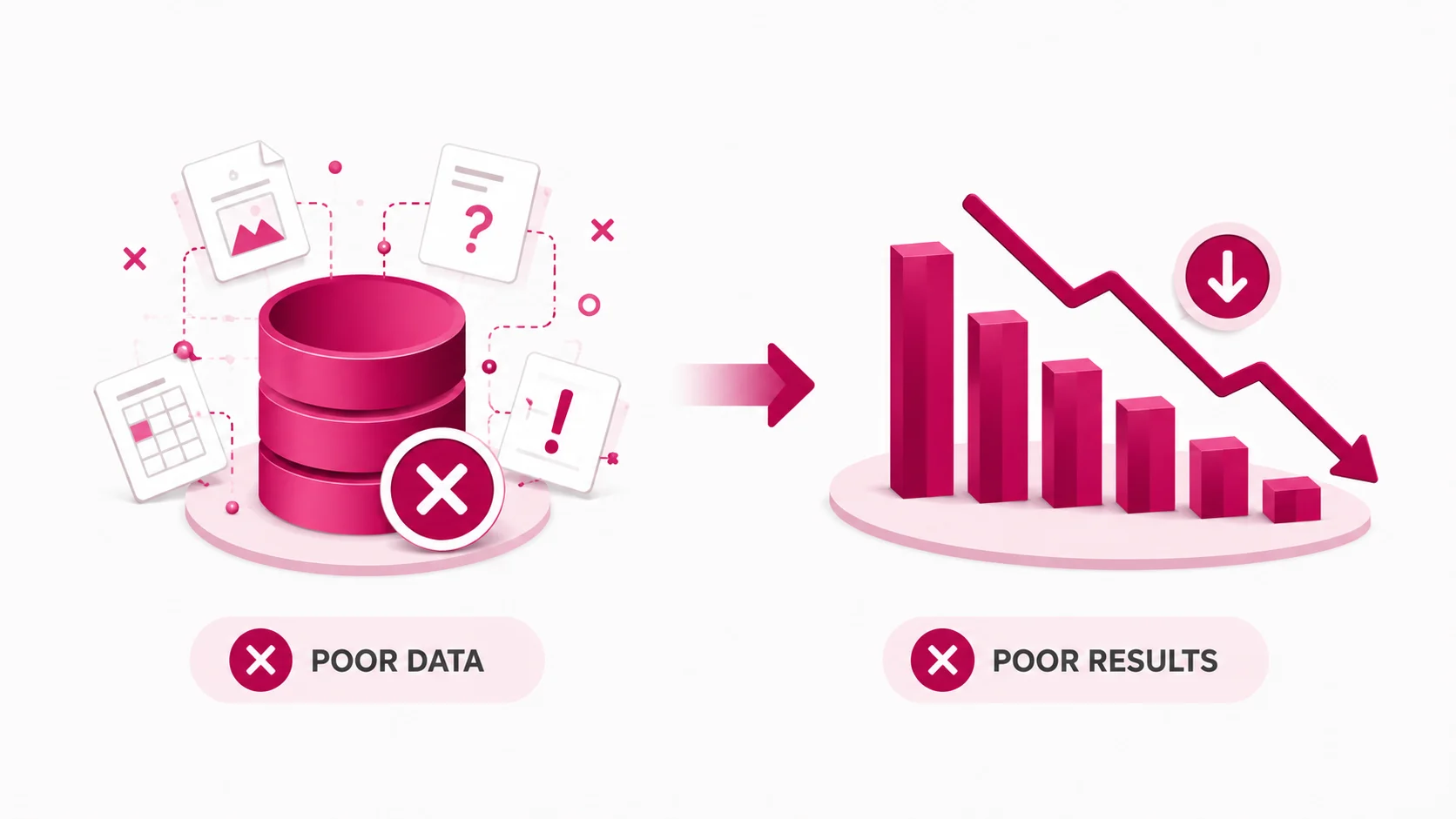
Sales forecasting is only as accurate as the information entered into the pipeline. Modern forecasting models, whether driven by spreadsheets, CRM analytics, or AI-powered prediction engines, depend on reliable opportunity data. They assume that deal stages, close dates, expected values, and customer interactions accurately represent what's happening in the market.
When sales representatives update opportunities manually, that assumption quickly breaks down.
A deal that should have moved from "Proposal Shared" to "Negotiation" remains unchanged because the representative forgot to update it after the customer meeting. Another opportunity continues showing an expected close date of this month, even though the customer has postponed the purchase until the next quarter. A large enterprise account that has already been lost remains active because no one has officially closed it in the system.
Each of these individual inaccuracies may seem insignificant. Collectively, they distort the entire sales forecast.
Sales leaders begin overestimating future revenue. Finance teams make budgeting decisions based on inflated pipeline values. Operations teams prepare inventory or implementation resources for deals that will never materialise. Executive leadership gains a false sense of confidence about business performance until the quarter ends and actual revenue falls short of expectations.
This forecasting gap is particularly damaging for enterprises with complex sales cycles, where strategic planning depends heavily on predictable pipeline movement.
Sales Managers Spend More Time Chasing Updates Than Coaching Teams

One of the least discussed consequences of manual sales updates is the amount of managerial time they consume.
In many organizations, pipeline review meetings are less about strategy and more about correcting data.
Managers ask questions like:
- "Has this meeting happened yet?"
- "Why is this opportunity still in the discovery stage?"
- "Did the customer receive the proposal?"
- "Has the expected deal value changed?"
- "Is this opportunity still active?"
Instead of discussing competitive positioning, objection handling, account strategy, or customer needs, meetings become exercises in reconstructing what has already happened.
Representatives search through emails, calendars, notebooks, and messaging apps to remember customer conversations from several days earlier. Valuable coaching time is replaced with administrative clarification.
Multiply this across dozens of managers conducting weekly pipeline reviews, and the productivity loss becomes substantial.
Rather than helping sales teams win more deals, managers spend a significant portion of their time improving the accuracy of reports that should already reflect the current state of the business.
CRM Adoption Begins to Decline
Manual sales updates also create a negative perception of CRM systems among frontline sales teams.
Most sales representatives enter the profession because they enjoy building relationships, solving customer problems, and closing deals. Administrative work is rarely seen as a value-adding activity.
When CRM usage is primarily associated with filling mandatory fields, writing lengthy meeting notes, and updating opportunity stages after every interaction, it begins to feel like a reporting tool built for management rather than a platform that supports selling.
As administrative expectations increase, representatives often look for shortcuts.
Some postpone updates until the end of the week. Others enter minimal information simply to satisfy reporting requirements. Meeting notes become vague, follow-up tasks are skipped, and pipeline stages are updated only before review meetings.
Over time, CRM compliance becomes reactive rather than continuous.
Ironically, leadership often responds by introducing stricter reporting rules, mandatory update deadlines, and additional compliance checks.
While these measures may temporarily improve reporting discipline, they rarely address the root cause: manual data entry creates friction for sales representatives who are already managing demanding customer-facing schedules.
The result is a cycle where increasing administrative requirements further reduce user engagement, ultimately making data quality even more difficult to maintain.
Delayed Updates Lead to Missed Revenue Opportunities
Pipeline visibility isn't just about reporting. It also enables timely action.
When managers have access to real-time opportunity information, they can identify stalled deals, support representatives facing competitive challenges, escalate pricing approvals, or involve senior leadership before opportunities are lost.
Manual updates delay this visibility.
Consider a software sales representative negotiating a large enterprise contract. During the customer meeting, a competitor unexpectedly offers additional implementation support. The representative plans to discuss this internally but becomes occupied with subsequent customer visits and forgets to update the opportunity.
Several days later, the competitor wins the account.
Had the manager been aware of the competitive threat immediately, they might have arranged executive sponsorship, adjusted commercial terms, or involved solution specialists to strengthen the proposal.
Instead, the organization learns about the lost deal only after it has already happened.
The same scenario occurs across industries.
A relationship manager identifies an opportunity to expand an existing banking relationship but delays recording the customer's interest. Another advisor approaches the same customer without knowing about the previous discussion, resulting in a fragmented experience.
A pharmaceutical representative hears concerns about competitor pricing but doesn't document them until the end of the week. Marketing loses valuable market intelligence that could have informed broader pricing or messaging decisions.
An automotive sales consultant notices growing customer interest in a particular financing option, but delayed reporting prevents leadership from recognising an emerging market trend until months later.
Each missed update represents more than missing information. It represents delayed business action.
Inconsistent Data Makes Sales Analytics Less Reliable
Modern enterprises increasingly rely on analytics to improve sales performance. Leaders track conversion rates, average sales cycle length, win-loss ratios, pipeline velocity, product adoption, territory performance, and customer engagement trends to optimise their sales strategies.
However, analytics are only as reliable as the underlying data.
If opportunities are updated inconsistently, conversion rates become misleading because stage progression no longer reflects actual customer behaviour. Sales cycle calculations become inaccurate when deal milestones are recorded days or weeks after they occur. Win-loss analysis loses credibility because reasons for lost deals are incomplete or entered long after customer conversations have taken place.
As a result, organizations struggle to answer important strategic questions.
Why are deals slowing down?
Which competitors are becoming more aggressive?
Which products are gaining momentum?
Which objections occur most frequently?
Which regions require additional support?
Without accurate, real-time pipeline data, these questions become increasingly difficult to answer with confidence.
The Customer Experience Also Suffers
The impact of manual sales updates isn't limited to internal operations. Customers experience the consequences as well.
When sales information isn't updated promptly, representatives may arrive at follow-up meetings unaware of previous commitments, customer concerns, or agreed next steps. Customers are forced to repeat information they have already shared, creating frustration and reducing confidence in the organization.
Delayed updates can also affect collaboration between departments. Customer success teams, solution consultants, implementation specialists, and service teams often rely on CRM data to prepare for handovers. If sales information is incomplete, downstream teams begin engagements without the context they need, leading to inconsistent customer experiences and avoidable delays.
In enterprise sales, where buying decisions often involve multiple stakeholders and lengthy evaluation cycles, these small breakdowns can significantly impact trust.
Customers expect organizations to remember previous conversations, understand their business priorities, and provide seamless interactions across teams. Manual updates make delivering that level of consistency far more difficult.
Ultimately, manual sales updates do more than create administrative inefficiencies. They reduce forecasting accuracy, weaken sales coaching, limit the value of analytics, slow decision-making, and create unnecessary friction for both sales teams and customers. For distributed enterprise organizations operating across multiple markets and large frontline teams, these challenges scale quickly, making reliable pipeline visibility increasingly difficult to achieve through manual processes alone.
Why Distributed Sales Teams Struggle the Most with Manual Sales Updates

Manual sales updates create challenges for almost every sales organization, but their impact is significantly greater in enterprises with distributed sales teams. As organizations expand into new markets, add product lines, and grow their customer base, sales operations become increasingly decentralized. Representatives work from branch offices, customer locations, dealer networks, partner channels, retail outlets, and remote locations rather than a single corporate office. While this enables businesses to reach more customers, it also makes maintaining accurate pipeline visibility much more difficult.
Unlike centralized inside sales teams that spend most of their day working from laptops, distributed sales teams are constantly on the move. Their priorities revolve around meeting customers, building relationships, conducting demonstrations, negotiating deals, and resolving customer concerns. Administrative work naturally takes a back seat.
As a result, sales updates become delayed, inconsistent, or forgotten altogether.
This creates a significant disconnect between what is actually happening in the field and what leadership sees on dashboards.
For enterprise organizations, this gap has become one of the biggest barriers to predictable revenue growth.
The More Distributed the Team, the Larger the Visibility Gap
A regional sales manager overseeing ten representatives may still maintain reasonable visibility through regular conversations. They know which customers are actively evaluating solutions and which deals require immediate attention.
Now imagine a national sales organization with 3,000 representatives spread across hundreds of cities.
Some representatives update opportunities immediately after meetings.
Others wait until the end of the day.
Some update their CRM once every few days.
Others only update opportunities before weekly review meetings.
Every representative follows a slightly different reporting habit.
While these individual differences may appear minor, they collectively create a fragmented view of the sales pipeline.
Leadership no longer sees what is happening today.
Instead, they see a mixture of yesterday's activities, last week's conversations, incomplete updates, and assumptions based on outdated information.
The larger the organization becomes, the more difficult it is to distinguish between an active pipeline and an outdated one.
Enterprise Sales Cycles Are No Longer Linear
Traditional sales models assumed opportunities moved through predictable stages.
Prospecting.
Discovery.
Proposal.
Negotiation.
Closure.
Modern enterprise sales rarely follow such a straightforward path.
Buying committees have expanded. Procurement processes are more complex. Customers evaluate multiple vendors simultaneously, involve technical teams earlier, request customised demonstrations, and often pause purchasing decisions due to changing business priorities.
A single enterprise opportunity may involve dozens of customer interactions over several months.
During this period, customer priorities change frequently.
Budgets are revised.
New decision-makers join discussions.
Competitors introduce revised commercial offers.
Internal approvals are delayed.
Product requirements evolve.
Capturing these changes through manual CRM updates becomes increasingly difficult.
By the time representatives record what happened, several new developments may already have occurred.
Consequently, CRM data struggles to keep pace with the actual buying journey.
Managers Spend More Time Validating Data Than Driving Performance
As confidence in pipeline data decreases, sales managers begin creating alternative reporting mechanisms.
Weekly forecast meetings become longer.
Regional heads request Excel reports alongside CRM dashboards.
Representatives send WhatsApp updates before leadership reviews.
Managers maintain personal spreadsheets to track critical opportunities.
Senior executives request separate pipeline summaries before quarterly business reviews.
Each additional reporting layer is introduced with good intentions.
Leadership simply wants more confidence in the numbers.
Ironically, these parallel reporting systems increase administrative effort while solving very little.
Representatives now update the CRM.
They also prepare spreadsheets.
They attend review meetings.
They respond to follow-up emails requesting clarification.
The same information is entered multiple times across different systems.
Administrative workload increases while pipeline accuracy improves only marginally.
Instead of simplifying sales operations, manual reporting creates operational complexity.
Different Functions Begin Working from Different Versions of the Truth
One of the biggest risks of manual sales updates is that different departments begin relying on different datasets.
Sales leadership reviews CRM dashboards.
Finance builds forecasts using quarterly pipeline reports.
Marketing evaluates campaign performance through lead conversion data.
Customer success prepares implementation plans based on closed opportunities.
Operations allocate resources using projected sales volumes.
When sales updates are delayed, every function begins making decisions based on slightly different information.
Finance may expect revenue from deals that sales representatives already know are unlikely to close.
Marketing may continue promoting products that customers are consistently rejecting because competitive feedback has not yet reached them.
Implementation teams may prepare for projects that have already been postponed.
Executives reviewing quarterly business performance may believe the organization is on track while frontline managers are already aware of emerging risks.
The organization gradually loses alignment because each department operates from a different version of reality.
Industry Examples: How Manual Updates Affect Different Enterprise Sales Teams

Although the challenges are universal, their business impact varies across industries.
In banking, relationship managers often handle large portfolios of corporate and retail customers simultaneously. Throughout the day, they discuss loans, deposits, wealth products, insurance, treasury services, and digital banking solutions. Updating every customer interaction manually is time-consuming, particularly when meetings take place outside the branch. Delayed CRM updates prevent managers from identifying cross-selling opportunities, monitoring customer engagement, and accurately forecasting business growth across regions.
Insurance advisors experience similar challenges. Customer meetings often generate multiple follow-up actions involving underwriting, documentation, policy comparisons, premium calculations, and compliance requirements. If these activities are not updated promptly, managers struggle to monitor policy progression, identify stalled applications, or provide timely support before prospects lose interest.
Pharmaceutical sales teams depend heavily on accurate field intelligence. Medical representatives collect valuable insights during doctor visits regarding prescription behaviour, competitor promotions, patient feedback, and treatment preferences. When these observations are entered manually several days later, much of the detail is forgotten. Marketing and product teams lose access to critical market intelligence that could influence campaign strategy or product positioning.
Automotive dealerships manage hundreds of customer enquiries every week. Sales consultants conduct test drives, explain financing plans, evaluate exchange vehicles, discuss accessories, and coordinate deliveries. During weekends and festive periods, showroom traffic becomes extremely high. Manual CRM updates are often delayed until customer footfall reduces, leaving dealership managers with limited visibility into active buying intent during the busiest selling periods.
Despite differences in products and customers, the underlying challenge remains remarkably similar.
Manual reporting cannot keep pace with modern enterprise selling.
Why Traditional CRM Workflows Are No Longer Enough
CRM systems remain one of the most valuable investments an enterprise can make. They provide a central repository for customer information, opportunity management, account history, forecasting, and reporting.
However, most CRM platforms were designed to record sales activities—not necessarily to make capturing those activities effortless.
In many organizations, representatives still need to manually update opportunity stages, enter meeting notes, modify expected close dates, upload presentations, record competitor information, and schedule follow-up tasks after every customer interaction.
These processes assume that representatives have sufficient time available for administrative work.
In today's selling environment, that assumption is becoming increasingly unrealistic.
Enterprise sales representatives spend their time switching between customer meetings, virtual presentations, travel, internal discussions, product specialists, procurement teams, and customer follow-ups.
Every additional administrative task competes with time that could otherwise be spent selling.
This explains why CRM adoption often declines despite significant technology investments.
The issue is rarely resistance to technology.
The issue is friction.
The more effort required to update systems manually, the less likely representatives are to maintain accurate information consistently.
Pipeline Visibility Requires More Than Better Reporting
Many organizations attempt to improve pipeline visibility by introducing stricter reporting policies.
Mandatory CRM updates before leaving the office.
Daily reporting deadlines.
Weekly compliance scorecards.
Manager approval workflows.
Additional audit processes.
While these initiatives may temporarily improve reporting discipline, they do not fundamentally solve the underlying challenge.
The problem is not that representatives do not understand the importance of CRM updates.
The problem is that manual updates interrupt the selling process.
Modern enterprise sales teams require systems that reduce administrative effort rather than increasing it. The objective should not be to encourage representatives to spend more time updating CRM records. Instead, organizations should focus on enabling sales activities in ways that naturally capture meaningful customer interactions while reducing the burden of manual reporting.
When pipeline visibility becomes a by-product of the sales process rather than a separate administrative responsibility, organizations gain access to faster insights, more reliable forecasts, stronger coaching opportunities, and better decision-making across every level of the business.
This shift - from manual reporting to real-time sales execution, is becoming one of the defining characteristics of high-performing enterprise sales organizations.
How Leading Enterprises Are Replacing Manual Sales Updates with Real-Time Sales Execution

As sales organizations grow, one thing becomes increasingly clear: asking sales representatives to spend more time updating CRM systems is not a sustainable solution. Enterprises have invested in stricter reporting policies, mandatory CRM compliance, additional dashboards, and weekly pipeline reviews, yet many still struggle with inaccurate forecasts and incomplete visibility.
The highest-performing organizations are approaching the problem differently. Instead of trying to improve manual reporting, they are redesigning the sales process so that accurate pipeline data becomes a natural outcome of selling rather than an additional administrative responsibility.
This shift is moving organizations from manual sales reporting to real-time sales execution.
In a real-time sales execution environment, sales representatives are guided throughout the customer journey using digital playbooks, contextual content, guided workflows, and mobile-first tools. Customer interactions, sales activities, and opportunity progress are captured as part of the selling process instead of relying on representatives to remember every detail hours later.
The result is a sales pipeline that reflects what is happening now—not what someone remembered to update at the end of the day.
Real-Time Visibility Enables Better Decision-Making
When sales data is updated in real time, every stakeholder benefits.
Sales managers can immediately identify opportunities that require executive intervention. If a large enterprise deal enters a critical negotiation stage, leadership can allocate pricing specialists, solution consultants, or senior executives before momentum is lost.
Sales operations teams gain a more accurate understanding of pipeline health across territories. Rather than waiting for weekly reports, they can identify bottlenecks as they emerge and take corrective action before they affect quarterly performance.
Marketing teams receive faster feedback from the field. If multiple representatives encounter the same customer objection or notice growing interest in a particular product feature, messaging can be refined much earlier. Campaigns become more responsive because they are informed by current customer conversations rather than historical reports.
Finance teams also benefit from more reliable forecasting. Revenue projections become increasingly dependable when opportunity stages accurately reflect customer buying intent instead of delayed administrative updates. This allows businesses to allocate budgets, plan investments, and manage resources with greater confidence.
Most importantly, sales representatives themselves spend less time on administration and more time engaging customers, preparing proposals, and building relationships.
The Role of AI in Improving Pipeline Visibility
Artificial intelligence is playing an increasingly important role in helping enterprises reduce manual effort while improving data quality.
For many organizations, the first use case for AI has been automating administrative work. Meeting summaries, CRM note generation, follow-up email drafts, and activity logging help reduce the burden of documentation after customer interactions.
However, AI is beginning to contribute far beyond automation.
Modern AI capabilities can analyse customer conversations, identify key discussion points, recommend relevant sales content, surface competitive intelligence, suggest next best actions, and highlight potential risks within active opportunities. Instead of waiting until the end of the week to review pipeline reports, managers receive earlier signals about deals that may require attention.
AI can also improve forecasting by analysing historical deal progression, customer engagement patterns, buying behaviour, and opportunity movement across thousands of similar sales cycles. Rather than relying solely on manually updated pipeline stages, forecasting models incorporate behavioural signals that provide a more realistic picture of deal health.
For frontline representatives, AI reduces cognitive load. Instead of remembering every product update, pricing change, or customer success story, sellers receive contextual recommendations during customer interactions, allowing them to focus on building meaningful conversations rather than searching for information.
Importantly, AI should not replace human judgement. Enterprise sales still depend on trust, consultative selling, relationship management, and strategic negotiation. AI simply enables representatives to execute more consistently while reducing the administrative effort required to maintain accurate pipeline data.
Building a Sales Process That Encourages Accurate Data
One of the biggest reasons manual sales updates fail is that they are disconnected from the selling experience.
Representatives typically finish a customer meeting, leave the conversation, open a separate CRM application, search for the relevant opportunity, update multiple fields, write meeting notes, schedule follow-up activities, and then move on to the next customer.
Every additional step increases the likelihood that updates will be delayed or skipped.
Leading organizations are instead integrating pipeline updates directly into the sales workflow.
When representatives access product information, presentations, pricing, sales playbooks, customer case studies, or proposal materials through a unified platform, many sales activities are automatically linked to customer opportunities. Instead of viewing CRM updates as an isolated administrative task, sellers interact with systems that actively help them sell while simultaneously improving pipeline visibility.
This approach creates a positive feedback loop.
Representatives gain immediate value from the platform because it simplifies customer conversations.
Managers receive better visibility because activities are captured as they occur.
Leadership gains more reliable forecasts because pipeline data reflects actual customer engagement.
Everyone benefits without increasing administrative workload.
Best Practices for Improving Pipeline Visibility in Distributed Sales Teams

Improving pipeline visibility requires more than introducing new technology. It requires rethinking how sales teams work on a day-to-day basis. The following best practices have consistently helped enterprise organizations reduce manual reporting while improving data quality and sales productivity.
1. Reduce Administrative Friction
Every additional manual task decreases CRM adoption. Simplify workflows wherever possible by reducing duplicate data entry, eliminating unnecessary fields, and integrating systems so representatives spend more time selling than reporting.
2. Prioritise Mobile-First Experiences
Distributed sales teams rarely spend their day at a desk. Mobile-first sales tools allow representatives to access content, capture updates, and prepare for customer meetings from anywhere, making it easier to maintain accurate information throughout the day.
3. Standardise Sales Processes Across Teams
Different representatives often develop different reporting habits. Establishing consistent sales stages, qualification criteria, meeting frameworks, and opportunity definitions ensures pipeline data is comparable across regions and business units.
4. Focus on Data Quality, Not Data Quantity
Collect only the information that supports better decision-making. Requiring representatives to complete excessive CRM fields often reduces adoption while providing little additional business value.
5. Use Pipeline Reviews for Strategy, Not Data Correction
Weekly review meetings should focus on customer strategy, competitive positioning, deal acceleration, and coaching—not verifying whether opportunity stages have been updated correctly. If pipeline meetings are primarily spent correcting CRM data, it is often a sign that reporting processes need to be redesigned.
6. Connect Enablement, Execution, and Analytics
Sales content, product updates, coaching, CRM insights, and customer engagement should work together rather than existing in separate systems. A connected sales ecosystem enables representatives to execute more effectively while providing leadership with better visibility into pipeline health.
Conclusion
Pipeline visibility is one of the most valuable assets an enterprise sales organization can have. Accurate, real-time insights enable better forecasting, stronger coaching, faster decision-making, improved customer experiences, and more predictable revenue growth. Yet many organizations continue to undermine these benefits by relying on manual sales updates that cannot keep pace with the realities of modern enterprise selling.
As distributed sales teams become larger, more mobile, and more complex, manual reporting creates increasing gaps between what is happening in the field and what leadership sees in the CRM. Delayed updates, inconsistent reporting habits, incomplete meeting notes, and fragmented customer information make it difficult for managers to identify risks, allocate resources effectively, or forecast revenue with confidence.
The solution is not asking sales representatives to spend more time updating systems. It is creating sales processes where data is captured naturally as part of customer engagement. By integrating sales enablement, real-time execution, automation, and AI-powered insights into everyday workflows, organizations can significantly reduce administrative effort while improving the quality and timeliness of pipeline data.
For enterprise businesses, this shift represents more than an operational improvement—it is a competitive advantage. When sales leaders can trust their pipeline, managers can coach proactively, representatives can focus on selling, and customers receive more consistent experiences across every interaction.
Platforms like SharpSell help bridge this gap by bringing together sales content, guided execution, customer engagement, and real-time insights in a single, unified experience. Rather than treating CRM updates as a separate administrative task, enterprise sales teams can execute customer conversations more effectively while automatically improving pipeline visibility. The result is not just cleaner data, but a more productive sales organisation that is equipped to make faster decisions, scale consistently, and drive predictable revenue growth
What’s a Rich Text element?
The rich text element allows you to create and format headings, paragraphs, blockquotes, images, and video all in one place instead of having to add and format them individually. Just double-click and easily create content.
Static and dynamic content editing
A rich text element can be used with static or dynamic content. For static content, just drop it into any page and begin editing. For dynamic content, add a rich text field to any collection and then connect a rich text element to that field in the settings panel. Voila!
How to customize formatting for each rich text
Headings, paragraphs, blockquotes, figures, images, and figure captions can all be styled after a class is added to the rich text element using the "When inside of" nested selector system.
zdxfhgfg
- sdnslk,xdv
- SDlknjsdv
- SDvlknj
- sdgdf v