
The 20% Blueprint: Why Your Top Sellers Win and How to Systemize Their Success Across Indian Enterprise Frontline Teams

In Indian enterprise sectors like BFSI, FMCG, and Telecom, the Pareto Principle is a source of constant revenue volatility. Most organizations find that roughly 80% of their new business is generated by just 20% of their frontline force. When these "star performers" exit or move to competitors

The 20% Blueprint: Why Your Top Sellers Win and How to Systemize Their Success Across Indian Enterprise Frontline Teams

In Indian enterprise sectors like BFSI, FMCG, and Telecom, the Pareto Principle is a source of constant revenue volatility. Most organizations find that roughly 80% of their new business is generated by just 20% of their frontline force. When these "star performers" exit or move to competitors, they take their tribal knowledge and deep-rooted client relationships with them, leaving regional managers to bridge massive quota gaps with underperforming middle-movers. The standard response to this disparity is usually more generic sales training or higher activity KPIs. These methods fail because they focus on the volume of work rather than the specific, high-impact behaviors that define a top seller in the Indian market. The elite 20% possess a localized intuition for navigating complex hierarchies and building trust that is rarely captured in a standard CRM or training manual. Systemizing success requires moving beyond the "rockstar" culture and deconstructing exactly what these top performers do differently during the discovery and closing phases. By identifying these repeatable patterns and embedding them into the daily workflows of the entire frontline, enterprises can reduce their reliance on individual brilliance. This approach turns the unique tactics of your best people into a scalable operating system that drives consistent growth across every territory.
Q1: What specific behaviors distinguish the top 20% of Indian enterprise sellers?

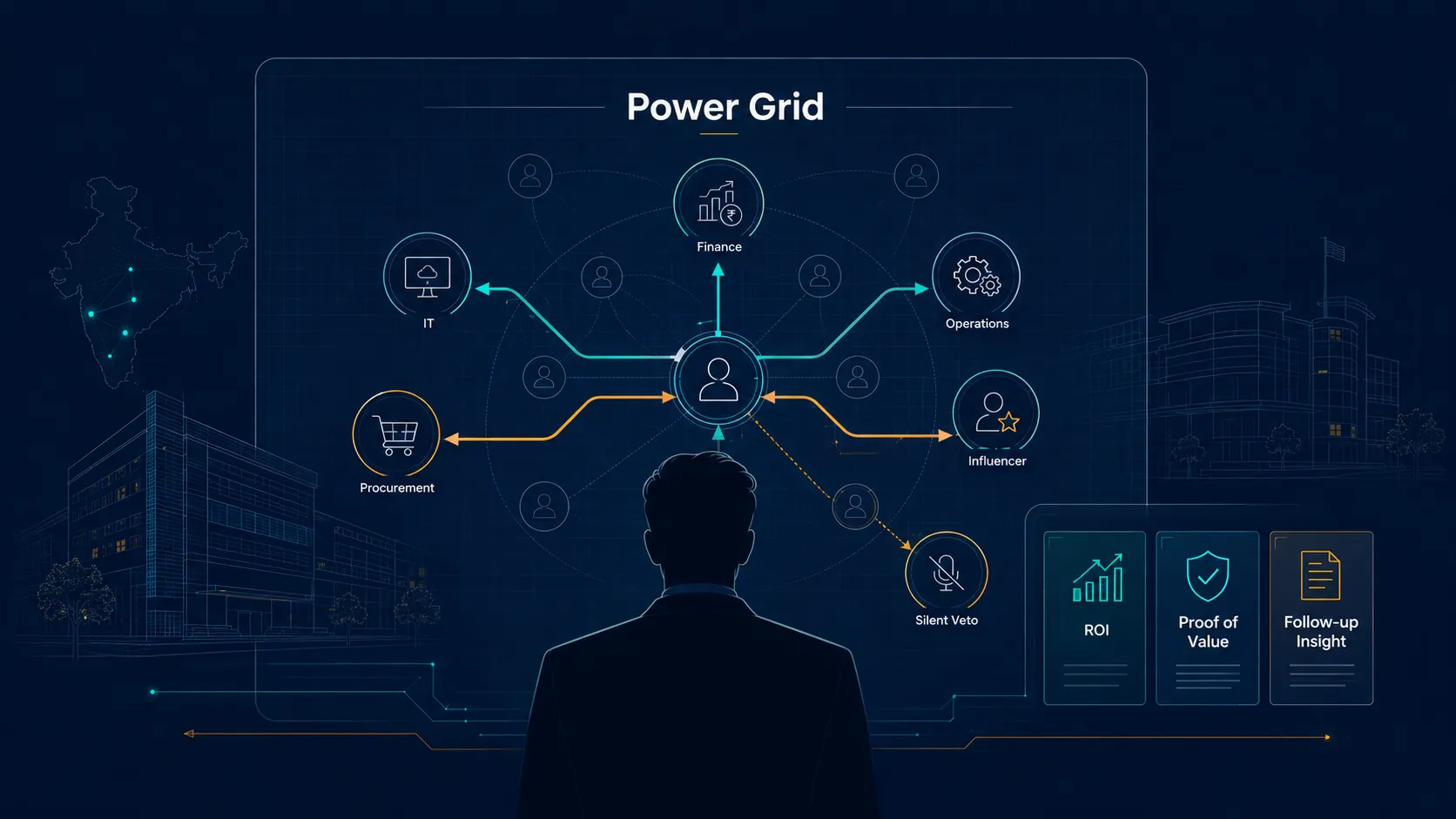
Top performers in the Indian enterprise sector operate with a level of "Social Capital" that far exceeds their peers. While the bottom 80% focus on the procurement process, the top 20% focus on the informal power structures within an organization. In the Indian context, decisions are rarely made by a single individual, even if their title suggests otherwise. Elite sellers map the "Power Grid" of an account, identifying not just the decision-makers, but the influencers, the detractors, and the silent observers who hold veto power. They spend more time building consensus across departments—Finance, IT, and Operations—than they do pitching to a single point of contact.

In 2026, the distinguishing factor is "Value Quantization." Top sellers have moved beyond explaining what a product does to proving exactly how it affects the client’s P&L. They speak the language of the CFO. Instead of citing generic benefits like "improved efficiency," they present models showing a 14% reduction in operational overhead or a 22% improvement in speed-to-market. They understand that the Indian enterprise buyer is inherently risk-averse. To counter this, they use "Proof of Value" exercises that involve the client’s own data, making the transition from a vendor to a strategic partner who shares the risk of the project.

Strategic patience combined with aggressive follow-up is another hallmark. The Indian enterprise sales cycle is notoriously non-linear. Top performers anticipate the "dead zones" where momentum stalls due to internal bureaucracy or shifting priorities. Rather than sending generic "checking in" emails, they provide "Continuous Value Additions." This might be a relevant white paper, an introduction to a peer in a non-competing industry, or an insight into a new regulatory change. They stay top-of-mind by being useful, not by being persistent. They manage the internal politics of the client by equipping their "Internal Champion" with the exact collateral needed to win over internal skeptics.

Resilience in the face of "Price Sensitivity" is where the top 20% truly separate themselves. While average sellers immediately offer discounts when pushed, elite sellers reframe the conversation around the "Cost of Inaction." They help the customer realize that delaying the decision by six months will cost more in lost revenue or wasted resources than the initial investment itself. They negotiate on terms, service levels, or project scope rather than slashing the headline price, thereby protecting the brand’s integrity and the deal's long-term viability.

Actionable Steps for Enterprise Sellers:

  • Map the Influence Map: Within the first two weeks of an engagement, identify at least five stakeholders across three different departments. Do not rely on a single point of contact.
  • Create a Value Spreadsheet: Develop a custom ROI calculator for every major deal. Input the client’s specific numbers to show the financial impact over a 36-month period.
  • Pre-empt the Procurement Bottle-neck: Ask the champion early about the specific steps required for vendor onboarding and legal review. Start these administrative tracks in parallel with the technical evaluation to avoid end-of-quarter delays.
  • Audit Your Follow-ups: Every outbound touchpoint must contain a "New Insight." If you aren't teaching the client something new about their industry or their own business, do not send the email.
  • Coach the Champion: Treat your internal champion like a partner. Give them the "internal pitch deck" they need to present to their board, focusing on the risks your solution mitigates.

Pro Tip: Master the "Post-Meeting Debrief." After every major stakeholder meeting, send a summary within two hours that outlines not just what was discussed, but the specific "Next Steps" assigned to each person. In the Indian enterprise landscape, whoever controls the documentation controls the momentum of the deal.
Q2: Why does traditional sales training fail to move the needle for the bottom 80%?

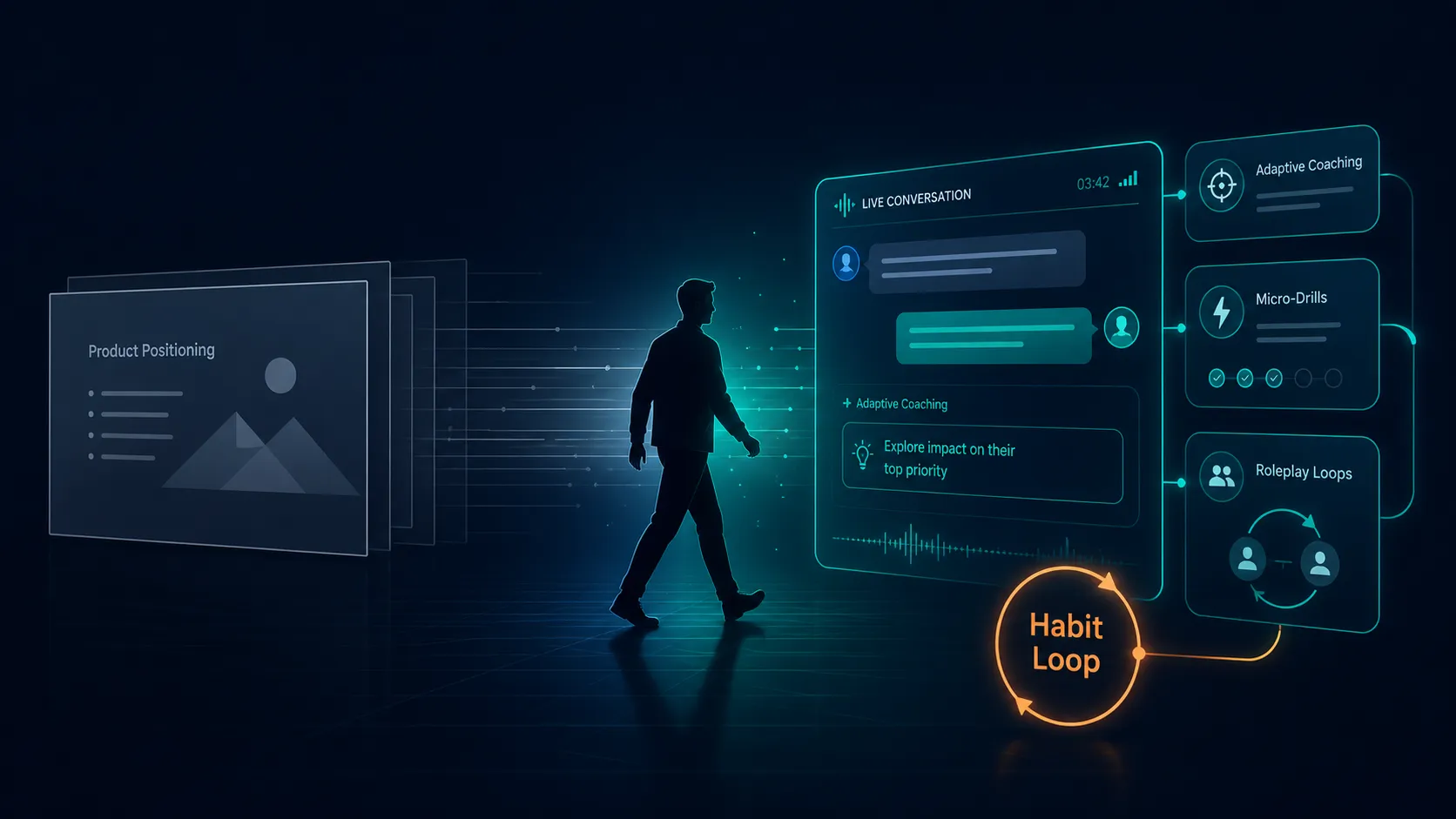
Traditional sales training treats selling as a knowledge problem when it is actually a behavioral habit problem. The bottom 80% of a sales force often struggles not because they lack information, but because they lack the muscle memory to apply that information under the heat of a live interaction. Most programs are designed as one-off events—intense workshops that dump forty hours of theory into a weekend. For the majority of performers, this results in the "Forgetting Curve," where nearly 90% of the material is lost within a month because there is no structured system for daily, incremental application.

A significant flaw lies in the "Top-Down" modeling approach. Most sales methodologies are codified versions of what the "natural" top 5% of performers do. These elite individuals often rely on high emotional intelligence, innate intuition, and social confidence—traits that are difficult to transfer via a slide deck. When the bottom 80% tries to mimic these advanced maneuvers without the underlying confidence, they come across as disingenuous or robotic to their customers. The training fails because it tries to force a change in personality rather than building a bridge of repeatable, low-friction processes that work for different temperaments.

Furthermore, traditional training frequently ignores the environment the salesperson returns to after the session. In 2026, customers are more informed and skeptical than they have ever been. They can detect a rehearsed "sales technique" immediately. Traditional training often over-emphasizes closing tactics and pressure-based scripts. While the top 20% can mask these tactics with charisma, the bottom 80% uses them as a crutch, which actively pushes customers away. If the training does not align with the modern buyer’s psychological state—which prioritizes autonomy and transparency—it becomes a liability rather than an asset.

The lack of middle-management involvement is the final nail in the coffin. Companies often outsource training to a third party and expect the problem to be solved. However, without a manager who knows how to coach the specific nuances of that training, the bottom 80% quickly reverts to their old, comfortable habits the moment the first high-pressure quota deadline approaches. Training is an education; coaching is the enforcement of that education. Without the latter, the former is a wasted investment.

To move the needle for the majority of your team, shift the focus from "what to say" to "how to listen and adapt." Implement these actionable strategies:

  • Prioritize Micro-Learning: Replace the two-day marathon with fifteen-minute daily "drills." Focus on one specific skill—such as clarifying an objection or asking an open-ended question—until it becomes an unconscious habit.
  • Role-Play the "Loss": Most training focuses on the perfect pitch. Instead, have your team practice what to do when a customer says "no" or "I’m not interested." Building resilience in the bottom 80% is more valuable than teaching them a perfect closing line.
  • Develop "Guardrail" Scripts: Instead of rigid word-for-word scripts, provide frameworks that allow for individual personality. This prevents the "robotic" feel that kills trust with customers.
  • Audit the Manager, Not the Rep: Ensure your managers spend 50% of their time coaching the "middle" performers rather than just auditing the "bottom" or praising the "top."
  • Simulate Real-World Friction: Use recorded calls from the previous week to analyze where the bottom 80% lost the customer's interest. Real-world post-mortems are more effective than hypothetical scenarios.

Pro Tip: Stop rewarding "activity" and start measuring "conversion milestones." For the bottom 80%, high activity often masks poor technique. Instead of tracking how many calls they make, track how many prospects move from the "discovery" phase to the "solution" phase. This forces the rep to focus on the quality of the interaction rather than the volume of the noise.

Q3: How do top performers navigate the unique relationship dynamics of Indian B2B sales?

Top performers in the Indian B2B landscape treat relationship building as a core business function rather than a soft skill. In this market, the transaction is often the byproduct of a deep, multi-layered trust established over time. High achievers understand that Indian B2B cycles are rarely linear. They move through informal networks, personal rapport, and a specific type of social proof that goes beyond a standard slide deck.

The first layer of mastery involves navigating the "High-Touch" requirement. While global markets have shifted toward a "self-serve" or "digital-first" model, Indian B2B decision-makers still prioritize face-to-face or high-frequency interactions. Even in 2026, where digital tools are ubiquitous, the "Chai and Conversation" culture remains the foundation of high-ticket deals. Top performers use digital tools to streamline administration but reserve high-stakes negotiations and relationship nurturing for personal interactions. They recognize that a WhatsApp message often carries more weight than a formal email because it signals a level of personal accessibility.

Hierarchy and seniority play a pivotal role. Top sales professionals respect the "Gatekeeper" while simultaneously building bridges with the "Influencers" and the "Final Approver." In many Indian organizations, the person signing the check may not be the one using the product, but their personal comfort with the vendor is the deciding factor. Top performers map these power dynamics early. They identify who holds the "silent veto" and ensure that individual feels heard and respected, often using specific linguistic cues and professional etiquette that honor seniority.

Persistence in the Indian context is a delicate balance. There is a fine line between being diligent and being perceived as a nuisance. Top performers master the art of the "Value-Added Follow-up." They don't just ask for a status update; they share a relevant industry insight, a news snippet about the client’s competitor, or a potential solution to a problem mentioned in passing. This keeps the relationship active without appearing desperate, positioning the salesperson as a consultant rather than a vendor.

Actionable Strategies for Navigating Indian B2B Dynamics:

  • Map the "Shadow Hierarchy": Identify who the decision-maker trusts most. It might be a long-term executive assistant, a technical head, or a family member in promoter-led businesses. Build a separate, low-pressure rapport with these influencers.
  • Leverage "Hyper-Local" Context: Understand the regional nuances of your client. A B2B lead in Chennai requires a different engagement style than one in Gurugram. Mirroring the communication pace and social norms of the specific region builds instant familiarity.
  • Practice Strategic Patience: Indian B2B deals often stall due to internal consensus-building. Instead of pushing for a close, offer to facilitate internal meetings or provide documentation that helps your champion sell the idea internally.
  • Humanize the Interaction: Don't shy away from personal touchpoints. Acknowledging a client’s personal milestone or a simple check-in during a festive season is not "unprofessional" in India; it is expected. It signals that you value the person behind the title.
  • Standardize the "Social Proof": Indian buyers are risk-averse. Use case studies from domestic competitors or similar industries. A recommendation from a peer in their professional network is more valuable than a global testimonial.

Negotiation in India is often perceived as a test of the partnership's longevity. Top performers do not see the "final discount" request as an insult or a hurdle; they see it as a ritual. They enter negotiations with "give-to-get" concessions that allow the buyer to feel they have secured a victory for their organization, thereby preserving the buyer's internal "face" and strengthening the long-term bond.

Pro Tip: Transition from a "Vendor" to a "Vishwaas-Patra" (Trusted Advisor). When a client faces a crisis that is outside your product’s scope, offer your network or expertise to help solve it for free. In the Indian B2B ecosystem, this "unbilled" help creates a psychological debt that ensures long-term loyalty and makes you un-replaceable by cheaper competitors.

Q4: What are the "unconscious" habits that make elite sellers successful?

Elite sellers operate on a level of intuition that looks like magic to the outside observer, but it is actually the result of deeply ingrained unconscious habits. These habits allow them to navigate complex human interactions without the cognitive load that slows down average performers. By 2026, as automated tools handle more of the administrative burden of sales, these human-centric unconscious habits have become the primary differentiator between hitting a quota and dominating a market.

The most powerful unconscious habit is the mastery of strategic silence. While most sellers feel a physical need to fill every gap in a conversation with features or reassurances, elite sellers use silence as a diagnostic tool. They have trained their brains to perceive a pause not as an awkward moment, but as an invitation for the prospect to speak their truth. Often, the most critical piece of information—the real reason a deal might fail—is shared only after a period of silence that would make an amateur uncomfortable.

Elite sellers also possess a reflexive ability to ask the "second question." They do not accept the first answer provided by a prospect as the final truth. If a customer says they are looking to cut costs, the elite seller doesn't immediately pitch their most affordable option. Instead, they instinctively ask, "What is the specific internal pressure driving this focus on costs right now?" This habit uncovers the emotional and political drivers behind a purchase, allowing the seller to align their solution with the prospect’s actual needs rather than their stated ones.

Another unconscious habit is anticipatory objection management. Rather than waiting for a prospect to raise a concern, elite sellers weave the resolution of that concern into their standard narrative. They have internalized the patterns of their industry so thoroughly that they can sense friction before it manifests. They address common hurdles like implementation timelines or budget approvals as if they were standard parts of the process, which prevents the prospect from ever viewing these issues as deal-breakers.

Finally, high-performers have an unconscious "disqualification filter." They do not view every lead as a potential win. Instead, they have an internal alarm that goes off when a prospect does not fit their Ideal Customer Profile (ICP). They walk away from bad fits early and without regret. This frees up their mental and physical energy to focus entirely on high-probability opportunities, ensuring their win rate remains high while their stress levels remain manageable.

Actionables for Sales Execution:

  • Practice the Three-Second Rule: After a prospect finishes speaking, count to three in your head before responding. This ensures the prospect has completely finished their thought and often prompts them to provide additional, unprompted details.
  • Audit Your Follow-Ups: Review your last ten discovery calls. Identify how many times you accepted the first answer without asking a clarifying "second question." Aim to double your follow-up questions in the next week.
  • Pre-Empt Three Objections: Identify the three most common reasons people say "no" to your product. Create a script that addresses these three points in the first fifteen minutes of your presentation, before the prospect has a chance to voice them.
  • Define Your "Hard No" Criteria: List five characteristics of a customer that always leads to a difficult implementation or a low-value deal. Commit to ending conversations within ten minutes if three or more of these criteria are met.

Pro Tip: To develop these habits, record your sales calls and listen specifically for the moments where you interrupted the prospect or moved too quickly to a solution. Developing "unconscious" excellence requires a conscious analysis of your failures until the correct behavior becomes your default setting.
Q5: How can companies capture and clone the "unwritten" playbooks of their best performers?

To capture the unwritten playbooks of your top performers, you must first acknowledge that standard operating procedures (SOPs) only track the "what," while top performers live in the "how." Most companies make the mistake of asking their best people to write down what they do. This fails because high achievers often suffer from the curse of knowledge; they perform complex, nuanced tasks subconsciously and cannot easily articulate their internal logic.

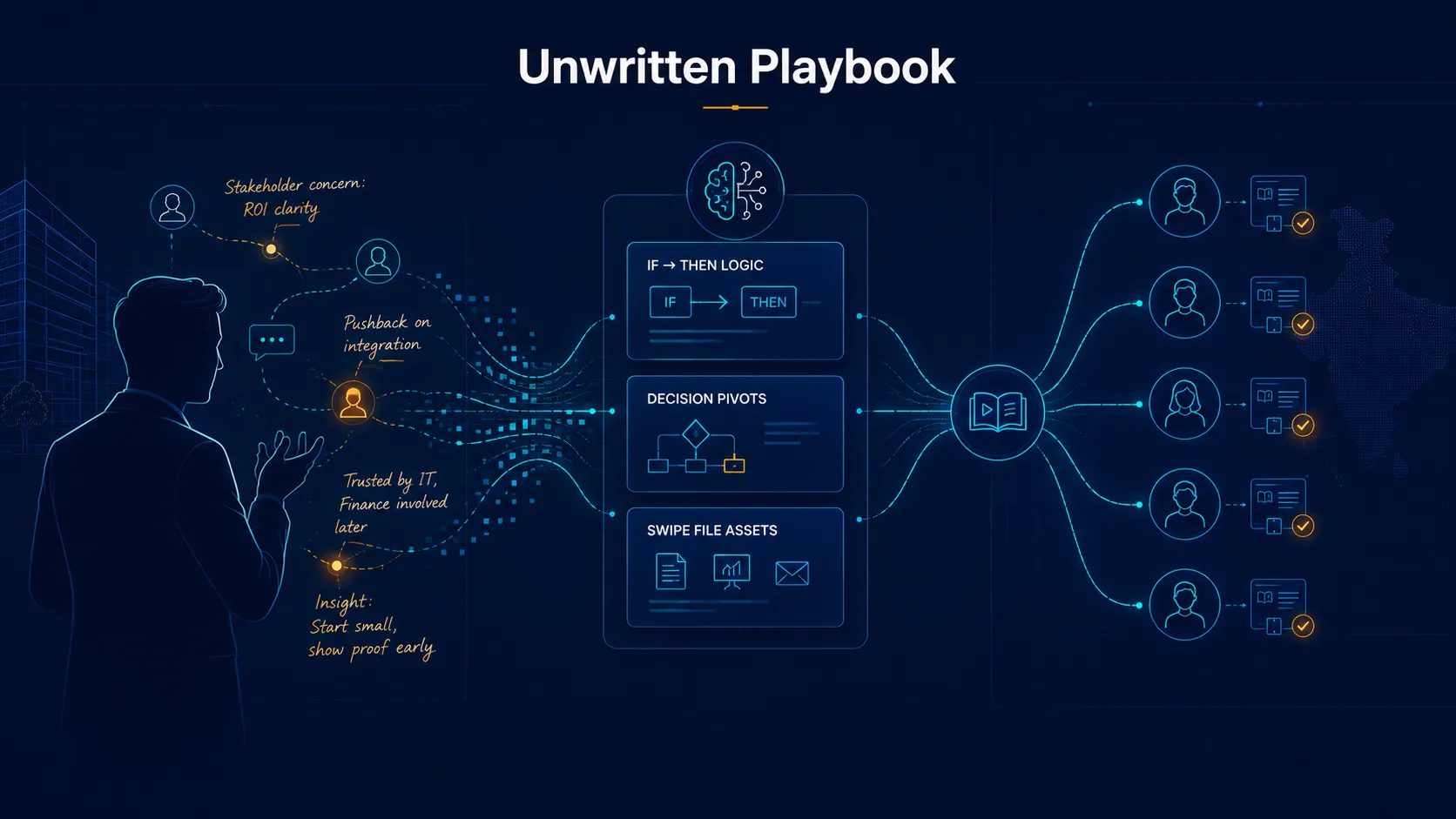
To bridge this gap, move beyond self-reporting and implement "Contextual Inquiry." This involves an observer—someone skilled in process mapping—watching the performer in real-time as they interact with consumers. The observer’s job is not to record the steps, but to identify the "pivots." A pivot is a moment where the performer deviates from the standard script because they sensed a specific customer emotion, detected a subtle objection, or saw an opportunity to add unexpected value. These pivots are the DNA of the unwritten playbook.

Once these pivots are identified, use "Artifact Analysis" to find the tangible evidence of their success. In 2026, your best performers are likely using specific email templates they’ve tweaked over years, custom visual aids, or even a particular cadence of follow-up calls that doesn't exist in your official CRM workflow. Collect these "underground" tools. These are the shortcuts and enhancements that make them faster and more effective than the rest of the team.

The final stage is converting these observations into a "Heuristic Framework" rather than a rigid manual. Consumers today react poorly to robotic, scripted interactions. Instead of telling your team exactly what to say, give them the "If-Then" logic used by your top 1%. For example: "If a consumer expresses budget anxiety through silence rather than a direct question, then use the 'Value-Extension' pivot." This empowers the rest of the team to apply the top performer’s intuition without losing their own authentic voice.

Actionable steps to clone your top performers:

  • Execute "Flash Shadowing": Spend 60 minutes twice a week silently observing a top performer’s live interactions. Note every time they skip a "mandatory" step or add an "extra" one.
  • Conduct "Decision Audits": After a successful consumer interaction, ask the performer: "At [specific minute mark], you changed your tone. What did you hear from the consumer that triggered that change?"
  • Create a "Swipe File" of Unofficial Assets: Gather all the non-standard emails, SMS scripts, and talk tracks your top performers actually use. Centralize these for the whole team to use as a starting point.
  • Develop "Scenario Loops": Use the most difficult consumer objections identified by your top performers to create low-stakes role-play loops for underperformers. Focus strictly on the "pivots" discovered during your audit.
  • Audit Calendar Architecture: Top performers rarely follow the company’s suggested schedule. Map how they actually structure their day—specifically when they choose to engage with consumers versus when they handle administrative tasks.

Pro Tip: Look for the "Negative Space" in their performance. Often, what makes a top performer elite isn't what they do, but what they *stop* doing. Identify the corporate tasks or outdated scripts they have quietly abandoned in favor of more effective methods. Cloning their "stop-doing" list is often more impactful than copying their "to-do" list.

Q6: Why is the productivity gap widening in Indian frontline teams despite digital tools?

The widening productivity gap in Indian frontline teams is not a result of "bad" technology, but rather the compounding effect of implementation debt. As of 2026, most frontline workers in retail, logistics, and field services find themselves trapped in a digital paradox: they are equipped with more tools than ever, yet they spend nearly 40% of their shift performing "shadow work"—the manual tasks required to make those very tools function. This gap persists because digital transformation has largely focused on data collection for management rather than utility for the worker.

A primary driver of this gap is cognitive friction caused by fragmented toolsets. In many Indian enterprises, a delivery partner or retail associate must toggle between four or five different applications to complete a single customer journey. One app for attendance, another for inventory, a third for customer history, and perhaps a fourth for internal communication. This "app switching" tax breaks the flow of work. Instead of focusing on the customer standing in front of them, the frontline worker is preoccupied with navigating a clunky interface to find a specific SKU or update a status.

Furthermore, many digital tools are designed with a "surveillance-first" mindset. When the primary function of a mobile application is GPS tracking or frequent selfie-based attendance, the frontline team views the technology as a burden rather than an enabler. This creates a psychological barrier where the worker does the bare minimum to satisfy the tool’s tracking requirements, often at the expense of genuine customer service. The tool becomes an obstacle to navigate rather than a lever to pull.

There is also a severe mismatch between tool design and the ground reality of the Indian frontline. Many enterprise platforms are heavy, data-intensive, and designed for high-end smartphones with stable 5G connections. When these tools are deployed in Tier 2 or Tier 3 cities where network latency is high and hardware is mid-range, the "lag time" becomes a significant drain on productivity. Every three-second screen load adds up over hundreds of daily interactions, leading to frustrated employees and impatient customers.

To bridge this gap, organizations must shift from "tracking tasks" to "enabling outcomes." 

Actionable steps for operational leaders include:

  • Consolidate the stack: Use single-pane-of-glass applications where the worker never has to leave a single interface to complete an end-to-end customer transaction.
  • Prioritize Offline-First capability: Ensure that your frontline tools function flawlessly without an active internet connection, syncing data in the background once the network is restored.
  • Automate the "Reporting" layer: Use ambient data collection (like automated location triggers or voice-to-text notes) so workers don't have to manually type in reports after every task.
  • Simplify the UI for speed: Move away from text-heavy menus toward icon-driven, gesture-based interfaces that cater to various levels of digital literacy and regional languages.
  • Feedback loops: Build a mechanism within the app where frontline workers can flag "process friction" directly to the product team in real-time.

The focus must remain on reducing the "Time to Customer Value." If a digital tool does not directly shorten the time it takes for a frontline worker to solve a consumer's problem, it is likely contributing to the productivity gap rather than closing it.

Pro Tip: Audit your frontline's "Click Count." Measure exactly how many taps or screen transitions it takes for an employee to complete their most frequent daily task. If it takes more than three clicks, your UI is actively leaking productivity. Optimize the workflow until the most critical 80% of their work can be done from the home screen of the application.

Q7: How do you build a system that prompts the "next best action" for sellers in real-time?

Building a real-time Next Best Action (NBA) system requires moving away from static lead scoring toward a dynamic signal-processing architecture. The objective is to eliminate the seller’s cognitive load by identifying the exact moment a prospect is ready for a specific intervention. This system relies on three distinct layers: a unified data layer, a decision engine, and a delivery mechanism.

The foundation is a real-time data pipeline that aggregates behavioral, firmographic, and intent data. You cannot prompt a seller effectively if your data is twelve hours old. In 2026, successful systems ingest signals from website clickstreams, product usage logs, support tickets, and external intent providers simultaneously. If a high-value customer views a pricing page while having an open support ticket, the system must recognize this conflict instantly. The data must be normalized so the decision engine views the customer as a single entity across all touchpoints.

The decision engine is where you define the logic for what constitutes a "best" action. This layer should combine heuristic rules with predictive modeling. Heuristic rules handle high-certainty scenarios—for example, if a trial user hits 90% of their limit, the action is "Suggest Upgrade." Predictive models handle nuance, such as identifying a pattern where a specific sequence of content downloads indicates a high probability of churn. The engine prioritizes these signals based on expected value, ensuring the seller isn't overwhelmed by twenty different notifications.

For the delivery mechanism, the prompt must appear within the tools the seller already uses, such as the CRM, email client, or communication platform. A notification that requires a seller to switch tabs is often ignored. The prompt itself needs to be prescriptive. Instead of a vague alert saying "Lead is active," the system should provide a specific script or resource, such as "Lead downloaded the Security Whitepaper; send the SOC2 compliance overview." This reduces the friction between receiving an insight and taking action.

To implement this effectively, follow these actionable steps:

  • Map your customer journey to identify "High-Intent Signal Pairs." These are combinations of actions that historically lead to a conversion, such as visiting the demo page twice within 24 hours of opening a marketing email.
  • Establish a low-latency data bridge between your Customer Data Platform (CDP) and your CRM. Real-time in this context means actions are triggered within seconds of the user event.
  • Standardize your "Action Library." Create a repository of pre-approved email templates, case studies, and talk tracks that correspond to specific triggers.
  • Implement a feedback loop where sellers can "upvote" or "downvote" the relevance of a prompt. This data should flow back into the decision engine to refine the predictive models.
  • Set a "Throttle Limit" to prevent alert fatigue. Limit the number of real-time prompts a seller receives per hour to ensure they focus only on the highest-priority opportunities.

The final component is measurement. You must track the conversion rate of specific prompts rather than just overall sales volume. If a "Next Best Action" prompt to "Book a Discovery Call" has a 5% success rate while "Send Case Study" has a 25% success rate for the same trigger, the system must automatically adjust the prioritization logic.

Pro Tip: Avoid the "Black Box" problem. Sellers are more likely to execute a recommended action if the system explains the "Why" behind the prompt. Instead of just saying "Call this person," include a brief bullet point: "Reason: Viewed the enterprise integration docs three times in the last hour." This context builds trust in the system and helps the seller tailor their conversation.

Finally, ensure the system can distinguish between a user’s "Technical Intent" and "Economic Intent." A developer looking at API documentation requires a different intervention than a Director looking at a ROI calculator. Your NBA system should categorize signals into these buckets to ensure the seller’s outreach matches the prospect’s current mindset and professional role.

Q8: What is the true cost of ignoring the performance variance in your sales force?

Ignoring performance variance acts as a silent tax on your growth. While most leaders focus on the aggregate team quota, they often overlook the massive delta between their top 10% and the bottom 30%. This delta represents more than just missing sales; it represents the systematic destruction of your marketing ROI. When you spend capital to acquire leads, those leads have a fixed potential value. Handing a high-intent prospect to a low-performing rep is effectively throwing away 60-70% of that lead's potential lifetime value before the conversation even begins.

The true cost is felt most acutely in your Customer Acquisition Cost (CAC). If your top performers close at a 30% rate and your bottom performers close at 10%, the leads routed to the bottom tier are costing you three times more to convert. Over a fiscal year, this inefficiency drains the budget that could have been used for product innovation or market expansion. By ignoring this variance, you are subsidizing underperformance with the profits generated by your elite talent.

Beyond the balance sheet, there is a profound impact on brand equity. In 2026, the consumer's tolerance for friction is near zero. If one customer receives an expert-level, consultative experience and another receives a mediocre, script-heavy interaction from the same brand, your market positioning becomes incoherent. Variance creates an "unreliable narrator" effect for your business. When customers cannot count on a consistent level of service, they stop referring your business, leading to a decline in organic growth and an over-reliance on paid channels.

There is also an internal cultural cost known as the "mediocrity tax." Your high performers are acutely aware of who is carrying the weight. When they see low performance tolerated without intervention, their engagement drops. They may feel they are being "punished" with more work or harder targets to compensate for the laggards. This leads to the departure of your most valuable assets, leaving you with a team composed primarily of the very people causing the variance. The cost of replacing a top-tier rep is often 1.5x to 2x their annual salary, a figure that dwarfs the cost of addressing performance issues early.

Operational drag is the final hidden cost. Managers spend roughly 80% of their time "firefighting" issues caused by the bottom 20% of the sales force. This is time stolen from strategic planning, coaching the "middle 60%" who have the most growth potential, and scaling the tactics used by top performers. When leadership is stuck in a cycle of damage control, the entire organization loses its ability to be proactive in a competitive market.

Actionable Steps to Mitigate Performance Variance:

  • Audit the Lead Distribution: Analyze your conversion data by rep. Stop routing high-value, high-intent leads to reps who consistently fall below the median conversion rate. Use these leads as a reward for performance rather than a participation trophy.
  • Identify the "Success DNA": Record and transcribe calls from your top 5% of performers. Identify the specific linguistic patterns, objection-handling techniques, and discovery questions they use. Turn these into a standardized training module for the rest of the team.
  • Implement a "Shadowing" Requirement: Force a weekly peer-to-peer coaching session where bottom-tier reps shadow top-tier reps. This exposes low performers to the delta in effort and skill in real-time, removing the excuse that "the leads are bad."
  • Standardize the Sales Stack: Ensure every rep is using the same tools and workflows. Often, variance is caused by reps "going rogue" with their own processes. Eliminate technical friction to ensure the only variable left is individual skill.
  • Set Non-Negotiable Activity Baselines: Define the minimum volume of outreach, follow-ups, and CRM updates required. Variance often stems from a lack of discipline rather than a lack of talent.

Pro Tip: Move away from measuring only "lagging indicators" like total revenue. Instead, track "leading indicators" such as the ratio of discovery calls to qualified demos. Performance variance usually shows up in these early-stage metrics weeks before it impacts the monthly revenue report. Addressing the variance at the activity level prevents it from becoming a financial crisis.

Q9: How do you localize high-performer behaviors for diverse Indian market tiers?

High-performance behaviors in the Indian market are not a monolith. A strategy that secures a high Net Promoter Score in a South Delhi showroom will likely fail in a distribution hub in rural Bihar. In 2026, the gap between consumer expectations in Tier 1 and Tier 3 markets has widened due to varying levels of digital maturity and cultural priorities. Localizing these behaviors requires moving away from a single corporate playbook toward a segmented behavioral framework.

In Tier 1 metros, high performers focus on "Efficiency and Precision." These consumers value their time and expect frictionless interactions. High-performing individuals in this segment use data-driven insights to anticipate needs before the customer articulates them. Their communication is brief, professional, and often occurs through digital-first channels. The behavioral goal here is to reduce the "mental load" of the consumer by providing seamless, tech-enabled solutions.

Tier 2 markets require a shift toward "Aspirational Relatability." These consumers are in a transition phase; they have the disposable income of Tier 1 but retain the social values of smaller towns. High performers in this tier act as bridge-builders. They maintain the brand’s premium image while communicating in a way that feels familiar and grounded. They often use a mix of English and regional languages and focus heavily on the "value-for-money" aspect, even when selling premium goods.

In Tier 3 and Tier 4 markets, high performance is defined by "Community Integration and Trust." Consumers here are skeptical of big-brand promises and rely heavily on social proof. A high performer in this segment behaves more like a community advisor than a salesperson. They spend time building physical presence, attending local events, and securing endorsements from local influencers or "village elders." Logic and data take a backseat to personal loyalty and consistent physical visibility.

To localize these behaviors effectively, consider these actionable steps:

  • Audit Digital vs. Human Touchpoints: In Tier 1, automate the transaction and humanize the exception. In Tier 3, humanize the transaction and use technology only for back-end logistics.
  • Vernacular Competency: Train your frontline staff in Tier 2 and 3 to lead with regional dialects. In 2026, language is no longer just a communication tool; it is a signal of respect and cultural alignment.
  • Localized Social Proof: High performers should be equipped with case studies and testimonials from the specific region they are working in. A testimonial from a Mumbai-based CEO carries zero weight in a Tier 3 agricultural hub.
  • Hyper-Local Networking: Shift performance metrics in Tier 3 from "call volume" to "relationship depth." Encourage staff to engage with community leaders and local business ecosystems to build a foundation of trust.
  • Adaptive Presentation: Provide sales teams with different presentation assets for different tiers. Tier 1 assets should be sleek and data-heavy; Tier 3 assets should be visual, video-centric, and focused on tangible utility.

Pro Tip: Implement a "Cultural Mirroring" training module. High performers naturally mirror the pace, tone, and vocabulary of their customers. In Tier 1, this means being fast and tech-savvy. In Tier 3, this means slowing down the conversation, sharing personal anecdotes, and emphasizing long-term reliability over immediate features. Train your teams to identify these "tier-signals" within the first sixty seconds of an interaction to pivot their behavior accordingly.
Q10: What does the 2026 framework for frontline sales excellence look like?

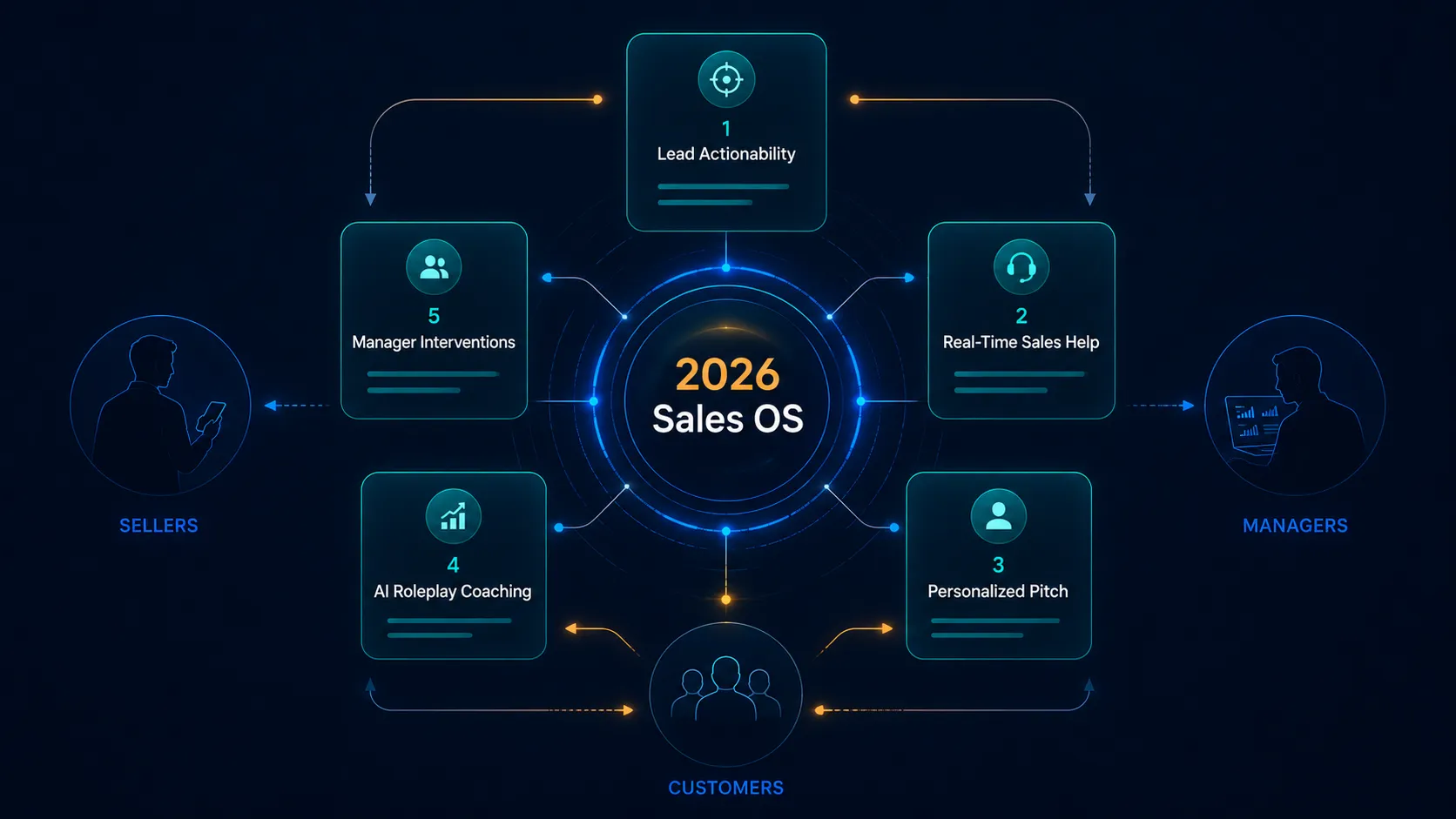
The 2026 framework for frontline sales excellence centers on the transition from "Information Provider" to "Decision Architect." Consumers now enter interactions with high levels of digital research and low levels of patience for redundant discovery. Excellence is no longer measured by the ability to recite product features, but by the ability to synthesize data in real-time to solve a specific friction point in the buyer's journey. This requires a frontline team that operates with a "Precision-First" mindset, utilizing live intent signals to dictate the flow of every conversation.

The modern framework mandates the integration of Augmented Intelligence (AI) into the live sales flow. By 2026, top-performing frontline teams use real-time sentiment analysis and behavioral prompts to pivot their strategy mid-conversation. If a consumer shows signs of hesitation regarding long-term value, the system surfaces specific case studies or ROI calculators instantly. This allows the representative to maintain eye contact and emotional connection while the technical validation is handled by their digital co-pilot. The goal is to eliminate the "let me check on that" delay, which currently kills 40% of high-intent conversions.

Frontline excellence also demands a radical shift in data literacy. Every representative must be capable of interpreting complex consumer profiles on the fly. This includes understanding cross-channel behavior—such as knowing a customer spent twenty minutes on a specific comparison page before calling or visiting. When the frontline rep acknowledges this journey without being intrusive, they build "Cognitive Trust." This type of trust is the primary currency in 2026, as consumers are increasingly skeptical of generic sales pitches and automated responses.

Actionable steps to implement this framework:

  • Deploy Live Guidance Tools: Equip your frontline with software that provides real-time "next-best-action" prompts based on the current conversation’s tone and keywords.
  • Audit the Discovery Phase: Eliminate any questions in your sales script that the customer has already answered through their digital behavior or profile data.
  • Transition to Outcome-Based Training: Stop training on product specs. Start training on "Situational Fluency"—the ability to map product benefits to the specific emotional or financial anxieties of the consumer in real-time.
  • Implement "Micro-Coaching" Loops: Instead of monthly reviews, use AI-generated summaries of daily interactions to provide reps with one specific behavioral adjustment every 24 hours.
  • Centralize the Truth: Ensure the frontline has a single, unified view of the customer. If a customer has to repeat their problem to a second person or channel, the excellence framework has failed.

The focus on empathy must be sharpened as automation handles the administrative burden. With CRM entries, follow-up emails, and scheduling handled by background processes, the frontline rep’s primary job is to manage the psychological state of the consumer. This means mastery of soft skills—active listening, mirroring, and objection de-escalation—is more critical than ever. In 2026, the human element is the "premium" layer of the transaction, while the technology provides the foundation of efficiency.

Pro Tip: Shift your primary KPI from "Average Handle Time" to "Resolution Velocity." In 2026, consumers value their time above all else. A longer conversation that results in a definitive, personalized solution is significantly more valuable than a quick interaction that leaves the consumer with more homework. Measure how effectively your reps move a customer from "confusion" to "conviction" in a single touchpoint.

Conclusion
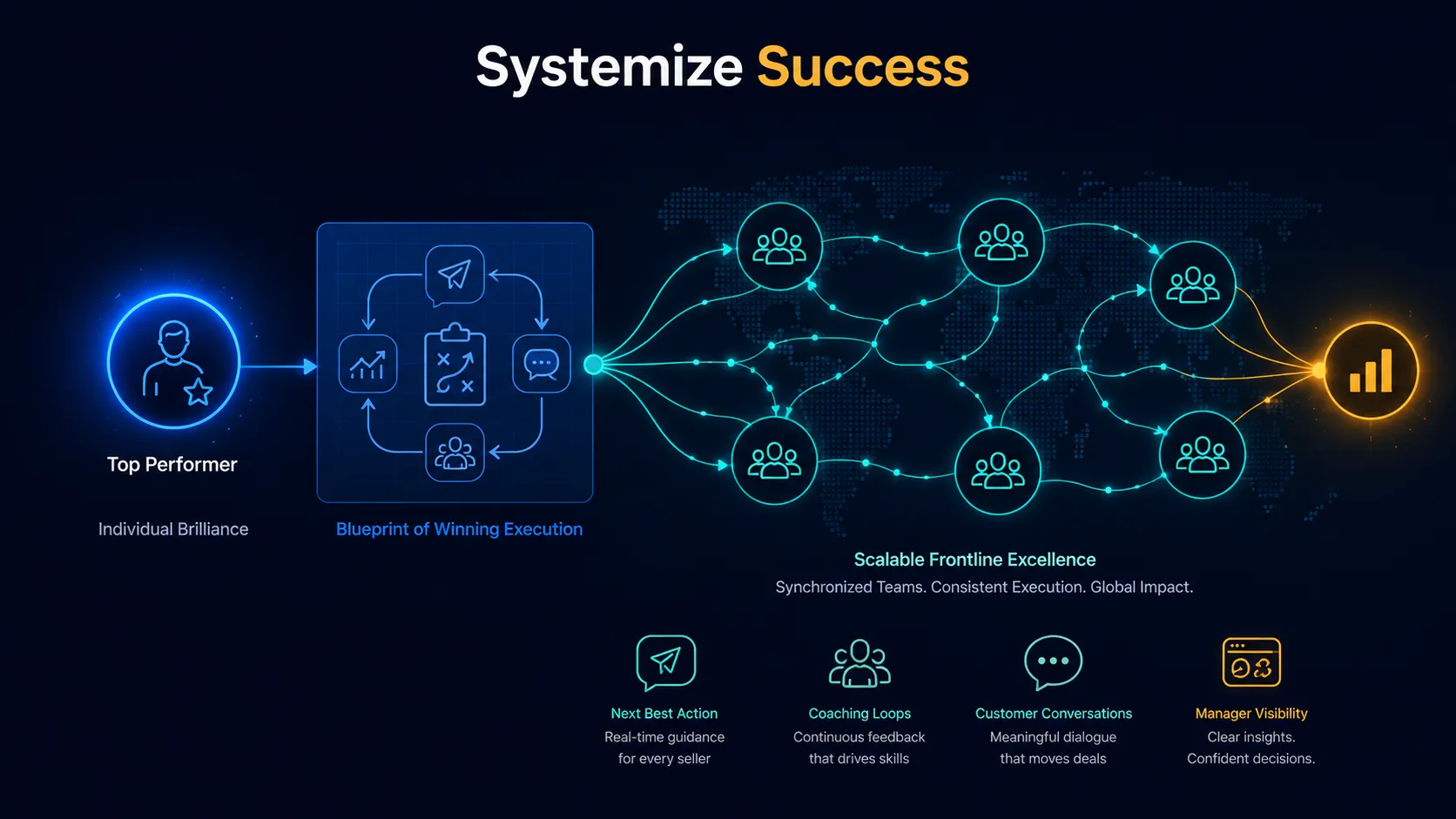
Reliance on a few star performers creates a fragile revenue model. When your top 20% carry the bulk of the quota, your enterprise remains vulnerable to turnover and inconsistent growth. The performance gap between your elite sellers and the rest of the frontline is rarely a matter of talent. It is almost always a result of your top performers using specific, undocumented workflows that the rest of the team hasn't been taught.

In the 2026 Indian enterprise landscape, where procurement cycles are increasingly complex and multi-stakeholder, intuition is no longer a scalable strategy. Your top sellers have already identified the most effective ways to navigate regional nuances and high-pressure negotiations. Systemizing this success involves capturing these specific micro-behaviors and embedding them into a repeatable framework that your entire frontline can execute.

Shifting your focus from "hiring stars" to "building a star-producing system" stabilizes your revenue. By documenting the exact discovery questions, objection-handling techniques, and stakeholder management steps used by your best people, you reduce the time it takes for new hires to reach full productivity. This transformation turns individual excellence into a permanent organizational asset.

The path to a more predictable bottom line starts with analyzing what your top 20% are doing differently today. Stop leaving your revenue targets to chance or individual brilliance. Contact our consultants now to schedule a Sales Process Audit and begin building a scalable blueprint for your enterprise frontline.

  • The “New Normal” for Pharma Sales post the lockdown
  • Why organizations look for Sales Enablement
  • How Sales Enablement is different from traditional LMS or CRM
  • The industry best practices for Sales Enablement
  • Implementation challenges and how to overcome them
  • Ensuring higher adoption

Aman Vasishth

Aman Vasishth is a B2B marketing leader who simplifies complex products through storytelling-driven strategy. He has led brand, growth, and content initiatives across fintech and F&B, building scalable marketing systems that drive measurable business impact.

The 20% Blueprint: Why Your Top Sellers Win and How to Systemize Their Success Across Indian Enterprise Frontline Teams

The 20% Blueprint: Why Your Top Sellers Win and How to Systemize Their Success Across Indian Enterprise Frontline Teams

In Indian enterprise sectors like BFSI, FMCG, and Telecom, the Pareto Principle is a source of constant revenue volatility. Most organizations find that roughly 80% of their new business is generated by just 20% of their frontline force. When these "star performers" exit or move to competitors
Aman Vasishth
January 7, 2026

In Indian enterprise sectors like BFSI, FMCG, and Telecom, the Pareto Principle is a source of constant revenue volatility. Most organizations find that roughly 80% of their new business is generated by just 20% of their frontline force. When these "star performers" exit or move to competitors, they take their tribal knowledge and deep-rooted client relationships with them, leaving regional managers to bridge massive quota gaps with underperforming middle-movers. The standard response to this disparity is usually more generic sales training or higher activity KPIs. These methods fail because they focus on the volume of work rather than the specific, high-impact behaviors that define a top seller in the Indian market. The elite 20% possess a localized intuition for navigating complex hierarchies and building trust that is rarely captured in a standard CRM or training manual. Systemizing success requires moving beyond the "rockstar" culture and deconstructing exactly what these top performers do differently during the discovery and closing phases. By identifying these repeatable patterns and embedding them into the daily workflows of the entire frontline, enterprises can reduce their reliance on individual brilliance. This approach turns the unique tactics of your best people into a scalable operating system that drives consistent growth across every territory.

Q1: What specific behaviors distinguish the top 20% of Indian enterprise sellers?

Top performers in the Indian enterprise sector operate with a level of "Social Capital" that far exceeds their peers. While the bottom 80% focus on the procurement process, the top 20% focus on the informal power structures within an organization. In the Indian context, decisions are rarely made by a single individual, even if their title suggests otherwise. Elite sellers map the "Power Grid" of an account, identifying not just the decision-makers, but the influencers, the detractors, and the silent observers who hold veto power. They spend more time building consensus across departments—Finance, IT, and Operations—than they do pitching to a single point of contact.

In 2026, the distinguishing factor is "Value Quantization." Top sellers have moved beyond explaining what a product does to proving exactly how it affects the client’s P&L. They speak the language of the CFO. Instead of citing generic benefits like "improved efficiency," they present models showing a 14% reduction in operational overhead or a 22% improvement in speed-to-market. They understand that the Indian enterprise buyer is inherently risk-averse. To counter this, they use "Proof of Value" exercises that involve the client’s own data, making the transition from a vendor to a strategic partner who shares the risk of the project.

Strategic patience combined with aggressive follow-up is another hallmark. The Indian enterprise sales cycle is notoriously non-linear. Top performers anticipate the "dead zones" where momentum stalls due to internal bureaucracy or shifting priorities. Rather than sending generic "checking in" emails, they provide "Continuous Value Additions." This might be a relevant white paper, an introduction to a peer in a non-competing industry, or an insight into a new regulatory change. They stay top-of-mind by being useful, not by being persistent. They manage the internal politics of the client by equipping their "Internal Champion" with the exact collateral needed to win over internal skeptics.

Resilience in the face of "Price Sensitivity" is where the top 20% truly separate themselves. While average sellers immediately offer discounts when pushed, elite sellers reframe the conversation around the "Cost of Inaction." They help the customer realize that delaying the decision by six months will cost more in lost revenue or wasted resources than the initial investment itself. They negotiate on terms, service levels, or project scope rather than slashing the headline price, thereby protecting the brand’s integrity and the deal's long-term viability.

Actionable Steps for Enterprise Sellers:

  • Map the Influence Map: Within the first two weeks of an engagement, identify at least five stakeholders across three different departments. Do not rely on a single point of contact.
  • Create a Value Spreadsheet: Develop a custom ROI calculator for every major deal. Input the client’s specific numbers to show the financial impact over a 36-month period.
  • Pre-empt the Procurement Bottle-neck: Ask the champion early about the specific steps required for vendor onboarding and legal review. Start these administrative tracks in parallel with the technical evaluation to avoid end-of-quarter delays.
  • Audit Your Follow-ups: Every outbound touchpoint must contain a "New Insight." If you aren't teaching the client something new about their industry or their own business, do not send the email.
  • Coach the Champion: Treat your internal champion like a partner. Give them the "internal pitch deck" they need to present to their board, focusing on the risks your solution mitigates.

Pro Tip: Master the "Post-Meeting Debrief." After every major stakeholder meeting, send a summary within two hours that outlines not just what was discussed, but the specific "Next Steps" assigned to each person. In the Indian enterprise landscape, whoever controls the documentation controls the momentum of the deal.

Q2: Why does traditional sales training fail to move the needle for the bottom 80%?

Traditional sales training treats selling as a knowledge problem when it is actually a behavioral habit problem. The bottom 80% of a sales force often struggles not because they lack information, but because they lack the muscle memory to apply that information under the heat of a live interaction. Most programs are designed as one-off events—intense workshops that dump forty hours of theory into a weekend. For the majority of performers, this results in the "Forgetting Curve," where nearly 90% of the material is lost within a month because there is no structured system for daily, incremental application.

A significant flaw lies in the "Top-Down" modeling approach. Most sales methodologies are codified versions of what the "natural" top 5% of performers do. These elite individuals often rely on high emotional intelligence, innate intuition, and social confidence—traits that are difficult to transfer via a slide deck. When the bottom 80% tries to mimic these advanced maneuvers without the underlying confidence, they come across as disingenuous or robotic to their customers. The training fails because it tries to force a change in personality rather than building a bridge of repeatable, low-friction processes that work for different temperaments.

Furthermore, traditional training frequently ignores the environment the salesperson returns to after the session. In 2026, customers are more informed and skeptical than they have ever been. They can detect a rehearsed "sales technique" immediately. Traditional training often over-emphasizes closing tactics and pressure-based scripts. While the top 20% can mask these tactics with charisma, the bottom 80% uses them as a crutch, which actively pushes customers away. If the training does not align with the modern buyer’s psychological state—which prioritizes autonomy and transparency—it becomes a liability rather than an asset.

The lack of middle-management involvement is the final nail in the coffin. Companies often outsource training to a third party and expect the problem to be solved. However, without a manager who knows how to coach the specific nuances of that training, the bottom 80% quickly reverts to their old, comfortable habits the moment the first high-pressure quota deadline approaches. Training is an education; coaching is the enforcement of that education. Without the latter, the former is a wasted investment.

To move the needle for the majority of your team, shift the focus from "what to say" to "how to listen and adapt." Implement these actionable strategies:

  • Prioritize Micro-Learning: Replace the two-day marathon with fifteen-minute daily "drills." Focus on one specific skill—such as clarifying an objection or asking an open-ended question—until it becomes an unconscious habit.
  • Role-Play the "Loss": Most training focuses on the perfect pitch. Instead, have your team practice what to do when a customer says "no" or "I’m not interested." Building resilience in the bottom 80% is more valuable than teaching them a perfect closing line.
  • Develop "Guardrail" Scripts: Instead of rigid word-for-word scripts, provide frameworks that allow for individual personality. This prevents the "robotic" feel that kills trust with customers.
  • Audit the Manager, Not the Rep: Ensure your managers spend 50% of their time coaching the "middle" performers rather than just auditing the "bottom" or praising the "top."
  • Simulate Real-World Friction: Use recorded calls from the previous week to analyze where the bottom 80% lost the customer's interest. Real-world post-mortems are more effective than hypothetical scenarios.

Pro Tip: Stop rewarding "activity" and start measuring "conversion milestones." For the bottom 80%, high activity often masks poor technique. Instead of tracking how many calls they make, track how many prospects move from the "discovery" phase to the "solution" phase. This forces the rep to focus on the quality of the interaction rather than the volume of the noise.

Q3: How do top performers navigate the unique relationship dynamics of Indian B2B sales?

Top performers in the Indian B2B landscape treat relationship building as a core business function rather than a soft skill. In this market, the transaction is often the byproduct of a deep, multi-layered trust established over time. High achievers understand that Indian B2B cycles are rarely linear. They move through informal networks, personal rapport, and a specific type of social proof that goes beyond a standard slide deck.

The first layer of mastery involves navigating the "High-Touch" requirement. While global markets have shifted toward a "self-serve" or "digital-first" model, Indian B2B decision-makers still prioritize face-to-face or high-frequency interactions. Even in 2026, where digital tools are ubiquitous, the "Chai and Conversation" culture remains the foundation of high-ticket deals. Top performers use digital tools to streamline administration but reserve high-stakes negotiations and relationship nurturing for personal interactions. They recognize that a WhatsApp message often carries more weight than a formal email because it signals a level of personal accessibility.

Hierarchy and seniority play a pivotal role. Top sales professionals respect the "Gatekeeper" while simultaneously building bridges with the "Influencers" and the "Final Approver." In many Indian organizations, the person signing the check may not be the one using the product, but their personal comfort with the vendor is the deciding factor. Top performers map these power dynamics early. They identify who holds the "silent veto" and ensure that individual feels heard and respected, often using specific linguistic cues and professional etiquette that honor seniority.

Persistence in the Indian context is a delicate balance. There is a fine line between being diligent and being perceived as a nuisance. Top performers master the art of the "Value-Added Follow-up." They don't just ask for a status update; they share a relevant industry insight, a news snippet about the client’s competitor, or a potential solution to a problem mentioned in passing. This keeps the relationship active without appearing desperate, positioning the salesperson as a consultant rather than a vendor.

Actionable Strategies for Navigating Indian B2B Dynamics:

  • Map the "Shadow Hierarchy": Identify who the decision-maker trusts most. It might be a long-term executive assistant, a technical head, or a family member in promoter-led businesses. Build a separate, low-pressure rapport with these influencers.
  • Leverage "Hyper-Local" Context: Understand the regional nuances of your client. A B2B lead in Chennai requires a different engagement style than one in Gurugram. Mirroring the communication pace and social norms of the specific region builds instant familiarity.
  • Practice Strategic Patience: Indian B2B deals often stall due to internal consensus-building. Instead of pushing for a close, offer to facilitate internal meetings or provide documentation that helps your champion sell the idea internally.
  • Humanize the Interaction: Don't shy away from personal touchpoints. Acknowledging a client’s personal milestone or a simple check-in during a festive season is not "unprofessional" in India; it is expected. It signals that you value the person behind the title.
  • Standardize the "Social Proof": Indian buyers are risk-averse. Use case studies from domestic competitors or similar industries. A recommendation from a peer in their professional network is more valuable than a global testimonial.

Negotiation in India is often perceived as a test of the partnership's longevity. Top performers do not see the "final discount" request as an insult or a hurdle; they see it as a ritual. They enter negotiations with "give-to-get" concessions that allow the buyer to feel they have secured a victory for their organization, thereby preserving the buyer's internal "face" and strengthening the long-term bond.

Pro Tip: Transition from a "Vendor" to a "Vishwaas-Patra" (Trusted Advisor). When a client faces a crisis that is outside your product’s scope, offer your network or expertise to help solve it for free. In the Indian B2B ecosystem, this "unbilled" help creates a psychological debt that ensures long-term loyalty and makes you un-replaceable by cheaper competitors.

Q4: What are the "unconscious" habits that make elite sellers successful?

Elite sellers operate on a level of intuition that looks like magic to the outside observer, but it is actually the result of deeply ingrained unconscious habits. These habits allow them to navigate complex human interactions without the cognitive load that slows down average performers. By 2026, as automated tools handle more of the administrative burden of sales, these human-centric unconscious habits have become the primary differentiator between hitting a quota and dominating a market.

The most powerful unconscious habit is the mastery of strategic silence. While most sellers feel a physical need to fill every gap in a conversation with features or reassurances, elite sellers use silence as a diagnostic tool. They have trained their brains to perceive a pause not as an awkward moment, but as an invitation for the prospect to speak their truth. Often, the most critical piece of information—the real reason a deal might fail—is shared only after a period of silence that would make an amateur uncomfortable.

Elite sellers also possess a reflexive ability to ask the "second question." They do not accept the first answer provided by a prospect as the final truth. If a customer says they are looking to cut costs, the elite seller doesn't immediately pitch their most affordable option. Instead, they instinctively ask, "What is the specific internal pressure driving this focus on costs right now?" This habit uncovers the emotional and political drivers behind a purchase, allowing the seller to align their solution with the prospect’s actual needs rather than their stated ones.

Another unconscious habit is anticipatory objection management. Rather than waiting for a prospect to raise a concern, elite sellers weave the resolution of that concern into their standard narrative. They have internalized the patterns of their industry so thoroughly that they can sense friction before it manifests. They address common hurdles like implementation timelines or budget approvals as if they were standard parts of the process, which prevents the prospect from ever viewing these issues as deal-breakers.

Finally, high-performers have an unconscious "disqualification filter." They do not view every lead as a potential win. Instead, they have an internal alarm that goes off when a prospect does not fit their Ideal Customer Profile (ICP). They walk away from bad fits early and without regret. This frees up their mental and physical energy to focus entirely on high-probability opportunities, ensuring their win rate remains high while their stress levels remain manageable.

Actionables for Sales Execution:

  • Practice the Three-Second Rule: After a prospect finishes speaking, count to three in your head before responding. This ensures the prospect has completely finished their thought and often prompts them to provide additional, unprompted details.
  • Audit Your Follow-Ups: Review your last ten discovery calls. Identify how many times you accepted the first answer without asking a clarifying "second question." Aim to double your follow-up questions in the next week.
  • Pre-Empt Three Objections: Identify the three most common reasons people say "no" to your product. Create a script that addresses these three points in the first fifteen minutes of your presentation, before the prospect has a chance to voice them.
  • Define Your "Hard No" Criteria: List five characteristics of a customer that always leads to a difficult implementation or a low-value deal. Commit to ending conversations within ten minutes if three or more of these criteria are met.

Pro Tip: To develop these habits, record your sales calls and listen specifically for the moments where you interrupted the prospect or moved too quickly to a solution. Developing "unconscious" excellence requires a conscious analysis of your failures until the correct behavior becomes your default setting.

Q5: How can companies capture and clone the "unwritten" playbooks of their best performers?

To capture the unwritten playbooks of your top performers, you must first acknowledge that standard operating procedures (SOPs) only track the "what," while top performers live in the "how." Most companies make the mistake of asking their best people to write down what they do. This fails because high achievers often suffer from the curse of knowledge; they perform complex, nuanced tasks subconsciously and cannot easily articulate their internal logic.

To bridge this gap, move beyond self-reporting and implement "Contextual Inquiry." This involves an observer—someone skilled in process mapping—watching the performer in real-time as they interact with consumers. The observer’s job is not to record the steps, but to identify the "pivots." A pivot is a moment where the performer deviates from the standard script because they sensed a specific customer emotion, detected a subtle objection, or saw an opportunity to add unexpected value. These pivots are the DNA of the unwritten playbook.

Once these pivots are identified, use "Artifact Analysis" to find the tangible evidence of their success. In 2026, your best performers are likely using specific email templates they’ve tweaked over years, custom visual aids, or even a particular cadence of follow-up calls that doesn't exist in your official CRM workflow. Collect these "underground" tools. These are the shortcuts and enhancements that make them faster and more effective than the rest of the team.

The final stage is converting these observations into a "Heuristic Framework" rather than a rigid manual. Consumers today react poorly to robotic, scripted interactions. Instead of telling your team exactly what to say, give them the "If-Then" logic used by your top 1%. For example: "If a consumer expresses budget anxiety through silence rather than a direct question, then use the 'Value-Extension' pivot." This empowers the rest of the team to apply the top performer’s intuition without losing their own authentic voice.

Actionable steps to clone your top performers:

  • Execute "Flash Shadowing": Spend 60 minutes twice a week silently observing a top performer’s live interactions. Note every time they skip a "mandatory" step or add an "extra" one.
  • Conduct "Decision Audits": After a successful consumer interaction, ask the performer: "At [specific minute mark], you changed your tone. What did you hear from the consumer that triggered that change?"
  • Create a "Swipe File" of Unofficial Assets: Gather all the non-standard emails, SMS scripts, and talk tracks your top performers actually use. Centralize these for the whole team to use as a starting point.
  • Develop "Scenario Loops": Use the most difficult consumer objections identified by your top performers to create low-stakes role-play loops for underperformers. Focus strictly on the "pivots" discovered during your audit.
  • Audit Calendar Architecture: Top performers rarely follow the company’s suggested schedule. Map how they actually structure their day—specifically when they choose to engage with consumers versus when they handle administrative tasks.

Pro Tip: Look for the "Negative Space" in their performance. Often, what makes a top performer elite isn't what they do, but what they *stop* doing. Identify the corporate tasks or outdated scripts they have quietly abandoned in favor of more effective methods. Cloning their "stop-doing" list is often more impactful than copying their "to-do" list.

Q6: Why is the productivity gap widening in Indian frontline teams despite digital tools?

The widening productivity gap in Indian frontline teams is not a result of "bad" technology, but rather the compounding effect of implementation debt. As of 2026, most frontline workers in retail, logistics, and field services find themselves trapped in a digital paradox: they are equipped with more tools than ever, yet they spend nearly 40% of their shift performing "shadow work"—the manual tasks required to make those very tools function. This gap persists because digital transformation has largely focused on data collection for management rather than utility for the worker.

A primary driver of this gap is cognitive friction caused by fragmented toolsets. In many Indian enterprises, a delivery partner or retail associate must toggle between four or five different applications to complete a single customer journey. One app for attendance, another for inventory, a third for customer history, and perhaps a fourth for internal communication. This "app switching" tax breaks the flow of work. Instead of focusing on the customer standing in front of them, the frontline worker is preoccupied with navigating a clunky interface to find a specific SKU or update a status.

Furthermore, many digital tools are designed with a "surveillance-first" mindset. When the primary function of a mobile application is GPS tracking or frequent selfie-based attendance, the frontline team views the technology as a burden rather than an enabler. This creates a psychological barrier where the worker does the bare minimum to satisfy the tool’s tracking requirements, often at the expense of genuine customer service. The tool becomes an obstacle to navigate rather than a lever to pull.

There is also a severe mismatch between tool design and the ground reality of the Indian frontline. Many enterprise platforms are heavy, data-intensive, and designed for high-end smartphones with stable 5G connections. When these tools are deployed in Tier 2 or Tier 3 cities where network latency is high and hardware is mid-range, the "lag time" becomes a significant drain on productivity. Every three-second screen load adds up over hundreds of daily interactions, leading to frustrated employees and impatient customers.

To bridge this gap, organizations must shift from "tracking tasks" to "enabling outcomes." 

Actionable steps for operational leaders include:

  • Consolidate the stack: Use single-pane-of-glass applications where the worker never has to leave a single interface to complete an end-to-end customer transaction.
  • Prioritize Offline-First capability: Ensure that your frontline tools function flawlessly without an active internet connection, syncing data in the background once the network is restored.
  • Automate the "Reporting" layer: Use ambient data collection (like automated location triggers or voice-to-text notes) so workers don't have to manually type in reports after every task.
  • Simplify the UI for speed: Move away from text-heavy menus toward icon-driven, gesture-based interfaces that cater to various levels of digital literacy and regional languages.
  • Feedback loops: Build a mechanism within the app where frontline workers can flag "process friction" directly to the product team in real-time.

The focus must remain on reducing the "Time to Customer Value." If a digital tool does not directly shorten the time it takes for a frontline worker to solve a consumer's problem, it is likely contributing to the productivity gap rather than closing it.

Pro Tip: Audit your frontline's "Click Count." Measure exactly how many taps or screen transitions it takes for an employee to complete their most frequent daily task. If it takes more than three clicks, your UI is actively leaking productivity. Optimize the workflow until the most critical 80% of their work can be done from the home screen of the application.

Q7: How do you build a system that prompts the "next best action" for sellers in real-time?

Building a real-time Next Best Action (NBA) system requires moving away from static lead scoring toward a dynamic signal-processing architecture. The objective is to eliminate the seller’s cognitive load by identifying the exact moment a prospect is ready for a specific intervention. This system relies on three distinct layers: a unified data layer, a decision engine, and a delivery mechanism.

The foundation is a real-time data pipeline that aggregates behavioral, firmographic, and intent data. You cannot prompt a seller effectively if your data is twelve hours old. In 2026, successful systems ingest signals from website clickstreams, product usage logs, support tickets, and external intent providers simultaneously. If a high-value customer views a pricing page while having an open support ticket, the system must recognize this conflict instantly. The data must be normalized so the decision engine views the customer as a single entity across all touchpoints.

The decision engine is where you define the logic for what constitutes a "best" action. This layer should combine heuristic rules with predictive modeling. Heuristic rules handle high-certainty scenarios—for example, if a trial user hits 90% of their limit, the action is "Suggest Upgrade." Predictive models handle nuance, such as identifying a pattern where a specific sequence of content downloads indicates a high probability of churn. The engine prioritizes these signals based on expected value, ensuring the seller isn't overwhelmed by twenty different notifications.

For the delivery mechanism, the prompt must appear within the tools the seller already uses, such as the CRM, email client, or communication platform. A notification that requires a seller to switch tabs is often ignored. The prompt itself needs to be prescriptive. Instead of a vague alert saying "Lead is active," the system should provide a specific script or resource, such as "Lead downloaded the Security Whitepaper; send the SOC2 compliance overview." This reduces the friction between receiving an insight and taking action.

To implement this effectively, follow these actionable steps:

  • Map your customer journey to identify "High-Intent Signal Pairs." These are combinations of actions that historically lead to a conversion, such as visiting the demo page twice within 24 hours of opening a marketing email.
  • Establish a low-latency data bridge between your Customer Data Platform (CDP) and your CRM. Real-time in this context means actions are triggered within seconds of the user event.
  • Standardize your "Action Library." Create a repository of pre-approved email templates, case studies, and talk tracks that correspond to specific triggers.
  • Implement a feedback loop where sellers can "upvote" or "downvote" the relevance of a prompt. This data should flow back into the decision engine to refine the predictive models.
  • Set a "Throttle Limit" to prevent alert fatigue. Limit the number of real-time prompts a seller receives per hour to ensure they focus only on the highest-priority opportunities.

The final component is measurement. You must track the conversion rate of specific prompts rather than just overall sales volume. If a "Next Best Action" prompt to "Book a Discovery Call" has a 5% success rate while "Send Case Study" has a 25% success rate for the same trigger, the system must automatically adjust the prioritization logic.

Pro Tip: Avoid the "Black Box" problem. Sellers are more likely to execute a recommended action if the system explains the "Why" behind the prompt. Instead of just saying "Call this person," include a brief bullet point: "Reason: Viewed the enterprise integration docs three times in the last hour." This context builds trust in the system and helps the seller tailor their conversation.

Finally, ensure the system can distinguish between a user’s "Technical Intent" and "Economic Intent." A developer looking at API documentation requires a different intervention than a Director looking at a ROI calculator. Your NBA system should categorize signals into these buckets to ensure the seller’s outreach matches the prospect’s current mindset and professional role.

Q8: What is the true cost of ignoring the performance variance in your sales force?

Ignoring performance variance acts as a silent tax on your growth. While most leaders focus on the aggregate team quota, they often overlook the massive delta between their top 10% and the bottom 30%. This delta represents more than just missing sales; it represents the systematic destruction of your marketing ROI. When you spend capital to acquire leads, those leads have a fixed potential value. Handing a high-intent prospect to a low-performing rep is effectively throwing away 60-70% of that lead's potential lifetime value before the conversation even begins.

The true cost is felt most acutely in your Customer Acquisition Cost (CAC). If your top performers close at a 30% rate and your bottom performers close at 10%, the leads routed to the bottom tier are costing you three times more to convert. Over a fiscal year, this inefficiency drains the budget that could have been used for product innovation or market expansion. By ignoring this variance, you are subsidizing underperformance with the profits generated by your elite talent.

Beyond the balance sheet, there is a profound impact on brand equity. In 2026, the consumer's tolerance for friction is near zero. If one customer receives an expert-level, consultative experience and another receives a mediocre, script-heavy interaction from the same brand, your market positioning becomes incoherent. Variance creates an "unreliable narrator" effect for your business. When customers cannot count on a consistent level of service, they stop referring your business, leading to a decline in organic growth and an over-reliance on paid channels.

There is also an internal cultural cost known as the "mediocrity tax." Your high performers are acutely aware of who is carrying the weight. When they see low performance tolerated without intervention, their engagement drops. They may feel they are being "punished" with more work or harder targets to compensate for the laggards. This leads to the departure of your most valuable assets, leaving you with a team composed primarily of the very people causing the variance. The cost of replacing a top-tier rep is often 1.5x to 2x their annual salary, a figure that dwarfs the cost of addressing performance issues early.

Operational drag is the final hidden cost. Managers spend roughly 80% of their time "firefighting" issues caused by the bottom 20% of the sales force. This is time stolen from strategic planning, coaching the "middle 60%" who have the most growth potential, and scaling the tactics used by top performers. When leadership is stuck in a cycle of damage control, the entire organization loses its ability to be proactive in a competitive market.

Actionable Steps to Mitigate Performance Variance:

  • Audit the Lead Distribution: Analyze your conversion data by rep. Stop routing high-value, high-intent leads to reps who consistently fall below the median conversion rate. Use these leads as a reward for performance rather than a participation trophy.
  • Identify the "Success DNA": Record and transcribe calls from your top 5% of performers. Identify the specific linguistic patterns, objection-handling techniques, and discovery questions they use. Turn these into a standardized training module for the rest of the team.
  • Implement a "Shadowing" Requirement: Force a weekly peer-to-peer coaching session where bottom-tier reps shadow top-tier reps. This exposes low performers to the delta in effort and skill in real-time, removing the excuse that "the leads are bad."
  • Standardize the Sales Stack: Ensure every rep is using the same tools and workflows. Often, variance is caused by reps "going rogue" with their own processes. Eliminate technical friction to ensure the only variable left is individual skill.
  • Set Non-Negotiable Activity Baselines: Define the minimum volume of outreach, follow-ups, and CRM updates required. Variance often stems from a lack of discipline rather than a lack of talent.

Pro Tip: Move away from measuring only "lagging indicators" like total revenue. Instead, track "leading indicators" such as the ratio of discovery calls to qualified demos. Performance variance usually shows up in these early-stage metrics weeks before it impacts the monthly revenue report. Addressing the variance at the activity level prevents it from becoming a financial crisis.

Q9: How do you localize high-performer behaviors for diverse Indian market tiers?

High-performance behaviors in the Indian market are not a monolith. A strategy that secures a high Net Promoter Score in a South Delhi showroom will likely fail in a distribution hub in rural Bihar. In 2026, the gap between consumer expectations in Tier 1 and Tier 3 markets has widened due to varying levels of digital maturity and cultural priorities. Localizing these behaviors requires moving away from a single corporate playbook toward a segmented behavioral framework.

In Tier 1 metros, high performers focus on "Efficiency and Precision." These consumers value their time and expect frictionless interactions. High-performing individuals in this segment use data-driven insights to anticipate needs before the customer articulates them. Their communication is brief, professional, and often occurs through digital-first channels. The behavioral goal here is to reduce the "mental load" of the consumer by providing seamless, tech-enabled solutions.

Tier 2 markets require a shift toward "Aspirational Relatability." These consumers are in a transition phase; they have the disposable income of Tier 1 but retain the social values of smaller towns. High performers in this tier act as bridge-builders. They maintain the brand’s premium image while communicating in a way that feels familiar and grounded. They often use a mix of English and regional languages and focus heavily on the "value-for-money" aspect, even when selling premium goods.

In Tier 3 and Tier 4 markets, high performance is defined by "Community Integration and Trust." Consumers here are skeptical of big-brand promises and rely heavily on social proof. A high performer in this segment behaves more like a community advisor than a salesperson. They spend time building physical presence, attending local events, and securing endorsements from local influencers or "village elders." Logic and data take a backseat to personal loyalty and consistent physical visibility.

To localize these behaviors effectively, consider these actionable steps:

  • Audit Digital vs. Human Touchpoints: In Tier 1, automate the transaction and humanize the exception. In Tier 3, humanize the transaction and use technology only for back-end logistics.
  • Vernacular Competency: Train your frontline staff in Tier 2 and 3 to lead with regional dialects. In 2026, language is no longer just a communication tool; it is a signal of respect and cultural alignment.
  • Localized Social Proof: High performers should be equipped with case studies and testimonials from the specific region they are working in. A testimonial from a Mumbai-based CEO carries zero weight in a Tier 3 agricultural hub.
  • Hyper-Local Networking: Shift performance metrics in Tier 3 from "call volume" to "relationship depth." Encourage staff to engage with community leaders and local business ecosystems to build a foundation of trust.
  • Adaptive Presentation: Provide sales teams with different presentation assets for different tiers. Tier 1 assets should be sleek and data-heavy; Tier 3 assets should be visual, video-centric, and focused on tangible utility.

Pro Tip: Implement a "Cultural Mirroring" training module. High performers naturally mirror the pace, tone, and vocabulary of their customers. In Tier 1, this means being fast and tech-savvy. In Tier 3, this means slowing down the conversation, sharing personal anecdotes, and emphasizing long-term reliability over immediate features. Train your teams to identify these "tier-signals" within the first sixty seconds of an interaction to pivot their behavior accordingly.

Q10: What does the 2026 framework for frontline sales excellence look like?

The 2026 framework for frontline sales excellence centers on the transition from "Information Provider" to "Decision Architect." Consumers now enter interactions with high levels of digital research and low levels of patience for redundant discovery. Excellence is no longer measured by the ability to recite product features, but by the ability to synthesize data in real-time to solve a specific friction point in the buyer's journey. This requires a frontline team that operates with a "Precision-First" mindset, utilizing live intent signals to dictate the flow of every conversation.

The modern framework mandates the integration of Augmented Intelligence (AI) into the live sales flow. By 2026, top-performing frontline teams use real-time sentiment analysis and behavioral prompts to pivot their strategy mid-conversation. If a consumer shows signs of hesitation regarding long-term value, the system surfaces specific case studies or ROI calculators instantly. This allows the representative to maintain eye contact and emotional connection while the technical validation is handled by their digital co-pilot. The goal is to eliminate the "let me check on that" delay, which currently kills 40% of high-intent conversions.

Frontline excellence also demands a radical shift in data literacy. Every representative must be capable of interpreting complex consumer profiles on the fly. This includes understanding cross-channel behavior—such as knowing a customer spent twenty minutes on a specific comparison page before calling or visiting. When the frontline rep acknowledges this journey without being intrusive, they build "Cognitive Trust." This type of trust is the primary currency in 2026, as consumers are increasingly skeptical of generic sales pitches and automated responses.

Actionable steps to implement this framework:

  • Deploy Live Guidance Tools: Equip your frontline with software that provides real-time "next-best-action" prompts based on the current conversation’s tone and keywords.
  • Audit the Discovery Phase: Eliminate any questions in your sales script that the customer has already answered through their digital behavior or profile data.
  • Transition to Outcome-Based Training: Stop training on product specs. Start training on "Situational Fluency"—the ability to map product benefits to the specific emotional or financial anxieties of the consumer in real-time.
  • Implement "Micro-Coaching" Loops: Instead of monthly reviews, use AI-generated summaries of daily interactions to provide reps with one specific behavioral adjustment every 24 hours.
  • Centralize the Truth: Ensure the frontline has a single, unified view of the customer. If a customer has to repeat their problem to a second person or channel, the excellence framework has failed.

The focus on empathy must be sharpened as automation handles the administrative burden. With CRM entries, follow-up emails, and scheduling handled by background processes, the frontline rep’s primary job is to manage the psychological state of the consumer. This means mastery of soft skills—active listening, mirroring, and objection de-escalation—is more critical than ever. In 2026, the human element is the "premium" layer of the transaction, while the technology provides the foundation of efficiency.

Pro Tip: Shift your primary KPI from "Average Handle Time" to "Resolution Velocity." In 2026, consumers value their time above all else. A longer conversation that results in a definitive, personalized solution is significantly more valuable than a quick interaction that leaves the consumer with more homework. Measure how effectively your reps move a customer from "confusion" to "conviction" in a single touchpoint.

Conclusion

Reliance on a few star performers creates a fragile revenue model. When your top 20% carry the bulk of the quota, your enterprise remains vulnerable to turnover and inconsistent growth. The performance gap between your elite sellers and the rest of the frontline is rarely a matter of talent. It is almost always a result of your top performers using specific, undocumented workflows that the rest of the team hasn't been taught.

In the 2026 Indian enterprise landscape, where procurement cycles are increasingly complex and multi-stakeholder, intuition is no longer a scalable strategy. Your top sellers have already identified the most effective ways to navigate regional nuances and high-pressure negotiations. Systemizing this success involves capturing these specific micro-behaviors and embedding them into a repeatable framework that your entire frontline can execute.

Shifting your focus from "hiring stars" to "building a star-producing system" stabilizes your revenue. By documenting the exact discovery questions, objection-handling techniques, and stakeholder management steps used by your best people, you reduce the time it takes for new hires to reach full productivity. This transformation turns individual excellence into a permanent organizational asset.

The path to a more predictable bottom line starts with analyzing what your top 20% are doing differently today. Stop leaving your revenue targets to chance or individual brilliance. Contact our consultants now to schedule a Sales Process Audit and begin building a scalable blueprint for your enterprise frontline.

What’s a Rich Text element?

The rich text element allows you to create and format headings, paragraphs, blockquotes, images, and video all in one place instead of having to add and format them individually. Just double-click and easily create content.

Static and dynamic content editing

A rich text element can be used with static or dynamic content. For static content, just drop it into any page and begin editing. For dynamic content, add a rich text field to any collection and then connect a rich text element to that field in the settings panel. Voila!

How to customize formatting for each rich text

Headings, paragraphs, blockquotes, figures, images, and figure captions can all be styled after a class is added to the rich text element using the "When inside of" nested selector system.

zdxfhgfg

  1. sdnslk,xdv
  2. SDlknjsdv
  3. SDvlknj
  • sdgdf v

The 20% Blueprint: Why Your Top Sellers Win and How to Systemize Their Success Across Indian Enterprise Frontline Teams

May 28, 2026
11 min
Aman Vasishth
Aman Vasishth

In Indian enterprise sectors like BFSI, FMCG, and Telecom, the Pareto Principle is a source of constant revenue volatility. Most organizations find that roughly 80% of their new business is generated by just 20% of their frontline force. When these "star performers" exit or move to competitors, they take their tribal knowledge and deep-rooted client relationships with them, leaving regional managers to bridge massive quota gaps with underperforming middle-movers. The standard response to this disparity is usually more generic sales training or higher activity KPIs. These methods fail because they focus on the volume of work rather than the specific, high-impact behaviors that define a top seller in the Indian market. The elite 20% possess a localized intuition for navigating complex hierarchies and building trust that is rarely captured in a standard CRM or training manual. Systemizing success requires moving beyond the "rockstar" culture and deconstructing exactly what these top performers do differently during the discovery and closing phases. By identifying these repeatable patterns and embedding them into the daily workflows of the entire frontline, enterprises can reduce their reliance on individual brilliance. This approach turns the unique tactics of your best people into a scalable operating system that drives consistent growth across every territory.

Q1: What specific behaviors distinguish the top 20% of Indian enterprise sellers?

Top performers in the Indian enterprise sector operate with a level of "Social Capital" that far exceeds their peers. While the bottom 80% focus on the procurement process, the top 20% focus on the informal power structures within an organization. In the Indian context, decisions are rarely made by a single individual, even if their title suggests otherwise. Elite sellers map the "Power Grid" of an account, identifying not just the decision-makers, but the influencers, the detractors, and the silent observers who hold veto power. They spend more time building consensus across departments—Finance, IT, and Operations—than they do pitching to a single point of contact.

In 2026, the distinguishing factor is "Value Quantization." Top sellers have moved beyond explaining what a product does to proving exactly how it affects the client’s P&L. They speak the language of the CFO. Instead of citing generic benefits like "improved efficiency," they present models showing a 14% reduction in operational overhead or a 22% improvement in speed-to-market. They understand that the Indian enterprise buyer is inherently risk-averse. To counter this, they use "Proof of Value" exercises that involve the client’s own data, making the transition from a vendor to a strategic partner who shares the risk of the project.

Strategic patience combined with aggressive follow-up is another hallmark. The Indian enterprise sales cycle is notoriously non-linear. Top performers anticipate the "dead zones" where momentum stalls due to internal bureaucracy or shifting priorities. Rather than sending generic "checking in" emails, they provide "Continuous Value Additions." This might be a relevant white paper, an introduction to a peer in a non-competing industry, or an insight into a new regulatory change. They stay top-of-mind by being useful, not by being persistent. They manage the internal politics of the client by equipping their "Internal Champion" with the exact collateral needed to win over internal skeptics.

Resilience in the face of "Price Sensitivity" is where the top 20% truly separate themselves. While average sellers immediately offer discounts when pushed, elite sellers reframe the conversation around the "Cost of Inaction." They help the customer realize that delaying the decision by six months will cost more in lost revenue or wasted resources than the initial investment itself. They negotiate on terms, service levels, or project scope rather than slashing the headline price, thereby protecting the brand’s integrity and the deal's long-term viability.

Actionable Steps for Enterprise Sellers:

  • Map the Influence Map: Within the first two weeks of an engagement, identify at least five stakeholders across three different departments. Do not rely on a single point of contact.
  • Create a Value Spreadsheet: Develop a custom ROI calculator for every major deal. Input the client’s specific numbers to show the financial impact over a 36-month period.
  • Pre-empt the Procurement Bottle-neck: Ask the champion early about the specific steps required for vendor onboarding and legal review. Start these administrative tracks in parallel with the technical evaluation to avoid end-of-quarter delays.
  • Audit Your Follow-ups: Every outbound touchpoint must contain a "New Insight." If you aren't teaching the client something new about their industry or their own business, do not send the email.
  • Coach the Champion: Treat your internal champion like a partner. Give them the "internal pitch deck" they need to present to their board, focusing on the risks your solution mitigates.

Pro Tip: Master the "Post-Meeting Debrief." After every major stakeholder meeting, send a summary within two hours that outlines not just what was discussed, but the specific "Next Steps" assigned to each person. In the Indian enterprise landscape, whoever controls the documentation controls the momentum of the deal.

Q2: Why does traditional sales training fail to move the needle for the bottom 80%?

Traditional sales training treats selling as a knowledge problem when it is actually a behavioral habit problem. The bottom 80% of a sales force often struggles not because they lack information, but because they lack the muscle memory to apply that information under the heat of a live interaction. Most programs are designed as one-off events—intense workshops that dump forty hours of theory into a weekend. For the majority of performers, this results in the "Forgetting Curve," where nearly 90% of the material is lost within a month because there is no structured system for daily, incremental application.

A significant flaw lies in the "Top-Down" modeling approach. Most sales methodologies are codified versions of what the "natural" top 5% of performers do. These elite individuals often rely on high emotional intelligence, innate intuition, and social confidence—traits that are difficult to transfer via a slide deck. When the bottom 80% tries to mimic these advanced maneuvers without the underlying confidence, they come across as disingenuous or robotic to their customers. The training fails because it tries to force a change in personality rather than building a bridge of repeatable, low-friction processes that work for different temperaments.

Furthermore, traditional training frequently ignores the environment the salesperson returns to after the session. In 2026, customers are more informed and skeptical than they have ever been. They can detect a rehearsed "sales technique" immediately. Traditional training often over-emphasizes closing tactics and pressure-based scripts. While the top 20% can mask these tactics with charisma, the bottom 80% uses them as a crutch, which actively pushes customers away. If the training does not align with the modern buyer’s psychological state—which prioritizes autonomy and transparency—it becomes a liability rather than an asset.

The lack of middle-management involvement is the final nail in the coffin. Companies often outsource training to a third party and expect the problem to be solved. However, without a manager who knows how to coach the specific nuances of that training, the bottom 80% quickly reverts to their old, comfortable habits the moment the first high-pressure quota deadline approaches. Training is an education; coaching is the enforcement of that education. Without the latter, the former is a wasted investment.

To move the needle for the majority of your team, shift the focus from "what to say" to "how to listen and adapt." Implement these actionable strategies:

  • Prioritize Micro-Learning: Replace the two-day marathon with fifteen-minute daily "drills." Focus on one specific skill—such as clarifying an objection or asking an open-ended question—until it becomes an unconscious habit.
  • Role-Play the "Loss": Most training focuses on the perfect pitch. Instead, have your team practice what to do when a customer says "no" or "I’m not interested." Building resilience in the bottom 80% is more valuable than teaching them a perfect closing line.
  • Develop "Guardrail" Scripts: Instead of rigid word-for-word scripts, provide frameworks that allow for individual personality. This prevents the "robotic" feel that kills trust with customers.
  • Audit the Manager, Not the Rep: Ensure your managers spend 50% of their time coaching the "middle" performers rather than just auditing the "bottom" or praising the "top."
  • Simulate Real-World Friction: Use recorded calls from the previous week to analyze where the bottom 80% lost the customer's interest. Real-world post-mortems are more effective than hypothetical scenarios.

Pro Tip: Stop rewarding "activity" and start measuring "conversion milestones." For the bottom 80%, high activity often masks poor technique. Instead of tracking how many calls they make, track how many prospects move from the "discovery" phase to the "solution" phase. This forces the rep to focus on the quality of the interaction rather than the volume of the noise.

Q3: How do top performers navigate the unique relationship dynamics of Indian B2B sales?

Top performers in the Indian B2B landscape treat relationship building as a core business function rather than a soft skill. In this market, the transaction is often the byproduct of a deep, multi-layered trust established over time. High achievers understand that Indian B2B cycles are rarely linear. They move through informal networks, personal rapport, and a specific type of social proof that goes beyond a standard slide deck.

The first layer of mastery involves navigating the "High-Touch" requirement. While global markets have shifted toward a "self-serve" or "digital-first" model, Indian B2B decision-makers still prioritize face-to-face or high-frequency interactions. Even in 2026, where digital tools are ubiquitous, the "Chai and Conversation" culture remains the foundation of high-ticket deals. Top performers use digital tools to streamline administration but reserve high-stakes negotiations and relationship nurturing for personal interactions. They recognize that a WhatsApp message often carries more weight than a formal email because it signals a level of personal accessibility.

Hierarchy and seniority play a pivotal role. Top sales professionals respect the "Gatekeeper" while simultaneously building bridges with the "Influencers" and the "Final Approver." In many Indian organizations, the person signing the check may not be the one using the product, but their personal comfort with the vendor is the deciding factor. Top performers map these power dynamics early. They identify who holds the "silent veto" and ensure that individual feels heard and respected, often using specific linguistic cues and professional etiquette that honor seniority.

Persistence in the Indian context is a delicate balance. There is a fine line between being diligent and being perceived as a nuisance. Top performers master the art of the "Value-Added Follow-up." They don't just ask for a status update; they share a relevant industry insight, a news snippet about the client’s competitor, or a potential solution to a problem mentioned in passing. This keeps the relationship active without appearing desperate, positioning the salesperson as a consultant rather than a vendor.

Actionable Strategies for Navigating Indian B2B Dynamics:

  • Map the "Shadow Hierarchy": Identify who the decision-maker trusts most. It might be a long-term executive assistant, a technical head, or a family member in promoter-led businesses. Build a separate, low-pressure rapport with these influencers.
  • Leverage "Hyper-Local" Context: Understand the regional nuances of your client. A B2B lead in Chennai requires a different engagement style than one in Gurugram. Mirroring the communication pace and social norms of the specific region builds instant familiarity.
  • Practice Strategic Patience: Indian B2B deals often stall due to internal consensus-building. Instead of pushing for a close, offer to facilitate internal meetings or provide documentation that helps your champion sell the idea internally.
  • Humanize the Interaction: Don't shy away from personal touchpoints. Acknowledging a client’s personal milestone or a simple check-in during a festive season is not "unprofessional" in India; it is expected. It signals that you value the person behind the title.
  • Standardize the "Social Proof": Indian buyers are risk-averse. Use case studies from domestic competitors or similar industries. A recommendation from a peer in their professional network is more valuable than a global testimonial.

Negotiation in India is often perceived as a test of the partnership's longevity. Top performers do not see the "final discount" request as an insult or a hurdle; they see it as a ritual. They enter negotiations with "give-to-get" concessions that allow the buyer to feel they have secured a victory for their organization, thereby preserving the buyer's internal "face" and strengthening the long-term bond.

Pro Tip: Transition from a "Vendor" to a "Vishwaas-Patra" (Trusted Advisor). When a client faces a crisis that is outside your product’s scope, offer your network or expertise to help solve it for free. In the Indian B2B ecosystem, this "unbilled" help creates a psychological debt that ensures long-term loyalty and makes you un-replaceable by cheaper competitors.

Q4: What are the "unconscious" habits that make elite sellers successful?

Elite sellers operate on a level of intuition that looks like magic to the outside observer, but it is actually the result of deeply ingrained unconscious habits. These habits allow them to navigate complex human interactions without the cognitive load that slows down average performers. By 2026, as automated tools handle more of the administrative burden of sales, these human-centric unconscious habits have become the primary differentiator between hitting a quota and dominating a market.

The most powerful unconscious habit is the mastery of strategic silence. While most sellers feel a physical need to fill every gap in a conversation with features or reassurances, elite sellers use silence as a diagnostic tool. They have trained their brains to perceive a pause not as an awkward moment, but as an invitation for the prospect to speak their truth. Often, the most critical piece of information—the real reason a deal might fail—is shared only after a period of silence that would make an amateur uncomfortable.

Elite sellers also possess a reflexive ability to ask the "second question." They do not accept the first answer provided by a prospect as the final truth. If a customer says they are looking to cut costs, the elite seller doesn't immediately pitch their most affordable option. Instead, they instinctively ask, "What is the specific internal pressure driving this focus on costs right now?" This habit uncovers the emotional and political drivers behind a purchase, allowing the seller to align their solution with the prospect’s actual needs rather than their stated ones.

Another unconscious habit is anticipatory objection management. Rather than waiting for a prospect to raise a concern, elite sellers weave the resolution of that concern into their standard narrative. They have internalized the patterns of their industry so thoroughly that they can sense friction before it manifests. They address common hurdles like implementation timelines or budget approvals as if they were standard parts of the process, which prevents the prospect from ever viewing these issues as deal-breakers.

Finally, high-performers have an unconscious "disqualification filter." They do not view every lead as a potential win. Instead, they have an internal alarm that goes off when a prospect does not fit their Ideal Customer Profile (ICP). They walk away from bad fits early and without regret. This frees up their mental and physical energy to focus entirely on high-probability opportunities, ensuring their win rate remains high while their stress levels remain manageable.

Actionables for Sales Execution:

  • Practice the Three-Second Rule: After a prospect finishes speaking, count to three in your head before responding. This ensures the prospect has completely finished their thought and often prompts them to provide additional, unprompted details.
  • Audit Your Follow-Ups: Review your last ten discovery calls. Identify how many times you accepted the first answer without asking a clarifying "second question." Aim to double your follow-up questions in the next week.
  • Pre-Empt Three Objections: Identify the three most common reasons people say "no" to your product. Create a script that addresses these three points in the first fifteen minutes of your presentation, before the prospect has a chance to voice them.
  • Define Your "Hard No" Criteria: List five characteristics of a customer that always leads to a difficult implementation or a low-value deal. Commit to ending conversations within ten minutes if three or more of these criteria are met.

Pro Tip: To develop these habits, record your sales calls and listen specifically for the moments where you interrupted the prospect or moved too quickly to a solution. Developing "unconscious" excellence requires a conscious analysis of your failures until the correct behavior becomes your default setting.

Q5: How can companies capture and clone the "unwritten" playbooks of their best performers?

To capture the unwritten playbooks of your top performers, you must first acknowledge that standard operating procedures (SOPs) only track the "what," while top performers live in the "how." Most companies make the mistake of asking their best people to write down what they do. This fails because high achievers often suffer from the curse of knowledge; they perform complex, nuanced tasks subconsciously and cannot easily articulate their internal logic.

To bridge this gap, move beyond self-reporting and implement "Contextual Inquiry." This involves an observer—someone skilled in process mapping—watching the performer in real-time as they interact with consumers. The observer’s job is not to record the steps, but to identify the "pivots." A pivot is a moment where the performer deviates from the standard script because they sensed a specific customer emotion, detected a subtle objection, or saw an opportunity to add unexpected value. These pivots are the DNA of the unwritten playbook.

Once these pivots are identified, use "Artifact Analysis" to find the tangible evidence of their success. In 2026, your best performers are likely using specific email templates they’ve tweaked over years, custom visual aids, or even a particular cadence of follow-up calls that doesn't exist in your official CRM workflow. Collect these "underground" tools. These are the shortcuts and enhancements that make them faster and more effective than the rest of the team.

The final stage is converting these observations into a "Heuristic Framework" rather than a rigid manual. Consumers today react poorly to robotic, scripted interactions. Instead of telling your team exactly what to say, give them the "If-Then" logic used by your top 1%. For example: "If a consumer expresses budget anxiety through silence rather than a direct question, then use the 'Value-Extension' pivot." This empowers the rest of the team to apply the top performer’s intuition without losing their own authentic voice.

Actionable steps to clone your top performers:

  • Execute "Flash Shadowing": Spend 60 minutes twice a week silently observing a top performer’s live interactions. Note every time they skip a "mandatory" step or add an "extra" one.
  • Conduct "Decision Audits": After a successful consumer interaction, ask the performer: "At [specific minute mark], you changed your tone. What did you hear from the consumer that triggered that change?"
  • Create a "Swipe File" of Unofficial Assets: Gather all the non-standard emails, SMS scripts, and talk tracks your top performers actually use. Centralize these for the whole team to use as a starting point.
  • Develop "Scenario Loops": Use the most difficult consumer objections identified by your top performers to create low-stakes role-play loops for underperformers. Focus strictly on the "pivots" discovered during your audit.
  • Audit Calendar Architecture: Top performers rarely follow the company’s suggested schedule. Map how they actually structure their day—specifically when they choose to engage with consumers versus when they handle administrative tasks.

Pro Tip: Look for the "Negative Space" in their performance. Often, what makes a top performer elite isn't what they do, but what they *stop* doing. Identify the corporate tasks or outdated scripts they have quietly abandoned in favor of more effective methods. Cloning their "stop-doing" list is often more impactful than copying their "to-do" list.

Q6: Why is the productivity gap widening in Indian frontline teams despite digital tools?

The widening productivity gap in Indian frontline teams is not a result of "bad" technology, but rather the compounding effect of implementation debt. As of 2026, most frontline workers in retail, logistics, and field services find themselves trapped in a digital paradox: they are equipped with more tools than ever, yet they spend nearly 40% of their shift performing "shadow work"—the manual tasks required to make those very tools function. This gap persists because digital transformation has largely focused on data collection for management rather than utility for the worker.

A primary driver of this gap is cognitive friction caused by fragmented toolsets. In many Indian enterprises, a delivery partner or retail associate must toggle between four or five different applications to complete a single customer journey. One app for attendance, another for inventory, a third for customer history, and perhaps a fourth for internal communication. This "app switching" tax breaks the flow of work. Instead of focusing on the customer standing in front of them, the frontline worker is preoccupied with navigating a clunky interface to find a specific SKU or update a status.

Furthermore, many digital tools are designed with a "surveillance-first" mindset. When the primary function of a mobile application is GPS tracking or frequent selfie-based attendance, the frontline team views the technology as a burden rather than an enabler. This creates a psychological barrier where the worker does the bare minimum to satisfy the tool’s tracking requirements, often at the expense of genuine customer service. The tool becomes an obstacle to navigate rather than a lever to pull.

There is also a severe mismatch between tool design and the ground reality of the Indian frontline. Many enterprise platforms are heavy, data-intensive, and designed for high-end smartphones with stable 5G connections. When these tools are deployed in Tier 2 or Tier 3 cities where network latency is high and hardware is mid-range, the "lag time" becomes a significant drain on productivity. Every three-second screen load adds up over hundreds of daily interactions, leading to frustrated employees and impatient customers.

To bridge this gap, organizations must shift from "tracking tasks" to "enabling outcomes." 

Actionable steps for operational leaders include:

  • Consolidate the stack: Use single-pane-of-glass applications where the worker never has to leave a single interface to complete an end-to-end customer transaction.
  • Prioritize Offline-First capability: Ensure that your frontline tools function flawlessly without an active internet connection, syncing data in the background once the network is restored.
  • Automate the "Reporting" layer: Use ambient data collection (like automated location triggers or voice-to-text notes) so workers don't have to manually type in reports after every task.
  • Simplify the UI for speed: Move away from text-heavy menus toward icon-driven, gesture-based interfaces that cater to various levels of digital literacy and regional languages.
  • Feedback loops: Build a mechanism within the app where frontline workers can flag "process friction" directly to the product team in real-time.

The focus must remain on reducing the "Time to Customer Value." If a digital tool does not directly shorten the time it takes for a frontline worker to solve a consumer's problem, it is likely contributing to the productivity gap rather than closing it.

Pro Tip: Audit your frontline's "Click Count." Measure exactly how many taps or screen transitions it takes for an employee to complete their most frequent daily task. If it takes more than three clicks, your UI is actively leaking productivity. Optimize the workflow until the most critical 80% of their work can be done from the home screen of the application.

Q7: How do you build a system that prompts the "next best action" for sellers in real-time?

Building a real-time Next Best Action (NBA) system requires moving away from static lead scoring toward a dynamic signal-processing architecture. The objective is to eliminate the seller’s cognitive load by identifying the exact moment a prospect is ready for a specific intervention. This system relies on three distinct layers: a unified data layer, a decision engine, and a delivery mechanism.

The foundation is a real-time data pipeline that aggregates behavioral, firmographic, and intent data. You cannot prompt a seller effectively if your data is twelve hours old. In 2026, successful systems ingest signals from website clickstreams, product usage logs, support tickets, and external intent providers simultaneously. If a high-value customer views a pricing page while having an open support ticket, the system must recognize this conflict instantly. The data must be normalized so the decision engine views the customer as a single entity across all touchpoints.

The decision engine is where you define the logic for what constitutes a "best" action. This layer should combine heuristic rules with predictive modeling. Heuristic rules handle high-certainty scenarios—for example, if a trial user hits 90% of their limit, the action is "Suggest Upgrade." Predictive models handle nuance, such as identifying a pattern where a specific sequence of content downloads indicates a high probability of churn. The engine prioritizes these signals based on expected value, ensuring the seller isn't overwhelmed by twenty different notifications.

For the delivery mechanism, the prompt must appear within the tools the seller already uses, such as the CRM, email client, or communication platform. A notification that requires a seller to switch tabs is often ignored. The prompt itself needs to be prescriptive. Instead of a vague alert saying "Lead is active," the system should provide a specific script or resource, such as "Lead downloaded the Security Whitepaper; send the SOC2 compliance overview." This reduces the friction between receiving an insight and taking action.

To implement this effectively, follow these actionable steps:

  • Map your customer journey to identify "High-Intent Signal Pairs." These are combinations of actions that historically lead to a conversion, such as visiting the demo page twice within 24 hours of opening a marketing email.
  • Establish a low-latency data bridge between your Customer Data Platform (CDP) and your CRM. Real-time in this context means actions are triggered within seconds of the user event.
  • Standardize your "Action Library." Create a repository of pre-approved email templates, case studies, and talk tracks that correspond to specific triggers.
  • Implement a feedback loop where sellers can "upvote" or "downvote" the relevance of a prompt. This data should flow back into the decision engine to refine the predictive models.
  • Set a "Throttle Limit" to prevent alert fatigue. Limit the number of real-time prompts a seller receives per hour to ensure they focus only on the highest-priority opportunities.

The final component is measurement. You must track the conversion rate of specific prompts rather than just overall sales volume. If a "Next Best Action" prompt to "Book a Discovery Call" has a 5% success rate while "Send Case Study" has a 25% success rate for the same trigger, the system must automatically adjust the prioritization logic.

Pro Tip: Avoid the "Black Box" problem. Sellers are more likely to execute a recommended action if the system explains the "Why" behind the prompt. Instead of just saying "Call this person," include a brief bullet point: "Reason: Viewed the enterprise integration docs three times in the last hour." This context builds trust in the system and helps the seller tailor their conversation.

Finally, ensure the system can distinguish between a user’s "Technical Intent" and "Economic Intent." A developer looking at API documentation requires a different intervention than a Director looking at a ROI calculator. Your NBA system should categorize signals into these buckets to ensure the seller’s outreach matches the prospect’s current mindset and professional role.

Q8: What is the true cost of ignoring the performance variance in your sales force?

Ignoring performance variance acts as a silent tax on your growth. While most leaders focus on the aggregate team quota, they often overlook the massive delta between their top 10% and the bottom 30%. This delta represents more than just missing sales; it represents the systematic destruction of your marketing ROI. When you spend capital to acquire leads, those leads have a fixed potential value. Handing a high-intent prospect to a low-performing rep is effectively throwing away 60-70% of that lead's potential lifetime value before the conversation even begins.

The true cost is felt most acutely in your Customer Acquisition Cost (CAC). If your top performers close at a 30% rate and your bottom performers close at 10%, the leads routed to the bottom tier are costing you three times more to convert. Over a fiscal year, this inefficiency drains the budget that could have been used for product innovation or market expansion. By ignoring this variance, you are subsidizing underperformance with the profits generated by your elite talent.

Beyond the balance sheet, there is a profound impact on brand equity. In 2026, the consumer's tolerance for friction is near zero. If one customer receives an expert-level, consultative experience and another receives a mediocre, script-heavy interaction from the same brand, your market positioning becomes incoherent. Variance creates an "unreliable narrator" effect for your business. When customers cannot count on a consistent level of service, they stop referring your business, leading to a decline in organic growth and an over-reliance on paid channels.

There is also an internal cultural cost known as the "mediocrity tax." Your high performers are acutely aware of who is carrying the weight. When they see low performance tolerated without intervention, their engagement drops. They may feel they are being "punished" with more work or harder targets to compensate for the laggards. This leads to the departure of your most valuable assets, leaving you with a team composed primarily of the very people causing the variance. The cost of replacing a top-tier rep is often 1.5x to 2x their annual salary, a figure that dwarfs the cost of addressing performance issues early.

Operational drag is the final hidden cost. Managers spend roughly 80% of their time "firefighting" issues caused by the bottom 20% of the sales force. This is time stolen from strategic planning, coaching the "middle 60%" who have the most growth potential, and scaling the tactics used by top performers. When leadership is stuck in a cycle of damage control, the entire organization loses its ability to be proactive in a competitive market.

Actionable Steps to Mitigate Performance Variance:

  • Audit the Lead Distribution: Analyze your conversion data by rep. Stop routing high-value, high-intent leads to reps who consistently fall below the median conversion rate. Use these leads as a reward for performance rather than a participation trophy.
  • Identify the "Success DNA": Record and transcribe calls from your top 5% of performers. Identify the specific linguistic patterns, objection-handling techniques, and discovery questions they use. Turn these into a standardized training module for the rest of the team.
  • Implement a "Shadowing" Requirement: Force a weekly peer-to-peer coaching session where bottom-tier reps shadow top-tier reps. This exposes low performers to the delta in effort and skill in real-time, removing the excuse that "the leads are bad."
  • Standardize the Sales Stack: Ensure every rep is using the same tools and workflows. Often, variance is caused by reps "going rogue" with their own processes. Eliminate technical friction to ensure the only variable left is individual skill.
  • Set Non-Negotiable Activity Baselines: Define the minimum volume of outreach, follow-ups, and CRM updates required. Variance often stems from a lack of discipline rather than a lack of talent.

Pro Tip: Move away from measuring only "lagging indicators" like total revenue. Instead, track "leading indicators" such as the ratio of discovery calls to qualified demos. Performance variance usually shows up in these early-stage metrics weeks before it impacts the monthly revenue report. Addressing the variance at the activity level prevents it from becoming a financial crisis.

Q9: How do you localize high-performer behaviors for diverse Indian market tiers?

High-performance behaviors in the Indian market are not a monolith. A strategy that secures a high Net Promoter Score in a South Delhi showroom will likely fail in a distribution hub in rural Bihar. In 2026, the gap between consumer expectations in Tier 1 and Tier 3 markets has widened due to varying levels of digital maturity and cultural priorities. Localizing these behaviors requires moving away from a single corporate playbook toward a segmented behavioral framework.

In Tier 1 metros, high performers focus on "Efficiency and Precision." These consumers value their time and expect frictionless interactions. High-performing individuals in this segment use data-driven insights to anticipate needs before the customer articulates them. Their communication is brief, professional, and often occurs through digital-first channels. The behavioral goal here is to reduce the "mental load" of the consumer by providing seamless, tech-enabled solutions.

Tier 2 markets require a shift toward "Aspirational Relatability." These consumers are in a transition phase; they have the disposable income of Tier 1 but retain the social values of smaller towns. High performers in this tier act as bridge-builders. They maintain the brand’s premium image while communicating in a way that feels familiar and grounded. They often use a mix of English and regional languages and focus heavily on the "value-for-money" aspect, even when selling premium goods.

In Tier 3 and Tier 4 markets, high performance is defined by "Community Integration and Trust." Consumers here are skeptical of big-brand promises and rely heavily on social proof. A high performer in this segment behaves more like a community advisor than a salesperson. They spend time building physical presence, attending local events, and securing endorsements from local influencers or "village elders." Logic and data take a backseat to personal loyalty and consistent physical visibility.

To localize these behaviors effectively, consider these actionable steps:

  • Audit Digital vs. Human Touchpoints: In Tier 1, automate the transaction and humanize the exception. In Tier 3, humanize the transaction and use technology only for back-end logistics.
  • Vernacular Competency: Train your frontline staff in Tier 2 and 3 to lead with regional dialects. In 2026, language is no longer just a communication tool; it is a signal of respect and cultural alignment.
  • Localized Social Proof: High performers should be equipped with case studies and testimonials from the specific region they are working in. A testimonial from a Mumbai-based CEO carries zero weight in a Tier 3 agricultural hub.
  • Hyper-Local Networking: Shift performance metrics in Tier 3 from "call volume" to "relationship depth." Encourage staff to engage with community leaders and local business ecosystems to build a foundation of trust.
  • Adaptive Presentation: Provide sales teams with different presentation assets for different tiers. Tier 1 assets should be sleek and data-heavy; Tier 3 assets should be visual, video-centric, and focused on tangible utility.

Pro Tip: Implement a "Cultural Mirroring" training module. High performers naturally mirror the pace, tone, and vocabulary of their customers. In Tier 1, this means being fast and tech-savvy. In Tier 3, this means slowing down the conversation, sharing personal anecdotes, and emphasizing long-term reliability over immediate features. Train your teams to identify these "tier-signals" within the first sixty seconds of an interaction to pivot their behavior accordingly.

Q10: What does the 2026 framework for frontline sales excellence look like?

The 2026 framework for frontline sales excellence centers on the transition from "Information Provider" to "Decision Architect." Consumers now enter interactions with high levels of digital research and low levels of patience for redundant discovery. Excellence is no longer measured by the ability to recite product features, but by the ability to synthesize data in real-time to solve a specific friction point in the buyer's journey. This requires a frontline team that operates with a "Precision-First" mindset, utilizing live intent signals to dictate the flow of every conversation.

The modern framework mandates the integration of Augmented Intelligence (AI) into the live sales flow. By 2026, top-performing frontline teams use real-time sentiment analysis and behavioral prompts to pivot their strategy mid-conversation. If a consumer shows signs of hesitation regarding long-term value, the system surfaces specific case studies or ROI calculators instantly. This allows the representative to maintain eye contact and emotional connection while the technical validation is handled by their digital co-pilot. The goal is to eliminate the "let me check on that" delay, which currently kills 40% of high-intent conversions.

Frontline excellence also demands a radical shift in data literacy. Every representative must be capable of interpreting complex consumer profiles on the fly. This includes understanding cross-channel behavior—such as knowing a customer spent twenty minutes on a specific comparison page before calling or visiting. When the frontline rep acknowledges this journey without being intrusive, they build "Cognitive Trust." This type of trust is the primary currency in 2026, as consumers are increasingly skeptical of generic sales pitches and automated responses.

Actionable steps to implement this framework:

  • Deploy Live Guidance Tools: Equip your frontline with software that provides real-time "next-best-action" prompts based on the current conversation’s tone and keywords.
  • Audit the Discovery Phase: Eliminate any questions in your sales script that the customer has already answered through their digital behavior or profile data.
  • Transition to Outcome-Based Training: Stop training on product specs. Start training on "Situational Fluency"—the ability to map product benefits to the specific emotional or financial anxieties of the consumer in real-time.
  • Implement "Micro-Coaching" Loops: Instead of monthly reviews, use AI-generated summaries of daily interactions to provide reps with one specific behavioral adjustment every 24 hours.
  • Centralize the Truth: Ensure the frontline has a single, unified view of the customer. If a customer has to repeat their problem to a second person or channel, the excellence framework has failed.

The focus on empathy must be sharpened as automation handles the administrative burden. With CRM entries, follow-up emails, and scheduling handled by background processes, the frontline rep’s primary job is to manage the psychological state of the consumer. This means mastery of soft skills—active listening, mirroring, and objection de-escalation—is more critical than ever. In 2026, the human element is the "premium" layer of the transaction, while the technology provides the foundation of efficiency.

Pro Tip: Shift your primary KPI from "Average Handle Time" to "Resolution Velocity." In 2026, consumers value their time above all else. A longer conversation that results in a definitive, personalized solution is significantly more valuable than a quick interaction that leaves the consumer with more homework. Measure how effectively your reps move a customer from "confusion" to "conviction" in a single touchpoint.

Conclusion

Reliance on a few star performers creates a fragile revenue model. When your top 20% carry the bulk of the quota, your enterprise remains vulnerable to turnover and inconsistent growth. The performance gap between your elite sellers and the rest of the frontline is rarely a matter of talent. It is almost always a result of your top performers using specific, undocumented workflows that the rest of the team hasn't been taught.

In the 2026 Indian enterprise landscape, where procurement cycles are increasingly complex and multi-stakeholder, intuition is no longer a scalable strategy. Your top sellers have already identified the most effective ways to navigate regional nuances and high-pressure negotiations. Systemizing this success involves capturing these specific micro-behaviors and embedding them into a repeatable framework that your entire frontline can execute.

Shifting your focus from "hiring stars" to "building a star-producing system" stabilizes your revenue. By documenting the exact discovery questions, objection-handling techniques, and stakeholder management steps used by your best people, you reduce the time it takes for new hires to reach full productivity. This transformation turns individual excellence into a permanent organizational asset.

The path to a more predictable bottom line starts with analyzing what your top 20% are doing differently today. Stop leaving your revenue targets to chance or individual brilliance. Contact our consultants now to schedule a Sales Process Audit and begin building a scalable blueprint for your enterprise frontline.

Readers also liked

5 min
Aman Vasishth
Aman Vasishth
8 min
Aman Vasishth
Aman Vasishth
7 min
Chirag Parmar
Chirag Parmar
11 min
Chirag Parmar
Chirag Parmar

Are you ready to unleash the power of Sales Playbooks for your team?

Thank you! You have been added to our subscriber list!
Oops! Something went wrong while submitting the form.
Thank you! Your submission has been received!
Button Text
Oops! Something went wrong while submitting the form.