
Stop Fixing Mistakes After They Happen: How to Use AI to Coach Sales Reps in Real-Time
Sales leaders in banking and insurance often face a recurring bottleneck: they discover a rep’s mistake only after a prospect has walked away. Whether it is misquoting a complex interest rate or failing to navigate a specific compliance requirement, these errors are usually identified during post-mortem reviews. By the time a manager provides feedback, the deal is lost, and the opportunity to build trust is gone.
The traditional coaching model relies entirely on delayed observation. In a distributed field force, managers cannot be physically present for every interaction across different geographies. This creates a reliance on lagging indicators, results that tell you what went wrong last month, but do nothing to fix what is happening in the moment. For organisations in highly regulated sectors like financial services or healthcare, this gap between action and correction leads to inconsistent execution and lost revenue.
Real-time coaching moves the intervention to the point of sale. Instead of waiting for a weekly one-on-one, sales reps receive instant guidance on objection handling and product technicalities while they are still engaged with the customer. This guide examines how sales leaders can implement systems that act as a live safety net, ensuring every agent performs at the level of your top performers during every interaction.
What defines real-time coaching in the 2026 enterprise sales?
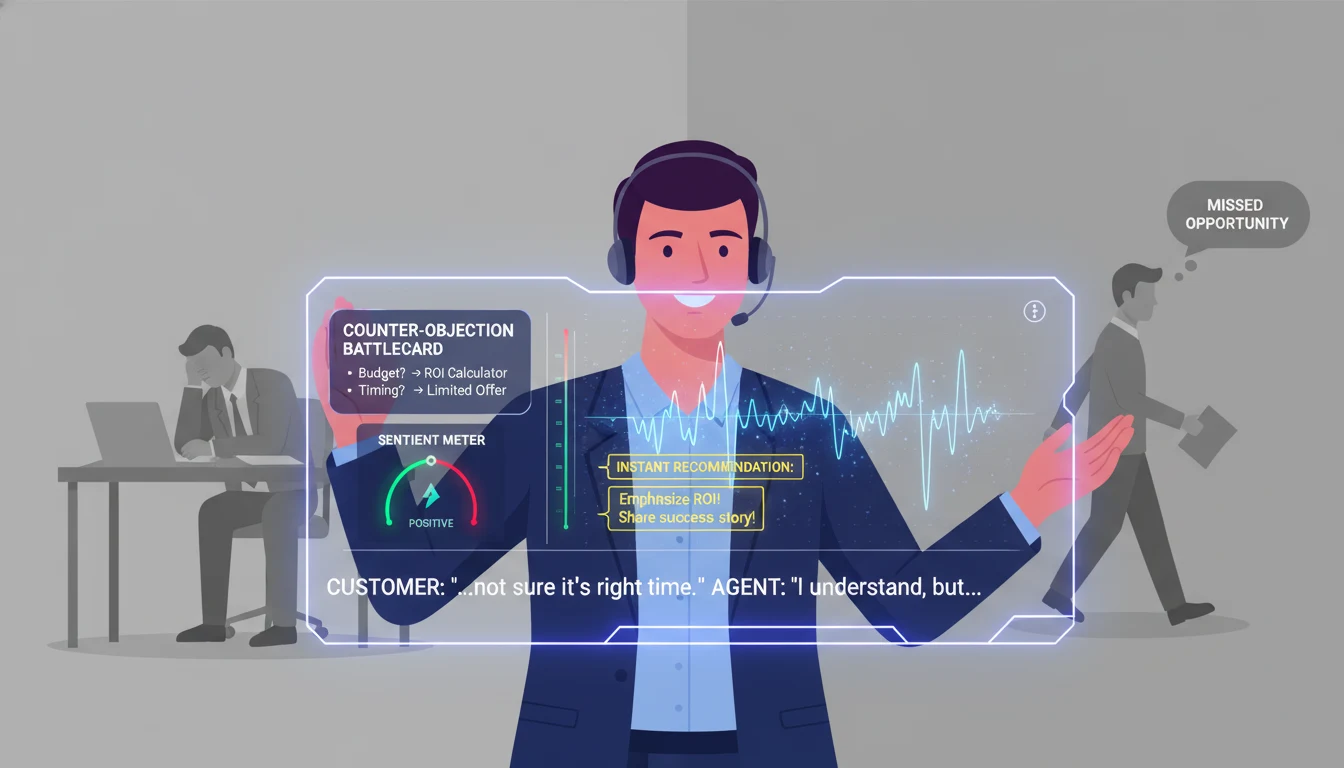
Real-time coaching in 2026 is defined by the transition from retroactive feedback, where managers review calls days after they happen, to live, AI-augmented intervention during the actual sales conversation. In high-stakes industries like Insurance, Banking, and Automotive, the margin for error has shrunk. Customers expect instant, accurate, and highly personalised responses. Real-time coaching now acts as a digital nervous system for the frontline agent, providing the exact data, rebuttal, or compliance prompt needed at the precise second a customer raises a query.
Modern real-time coaching utilises live transcription and sentiment analysis to understand the emotional and logical flow of a meeting. If a prospective borrower in a home loan discussion expresses hesitation about interest rate volatility, the system does not just provide a generic brochure. It pushes a specific "Counter-Objection Battlecard" to the agent's screen, comparing current market trends with historical data to de-risk the decision. This removes the cognitive load from the agent, allowing them to focus on building rapport while the AI handles the technical accuracy and content retrieval.
Consistency across distributed geographies is the second pillar of this definition. For a Chief Distribution Officer managing thousands of agents across different regions, real-time coaching ensures that a sales pitch delivered in a tier-3 city maintains the same quality and compliance standards as one delivered in a metro headquarters. The "Sales Playbook" is no longer a static PDF; it is a dynamic, living entity that adapts to the customer’s persona, the agent’s experience level, and the specific stage of the sales cycle.
To implement this effectively, organisations must focus on these actionable strategies:
- Deploy AI Copilots that integrate directly with communication tools (Zoom, Teams, or mobile dialers) to provide discreet, on-screen prompts during live interactions.
- Automate the delivery of "Just-in-Time" content. When a healthcare sales rep mentions a specific medical device, the system should immediately surface the relevant interactive product illustrator or clinical trial data.
- Shift from "Manager-Led" to "System-Led" daily coaching. Use AI to identify specific behaviour gaps-such as "talking too much" or "failing to ask discovery questions"-and provide an immediate nudge to the agent as the session concludes.
- Integrate interactive role-plays into the daily workflow. Use AI-driven simulations that mimic difficult customer personas (e.g., an angry policyholder or a sceptical investor) to refine skills before the actual high-stakes meeting occurs.
- Ensure compliance is "baked-in" rather than audited. In the Banking and NBFC sectors, the coaching system should flag non-compliant statements in real-time to prevent regulatory friction before the sale is even closed.
The definition also extends to the "After-Action Review." In 2026, real-time coaching involves an immediate feedback loop. Within seconds of a meeting’s conclusion, the agent receives a performance scorecard and a personalised learning journey based on their performance. This eliminates the delay in skill development, turning every customer interaction into a measurable training session.
Pro Tip:
Do not overwhelm agents with too many live prompts. Configure your AI enablement platform to surface only the "Top 3 Critical Nudges"-one for compliance, one for objection handling, and one for the strongest closing argument-to ensure the agent remains focused on the human connection rather than a screen of alerts.
How does AI analyse live customer interactions to provide instant feedback?
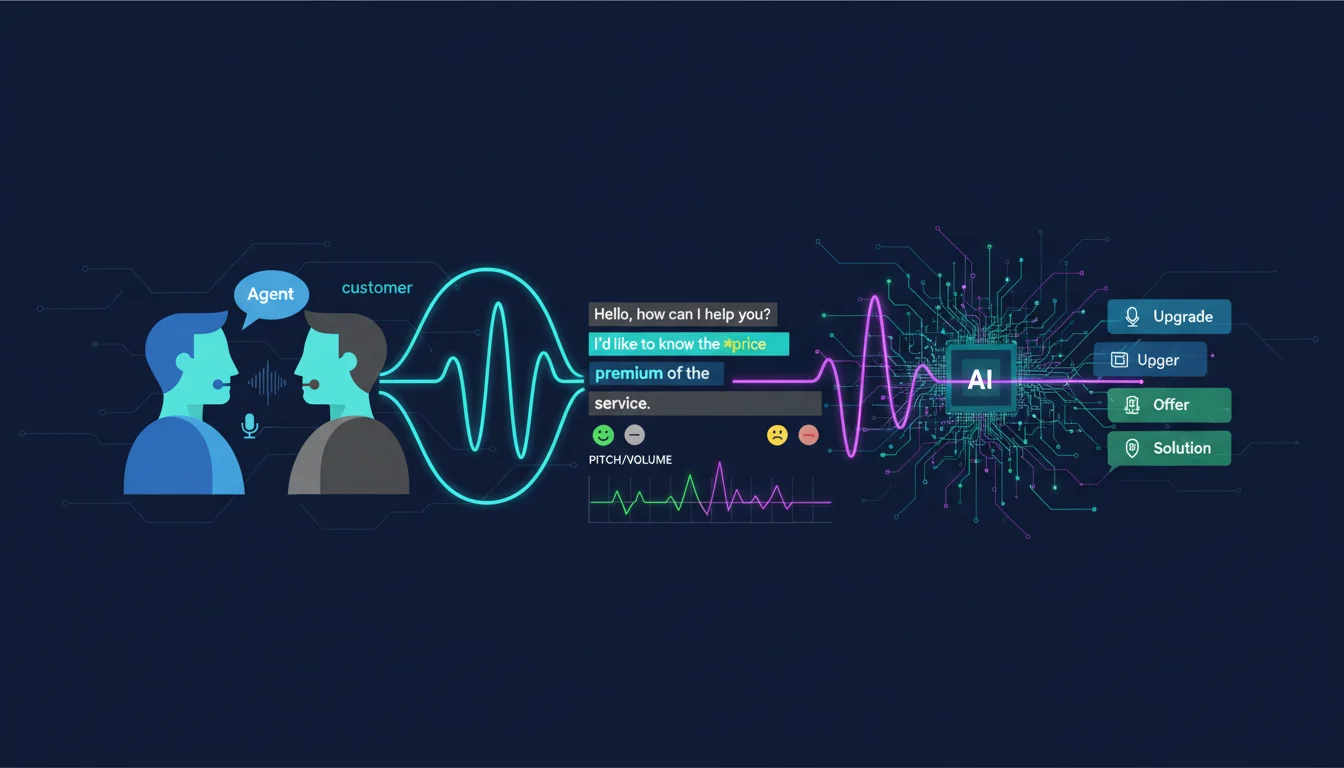
AI analyses live customer interactions by processing audio or text streams through a multi-layered engine that functions in milliseconds. The process begins with Real-Time Speech-to-Text (STT) or stream ingestion. In a live sales call or meeting, the AI captures the audio signal, filters out background noise, and converts the spoken word into structured text. This is not a simple transcription; it is a specialised process that handles diverse accents, industry-specific jargon (like "ULIPs" in insurance or "LTV" in banking), and overlapping dialogue.
Once the text is generated, the AI applies Natural Language Understanding (NLU) to determine the intent and sentiment behind the words. It looks for linguistic markers that indicate a customer’s pain point, a specific product interest, or a potential objection. For example, if a customer says, "The premium seems higher than what I saw online," the AI recognises this as a price objection. It doesn't just see the words; it understands the context of the negotiation.
Simultaneously, acoustic analysis engines evaluate non-verbal cues. The AI tracks the pitch, pace, and volume of the conversation. High-velocity speech might indicate excitement or anxiety, while long pauses might signal confusion. By combining what is said with how it is said, the system builds a comprehensive view of the interaction’s health.
The final layer involves a Real-Time Suggestion Engine. This engine compares the current live data against a library of "winning" behaviours and company-approved playbooks. If the AI detects a gap, such as an agent forgetting to mention a mandatory regulatory disclosure or failing to address a competitor mention, it triggers an instant nudge. These nudges appear as discreet prompts on the salesperson’s screen, providing the exact talk track or product battlecard needed to steer the conversation back on track.
To implement this effectively, organisations should focus on the following actionables:
- Define High-Impact Triggers:
Identify the top five objections or questions that frequently derail sales in your specific sector. Program these as primary triggers for the AI to ensure the feedback is relevant and not overwhelming.
- Establish Baseline Behaviours:
Use historical data from your top-performing agents to set the "gold standard" for pace, talk-to-listen ratios, and keyword usage. The AI should give feedback based on these successful benchmarks.
- Monitor "Coachable Moments":
Use the post-call summaries generated by the AI to identify recurring capability gaps across the team. If 40% of agents struggle with a new product’s value proposition, schedule a targeted training journey.
- Focus on Sentiment Shift:
Track how the customer’s sentiment changes after an AI-suggested nudge is used. This helps refine the prompts to ensure they actually resolve customer concerns rather than sounding scripted.
Pro Tip:
Look for "Negative Space" in interactions. High-performing AI models don't just analyse what is said; they flag what is missing. If your sales playbook requires a discovery question about a customer’s long-term financial goals and the agent hasn't asked it within the first ten minutes, the AI should prompt that specific question to ensure the sales process remains consultative.
Why is real-time AI coaching critical for distributed teams in Insurance and Banking?
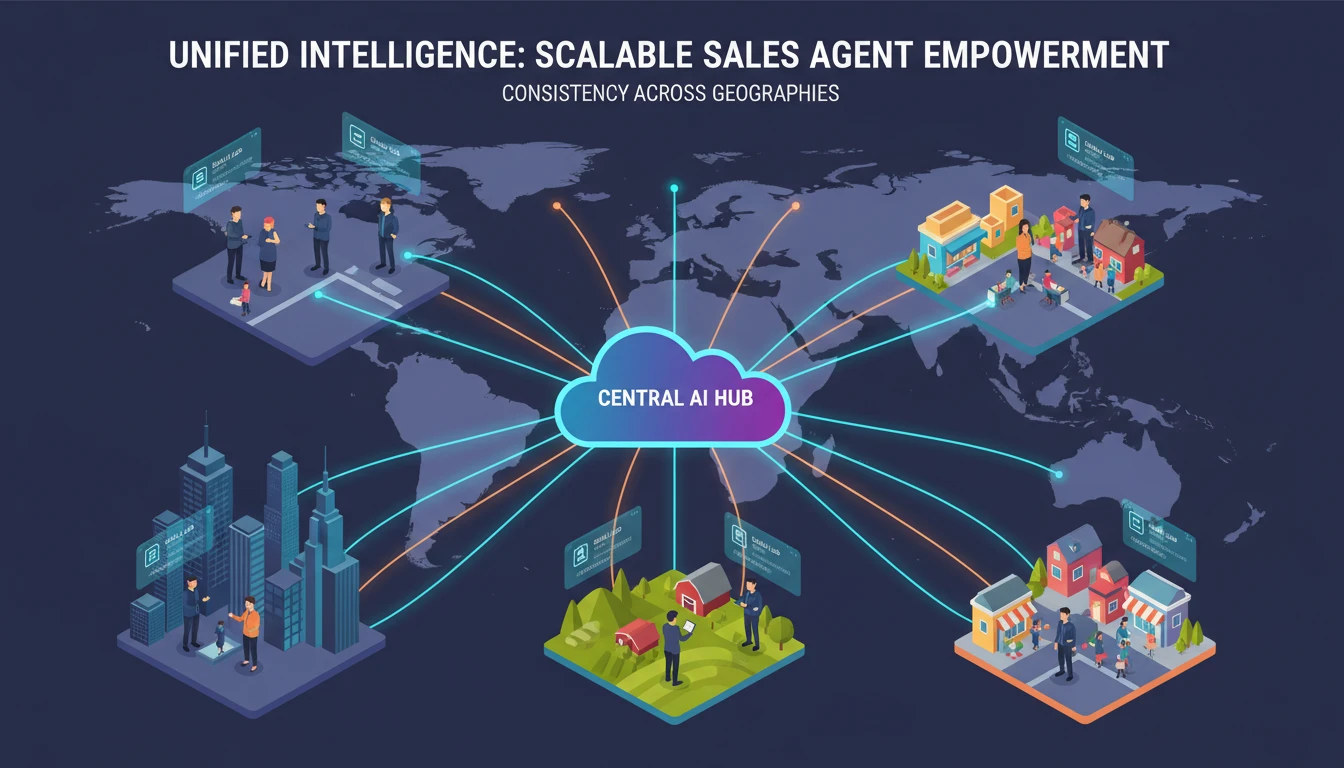
The fundamental challenge for distributed teams in Banking and Insurance is the "loneliness of the field." A Relationship Manager (RM) in a Tier-3 city or an insurance agent in a remote district lacks the immediate access to a supervisor that a centralised office team enjoys. Real-time AI coaching bridges this geographical and cognitive gap by functioning as a digital supervisor that sits in the agent’s pocket.
In 2026, the complexity of financial products has reached a point where expecting a frontline agent to memorise every nuance of a new ULIP or a multi-currency corporate credit line is unrealistic. When an agent is face-to-face with a prospect, a "let me check and get back to you" is often the death of a deal. Real-time AI coaching provides "just-in-time" enablement, allowing agents to surface the right product illustration or tax-saving benefit exactly when the customer asks for it. This immediate access transforms an average agent into a high performer by removing the fear of technical ignorance.
Compliance remains the highest risk factor in distributed financial sales. Mis-selling or failing to disclose specific terms leads to heavy regulatory penalties and brand erosion. Real-time AI systems act as a corrective layer during the sales process. For instance, if an agent is pitching a high-risk investment to a senior citizen, the AI can trigger a nudge reminding the agent of the suitability criteria and mandatory risk disclosures. This ensures that even the most remote team member adheres to the same quality and compliance standards as the headquarters.
Actionable strategies for implementing real-time AI coaching:
- Deploy Dynamic Battlecards:
Instead of static PDFs, use AI-driven battlecards that update based on current market interest rates or competitor movements. When a customer mentions a rival bank’s interest rate, the RM should have an instant rebuttal focused on total value or flexible tenure.
- Contextual Role-Play Simulation:
Before an agent enters a high-stakes meeting, they should perform a 2-minute AI-powered role-play. The AI simulates the specific persona of the client (e.g., a sceptical SME owner) and provides instant feedback on the agent's tone, clarity, and objection-handling skills.
- Interactive Value Illustrators:
Move away from boring brochures. Use interactive tools that allow the customer to input their data and see real-time projections. This makes the invisible nature of banking and insurance products tangible and builds immediate trust.
- Gap Identification via Live Dashboards:
Sales leaders should use AI to track which specific objections are causing the most friction across different geographies. If the South region is struggling with "premium costs" while the North struggles with "lock-in periods," coaching can be hyper-localised rather than generic.
Distributed teams also face the "consistency problem." In a centralised environment, best practices spread through osmosis. In a distributed setup, high-impact behaviours are often siloed. Real-time AI captures what the top 5% of performers are saying and doing-what phrases they use to close, how they bridge from a savings account to an insurance pitch-and pushes those behaviours to the rest of the fleet. This democratizes excellence across the entire organisation, regardless of the agent's location.
Pro Tip:
Shift your focus from "Post-Call Analysis" to "In-Call Intervention." While analysing recorded calls is useful for long-term training, it does nothing to save a deal that is currently failing. Use AI to provide silent, screen-based cues to agents during live digital interactions to pivot the conversation before the prospect disengages.
How can field agents use AI playbooks to pivot during a live pitch?
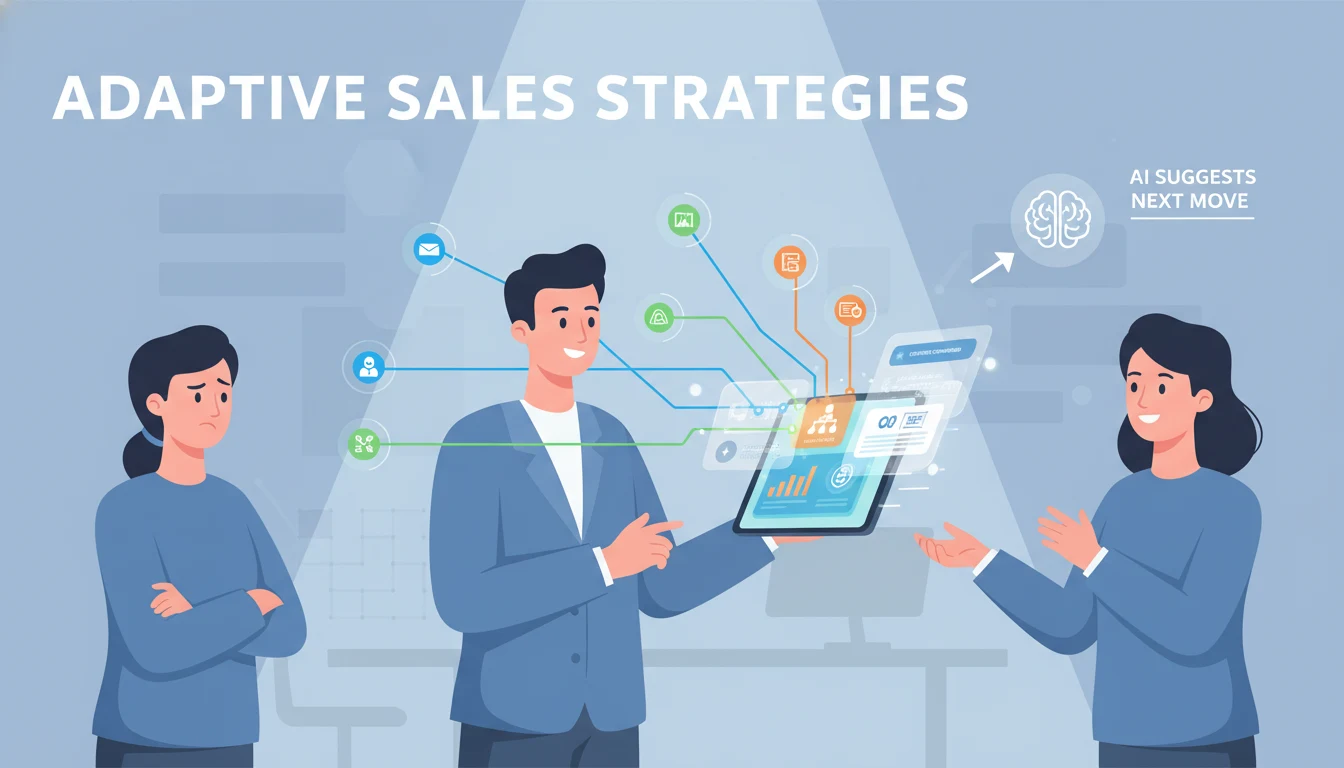
Field agents in 2026 no longer rely on rigid, linear slide decks. The ability to pivot during a live pitch depends on the transition from static scripts to dynamic, AI-driven sales execution systems. When a prospect in a banking or insurance consultation shifts the conversation from a general inquiry about interest rates to a specific concern regarding legacy planning, the AI playbook detects this change in intent through real-time transcription. Instead of the agent fumbling through manual folders, the system pushes a relevant "Legacy & Trust" module. This allows the agent to maintain eye contact and conversational flow while the screen updates with the exact visuals needed to address the new topic.
The most effective pivots are powered by interactive product illustrators. In the consumer durables or automotive sectors, a customer might suddenly express a constraint regarding space or fuel efficiency that contradicts their initial request. An AI playbook enables the agent to instantly adjust variables on a live dashboard. By inputting the customer’s new parameters, the illustrator regenerates the value proposition, shifting the focus from "performance" to "utility" or "cost-savings" in seconds. This real-time visualisation proves to the customer that the agent is listening and customising the solution to their specific needs, rather than pushing a pre-set agenda.
In high-stakes environments like NBFC or healthcare sales, the "competitor pivot" is a critical manoeuvre. When a prospect mentions a rival’s specific feature or pricing model, the AI copilot triggers a "Just-in-time" battlecard. This isn't a simple list of features; it is a strategic redirection tool. It provides the agent with a calculated rebuttal that acknowledges the competitor’s point but immediately pivots back to a unique value driver of their own offering. This ensures the agent is never caught off guard and can navigate competitive objections without losing the momentum of the pitch.
Pivoting is also about recognising when a current product fit is weak and moving toward a more suitable alternative. In insurance sales, if a prospect reacts negatively to a high-premium life policy, the AI playbook can suggest a pivot to a "Term-plus-Investment" hybrid that aligns with the prospect’s voiced concern over liquidity. This ensures the agent doesn't lose the lead entirely but instead finds a different path to a "yes" by following the data-backed recommendations of the execution system.
Pro Tip:
Practice "Micro-Pivots" by using AI to instantly swap out a generic customer testimonial for one that specifically matches the prospect's industry or job title mid-pitch. This high level of personalisation, delivered in real-time, significantly increases the perceived relevance of your solution.
Can AI coaching replace the need for traditional manager ride-alongs?
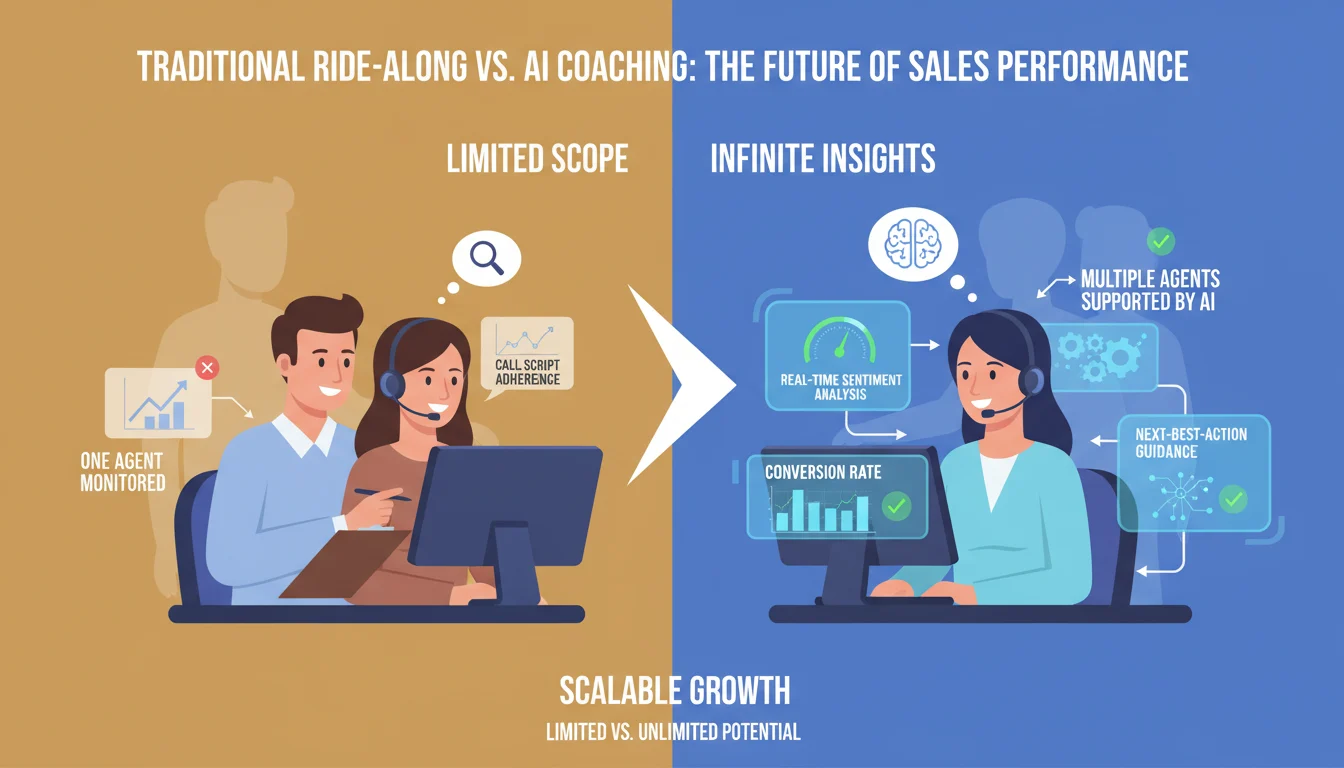
The traditional manager ride-along is physically impossible to scale across a distributed enterprise sales force. While a manager can realistically accompany one or two agents a week, a large organisation in the insurance or banking sector might have thousands of frontline representatives making pitches simultaneously. AI coaching does not just replace the ride-along; it upgrades the entire feedback mechanism from a rare, subjective event to a continuous, data-backed system. In 2026, the question is no longer about replacement but about strategic allocation of human intelligence versus machine efficiency.
AI coaching solves the "recency bias" often found in traditional management. When a manager joins a field visit, the agent often performs differently because they are being watched, a phenomenon known as the Hawthorne Effect. This creates an artificial environment that does not reflect the agent's daily reality. AI-driven role-plays and real-time pitch analysis capture how an agent performs when no one is looking. By analysing every interaction through tools like PitchWiz, AI identifies exactly where an agent falters, whether it is failing to handle a specific objection about premium costs or missing a critical product disclosure.
The frequency of feedback is the most significant differentiator. In a traditional setup, an agent might receive constructive criticism once a quarter. With AI coaching, feedback happens after every simulated or live session. This creates a tight loop of "micro-learning" where the agent can correct a behaviour immediately rather than reinforcing bad habits for months. For Chief Distribution Officers, this means the "middle 60%" of the sales force-the average performers-can be moved toward high-performance benchmarks without hiring more managers.
However, the human manager remains essential for complex emotional intelligence and career mentorship. The AI provides the "what" and the "how," but the manager provides the "why" and the motivation. The manager’s role shifts from being a monitor of basic skills to a high-level strategist. Instead of spending six hours in traffic to watch one pitch, a manager uses an AI dashboard to see which 10 agents are struggling with "objection handling" and conducts a targeted group coaching session.
Pro Tip:
Do not present AI coaching as a surveillance tool to your frontline agents. Position it as a "personal trainer" that allows them to practice in a safe, private environment before they perform in front of a customer, where commissions are at stake. When agents see AI as a way to increase their take-home pay through better performance, adoption rates skyrocket.
How does AI tailor real-time nudges to an individual agent's specific capability gaps?
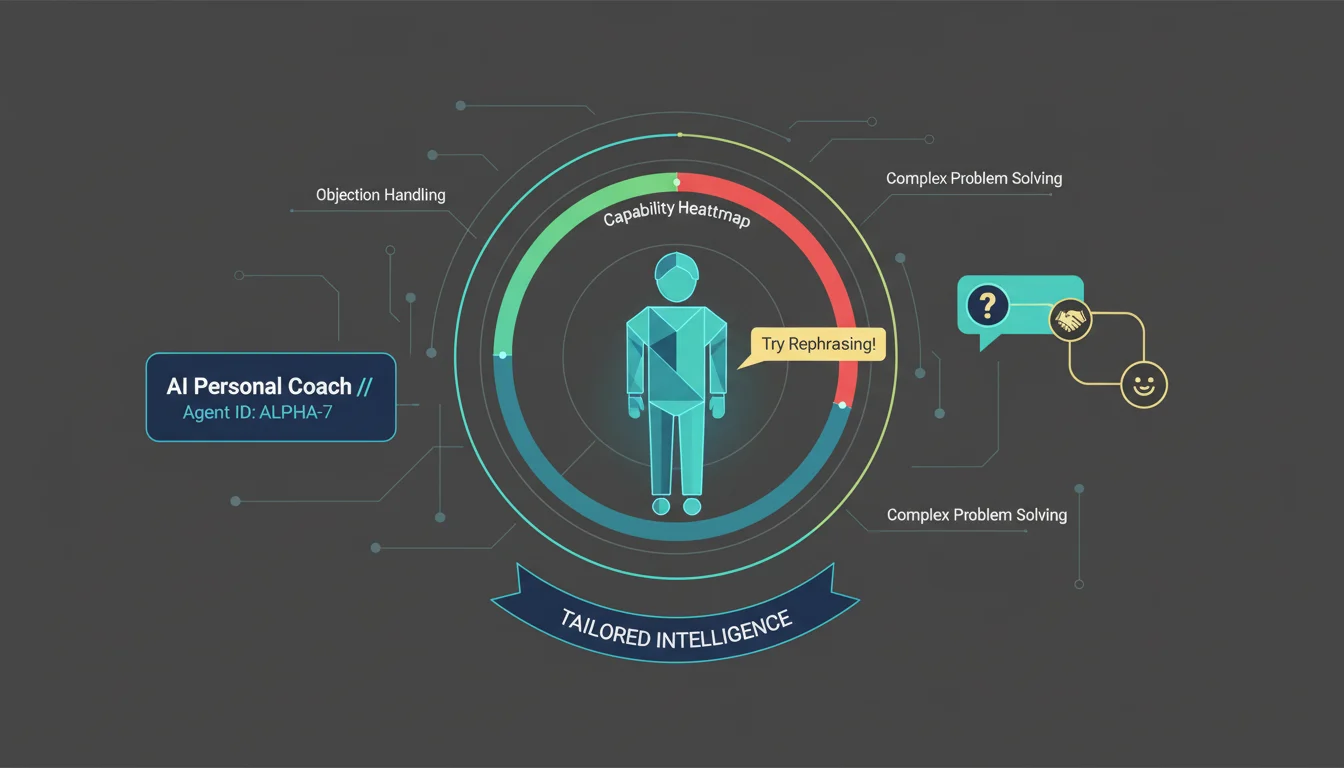
AI-driven personalisation in sales enablement moves away from generic, "one-size-fits-all" training by creating a continuous feedback loop between an agent's live performance and their historical capability data. The system constructs a dynamic capability heatmap for every individual based on their interaction history, conversion rates, and competency assessments. When an agent is in the middle of a customer interaction, the AI doesn't just provide random content; it analyses the specific stage of the deal and cross-references it with that agent’s known weaknesses, such as struggling with premium objection handling or failing to articulate rider benefits in a life insurance policy.
The process begins with behavioural telemetry. By integrating with the CRM and lead management systems, the AI tracks where an agent typically drops the ball. If the data shows an agent has a high lead-to-meeting ratio but a low meeting-to-conversion ratio in the "Healthcare" category, the AI flags a capability gap in value proposition delivery. During the next healthcare-related client meeting, the system triggers a real-time nudge-perhaps a specific product illustrator or a comparison battlecard-precisely when the agent reaches the product demonstration stage. This ensures the intervention is surgical, addressing the specific skill gap at the exact moment of need.
Tailoring these nudges requires a three-layered approach:
- Contextual Awareness:
The AI identifies the specific product being discussed and the customer's persona. For a high-net-worth individual (HNI) looking at investment-linked plans, the nudge will focus on long-term wealth creation rather than basic protection.
- Skill-Gap Mapping:
The system checks the agent’s past performance. If the agent historically avoids discussing "exclusion clauses" due to a lack of confidence, the AI pushes a simplified script or a visual aid to help them navigate that specific conversation.
- Predictive Intent:
By analysing the customer's responses in real-time, the AI predicts the most likely objection. It then surfaces a nudge that helps the agent pivot the conversation before the objection even crystallises, effectively bridging the capability gap through guided execution.
For sales leaders in distributed geographies, this means execution consistency is no longer dependent on manual coaching, which is impossible to scale. The AI acts as a digital twin of a high-performing manager, providing the right "nudge" to a struggling agent in a tier-2 city without requiring a supervisor's intervention. This transformation from "post-call coaching" to "in-call enablement" ensures that mistakes are corrected before they result in a lost sale.
Pro Tip:
Treat nudges as "micro-enablement" rather than "monitoring." To drive adoption, ensure the nudges are perceived by the frontline agents as a supportive tool that helps them hit their targets and earn higher commissions, rather than a surveillance mechanism. The most effective nudges are those that reduce cognitive load during a complex sales conversation.
How do AI battlecards surface the right response the moment a prospect raises a concern?
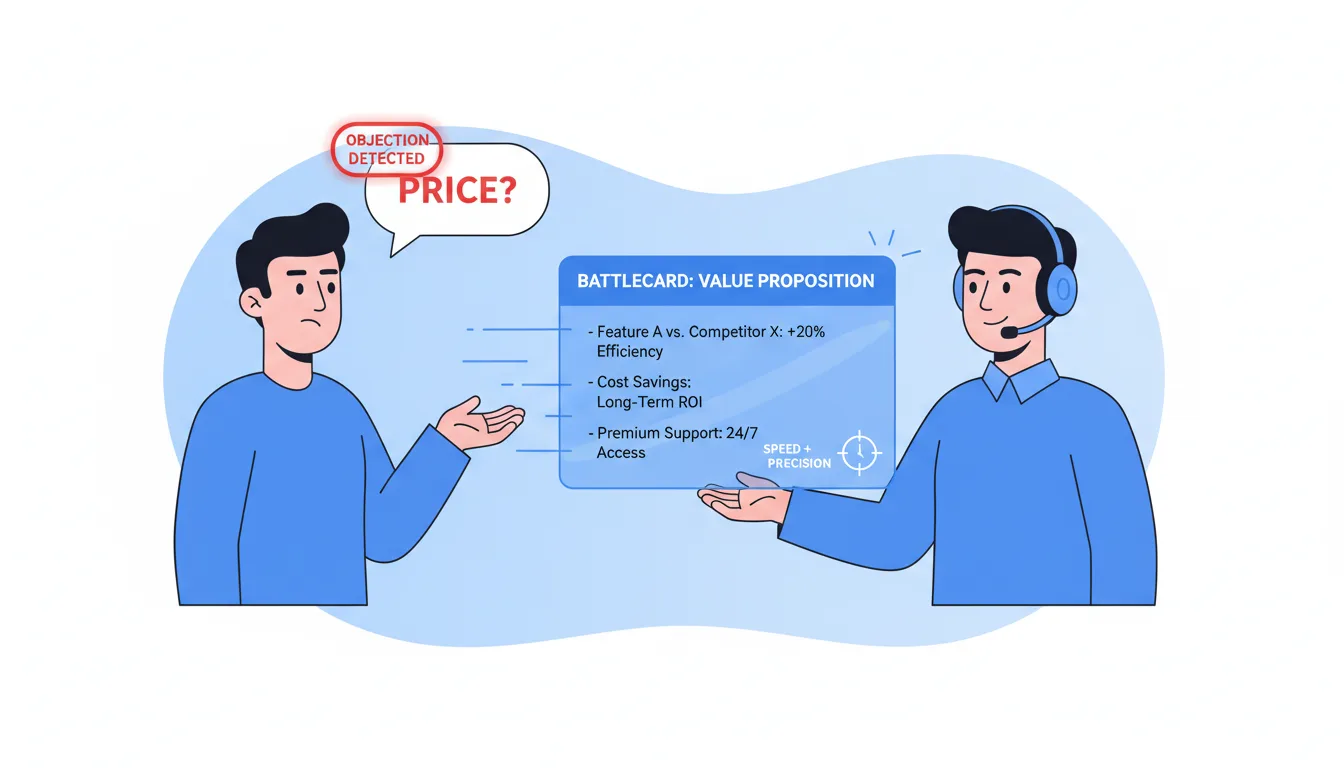
AI battlecards utilise a technology called Semantic Search combined with Natural Language Processing (NLP) to understand the intent behind a prospect's words. Unlike traditional search engines that look for exact keyword matches, these systems identify the underlying concern. When a customer in the insurance sector mentions "premium volatility," the AI recognises this as a risk-appetite objection. It doesn't just surface a generic FAQ; it pulls the specific rebuttal designed for that product's risk profile, drawing from a library of pre-validated sales playbooks.
The intelligence of these systems relies on a structured knowledge graph. This graph connects product features, competitor weaknesses, and historical success data. In the banking or NBFC space, if a prospect compares interest rates with a specific rival, the AI detects the competitor's name and immediately displays a side-by-side comparison. It highlights "hidden processing fees" or "rigid repayment schedules" of the competitor that are not immediately obvious. This happens in milliseconds, ensuring the agent doesn't lose the momentum of the conversation.
Contextual filtering is another layer that ensures the response is relevant to the specific moment. The AI considers the lead's profile, such as their industry, previous interactions, and the specific stage of the sales cycle. For instance, a healthcare sales representative dealing with a hospital administrator will see different talking points for a "budget constraint" objection than they would when speaking to a department head. The system filters out irrelevant data, presenting only the three most effective bullet points to handle the specific situation.
In field sales environments, such as automotive or consumer durables, speed is the most critical factor. AI battlecards often use "Trigger Word Recognition" via voice-to-text capabilities. As the prospect speaks, the mobile interface updates to show the relevant "Just-in-Time" content. This removes the need for the agent to memorise hundreds of product specs or search through bulky PDFs. By reducing the cognitive load on the agent, the AI allows them to focus on active listening and building rapport while the technical data is served to them on a silver platter.
Machine learning ensures these responses evolve. By analysing which rebuttals lead to a "next step" in the Lead Management System, the AI identifies high-impact behaviours. If a particular framing of a "claims process" objection is resulting in higher conversion rates for top-performing insurance agents, the system automatically promotes that response to the rest of the distributed sales team. This creates a feedback loop where the collective intelligence of the entire organisation is available to every individual agent during their most critical sales moments in 2026.
Actionable steps to implement this effectively:
- Audit your top 20 most frequent objections across different product lines and document the successful rebuttals used by your top 5% of performers.
- Structure your battlecard content into "Bite-sized" modules that can be read in under 10 seconds.
- Categorise objections by "Competitor," "Price," "Authority," and "Feature" to help the AI engine map responses more accurately.
- Integrate your battlecards with your Lead Management System to ensure the AI knows the prospect's history before the conversation even starts.
- Regularly update the "Competitive Intelligence" section of your battlecards to reflect mid-year market shifts or new product launches by rivals.
Pro Tip:
Do not just provide data points in your battlecards; provide the "Bridge Phrase." The most effective AI battlecards suggest exactly how to transition from acknowledging the concern back to the value proposition. For example: "I understand that the initial cost is a priority; however, most of our clients find that the 15% reduction in operational downtime offsets this within the first six months."
How do you ensure execution consistency across 10,000 distributed agents using AI?

Maintaining execution consistency across a distributed workforce of 10,000 agents requires moving away from static training manuals and adopting a "live" execution system. In large-scale operations like insurance or banking, the primary challenge is the dilution of strategy as it moves from headquarters to the frontline. AI solves this by embedding the sales playbook directly into the agent’s daily workflow, ensuring that every customer interaction follows a proven high-performance logic, regardless of the agent's location or experience level.
The core of this consistency lies in Just-in-Time (JIT) enablement. Instead of expecting agents to memorise complex product features or compliance nuances, AI-powered systems provide context-specific prompts during the sales conversation. When an agent is sitting with a customer, the system identifies the customer profile-such as a young parent looking for a savings plan or a small business owner seeking an NBFC loan-and surfaces the exact pitch deck, product illustrator, or calculator needed for that specific moment. This eliminates the guesswork and prevents agents from misrepresenting products or missing cross-sell opportunities.
The shift from "training for knowledge" to "enabling for execution" is critical. By using an AI Sales Playbook, you effectively place a digital coach in the pocket of every agent. This coach doesn't just tell them what to do; it provides the tools to do it correctly while the customer is watching. This real-time support is what prevents the performance variance typically seen between your top 10% and the rest of the distribution force.
Data visibility is the final piece of the puzzle. When 10,000 agents use an integrated AI system, leadership gets a bird's-eye view of which pitch modules are working and which objections are causing the most drop-offs. This allows for rapid iteration-you can update a sales script in the morning and have it deployed across all 10,000 devices by the afternoon, ensuring the entire organisation pivots in unison.
Pro Tip:
Stop tracking "training completion" as a success metric. Instead, track "Content Utilisation in the Field." True consistency is measured by how many agents used the specific AI-guided tool or calculator during a live customer interaction, not how many watched a training video on it.
What are the measurable KPIs for implementing a real-time AI coaching system?
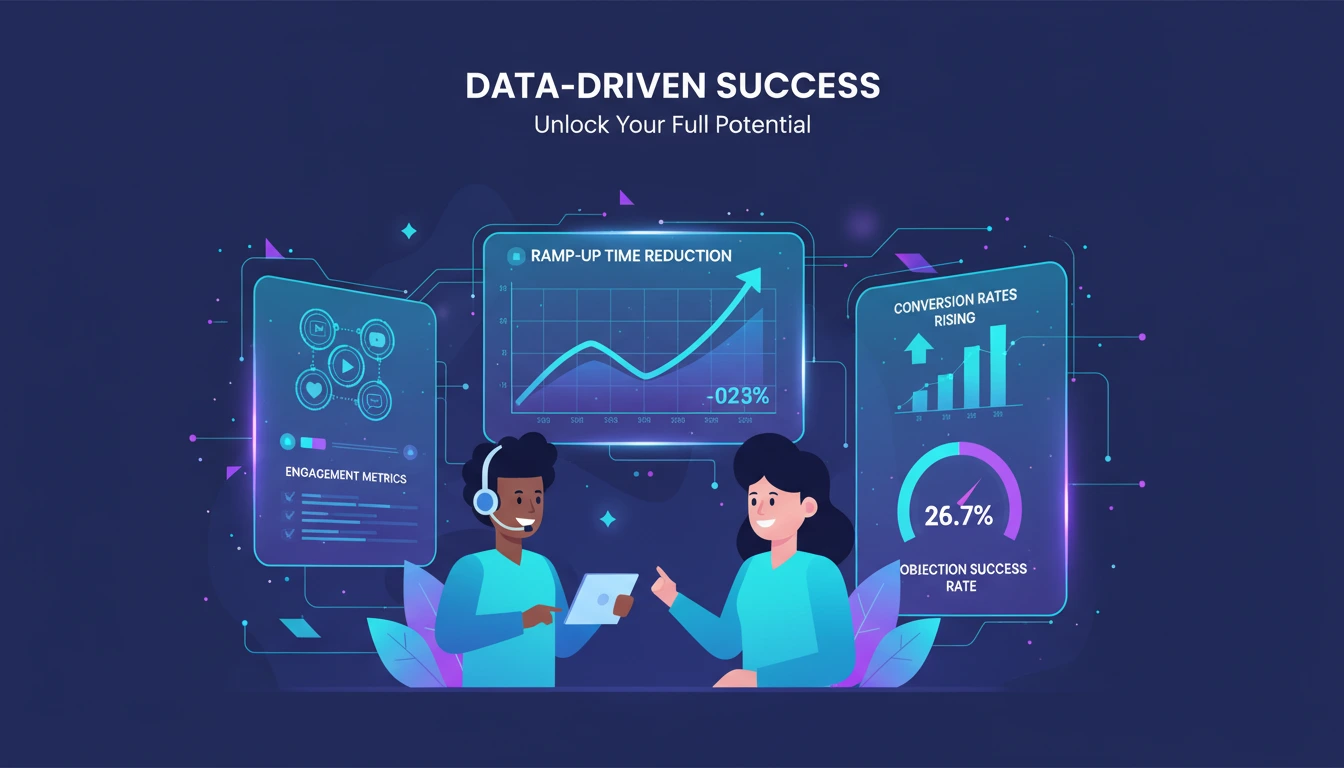
Measuring the impact of a real-time AI coaching system requires moving beyond vanity metrics like "log-in rates" and focusing on bottom-line outcomes and behavioural shifts. In high-stakes sectors like Insurance, Banking, and NBFCs, the gap between a top-performing relationship manager and an average one is often their ability to handle objections and present complex products with clarity.
The primary KPI is the Reduction in Sales Ramp-up Time. For enterprise teams, training a new hire to become productive can take months. A real-time AI system provides "just-in-time" enablement through PitchWiz and interactive playbooks, allowing new agents to start closing deals faster. You should measure the time from the hire date to the first closed deal or the first month of hitting 100% quota. A successful implementation typically reduces this window by 30-40% because the AI acts as a 24/7 supervisor, correcting mistakes during the actual sales interaction rather than weeks later in a classroom.
Playbook Adherence and Messaging Consistency is the second critical metric. In distributed sales teams across different geographies, messaging often gets diluted. AI systems can track the percentage of sales interactions where the agent followed the prescribed sales journey. This includes the usage of specific "Gold Standard" talk tracks, the deployment of interactive product illustrators, and the delivery of compliance-mandated disclosures. If your team is selling a complex life insurance product, tracking how often they use the correct benefit illustration versus a generic explanation is a measurable indicator of sales quality.
Objection Handling Success Rate provides a granular look at agent capability. AI coaching systems like Sharpsell.ai track which objections are being raised (e.g., "The premium is too high" or "I need to compare with another bank") and whether the agent used the recommended battlecard to navigate it. By tagging these moments in a CRM or through role-play data, you can measure the "Conversion from Objection to Next Step." A higher resolution rate directly correlates with improved win rates.
Content Engagement and Personalisation Velocity measures how frontline agents utilise the digital assets provided to them. Instead of tracking mere downloads, measure the "Share-to-Open" ratio of personalised product content. If an agent sends a customised pitch deck via the AI platform, how many prospects actually engage with it? This metric tells you if the "just-in-time" content is actually helping the agent build trust with the end consumer.
Actionables for Sales Leaders:
- Establish a 90-day baseline of your "Middle 60%" performers before deploying AI coaching to accurately measure the delta in their output.
- Automate the correlation between AI role-play scores and actual field performance to identify if your top "learners" are also your top "earners."
- Audit the frequency of "objection triggers" in your sales cycle and update AI battlecards every 30 days based on real-time feedback from the field.
- Link AI coaching data to your CRM to see if deals involving "Copilot" or "Interactive Illustrators" have a higher Average Order Value (AOV).
Pro Tip:
Do not focus your AI coaching efforts on your top 5% of performers; they already have the intuition. Instead, measure the "Migration of the Middle." Moving the middle 60% of your sales force by just 5% in their conversion metrics will yield a significantly higher ROI than trying to optimise your best-performing stars.
What is the first step to transitioning from legacy training to an AI-powered execution system?
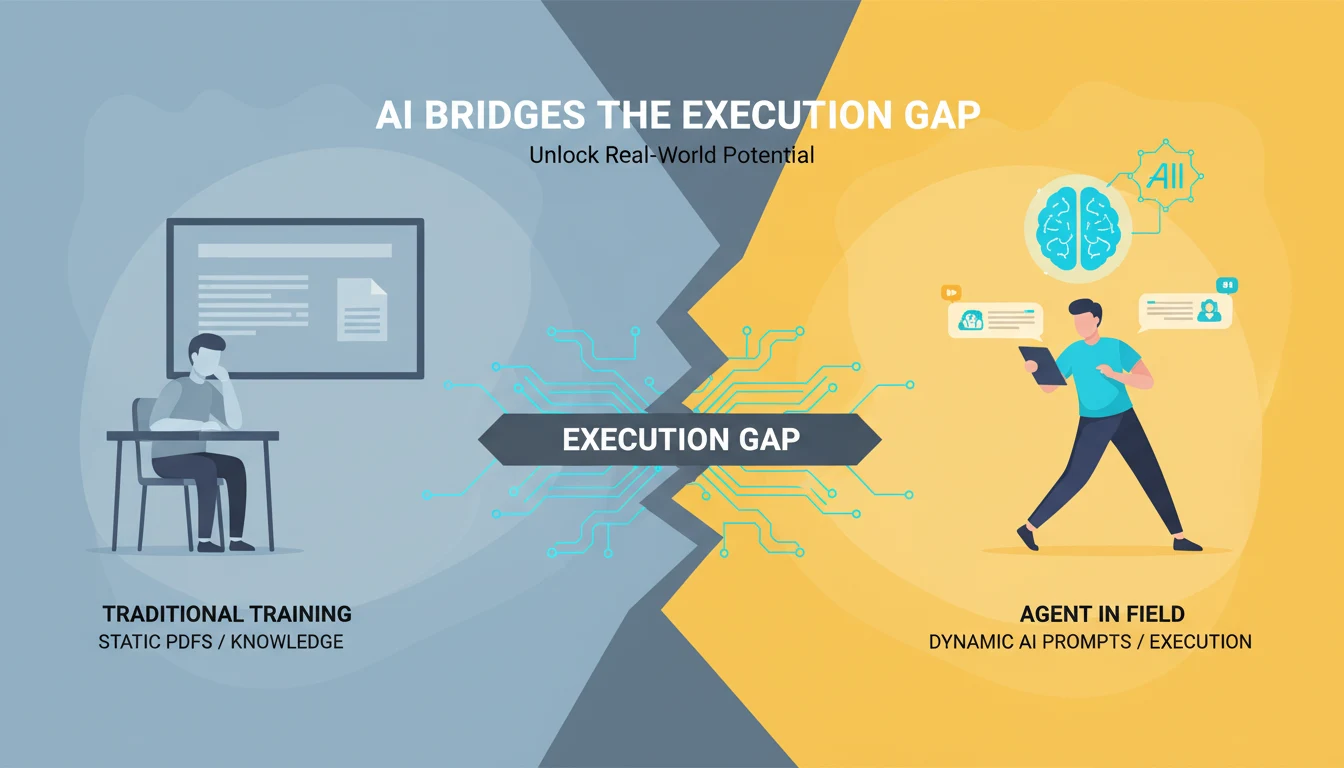
The transition from legacy training to an AI-powered execution system begins with a fundamental shift in how you define the "Unit of Value" for your sales force. In traditional models, value is measured by training hours completed or certification scores. In an AI-powered execution framework, value is measured by the seller’s ability to perform the right action at the exact moment a customer presents a specific need or objection. The first step, therefore, is a rigorous "Execution Gap Audit."
You must move beyond identifying what your agents do not know and start identifying what they fail to do during live interactions. A knowledge gap is an agent not knowing the features of a new ULIP or a specialised home loan product. An execution gap is an agent knowing those features but failing to articulate the specific ROI or tax-saving benefits when a high-net-worth individual mentions long-term wealth preservation.
Mapping these high-impact micro-moments is critical. You need to deconstruct the behaviours of your top 10% of performers-those who consistently hit targets in diverse geographies. In 2026, data suggests that the difference between a top performer and a median performer in the BFSI or Automotive sectors isn't just product knowledge; it is the ability to use visual aids effectively and handle price objections without collapsing margins. Once these behaviours are codified, they become the "logic" for your AI Sales Playbook. Unlike a legacy LMS that stores information in a silo, an execution system uses this logic to nudge agents in real-time.
Actionables for Sales Leaders:
- Deconstruct the "Golden Pitch":
Analyse the successful interactions of your top 5% performers. Identify the specific phrases, visual tools, and objection-handling techniques they use. This becomes the foundation for your AI-powered guidance.
- Audit Content Utility:
Categorise your current training material. If a PDF or video cannot be consumed and applied in under 60 seconds while an agent is in the field, it is "legacy content." It must be converted into atomic, just-in-time assets for the AI to surface.
- Identify Friction Points:
Survey frontline agents in specific hubs, whether they are selling insurance in tier-2 cities or durables in metro showrooms. Find out exactly where they feel "stuck" during a live pitch. These friction points should be the first workflows you automate.
- Define Success Triggers:
Identify specific triggers in a sales conversation that require AI intervention. For example, if a customer mentions a competitor’s interest rate, the system must be ready to surface a comparison battlecard immediately.
This transition requires moving from "Event-Based Learning" to "Continuous Enablement." In the legacy world, a product launch meant a two-day seminar. In an AI-powered execution world, the launch is baked into the seller's workflow. The AI system guides them through the new product's nuances while they are actually pitching to a lead. This effectively eliminates the "Forgetting Curve" because the learning occurs simultaneously with the execution.
Pro Tip for Practitioners:
Do not attempt to migrate your entire training library at once. Start by automating a single, high-friction scenario-such as interactive product illustrations or complex objection handling for a flagship product. Once the field force sees that the AI system solves a real-time problem that helps them close a deal faster, the cultural resistance to moving away from legacy training will vanish.
Conclusion
Post-mortem coaching creates a cycle of missed opportunities. When a sales manager reviews a recorded call or analyses a lost lead in the CRM, the revenue is already gone. In 2026, the high cost of customer acquisition in competitive sectors like insurance, banking, and automotive means you cannot afford to treat every failed interaction as a "learning moment." Real-time AI coaching shifts the focus from diagnosing past failures to ensuring your representatives execute correctly in the present.
True sales execution requires a system that supports frontline agents exactly when they are engaging with a prospect. By deploying AI-powered playbooks and live objection handling, organisations remove the guesswork for distributed teams. This shift does not replace the manager; instead, it provides every agent with a digital mentor that ensures regulatory compliance, explains complex product illustrations accurately, and delivers the right pitch at the moment of truth.
The transition from reactive to proactive coaching is the most reliable way to drive consistent growth across large, fragmented sales forces. Stop relying on lagging indicators to find out why your team missed their targets and start providing them with the intelligence to hit them in real-time.
Visit Sharpsell.ai to see how our AI Copilot and PitchWiz can transform your field sales execution and bring consistency to every customer interaction.
What’s a Rich Text element?
The rich text element allows you to create and format headings, paragraphs, blockquotes, images, and video all in one place instead of having to add and format them individually. Just double-click and easily create content.
Static and dynamic content editing
A rich text element can be used with static or dynamic content. For static content, just drop it into any page and begin editing. For dynamic content, add a rich text field to any collection and then connect a rich text element to that field in the settings panel. Voila!
How to customize formatting for each rich text
Headings, paragraphs, blockquotes, figures, images, and figure captions can all be styled after a class is added to the rich text element using the "When inside of" nested selector system.
zdxfhgfg
- sdnslk,xdv
- SDlknjsdv
- SDvlknj
- sdgdf v