
Cracking India's Sales Code: AI Blueprint Exposed

Sales leaders in India consistently grapple with a fundamental challenge: scaling growth effectively across the nation's incredibly diverse markets.

Cracking India's Sales Code: AI Blueprint Exposed

Sales leaders in India consistently grapple with a fundamental challenge: scaling growth effectively across the nation's incredibly diverse markets. What works in Mumbai often doesn't resonate in Lucknow, leading to fragmented efforts, inconsistent lead quality, and often, wasted sales resources trying to adapt generic strategies. This lack of a unified yet adaptable approach creates persistent headaches for predicting and achieving revenue targets.

Imagine moving beyond guesswork, instead having a clear roadmap that precisely identifies genuine buyer intent and pinpoints the most receptive market segments across India. This isn't a future fantasy; it's about leveraging specific AI capabilities to understand and navigate these complexities, turning data into direct, actionable sales intelligence.

This blueprint for 2027 cuts through the noise, exposing the real-world applications of AI being deployed right now to decode India's varied sales landscape. We're providing a practical, data-driven look at how companies are building sustainable, localised growth strategies by integrating smart technology into their sales operations.

How will AI fundamentally reshape India's sales ecosystem?
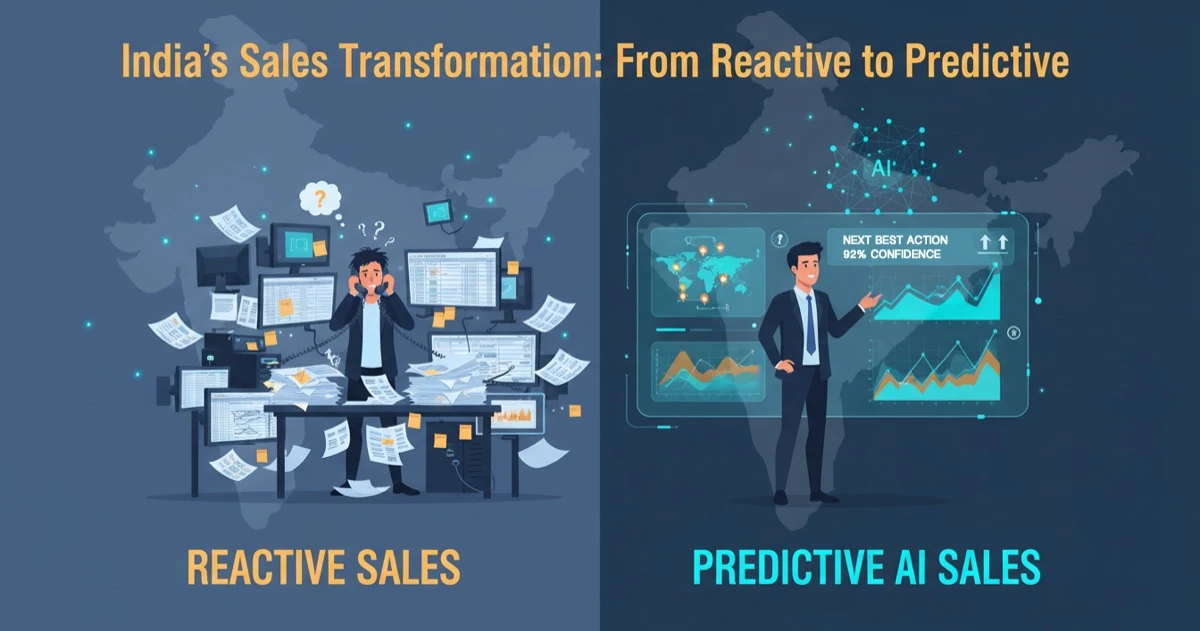
By 2027, AI will fundamentally transform India's sales landscape by shifting the focus from reactive selling to proactive, data-driven engagement. This change will affect how businesses interact with their customers.

One major shift will be in personalised customer journeys and predictive engagement. AI will move beyond basic recommendations to anticipate customer needs and preferences before they are explicitly stated. This means real-time, context-aware offers and support.

Sales productivity and efficiency will see significant gains through automation. Repetitive administrative tasks, lead qualification, and initial customer support will increasingly be handled by AI, freeing up sales professionals to focus on relationship building and complex problem-solving.

Data-driven decision-making and forecasting will become standard. AI's ability to process vast amounts of data will provide deeper insights into market trends, competitive landscapes, and sales performance, leading to more accurate predictions and strategic planning.

The role of the sales professional will evolve. Instead of being information providers, they will become strategic advisors, leveraging AI tools to enhance their expertise and focus on complex negotiations and customer success. For B2C, sales associates will use AI insights to provide a more tailored, human-centric service experience.

What are AI's top 3 breakthroughs for Indian sales lead generation?
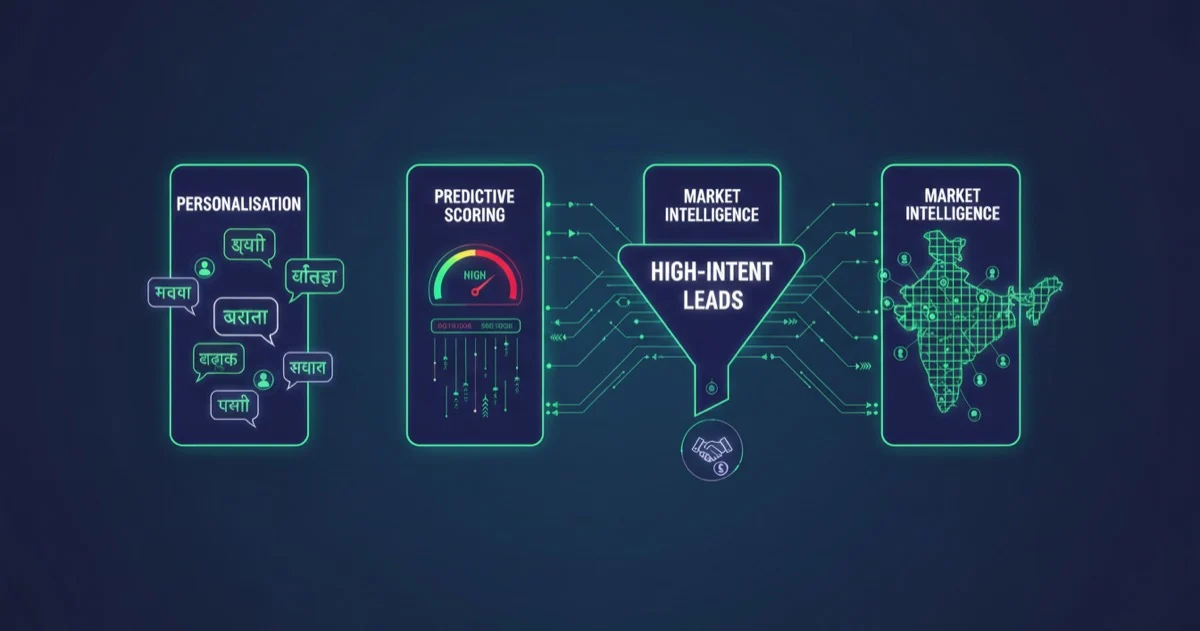
AI has brought several significant advancements to sales lead generation in India, enabling businesses to be much more precise and efficient. Here are the top three breakthroughs:

1. Hyper-Personalised Outreach at Scale

AI now allows businesses to craft highly individualised messages, content, and offers for prospects across a massive volume of leads. This goes beyond simple name merging. AI analyses extensive prospect data-their online behaviour, industry, job role, expressed interests, and even local news mentions-to generate communications that resonate directly with their specific pain points and needs. For the Indian market, this is a game-changer due to its immense linguistic and cultural diversity. AI tools can understand nuances in regional dialects, preferred communication styles, and specific buying patterns, making outreach feel genuinely local and relevant.

Traditional mass marketing often falls short in a market as fragmented and diverse as India. AI enables companies to communicate with individual buyers or micro-segments with the specificity of a one-on-one conversation, building trust and engagement more effectively. This is crucial for B2C (e.g., offering products based on local festivals or socio-economic indicators).

2. Predictive Lead Scoring and Prioritisation

Instead of relying on basic scoring models , AI uses advanced machine learning algorithms to analyse vast datasets. These include historical sales data, customer behaviour, market trends, and external signals. The goal is to predict which leads are most likely to convert. This means assigning a dynamic "propensity to buy" score to each lead, helping sales teams focus their efforts on those with the highest potential. In India, where lead volumes can be enormous, this prevents valuable time from being wasted on low-quality prospects and ensures that limited sales resources are allocated efficiently.

Indian businesses often face a high volume of inquiries and leads across various channels. Manually sifting through these to find genuinely interested buyers is incredibly inefficient. AI-driven scoring identifies the "needle in the haystack," allowing sales teams to engage with high-intent leads much faster, improving conversion rates and reducing sales cycle times. 

3. AI-Driven Market Intelligence and Data Enrichment

AI can now autonomously scour the internet, public databases, social media, news articles, and even proprietary data sources to gather deep insights about prospects, target companies, and broader market trends. This goes beyond just finding contact information; it’s about enriching lead profiles with details like a company's financial health, recent funding rounds, technology stack, hiring patterns, competitor landscape, or a consumer's purchasing power indicators and lifestyle preferences. For the Indian context, where structured data can sometimes be scarce, AI's ability to extract valuable information from unstructured text and diverse online sources is invaluable for building comprehensive lead profiles.

Understanding the complex and rapidly evolving Indian market requires granular, up-to-date data. AI-driven intelligence helps businesses identify emerging segments, understand regional purchasing power disparities, spot competitive shifts, and uncover underserved niches. This depth of insight allows for more strategic lead generation campaigns, better targeting, and more informed sales conversations.

How will AI empower Indian sales reps to close deals faster?

AI empowers Indian sales reps to close deals faster by streamlining workflows, providing deeper insights, and automating repetitive tasks. This allows reps to focus their energy on high-value interactions that move deals forward.

One key area is intelligent lead prioritisation. AI-powered systems can analyse vast amounts of data – including industry trends, company firmographics, and past engagement – to identify which leads are most likely to convert. This means reps spend less time chasing cold leads and more time engaging with genuinely interested prospects.

AI significantly enhances personalisation in outreach. By analysing a prospect's digital footprint, past interactions, and stated needs, AI can help reps craft highly relevant emails, messages, and even proposal sections. This targeted communication resonates better with prospects, reduces friction, and shortens the decision-making process.

Sales enablement and coaching benefit immensely from AI. Conversation intelligence platforms powered by AI can record and analyse sales calls, identifying key phrases, common objections, and successful negotiation tactics. Reps receive instant feedback on their performance, highlighting areas for improvement and best practices to adopt.

Predictive analytics from AI tools can forecast deal likelihood and suggest the "next best action" for a rep. This could be recommending specific content to share, suggesting a follow-up interval, or indicating when to involve a technical expert. This guidance removes guesswork and keeps the sales process proactive.

Routine administrative tasks, which often consume a large portion of a sales rep's day, are greatly reduced by AI. This includes automating data entry into CRMs, scheduling meetings, transcribing call notes, and generating standard reports. Freeing up this time directly translates to more selling hours.

AI can also provide valuable support in pricing and negotiation. By analysing historical deal data, market conditions, and competitor pricing, AI can suggest optimal pricing strategies and even arm reps with data-backed negotiation points. This reduces the back-and-forth typical in negotiations, accelerating commitment.

Can AI truly personalise outreach for India's diverse customer base?
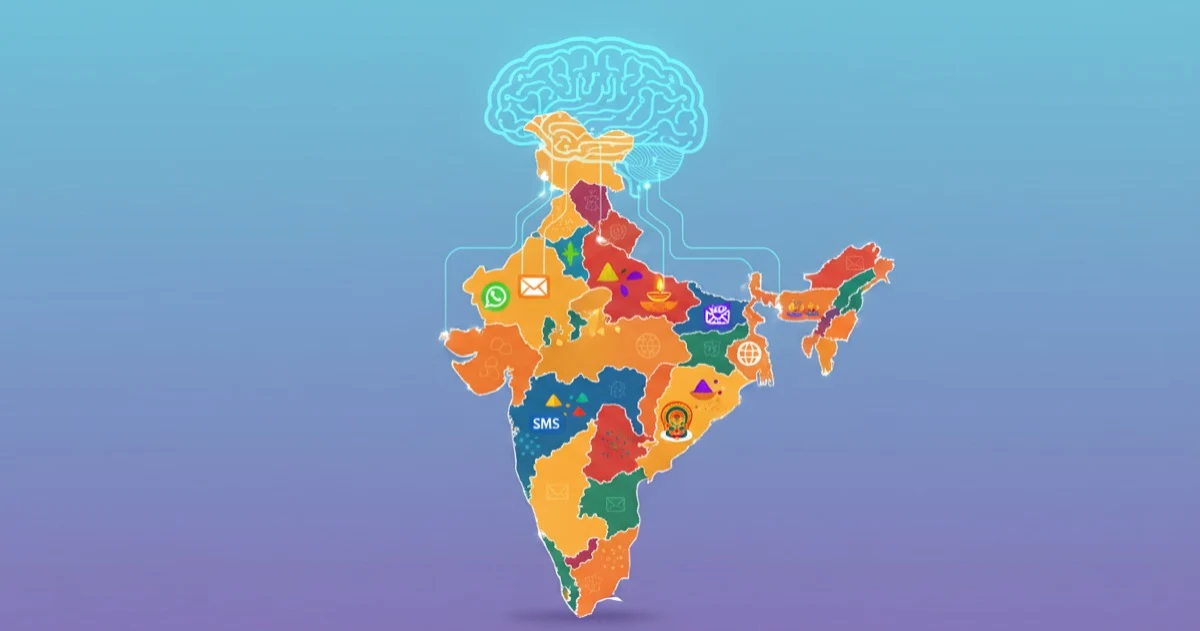
Yes, AI can absolutely enhance personalisation for India’s diverse customer base, but it’s not a magic bullet. It requires a thoughtful, data-driven approach combined with a deep understanding of local nuances. The sheer scale and variety across India – languages, cultures, economic strata, and digital literacy levels – make manual personalisation nearly impossible at scale. This is where AI truly shines, acting as a powerful tool to sift through vast amounts of data and identify patterns that humans might miss.

Here's how AI helps make personalisation effective in India:

  • Hyper-segmentation:

AI can analyse diverse data points like demographics, purchasing history, browsing behaviour, location, preferred language, and even local festival calendars to create highly specific customer segments. Instead of broad categories, you get micro-segments that allow for tailored messaging.

  • Multilingual Content Generation and Localisation: 

India has over 22 official languages, with hundreds of dialects. AI-powered translation and natural language generation (NLG) tools can create content in various regional languages, ensuring messages resonate locally. This goes beyond mere translation; it's about cultural localisation.

  • Behavioural Targeting and Predictive Analytics: 

AI can predict future customer actions based on past interactions. For instance, it can identify customers likely to churn, or those interested in specific product categories based on their browsing history or search queries in local languages. This allows for proactive and relevant outreach.

  • Channel Optimisation: 

Not all customers are on the same platforms. AI can determine the most effective communication channel for each customer segment based on their digital footprint and stated preferences – be it WhatsApp, SMS, email, app notifications, or even voice bots for those with lower digital literacy.

  • Dynamic Product Recommendations: 

For a diverse market like India, product relevance changes by region and income level. AI can provide dynamic, personalised product or service recommendations that are tailored to an individual's past purchases, browsing behaviour, and geographical context, considering factors like local availability or affordability.

  • Real-time Interaction Personalisation: 

AI-powered chatbots and virtual assistants can provide instant, personalised responses to customer queries in their preferred language, offering 24/7 support and guidance. This elevates the customer experience significantly.

What level of sales forecasting accuracy can AI deliver in India?
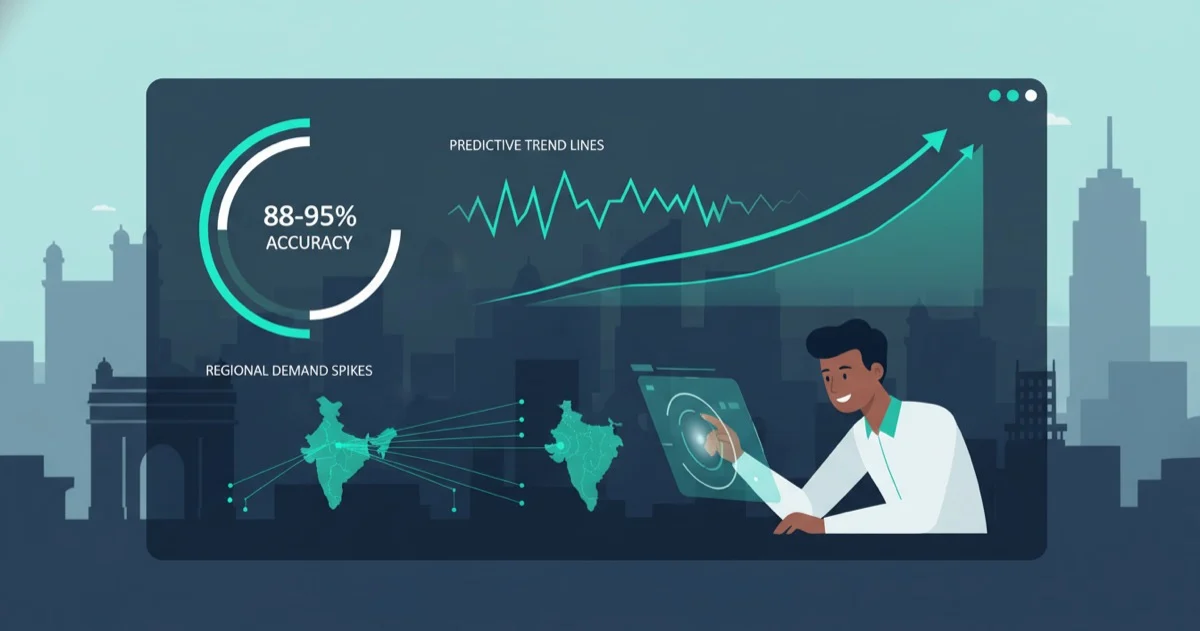
By 2027, AI's sales forecasting accuracy in India will largely depend on your business's data maturity and the specific market segment. For companies that have invested in clean, integrated historical sales data-covering transactional information, customer interactions, marketing campaigns, and even supply chain movements, AI models can realistically achieve a sales forecast accuracy of 88% to 95% for short to medium-term predictions (up to 6 months out). This represents a significant improvement, often 15-25% better than traditional spreadsheet-based or heuristic methods.

However, for businesses with fragmented data, manual record-keeping, or in highly nascent digital environments, the initial accuracy might sit in the 75% to 85% range. Even at this level, AI will still provide substantial strategic advantages by highlighting hidden patterns, identifying critical influencing factors, and reducing errors that typically plague human-only forecasting. The rapid digital transformation in India, coupled with increasing accessibility of cloud-based AI tools, will drive this adoption and subsequent accuracy improvements across sectors.

The path to higher accuracy involves specific, measurable actions:

  • Prioritise Data Foundation:

Systematically collect, clean, and integrate all sales-related data. This includes CRM data, ERP records, marketing automation insights, website analytics, and customer service interactions. Inconsistent or missing data is the biggest bottleneck to AI accuracy.

  • Start with Pilot Projects: 

Don't aim to overhaul everything at once. Begin with a specific product line, region, or sales channel. This allows you to refine your data inputs and model parameters in a controlled environment and demonstrate value quickly.

  • Integrate External Data Points: 

Indian markets are highly influenced by festivals, government policies, regional events, and even weather patterns. Feed external data sources-like public holiday calendars, macroeconomic indicators, competitor activities, and social media trends-into your AI models for richer, more context-aware predictions.

  • Foster Hybrid Intelligence: 

AI excels at pattern recognition, but human sales teams bring invaluable on-the-ground intuition and qualitative insights. Ensure your forecasting process combines AI predictions with expert human judgment, especially for unforeseen market shifts or new product launches.

  • Invest in Skill Development:

Train your sales and data teams to understand AI-generated forecasts. They need to interpret the 'why' behind the numbers, not just accept them blindly. This builds trust and ensures effective utilisation throughout the organisation.

The applicability of AI forecasting in India spans with different nuances. For B2C, particularly in e-commerce or retail, AI is excellent at predicting demand fluctuations driven by seasonal trends, promotions, or hyperlocal events, enabling better inventory management and targeted marketing campaigns.

Which AI-driven skills will define the elite Indian sales professional?

The elite Indian sales professional by 2027 will distinguish themselves not just by using AI tools, but by mastering the interpretation and strategic application of AI-generated insights. This shift means moving beyond simply relying on AI to augment tasks, to leveraging it for true competitive advantage and deeper customer relationships.

Here are the AI-driven skills that will be crucial:

  • AI-Powered Predictive Analytics & Insight Generation:

This involves understanding customer behaviour before they even realise it themselves. Elite professionals will use AI to predict buying patterns, identify churn risks, and pinpoint upselling or cross-selling opportunities with remarkable accuracy. They'll go beyond basic CRM reports to synthesise data from multiple sources – social media, website interactions, past purchase history – to build a holistic customer profile.

  • Intelligent Personalisation at Scale:

While AI can draft emails or content, the elite sales professional will refine and inject an authentic human connection into AI-generated outputs. This means leveraging AI to understand individual customer preferences, communication styles, and pain points, then crafting hyper-personalised messages, proposals, and product recommendations that resonate deeply. It's about combining AI's efficiency with human empathy.

  • AI-Driven Lead Prioritisation & Resource Optimisation:

Time is a salesperson's most valuable asset. AI excels at scoring leads based on their likelihood to convert, enabling professionals to focus their efforts on high-potential opportunities. This skill is about trusting the AI to sift through noise and then applying human judgment to nurture those high-value leads effectively.

  • AI-Augmented Negotiation & Objection Handling:

AI can provide real-time insights during a sales call or meeting, suggesting relevant talking points, competitor comparisons, or potential objections based on the customer's dialogue. The elite professional will seamlessly integrate these AI prompts into their natural conversation flow, using them to anticipate concerns and build stronger arguments.

  • Ethical AI Use & Data Stewardship:

As AI becomes more pervasive, understanding its ethical implications, especially regarding data privacy (e.g., India's Digital Personal Data Protection Act), becomes paramount. Elite professionals will not only comply with regulations but also transparently communicate data usage to customers, building trust and safeguarding client relationships.

Beyond closing: How will AI enhance customer experience and retention for Indian businesses?
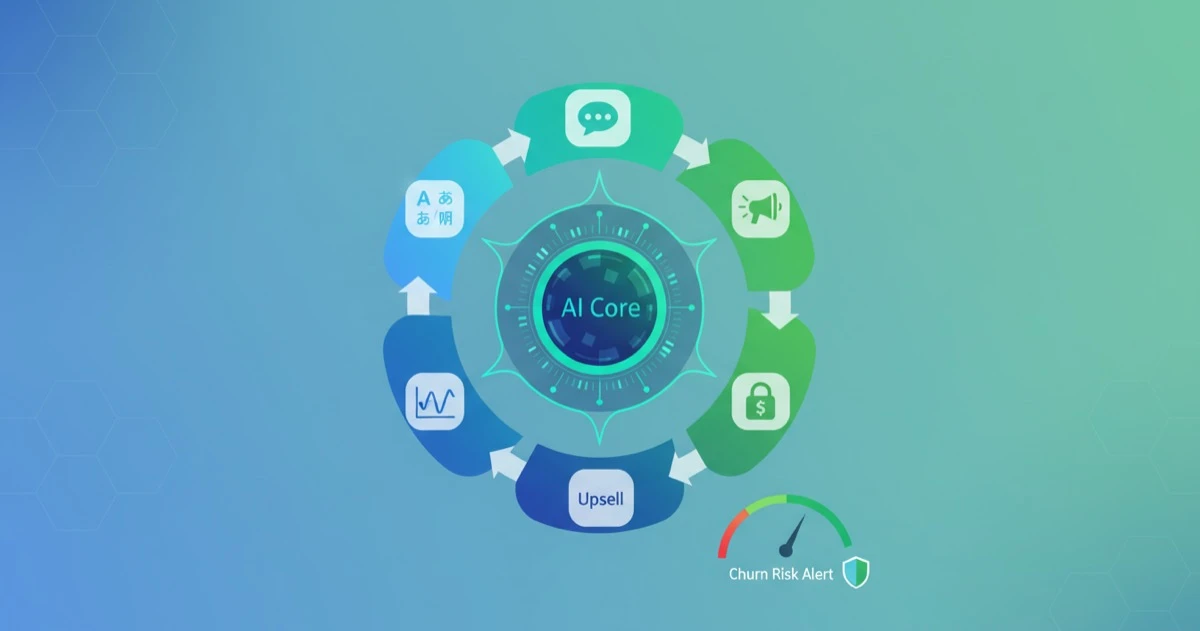
AI revolutionises customer experience and retention long after the sale is made, especially for Indian businesses catering to diverse customer needs. By moving beyond transaction closure, AI focuses on understanding and serving the customer throughout their entire lifecycle, building lasting relationships.

One significant enhancement comes through highly personalised and instant customer support. AI-powered chatbots and virtual assistants can handle a vast volume of queries 24/7, across multiple Indian languages. This means customers get immediate answers to common questions about products, services, or billing, reducing wait times and frustration.

AI excels at proactive engagement and churn prevention. By analysing vast amounts of customer data – purchase history, usage patterns, interaction logs, and feedback – AI can identify customers at risk of churn even before they express dissatisfaction. It can also predict future needs or recommend relevant products and services, fostering loyalty.

Customer feedback analysis becomes more powerful with AI. Instead of manually sifting through surveys, social media comments, call transcripts, and review sites, AI tools can rapidly process text and speech data to gauge sentiment, identify recurring pain points, and pinpoint areas for service improvement. This provides actionable insights directly from the customer's voice.

Optimised self-service and predictive insights further enhance the customer journey. AI can power intelligent knowledge bases that understand natural language queries, guiding customers to precise solutions without human intervention. This might involve personalised troubleshooting guides for electronics or appliances based on diagnostic data.

What AI automation breakthroughs await Indian sales operations?
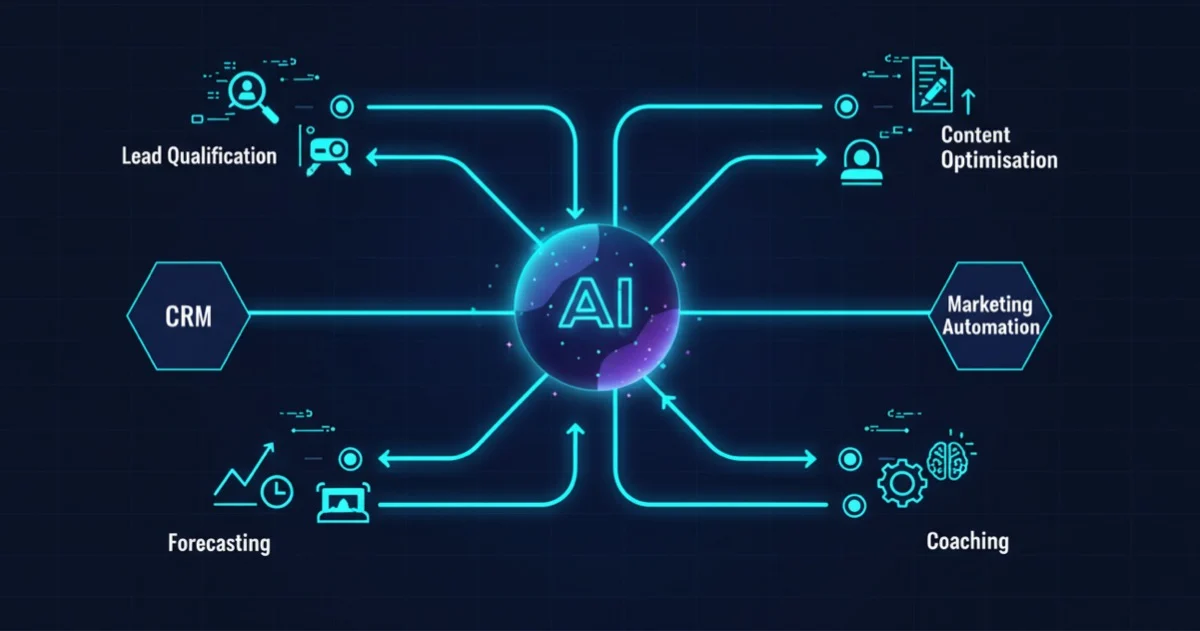
By 2027, Indian sales operations will experience significant shifts driven by AI automation, fundamentally changing how businesses interact with their customers. These advancements will focus on making sales cycles more efficient, personalised, and predictive.

One major breakthrough will be hyper-personalised customer engagement at scale. AI will move beyond basic segmentation to understand individual customer preferences, behaviours, and likely next actions with unprecedented accuracy. This means anticipating customer needs before they even articulate them.

Another key area is predictive analytics for demand forecasting and opportunity scoring. AI models will become highly sophisticated, integrating internal sales data with external market trends, economic indicators, and even localised events. This will allow sales teams to precisely identify high-potential leads and forecast sales with much greater accuracy.

Automated intelligent lead nurturing and qualification will also see rapid adoption. AI-powered chatbots and virtual assistants will handle initial inquiries, qualify leads, and provide personalised information around the clock, freeing up human sales representatives for more complex interactions.

Furthermore, AI will revolutionise sales content optimisation and delivery. AI tools will analyse which pieces of content resonate most effectively with different customer segments at various stages of their journey. This ensures that sales teams always have the right message at their fingertips.

Finally, real-time sales coaching and performance enhancement will become standard. AI will analyse sales calls and customer interactions for sentiment, keyword usage, and adherence to best practices, providing immediate, objective feedback to sales professionals.

What are the key ROI metrics and adoption challenges for AI in Indian sales?
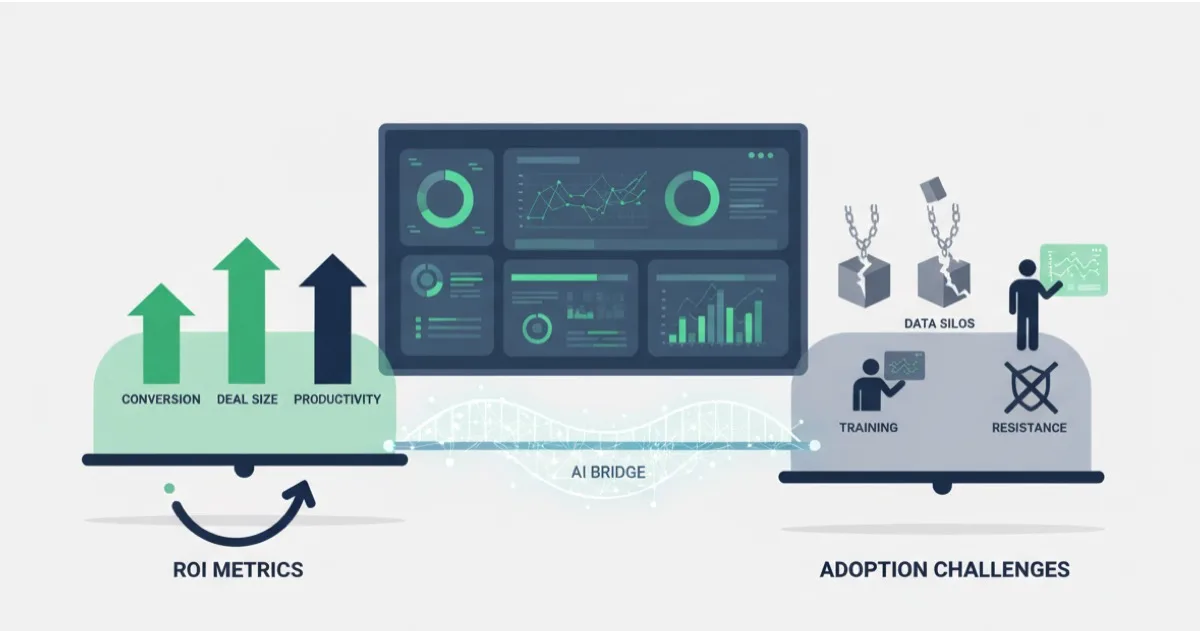
Understanding the impact and hurdles of AI in Indian sales is key for any business looking to stay competitive. When we talk about AI, we're essentially looking at tools that make sales teams smarter and more efficient, ultimately serving their consumers better.

Here are the key metrics to track for AI's Return on Investment (ROI) in sales:

  • Increased Lead Conversion Rate:

This measures how many AI-qualified leads actually turn into customers. AI can score leads based on historical data, allowing sales teams to focus on the most promising prospects.

  • Reduced Sales Cycle Length:

AI can automate mundane tasks, provide real-time insights during calls, and suggest next best actions. This speeds up the entire sales process.

  • Higher Average Deal Size:

AI tools can identify cross-sell and upsell opportunities by analysing customer purchase history and behaviour, leading to larger transactions.

  • Improved Sales Team Productivity:

This includes time saved on administrative tasks (data entry, scheduling), increased time spent directly engaging with customers, and faster access to necessary information.

  • Enhanced Forecast Accuracy:

AI uses predictive analytics to provide more reliable sales forecasts, helping businesses allocate resources effectively.

  • Lower Customer Acquisition Cost (CAC):

By optimising lead targeting and improving conversion efficiency, AI can reduce the overall cost of acquiring new customers.

Despite these clear benefits, several adoption challenges exist in the Indian market:

  • Data Quality and Availability:

Many Indian businesses struggle with fragmented, inconsistent, or incomplete customer data across legacy systems. AI models are only as good as the data they are trained on.

  • Talent Gap and Training:

There's a shortage of skilled professionals who can implement, manage, and optimise AI solutions. Sales teams also need adequate training to effectively leverage new AI tools, often fearing job displacement.

  • Integration Complexity with Existing Systems:

Integrating new AI platforms with existing CRM, ERP, and other sales enablement tools can be complex and time-consuming, especially with older, proprietary systems.

  • Cultural Resistance to Change:

Sales professionals, particularly those with long-standing relationship-based selling approaches, may be hesitant to adopt technology that changes their familiar workflows. There's a concern about losing the "human touch."

  • Cost and Scalability Concerns:

The initial investment in AI infrastructure, customisation, and ongoing maintenance can be significant. Smaller businesses, in particular, might find the upfront costs daunting.

How will AI influence dynamic pricing and negotiation strategies for Indian sales?
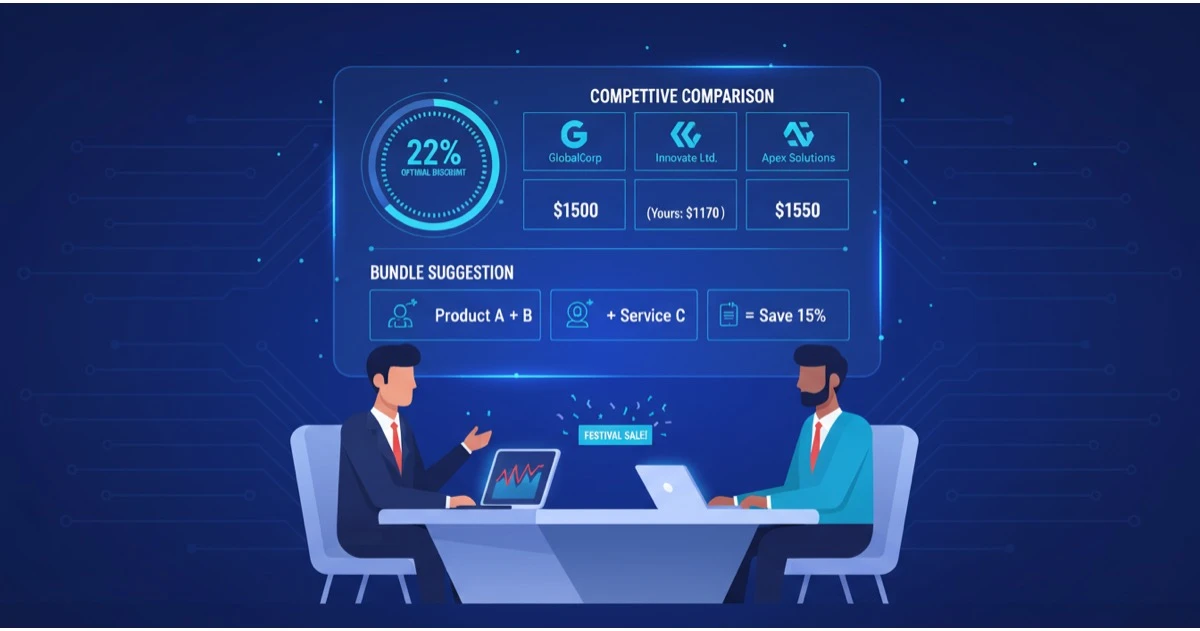
AI will profoundly reshape dynamic pricing in Indian sales by enabling real-time, data-driven adjustments that were previously impossible at scale. Instead of static price lists, businesses can now leverage AI to analyse a vast array of factors influencing buyer behaviour and market conditions. This includes real-time demand fluctuations, competitor pricing across various platforms, current inventory levels, granular customer segmentation, historical purchase patterns, and even external factors like local weather, traffic, or the lead-up to regional festivals such as Diwali or Holi.

For instance, an e-commerce platform selling consumer electronics in India could use AI to automatically adjust laptop prices not just daily, but hourly. The system would factor in competitor prices on major Indian marketplaces, current stock levels, user browsing history, peak shopping hours, and even the buyer's location (e.g., higher disposable income in metro cities versus tier-2 towns). 

In negotiations, AI transforms the sales professional from a reactive price-giver to a proactive, data-informed strategist. AI tools can analyse historical deal data to predict the likelihood of closing a deal at various price points, identify potential customer objections before they even arise, and suggest optimal negotiation pathways. This is particularly valuable in the Indian context, where building relationships and offering personalised approaches often play a significant role in successful deal closures.

An AI assistant could suggest the most effective product bundles, highlight features most relevant to the client's stated pain points, and recommend the best discount structure that maximises both deal closure probability and your profitability. For a car dealership, AI could analyse a customer's browsing habits, past inquiries, and financing pre-approvals to suggest the ideal model and a truly personalised offer package, including financing options tailored to their profile.

The nuances of the Indian market, such as varying regional price sensitivities, the importance of flexible credit periods, and the profound impact of festivals on consumer spending patterns, are perfectly suited for AI analysis. AI can quickly learn these complex, dynamic patterns and adapt pricing and negotiation strategies far faster and more accurately than any human team could manage manually. For instance, understanding how the rapid adoption of UPI impacts payment cycles and promotional offers, or how local competitors are reacting in a specific city, becomes actionable through real-time data ingestion and analysis.

Final Thoughts:

Embracing AI isn't a futuristic concept for India's sales landscape; it's a present necessity. As we've explored, the shift towards data-driven decisions and personalised customer engagement is already underway, shaping how businesses succeed in the competitive Indian market. The 2027 blueprint for AI in sales is not a distant vision but a practical roadmap that forward-thinking companies are adopting today to gain a tangible edge.

The opportunity to optimise sales processes, predict customer needs, and scale effectively across India's diverse regions is real and proven. By implementing AI tools for lead scoring, predictive analytics, and automated customer support, businesses can move beyond traditional methods and drive significant revenue growth. This isn't about replacing human touch but enhancing it, empowering sales teams with precise insights to close deals faster and build stronger, data-backed relationships.

Ready to implement these AI-powered strategies for your sales operations in India? Don't wait until 2027. Contact our experts today for a tailored consultation on developing your specific AI sales blueprint and start transforming your India sales performance now.

  • The “New Normal” for Pharma Sales post the lockdown
  • Why organizations look for Sales Enablement
  • How Sales Enablement is different from traditional LMS or CRM
  • The industry best practices for Sales Enablement
  • Implementation challenges and how to overcome them
  • Ensuring higher adoption

Chirag Parmar

Chirag Parmar is the Head of Marketing at Sharpsell.ai and a B2B marketing leader focused on scaling SaaS businesses through demand generation, brand strategy, and revenue-driven marketing. He builds scalable systems that deliver measurable business impact.

Cracking India's Sales Code: AI Blueprint Exposed

Cracking India's Sales Code: AI Blueprint Exposed

Sales leaders in India consistently grapple with a fundamental challenge: scaling growth effectively across the nation's incredibly diverse markets.
Chirag Parmar
February 26, 2026

Sales leaders in India consistently grapple with a fundamental challenge: scaling growth effectively across the nation's incredibly diverse markets. What works in Mumbai often doesn't resonate in Lucknow, leading to fragmented efforts, inconsistent lead quality, and often, wasted sales resources trying to adapt generic strategies. This lack of a unified yet adaptable approach creates persistent headaches for predicting and achieving revenue targets.

Imagine moving beyond guesswork, instead having a clear roadmap that precisely identifies genuine buyer intent and pinpoints the most receptive market segments across India. This isn't a future fantasy; it's about leveraging specific AI capabilities to understand and navigate these complexities, turning data into direct, actionable sales intelligence.

This blueprint for 2027 cuts through the noise, exposing the real-world applications of AI being deployed right now to decode India's varied sales landscape. We're providing a practical, data-driven look at how companies are building sustainable, localised growth strategies by integrating smart technology into their sales operations.

How will AI fundamentally reshape India's sales ecosystem?

By 2027, AI will fundamentally transform India's sales landscape by shifting the focus from reactive selling to proactive, data-driven engagement. This change will affect how businesses interact with their customers.

One major shift will be in personalised customer journeys and predictive engagement. AI will move beyond basic recommendations to anticipate customer needs and preferences before they are explicitly stated. This means real-time, context-aware offers and support.

Sales productivity and efficiency will see significant gains through automation. Repetitive administrative tasks, lead qualification, and initial customer support will increasingly be handled by AI, freeing up sales professionals to focus on relationship building and complex problem-solving.

Data-driven decision-making and forecasting will become standard. AI's ability to process vast amounts of data will provide deeper insights into market trends, competitive landscapes, and sales performance, leading to more accurate predictions and strategic planning.

The role of the sales professional will evolve. Instead of being information providers, they will become strategic advisors, leveraging AI tools to enhance their expertise and focus on complex negotiations and customer success. For B2C, sales associates will use AI insights to provide a more tailored, human-centric service experience.

What are AI's top 3 breakthroughs for Indian sales lead generation?

AI has brought several significant advancements to sales lead generation in India, enabling businesses to be much more precise and efficient. Here are the top three breakthroughs:

1. Hyper-Personalised Outreach at Scale

AI now allows businesses to craft highly individualised messages, content, and offers for prospects across a massive volume of leads. This goes beyond simple name merging. AI analyses extensive prospect data-their online behaviour, industry, job role, expressed interests, and even local news mentions-to generate communications that resonate directly with their specific pain points and needs. For the Indian market, this is a game-changer due to its immense linguistic and cultural diversity. AI tools can understand nuances in regional dialects, preferred communication styles, and specific buying patterns, making outreach feel genuinely local and relevant.

Traditional mass marketing often falls short in a market as fragmented and diverse as India. AI enables companies to communicate with individual buyers or micro-segments with the specificity of a one-on-one conversation, building trust and engagement more effectively. This is crucial for B2C (e.g., offering products based on local festivals or socio-economic indicators).

2. Predictive Lead Scoring and Prioritisation

Instead of relying on basic scoring models , AI uses advanced machine learning algorithms to analyse vast datasets. These include historical sales data, customer behaviour, market trends, and external signals. The goal is to predict which leads are most likely to convert. This means assigning a dynamic "propensity to buy" score to each lead, helping sales teams focus their efforts on those with the highest potential. In India, where lead volumes can be enormous, this prevents valuable time from being wasted on low-quality prospects and ensures that limited sales resources are allocated efficiently.

Indian businesses often face a high volume of inquiries and leads across various channels. Manually sifting through these to find genuinely interested buyers is incredibly inefficient. AI-driven scoring identifies the "needle in the haystack," allowing sales teams to engage with high-intent leads much faster, improving conversion rates and reducing sales cycle times. 

3. AI-Driven Market Intelligence and Data Enrichment

AI can now autonomously scour the internet, public databases, social media, news articles, and even proprietary data sources to gather deep insights about prospects, target companies, and broader market trends. This goes beyond just finding contact information; it’s about enriching lead profiles with details like a company's financial health, recent funding rounds, technology stack, hiring patterns, competitor landscape, or a consumer's purchasing power indicators and lifestyle preferences. For the Indian context, where structured data can sometimes be scarce, AI's ability to extract valuable information from unstructured text and diverse online sources is invaluable for building comprehensive lead profiles.

Understanding the complex and rapidly evolving Indian market requires granular, up-to-date data. AI-driven intelligence helps businesses identify emerging segments, understand regional purchasing power disparities, spot competitive shifts, and uncover underserved niches. This depth of insight allows for more strategic lead generation campaigns, better targeting, and more informed sales conversations.

How will AI empower Indian sales reps to close deals faster?

AI empowers Indian sales reps to close deals faster by streamlining workflows, providing deeper insights, and automating repetitive tasks. This allows reps to focus their energy on high-value interactions that move deals forward.

One key area is intelligent lead prioritisation. AI-powered systems can analyse vast amounts of data – including industry trends, company firmographics, and past engagement – to identify which leads are most likely to convert. This means reps spend less time chasing cold leads and more time engaging with genuinely interested prospects.

AI significantly enhances personalisation in outreach. By analysing a prospect's digital footprint, past interactions, and stated needs, AI can help reps craft highly relevant emails, messages, and even proposal sections. This targeted communication resonates better with prospects, reduces friction, and shortens the decision-making process.

Sales enablement and coaching benefit immensely from AI. Conversation intelligence platforms powered by AI can record and analyse sales calls, identifying key phrases, common objections, and successful negotiation tactics. Reps receive instant feedback on their performance, highlighting areas for improvement and best practices to adopt.

Predictive analytics from AI tools can forecast deal likelihood and suggest the "next best action" for a rep. This could be recommending specific content to share, suggesting a follow-up interval, or indicating when to involve a technical expert. This guidance removes guesswork and keeps the sales process proactive.

Routine administrative tasks, which often consume a large portion of a sales rep's day, are greatly reduced by AI. This includes automating data entry into CRMs, scheduling meetings, transcribing call notes, and generating standard reports. Freeing up this time directly translates to more selling hours.

AI can also provide valuable support in pricing and negotiation. By analysing historical deal data, market conditions, and competitor pricing, AI can suggest optimal pricing strategies and even arm reps with data-backed negotiation points. This reduces the back-and-forth typical in negotiations, accelerating commitment.

Can AI truly personalise outreach for India's diverse customer base?

Yes, AI can absolutely enhance personalisation for India’s diverse customer base, but it’s not a magic bullet. It requires a thoughtful, data-driven approach combined with a deep understanding of local nuances. The sheer scale and variety across India – languages, cultures, economic strata, and digital literacy levels – make manual personalisation nearly impossible at scale. This is where AI truly shines, acting as a powerful tool to sift through vast amounts of data and identify patterns that humans might miss.

Here's how AI helps make personalisation effective in India:

  • Hyper-segmentation:

AI can analyse diverse data points like demographics, purchasing history, browsing behaviour, location, preferred language, and even local festival calendars to create highly specific customer segments. Instead of broad categories, you get micro-segments that allow for tailored messaging.

  • Multilingual Content Generation and Localisation: 

India has over 22 official languages, with hundreds of dialects. AI-powered translation and natural language generation (NLG) tools can create content in various regional languages, ensuring messages resonate locally. This goes beyond mere translation; it's about cultural localisation.

  • Behavioural Targeting and Predictive Analytics: 

AI can predict future customer actions based on past interactions. For instance, it can identify customers likely to churn, or those interested in specific product categories based on their browsing history or search queries in local languages. This allows for proactive and relevant outreach.

  • Channel Optimisation: 

Not all customers are on the same platforms. AI can determine the most effective communication channel for each customer segment based on their digital footprint and stated preferences – be it WhatsApp, SMS, email, app notifications, or even voice bots for those with lower digital literacy.

  • Dynamic Product Recommendations: 

For a diverse market like India, product relevance changes by region and income level. AI can provide dynamic, personalised product or service recommendations that are tailored to an individual's past purchases, browsing behaviour, and geographical context, considering factors like local availability or affordability.

  • Real-time Interaction Personalisation: 

AI-powered chatbots and virtual assistants can provide instant, personalised responses to customer queries in their preferred language, offering 24/7 support and guidance. This elevates the customer experience significantly.

What level of sales forecasting accuracy can AI deliver in India?

By 2027, AI's sales forecasting accuracy in India will largely depend on your business's data maturity and the specific market segment. For companies that have invested in clean, integrated historical sales data-covering transactional information, customer interactions, marketing campaigns, and even supply chain movements, AI models can realistically achieve a sales forecast accuracy of 88% to 95% for short to medium-term predictions (up to 6 months out). This represents a significant improvement, often 15-25% better than traditional spreadsheet-based or heuristic methods.

However, for businesses with fragmented data, manual record-keeping, or in highly nascent digital environments, the initial accuracy might sit in the 75% to 85% range. Even at this level, AI will still provide substantial strategic advantages by highlighting hidden patterns, identifying critical influencing factors, and reducing errors that typically plague human-only forecasting. The rapid digital transformation in India, coupled with increasing accessibility of cloud-based AI tools, will drive this adoption and subsequent accuracy improvements across sectors.

The path to higher accuracy involves specific, measurable actions:

  • Prioritise Data Foundation:

Systematically collect, clean, and integrate all sales-related data. This includes CRM data, ERP records, marketing automation insights, website analytics, and customer service interactions. Inconsistent or missing data is the biggest bottleneck to AI accuracy.

  • Start with Pilot Projects: 

Don't aim to overhaul everything at once. Begin with a specific product line, region, or sales channel. This allows you to refine your data inputs and model parameters in a controlled environment and demonstrate value quickly.

  • Integrate External Data Points: 

Indian markets are highly influenced by festivals, government policies, regional events, and even weather patterns. Feed external data sources-like public holiday calendars, macroeconomic indicators, competitor activities, and social media trends-into your AI models for richer, more context-aware predictions.

  • Foster Hybrid Intelligence: 

AI excels at pattern recognition, but human sales teams bring invaluable on-the-ground intuition and qualitative insights. Ensure your forecasting process combines AI predictions with expert human judgment, especially for unforeseen market shifts or new product launches.

  • Invest in Skill Development:

Train your sales and data teams to understand AI-generated forecasts. They need to interpret the 'why' behind the numbers, not just accept them blindly. This builds trust and ensures effective utilisation throughout the organisation.

The applicability of AI forecasting in India spans with different nuances. For B2C, particularly in e-commerce or retail, AI is excellent at predicting demand fluctuations driven by seasonal trends, promotions, or hyperlocal events, enabling better inventory management and targeted marketing campaigns.

Which AI-driven skills will define the elite Indian sales professional?

The elite Indian sales professional by 2027 will distinguish themselves not just by using AI tools, but by mastering the interpretation and strategic application of AI-generated insights. This shift means moving beyond simply relying on AI to augment tasks, to leveraging it for true competitive advantage and deeper customer relationships.

Here are the AI-driven skills that will be crucial:

  • AI-Powered Predictive Analytics & Insight Generation:

This involves understanding customer behaviour before they even realise it themselves. Elite professionals will use AI to predict buying patterns, identify churn risks, and pinpoint upselling or cross-selling opportunities with remarkable accuracy. They'll go beyond basic CRM reports to synthesise data from multiple sources – social media, website interactions, past purchase history – to build a holistic customer profile.

  • Intelligent Personalisation at Scale:

While AI can draft emails or content, the elite sales professional will refine and inject an authentic human connection into AI-generated outputs. This means leveraging AI to understand individual customer preferences, communication styles, and pain points, then crafting hyper-personalised messages, proposals, and product recommendations that resonate deeply. It's about combining AI's efficiency with human empathy.

  • AI-Driven Lead Prioritisation & Resource Optimisation:

Time is a salesperson's most valuable asset. AI excels at scoring leads based on their likelihood to convert, enabling professionals to focus their efforts on high-potential opportunities. This skill is about trusting the AI to sift through noise and then applying human judgment to nurture those high-value leads effectively.

  • AI-Augmented Negotiation & Objection Handling:

AI can provide real-time insights during a sales call or meeting, suggesting relevant talking points, competitor comparisons, or potential objections based on the customer's dialogue. The elite professional will seamlessly integrate these AI prompts into their natural conversation flow, using them to anticipate concerns and build stronger arguments.

  • Ethical AI Use & Data Stewardship:

As AI becomes more pervasive, understanding its ethical implications, especially regarding data privacy (e.g., India's Digital Personal Data Protection Act), becomes paramount. Elite professionals will not only comply with regulations but also transparently communicate data usage to customers, building trust and safeguarding client relationships.

Beyond closing: How will AI enhance customer experience and retention for Indian businesses?

AI revolutionises customer experience and retention long after the sale is made, especially for Indian businesses catering to diverse customer needs. By moving beyond transaction closure, AI focuses on understanding and serving the customer throughout their entire lifecycle, building lasting relationships.

One significant enhancement comes through highly personalised and instant customer support. AI-powered chatbots and virtual assistants can handle a vast volume of queries 24/7, across multiple Indian languages. This means customers get immediate answers to common questions about products, services, or billing, reducing wait times and frustration.

AI excels at proactive engagement and churn prevention. By analysing vast amounts of customer data – purchase history, usage patterns, interaction logs, and feedback – AI can identify customers at risk of churn even before they express dissatisfaction. It can also predict future needs or recommend relevant products and services, fostering loyalty.

Customer feedback analysis becomes more powerful with AI. Instead of manually sifting through surveys, social media comments, call transcripts, and review sites, AI tools can rapidly process text and speech data to gauge sentiment, identify recurring pain points, and pinpoint areas for service improvement. This provides actionable insights directly from the customer's voice.

Optimised self-service and predictive insights further enhance the customer journey. AI can power intelligent knowledge bases that understand natural language queries, guiding customers to precise solutions without human intervention. This might involve personalised troubleshooting guides for electronics or appliances based on diagnostic data.

What AI automation breakthroughs await Indian sales operations?

By 2027, Indian sales operations will experience significant shifts driven by AI automation, fundamentally changing how businesses interact with their customers. These advancements will focus on making sales cycles more efficient, personalised, and predictive.

One major breakthrough will be hyper-personalised customer engagement at scale. AI will move beyond basic segmentation to understand individual customer preferences, behaviours, and likely next actions with unprecedented accuracy. This means anticipating customer needs before they even articulate them.

Another key area is predictive analytics for demand forecasting and opportunity scoring. AI models will become highly sophisticated, integrating internal sales data with external market trends, economic indicators, and even localised events. This will allow sales teams to precisely identify high-potential leads and forecast sales with much greater accuracy.

Automated intelligent lead nurturing and qualification will also see rapid adoption. AI-powered chatbots and virtual assistants will handle initial inquiries, qualify leads, and provide personalised information around the clock, freeing up human sales representatives for more complex interactions.

Furthermore, AI will revolutionise sales content optimisation and delivery. AI tools will analyse which pieces of content resonate most effectively with different customer segments at various stages of their journey. This ensures that sales teams always have the right message at their fingertips.

Finally, real-time sales coaching and performance enhancement will become standard. AI will analyse sales calls and customer interactions for sentiment, keyword usage, and adherence to best practices, providing immediate, objective feedback to sales professionals.

What are the key ROI metrics and adoption challenges for AI in Indian sales?

Understanding the impact and hurdles of AI in Indian sales is key for any business looking to stay competitive. When we talk about AI, we're essentially looking at tools that make sales teams smarter and more efficient, ultimately serving their consumers better.

Here are the key metrics to track for AI's Return on Investment (ROI) in sales:

  • Increased Lead Conversion Rate:

This measures how many AI-qualified leads actually turn into customers. AI can score leads based on historical data, allowing sales teams to focus on the most promising prospects.

  • Reduced Sales Cycle Length:

AI can automate mundane tasks, provide real-time insights during calls, and suggest next best actions. This speeds up the entire sales process.

  • Higher Average Deal Size:

AI tools can identify cross-sell and upsell opportunities by analysing customer purchase history and behaviour, leading to larger transactions.

  • Improved Sales Team Productivity:

This includes time saved on administrative tasks (data entry, scheduling), increased time spent directly engaging with customers, and faster access to necessary information.

  • Enhanced Forecast Accuracy:

AI uses predictive analytics to provide more reliable sales forecasts, helping businesses allocate resources effectively.

  • Lower Customer Acquisition Cost (CAC):

By optimising lead targeting and improving conversion efficiency, AI can reduce the overall cost of acquiring new customers.

Despite these clear benefits, several adoption challenges exist in the Indian market:

  • Data Quality and Availability:

Many Indian businesses struggle with fragmented, inconsistent, or incomplete customer data across legacy systems. AI models are only as good as the data they are trained on.

  • Talent Gap and Training:

There's a shortage of skilled professionals who can implement, manage, and optimise AI solutions. Sales teams also need adequate training to effectively leverage new AI tools, often fearing job displacement.

  • Integration Complexity with Existing Systems:

Integrating new AI platforms with existing CRM, ERP, and other sales enablement tools can be complex and time-consuming, especially with older, proprietary systems.

  • Cultural Resistance to Change:

Sales professionals, particularly those with long-standing relationship-based selling approaches, may be hesitant to adopt technology that changes their familiar workflows. There's a concern about losing the "human touch."

  • Cost and Scalability Concerns:

The initial investment in AI infrastructure, customisation, and ongoing maintenance can be significant. Smaller businesses, in particular, might find the upfront costs daunting.

How will AI influence dynamic pricing and negotiation strategies for Indian sales?

AI will profoundly reshape dynamic pricing in Indian sales by enabling real-time, data-driven adjustments that were previously impossible at scale. Instead of static price lists, businesses can now leverage AI to analyse a vast array of factors influencing buyer behaviour and market conditions. This includes real-time demand fluctuations, competitor pricing across various platforms, current inventory levels, granular customer segmentation, historical purchase patterns, and even external factors like local weather, traffic, or the lead-up to regional festivals such as Diwali or Holi.

For instance, an e-commerce platform selling consumer electronics in India could use AI to automatically adjust laptop prices not just daily, but hourly. The system would factor in competitor prices on major Indian marketplaces, current stock levels, user browsing history, peak shopping hours, and even the buyer's location (e.g., higher disposable income in metro cities versus tier-2 towns). 

In negotiations, AI transforms the sales professional from a reactive price-giver to a proactive, data-informed strategist. AI tools can analyse historical deal data to predict the likelihood of closing a deal at various price points, identify potential customer objections before they even arise, and suggest optimal negotiation pathways. This is particularly valuable in the Indian context, where building relationships and offering personalised approaches often play a significant role in successful deal closures.

An AI assistant could suggest the most effective product bundles, highlight features most relevant to the client's stated pain points, and recommend the best discount structure that maximises both deal closure probability and your profitability. For a car dealership, AI could analyse a customer's browsing habits, past inquiries, and financing pre-approvals to suggest the ideal model and a truly personalised offer package, including financing options tailored to their profile.

The nuances of the Indian market, such as varying regional price sensitivities, the importance of flexible credit periods, and the profound impact of festivals on consumer spending patterns, are perfectly suited for AI analysis. AI can quickly learn these complex, dynamic patterns and adapt pricing and negotiation strategies far faster and more accurately than any human team could manage manually. For instance, understanding how the rapid adoption of UPI impacts payment cycles and promotional offers, or how local competitors are reacting in a specific city, becomes actionable through real-time data ingestion and analysis.

Final Thoughts:

Embracing AI isn't a futuristic concept for India's sales landscape; it's a present necessity. As we've explored, the shift towards data-driven decisions and personalised customer engagement is already underway, shaping how businesses succeed in the competitive Indian market. The 2027 blueprint for AI in sales is not a distant vision but a practical roadmap that forward-thinking companies are adopting today to gain a tangible edge.

The opportunity to optimise sales processes, predict customer needs, and scale effectively across India's diverse regions is real and proven. By implementing AI tools for lead scoring, predictive analytics, and automated customer support, businesses can move beyond traditional methods and drive significant revenue growth. This isn't about replacing human touch but enhancing it, empowering sales teams with precise insights to close deals faster and build stronger, data-backed relationships.

Ready to implement these AI-powered strategies for your sales operations in India? Don't wait until 2027. Contact our experts today for a tailored consultation on developing your specific AI sales blueprint and start transforming your India sales performance now.

What’s a Rich Text element?

The rich text element allows you to create and format headings, paragraphs, blockquotes, images, and video all in one place instead of having to add and format them individually. Just double-click and easily create content.

Static and dynamic content editing

A rich text element can be used with static or dynamic content. For static content, just drop it into any page and begin editing. For dynamic content, add a rich text field to any collection and then connect a rich text element to that field in the settings panel. Voila!

How to customize formatting for each rich text

Headings, paragraphs, blockquotes, figures, images, and figure captions can all be styled after a class is added to the rich text element using the "When inside of" nested selector system.

zdxfhgfg

  1. sdnslk,xdv
  2. SDlknjsdv
  3. SDvlknj
  • sdgdf v

Cracking India's Sales Code: AI Blueprint Exposed

February 27, 2026
5 Min
Chirag Parmar
Chirag Parmar

Sales leaders in India consistently grapple with a fundamental challenge: scaling growth effectively across the nation's incredibly diverse markets. What works in Mumbai often doesn't resonate in Lucknow, leading to fragmented efforts, inconsistent lead quality, and often, wasted sales resources trying to adapt generic strategies. This lack of a unified yet adaptable approach creates persistent headaches for predicting and achieving revenue targets.

Imagine moving beyond guesswork, instead having a clear roadmap that precisely identifies genuine buyer intent and pinpoints the most receptive market segments across India. This isn't a future fantasy; it's about leveraging specific AI capabilities to understand and navigate these complexities, turning data into direct, actionable sales intelligence.

This blueprint for 2027 cuts through the noise, exposing the real-world applications of AI being deployed right now to decode India's varied sales landscape. We're providing a practical, data-driven look at how companies are building sustainable, localised growth strategies by integrating smart technology into their sales operations.

How will AI fundamentally reshape India's sales ecosystem?

By 2027, AI will fundamentally transform India's sales landscape by shifting the focus from reactive selling to proactive, data-driven engagement. This change will affect how businesses interact with their customers.

One major shift will be in personalised customer journeys and predictive engagement. AI will move beyond basic recommendations to anticipate customer needs and preferences before they are explicitly stated. This means real-time, context-aware offers and support.

Sales productivity and efficiency will see significant gains through automation. Repetitive administrative tasks, lead qualification, and initial customer support will increasingly be handled by AI, freeing up sales professionals to focus on relationship building and complex problem-solving.

Data-driven decision-making and forecasting will become standard. AI's ability to process vast amounts of data will provide deeper insights into market trends, competitive landscapes, and sales performance, leading to more accurate predictions and strategic planning.

The role of the sales professional will evolve. Instead of being information providers, they will become strategic advisors, leveraging AI tools to enhance their expertise and focus on complex negotiations and customer success. For B2C, sales associates will use AI insights to provide a more tailored, human-centric service experience.

What are AI's top 3 breakthroughs for Indian sales lead generation?

AI has brought several significant advancements to sales lead generation in India, enabling businesses to be much more precise and efficient. Here are the top three breakthroughs:

1. Hyper-Personalised Outreach at Scale

AI now allows businesses to craft highly individualised messages, content, and offers for prospects across a massive volume of leads. This goes beyond simple name merging. AI analyses extensive prospect data-their online behaviour, industry, job role, expressed interests, and even local news mentions-to generate communications that resonate directly with their specific pain points and needs. For the Indian market, this is a game-changer due to its immense linguistic and cultural diversity. AI tools can understand nuances in regional dialects, preferred communication styles, and specific buying patterns, making outreach feel genuinely local and relevant.

Traditional mass marketing often falls short in a market as fragmented and diverse as India. AI enables companies to communicate with individual buyers or micro-segments with the specificity of a one-on-one conversation, building trust and engagement more effectively. This is crucial for B2C (e.g., offering products based on local festivals or socio-economic indicators).

2. Predictive Lead Scoring and Prioritisation

Instead of relying on basic scoring models , AI uses advanced machine learning algorithms to analyse vast datasets. These include historical sales data, customer behaviour, market trends, and external signals. The goal is to predict which leads are most likely to convert. This means assigning a dynamic "propensity to buy" score to each lead, helping sales teams focus their efforts on those with the highest potential. In India, where lead volumes can be enormous, this prevents valuable time from being wasted on low-quality prospects and ensures that limited sales resources are allocated efficiently.

Indian businesses often face a high volume of inquiries and leads across various channels. Manually sifting through these to find genuinely interested buyers is incredibly inefficient. AI-driven scoring identifies the "needle in the haystack," allowing sales teams to engage with high-intent leads much faster, improving conversion rates and reducing sales cycle times. 

3. AI-Driven Market Intelligence and Data Enrichment

AI can now autonomously scour the internet, public databases, social media, news articles, and even proprietary data sources to gather deep insights about prospects, target companies, and broader market trends. This goes beyond just finding contact information; it’s about enriching lead profiles with details like a company's financial health, recent funding rounds, technology stack, hiring patterns, competitor landscape, or a consumer's purchasing power indicators and lifestyle preferences. For the Indian context, where structured data can sometimes be scarce, AI's ability to extract valuable information from unstructured text and diverse online sources is invaluable for building comprehensive lead profiles.

Understanding the complex and rapidly evolving Indian market requires granular, up-to-date data. AI-driven intelligence helps businesses identify emerging segments, understand regional purchasing power disparities, spot competitive shifts, and uncover underserved niches. This depth of insight allows for more strategic lead generation campaigns, better targeting, and more informed sales conversations.

How will AI empower Indian sales reps to close deals faster?

AI empowers Indian sales reps to close deals faster by streamlining workflows, providing deeper insights, and automating repetitive tasks. This allows reps to focus their energy on high-value interactions that move deals forward.

One key area is intelligent lead prioritisation. AI-powered systems can analyse vast amounts of data – including industry trends, company firmographics, and past engagement – to identify which leads are most likely to convert. This means reps spend less time chasing cold leads and more time engaging with genuinely interested prospects.

AI significantly enhances personalisation in outreach. By analysing a prospect's digital footprint, past interactions, and stated needs, AI can help reps craft highly relevant emails, messages, and even proposal sections. This targeted communication resonates better with prospects, reduces friction, and shortens the decision-making process.

Sales enablement and coaching benefit immensely from AI. Conversation intelligence platforms powered by AI can record and analyse sales calls, identifying key phrases, common objections, and successful negotiation tactics. Reps receive instant feedback on their performance, highlighting areas for improvement and best practices to adopt.

Predictive analytics from AI tools can forecast deal likelihood and suggest the "next best action" for a rep. This could be recommending specific content to share, suggesting a follow-up interval, or indicating when to involve a technical expert. This guidance removes guesswork and keeps the sales process proactive.

Routine administrative tasks, which often consume a large portion of a sales rep's day, are greatly reduced by AI. This includes automating data entry into CRMs, scheduling meetings, transcribing call notes, and generating standard reports. Freeing up this time directly translates to more selling hours.

AI can also provide valuable support in pricing and negotiation. By analysing historical deal data, market conditions, and competitor pricing, AI can suggest optimal pricing strategies and even arm reps with data-backed negotiation points. This reduces the back-and-forth typical in negotiations, accelerating commitment.

Can AI truly personalise outreach for India's diverse customer base?

Yes, AI can absolutely enhance personalisation for India’s diverse customer base, but it’s not a magic bullet. It requires a thoughtful, data-driven approach combined with a deep understanding of local nuances. The sheer scale and variety across India – languages, cultures, economic strata, and digital literacy levels – make manual personalisation nearly impossible at scale. This is where AI truly shines, acting as a powerful tool to sift through vast amounts of data and identify patterns that humans might miss.

Here's how AI helps make personalisation effective in India:

  • Hyper-segmentation:

AI can analyse diverse data points like demographics, purchasing history, browsing behaviour, location, preferred language, and even local festival calendars to create highly specific customer segments. Instead of broad categories, you get micro-segments that allow for tailored messaging.

  • Multilingual Content Generation and Localisation: 

India has over 22 official languages, with hundreds of dialects. AI-powered translation and natural language generation (NLG) tools can create content in various regional languages, ensuring messages resonate locally. This goes beyond mere translation; it's about cultural localisation.

  • Behavioural Targeting and Predictive Analytics: 

AI can predict future customer actions based on past interactions. For instance, it can identify customers likely to churn, or those interested in specific product categories based on their browsing history or search queries in local languages. This allows for proactive and relevant outreach.

  • Channel Optimisation: 

Not all customers are on the same platforms. AI can determine the most effective communication channel for each customer segment based on their digital footprint and stated preferences – be it WhatsApp, SMS, email, app notifications, or even voice bots for those with lower digital literacy.

  • Dynamic Product Recommendations: 

For a diverse market like India, product relevance changes by region and income level. AI can provide dynamic, personalised product or service recommendations that are tailored to an individual's past purchases, browsing behaviour, and geographical context, considering factors like local availability or affordability.

  • Real-time Interaction Personalisation: 

AI-powered chatbots and virtual assistants can provide instant, personalised responses to customer queries in their preferred language, offering 24/7 support and guidance. This elevates the customer experience significantly.

What level of sales forecasting accuracy can AI deliver in India?

By 2027, AI's sales forecasting accuracy in India will largely depend on your business's data maturity and the specific market segment. For companies that have invested in clean, integrated historical sales data-covering transactional information, customer interactions, marketing campaigns, and even supply chain movements, AI models can realistically achieve a sales forecast accuracy of 88% to 95% for short to medium-term predictions (up to 6 months out). This represents a significant improvement, often 15-25% better than traditional spreadsheet-based or heuristic methods.

However, for businesses with fragmented data, manual record-keeping, or in highly nascent digital environments, the initial accuracy might sit in the 75% to 85% range. Even at this level, AI will still provide substantial strategic advantages by highlighting hidden patterns, identifying critical influencing factors, and reducing errors that typically plague human-only forecasting. The rapid digital transformation in India, coupled with increasing accessibility of cloud-based AI tools, will drive this adoption and subsequent accuracy improvements across sectors.

The path to higher accuracy involves specific, measurable actions:

  • Prioritise Data Foundation:

Systematically collect, clean, and integrate all sales-related data. This includes CRM data, ERP records, marketing automation insights, website analytics, and customer service interactions. Inconsistent or missing data is the biggest bottleneck to AI accuracy.

  • Start with Pilot Projects: 

Don't aim to overhaul everything at once. Begin with a specific product line, region, or sales channel. This allows you to refine your data inputs and model parameters in a controlled environment and demonstrate value quickly.

  • Integrate External Data Points: 

Indian markets are highly influenced by festivals, government policies, regional events, and even weather patterns. Feed external data sources-like public holiday calendars, macroeconomic indicators, competitor activities, and social media trends-into your AI models for richer, more context-aware predictions.

  • Foster Hybrid Intelligence: 

AI excels at pattern recognition, but human sales teams bring invaluable on-the-ground intuition and qualitative insights. Ensure your forecasting process combines AI predictions with expert human judgment, especially for unforeseen market shifts or new product launches.

  • Invest in Skill Development:

Train your sales and data teams to understand AI-generated forecasts. They need to interpret the 'why' behind the numbers, not just accept them blindly. This builds trust and ensures effective utilisation throughout the organisation.

The applicability of AI forecasting in India spans with different nuances. For B2C, particularly in e-commerce or retail, AI is excellent at predicting demand fluctuations driven by seasonal trends, promotions, or hyperlocal events, enabling better inventory management and targeted marketing campaigns.

Which AI-driven skills will define the elite Indian sales professional?

The elite Indian sales professional by 2027 will distinguish themselves not just by using AI tools, but by mastering the interpretation and strategic application of AI-generated insights. This shift means moving beyond simply relying on AI to augment tasks, to leveraging it for true competitive advantage and deeper customer relationships.

Here are the AI-driven skills that will be crucial:

  • AI-Powered Predictive Analytics & Insight Generation:

This involves understanding customer behaviour before they even realise it themselves. Elite professionals will use AI to predict buying patterns, identify churn risks, and pinpoint upselling or cross-selling opportunities with remarkable accuracy. They'll go beyond basic CRM reports to synthesise data from multiple sources – social media, website interactions, past purchase history – to build a holistic customer profile.

  • Intelligent Personalisation at Scale:

While AI can draft emails or content, the elite sales professional will refine and inject an authentic human connection into AI-generated outputs. This means leveraging AI to understand individual customer preferences, communication styles, and pain points, then crafting hyper-personalised messages, proposals, and product recommendations that resonate deeply. It's about combining AI's efficiency with human empathy.

  • AI-Driven Lead Prioritisation & Resource Optimisation:

Time is a salesperson's most valuable asset. AI excels at scoring leads based on their likelihood to convert, enabling professionals to focus their efforts on high-potential opportunities. This skill is about trusting the AI to sift through noise and then applying human judgment to nurture those high-value leads effectively.

  • AI-Augmented Negotiation & Objection Handling:

AI can provide real-time insights during a sales call or meeting, suggesting relevant talking points, competitor comparisons, or potential objections based on the customer's dialogue. The elite professional will seamlessly integrate these AI prompts into their natural conversation flow, using them to anticipate concerns and build stronger arguments.

  • Ethical AI Use & Data Stewardship:

As AI becomes more pervasive, understanding its ethical implications, especially regarding data privacy (e.g., India's Digital Personal Data Protection Act), becomes paramount. Elite professionals will not only comply with regulations but also transparently communicate data usage to customers, building trust and safeguarding client relationships.

Beyond closing: How will AI enhance customer experience and retention for Indian businesses?

AI revolutionises customer experience and retention long after the sale is made, especially for Indian businesses catering to diverse customer needs. By moving beyond transaction closure, AI focuses on understanding and serving the customer throughout their entire lifecycle, building lasting relationships.

One significant enhancement comes through highly personalised and instant customer support. AI-powered chatbots and virtual assistants can handle a vast volume of queries 24/7, across multiple Indian languages. This means customers get immediate answers to common questions about products, services, or billing, reducing wait times and frustration.

AI excels at proactive engagement and churn prevention. By analysing vast amounts of customer data – purchase history, usage patterns, interaction logs, and feedback – AI can identify customers at risk of churn even before they express dissatisfaction. It can also predict future needs or recommend relevant products and services, fostering loyalty.

Customer feedback analysis becomes more powerful with AI. Instead of manually sifting through surveys, social media comments, call transcripts, and review sites, AI tools can rapidly process text and speech data to gauge sentiment, identify recurring pain points, and pinpoint areas for service improvement. This provides actionable insights directly from the customer's voice.

Optimised self-service and predictive insights further enhance the customer journey. AI can power intelligent knowledge bases that understand natural language queries, guiding customers to precise solutions without human intervention. This might involve personalised troubleshooting guides for electronics or appliances based on diagnostic data.

What AI automation breakthroughs await Indian sales operations?

By 2027, Indian sales operations will experience significant shifts driven by AI automation, fundamentally changing how businesses interact with their customers. These advancements will focus on making sales cycles more efficient, personalised, and predictive.

One major breakthrough will be hyper-personalised customer engagement at scale. AI will move beyond basic segmentation to understand individual customer preferences, behaviours, and likely next actions with unprecedented accuracy. This means anticipating customer needs before they even articulate them.

Another key area is predictive analytics for demand forecasting and opportunity scoring. AI models will become highly sophisticated, integrating internal sales data with external market trends, economic indicators, and even localised events. This will allow sales teams to precisely identify high-potential leads and forecast sales with much greater accuracy.

Automated intelligent lead nurturing and qualification will also see rapid adoption. AI-powered chatbots and virtual assistants will handle initial inquiries, qualify leads, and provide personalised information around the clock, freeing up human sales representatives for more complex interactions.

Furthermore, AI will revolutionise sales content optimisation and delivery. AI tools will analyse which pieces of content resonate most effectively with different customer segments at various stages of their journey. This ensures that sales teams always have the right message at their fingertips.

Finally, real-time sales coaching and performance enhancement will become standard. AI will analyse sales calls and customer interactions for sentiment, keyword usage, and adherence to best practices, providing immediate, objective feedback to sales professionals.

What are the key ROI metrics and adoption challenges for AI in Indian sales?

Understanding the impact and hurdles of AI in Indian sales is key for any business looking to stay competitive. When we talk about AI, we're essentially looking at tools that make sales teams smarter and more efficient, ultimately serving their consumers better.

Here are the key metrics to track for AI's Return on Investment (ROI) in sales:

  • Increased Lead Conversion Rate:

This measures how many AI-qualified leads actually turn into customers. AI can score leads based on historical data, allowing sales teams to focus on the most promising prospects.

  • Reduced Sales Cycle Length:

AI can automate mundane tasks, provide real-time insights during calls, and suggest next best actions. This speeds up the entire sales process.

  • Higher Average Deal Size:

AI tools can identify cross-sell and upsell opportunities by analysing customer purchase history and behaviour, leading to larger transactions.

  • Improved Sales Team Productivity:

This includes time saved on administrative tasks (data entry, scheduling), increased time spent directly engaging with customers, and faster access to necessary information.

  • Enhanced Forecast Accuracy:

AI uses predictive analytics to provide more reliable sales forecasts, helping businesses allocate resources effectively.

  • Lower Customer Acquisition Cost (CAC):

By optimising lead targeting and improving conversion efficiency, AI can reduce the overall cost of acquiring new customers.

Despite these clear benefits, several adoption challenges exist in the Indian market:

  • Data Quality and Availability:

Many Indian businesses struggle with fragmented, inconsistent, or incomplete customer data across legacy systems. AI models are only as good as the data they are trained on.

  • Talent Gap and Training:

There's a shortage of skilled professionals who can implement, manage, and optimise AI solutions. Sales teams also need adequate training to effectively leverage new AI tools, often fearing job displacement.

  • Integration Complexity with Existing Systems:

Integrating new AI platforms with existing CRM, ERP, and other sales enablement tools can be complex and time-consuming, especially with older, proprietary systems.

  • Cultural Resistance to Change:

Sales professionals, particularly those with long-standing relationship-based selling approaches, may be hesitant to adopt technology that changes their familiar workflows. There's a concern about losing the "human touch."

  • Cost and Scalability Concerns:

The initial investment in AI infrastructure, customisation, and ongoing maintenance can be significant. Smaller businesses, in particular, might find the upfront costs daunting.

How will AI influence dynamic pricing and negotiation strategies for Indian sales?

AI will profoundly reshape dynamic pricing in Indian sales by enabling real-time, data-driven adjustments that were previously impossible at scale. Instead of static price lists, businesses can now leverage AI to analyse a vast array of factors influencing buyer behaviour and market conditions. This includes real-time demand fluctuations, competitor pricing across various platforms, current inventory levels, granular customer segmentation, historical purchase patterns, and even external factors like local weather, traffic, or the lead-up to regional festivals such as Diwali or Holi.

For instance, an e-commerce platform selling consumer electronics in India could use AI to automatically adjust laptop prices not just daily, but hourly. The system would factor in competitor prices on major Indian marketplaces, current stock levels, user browsing history, peak shopping hours, and even the buyer's location (e.g., higher disposable income in metro cities versus tier-2 towns). 

In negotiations, AI transforms the sales professional from a reactive price-giver to a proactive, data-informed strategist. AI tools can analyse historical deal data to predict the likelihood of closing a deal at various price points, identify potential customer objections before they even arise, and suggest optimal negotiation pathways. This is particularly valuable in the Indian context, where building relationships and offering personalised approaches often play a significant role in successful deal closures.

An AI assistant could suggest the most effective product bundles, highlight features most relevant to the client's stated pain points, and recommend the best discount structure that maximises both deal closure probability and your profitability. For a car dealership, AI could analyse a customer's browsing habits, past inquiries, and financing pre-approvals to suggest the ideal model and a truly personalised offer package, including financing options tailored to their profile.

The nuances of the Indian market, such as varying regional price sensitivities, the importance of flexible credit periods, and the profound impact of festivals on consumer spending patterns, are perfectly suited for AI analysis. AI can quickly learn these complex, dynamic patterns and adapt pricing and negotiation strategies far faster and more accurately than any human team could manage manually. For instance, understanding how the rapid adoption of UPI impacts payment cycles and promotional offers, or how local competitors are reacting in a specific city, becomes actionable through real-time data ingestion and analysis.

Final Thoughts:

Embracing AI isn't a futuristic concept for India's sales landscape; it's a present necessity. As we've explored, the shift towards data-driven decisions and personalised customer engagement is already underway, shaping how businesses succeed in the competitive Indian market. The 2027 blueprint for AI in sales is not a distant vision but a practical roadmap that forward-thinking companies are adopting today to gain a tangible edge.

The opportunity to optimise sales processes, predict customer needs, and scale effectively across India's diverse regions is real and proven. By implementing AI tools for lead scoring, predictive analytics, and automated customer support, businesses can move beyond traditional methods and drive significant revenue growth. This isn't about replacing human touch but enhancing it, empowering sales teams with precise insights to close deals faster and build stronger, data-backed relationships.

Ready to implement these AI-powered strategies for your sales operations in India? Don't wait until 2027. Contact our experts today for a tailored consultation on developing your specific AI sales blueprint and start transforming your India sales performance now.

Readers also liked

9 Min
Chirag Parmar
Chirag Parmar
6 Min
Chirag Parmar
Chirag Parmar
7 Min
Chirag Parmar
Chirag Parmar
12 Min
Aman Vasishth
Aman Vasishth

Are you ready to unleash the power of Sales Playbooks for your team?

Thank you! You have been added to our subscriber list!
Oops! Something went wrong while submitting the form.